Howard Jacobson - Kalooki Nights
Здесь есть возможность читать онлайн «Howard Jacobson - Kalooki Nights» весь текст электронной книги совершенно бесплатно (целиком полную версию без сокращений). В некоторых случаях можно слушать аудио, скачать через торрент в формате fb2 и присутствует краткое содержание. Год выпуска: 2007, Издательство: Simon & Schuster, Жанр: Современная проза, на английском языке. Описание произведения, (предисловие) а так же отзывы посетителей доступны на портале библиотеки ЛибКат.
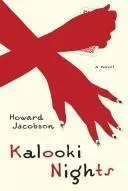
- Название:Kalooki Nights
- Автор:
- Издательство:Simon & Schuster
- Жанр:
- Год:2007
- ISBN:нет данных
- Рейтинг книги:5 / 5. Голосов: 1
-
Избранное:Добавить в избранное
- Отзывы:
-
Ваша оценка:
Kalooki Nights: краткое содержание, описание и аннотация
Предлагаем к чтению аннотацию, описание, краткое содержание или предисловие (зависит от того, что написал сам автор книги «Kalooki Nights»). Если вы не нашли необходимую информацию о книге — напишите в комментариях, мы постараемся отыскать её.
Spanning the decades between World War II and the present day, acclaimed author Howard Jacobson seamlessly weaves together a breath-takingly complex narrative of love, tragedy, redemption, and above all, remarkable humor. Deeply empathetic and audaciously funny, "Kalooki Nights" is a luminous story torn violently between the hope of restoring and rebuilding Jewish life, and the painful burden of memory and loss.
Kalooki Nights — читать онлайн бесплатно полную книгу (весь текст) целиком
Ниже представлен текст книги, разбитый по страницам. Система сохранения места последней прочитанной страницы, позволяет с удобством читать онлайн бесплатно книгу «Kalooki Nights», без необходимости каждый раз заново искать на чём Вы остановились. Поставьте закладку, и сможете в любой момент перейти на страницу, на которой закончили чтение.
Интервал:
Закладка:
A week later she raised her eyes to him. Not beseeching. Beyond beseeching. Well?
He hadn’t done it. It would take him longer. It wasn’t as easy. .
Then her words came. ‘I don’t blame the girl. I don’t blame her mother or her father. I blame you. I’m not saying I don’t understand you. I’m saying I blame you. I don’t wish to argue the rights and wrongs of it with you. In your eyes what you are doing might appear right. But had you stopped to think for a single minute how this was going to affect us, you wouldn’t have done it. There are a hundred things you could have done to hurt us, Asher. There are hundred things I have imagined you doing. But this was never one of them.’
This . How much did she know?
Could he ask her? Could he go though his transgressions, counting them out on the fingers of both hands, until he came to one she hadn’t heard about?
Imagining the worst, that she still wasn’t in possession of everything, he took the coward’s option and said, ‘It will blow over, Ma.’
‘If it will blow over why did you let it start?’
‘Oh, Ma, start . .’
‘If it’s so unimportant to you that you think it will blow over, it can’t be important enough to let it kill us.’
Us. Kill us. He was responsible for them both now. This was more how he thought it was going to be. She’d be screaming soon. Tearing gouges out of her flesh. The week before, he ’d been close to sacrificing Dorothy to her. What was Dorothy with her stretched-forth neck and wanton eyes compared to the dignified woman who’d given birth to him? Now that his mother threatened melodrama, he was once again besotted with Dorothy — the sweet, the calm, the melodious Dorothy.
Is this cynical of me, to suppose that Asher could operate only dialectically — one woman rising in his estimation as the other one descended? I don’t mean it to be. This, as I recall, is how it feels to be a boy in the throes of his first big passion. Especially if he’s a Jewish boy with dialectic in his soul. This or that. Meat or milk. Jew or Gentile. Wife or lover. Your life or your father’s. Choose.
‘All I ask,’ he said, ‘is that you don’t say anything to Dad yet.’
‘Until it blows over — is that what you’re asking me?’
‘Or until I decide to tell him myself.’
She put her hand out to him, as though the ghost she ’d been seeing were his now.
‘You are not to do that,’ she said. ‘Promise me you won’t do that.’
So he promised.
But later that same week his father got to hear about it anyway, and had what was diagnosed in our community as a double stroke. One on discovering his son was sleeping with a shikseh. One on discovering that the shikseh was a German. By our understanding of medicine, it was the second stroke that saved him from the worst effects of the first. Sometimes the news can be so bad that you go on living. Especially when going on living is worse than death.
The doctors said that Selick Washinsky had suffered a minor stroke. There you are! That was how terrible things were.
I remember the ambulance coming for Manny’s dad. How could I not? Twenty minutes later another one was coming for mine.
6
Under the body of his father, a boy lies.
It is hot. The boy can hear flies buzzing and dying. He thinks he can smell them too — decomposing flies. He doesn’t know how late in the day it is, or even whether it is the same day. His father is lying on him, his chest on his face. The boy understands the intentionality of this. His father doesn’t want him to see, but more than that he doesn’t want him to be seen. Nor does he want his breath to be heard. No word was spoken between them but he is lying as he knows his father wants him to lie, in utter silence, seeing nothing, barely breathing.
They are in a pit, in a clearing in a forest, in the shtetl of Butrimantz in the south-west of Lithuania. When the shooting started his father pushed him into the pit and then fell on top of him. When the shooting stops, the sounds in his father’s chest stop as well.
The boy listens but can hear nothing. Only the flies. He listens for so long that if there were other boys lying, breathing silently beneath their fathers, he would hear them. He is the only boy alive in the pit, maybe the only boy alive in the whole of Lithuania — who knows, he may be the only boy alive in the whole world.
He hasn’t got the strength for what is required. He is overcome by sadness. To what end must he exert himself? To what purpose?
A contradiction, as terrible as the pit, assails him. He owes it to the love he bears his father not to live. He owes his father death. But his father gave his own life so that he, the son, should live on. So he owes his father life as well.
Someone explain to the boy how he can repay his father by living and not living at the same time.
No one can explain this to him. There is nobody who knows. There is nobody alive.
When they start throwing soil into the pit, he makes a decision for life. Thus it happens: we want what we cannot have. He pushes his face into his father’s neck, takes one deep breath, then closes his throat and nose. Everything goes black. This must mean that there was light before and he was seeing it. The light perhaps of the same day. Perhaps of the same hour. It’s conceivable he has been lying here no time at all, a matter of minutes, no more, seeing light he did not recognise as light. But he sees nothing now.
The boy is Manny Washinsky.
Living on the pockets of air in his father’s jacket and shirt, he survives his own burial, escapes the pit in the dead of night, hides in the forest for weeks on end, criss-crosses the Lithuanian/Polish border, and finally finds his way to Kaliningrad where partisans smuggle him on to a boat bound for Hull. Subsequent to that he has lived with his uncle Selick in Crumpsall Park.
This was the story Manny began to put about soon after his father was released from hospital.
‘I’m glad your father’s better, Manny,’ I said.
‘He’s not my father,’ he replied.
‘Who is he then?’
‘My uncle. My father’s dead.’
And that was when I got to hear about the pit in Lithuania.
Out of some motive too base to investigate, I told Errol Tobias what Manny had been saying about himself. ‘It’s bullshit,’ Errol said. ‘The Nazis cleaned out Lithuania in 1941. Your meshuggeneh friend wasn’t born yet.’
‘How do you know that?’
‘How do I know when your meshuggeneh friend was born?’
‘How do you know about Lithuania?’
He tapped his forehead. ‘By fucking reading. Probably the same fucking books as your meshuggeneh friend’s been reading. Ask him. Ask him about the Einsatzgruppen . Ask him when they’d finished.’
They were all reading. Every Jew I knew. All swallowing bile. Even Errol Tobias who could have passed as a member of the Einsatzgruppen himself. All storing up their rage. The only person I knew who wasn’t by his fourteenth birthday an expert on the Holocaust (whether or not we called it by that name yet) was me. But I had enough bile in me already. And what I didn’t know I could imagine.
And what I could imagine I could draw.
Errol had one other point to make about the miracle of Manny’s escape from the pit before leaving the subject. ‘I bet the creep got the idea for that from the time I beat him up in that air-raid shelter of yours,’ he said. ‘His father lying on top of him, me sitting on his face stopping him from breathing. I bet he wanks about me being a Nazi, the freak.’
‘Or about you being his father,’ I said. Which caused Errol to pretend to beat me up.
Of course I knew that every word Manny had said about Lithuania was preposterous, but the fact of his bothering to lie at all made me suspect that some essential aspect of it could be true, that while he was too young to be a survivor of the war, he was just possibly someone other than we thought he was, and certainly not the brother of Asher, for example, whom he resembled in absolutely no particular.
Читать дальшеИнтервал:
Закладка:
Похожие книги на «Kalooki Nights»
Представляем Вашему вниманию похожие книги на «Kalooki Nights» списком для выбора. Мы отобрали схожую по названию и смыслу литературу в надежде предоставить читателям больше вариантов отыскать новые, интересные, ещё непрочитанные произведения.










Обсуждение, отзывы о книге «Kalooki Nights» и просто собственные мнения читателей. Оставьте ваши комментарии, напишите, что Вы думаете о произведении, его смысле или главных героях. Укажите что конкретно понравилось, а что нет, и почему Вы так считаете.