Howard Jacobson - Kalooki Nights
Здесь есть возможность читать онлайн «Howard Jacobson - Kalooki Nights» весь текст электронной книги совершенно бесплатно (целиком полную версию без сокращений). В некоторых случаях можно слушать аудио, скачать через торрент в формате fb2 и присутствует краткое содержание. Год выпуска: 2007, Издательство: Simon & Schuster, Жанр: Современная проза, на английском языке. Описание произведения, (предисловие) а так же отзывы посетителей доступны на портале библиотеки ЛибКат.
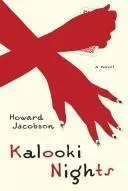
- Название:Kalooki Nights
- Автор:
- Издательство:Simon & Schuster
- Жанр:
- Год:2007
- ISBN:нет данных
- Рейтинг книги:5 / 5. Голосов: 1
-
Избранное:Добавить в избранное
- Отзывы:
-
Ваша оценка:
Kalooki Nights: краткое содержание, описание и аннотация
Предлагаем к чтению аннотацию, описание, краткое содержание или предисловие (зависит от того, что написал сам автор книги «Kalooki Nights»). Если вы не нашли необходимую информацию о книге — напишите в комментариях, мы постараемся отыскать её.
Spanning the decades between World War II and the present day, acclaimed author Howard Jacobson seamlessly weaves together a breath-takingly complex narrative of love, tragedy, redemption, and above all, remarkable humor. Deeply empathetic and audaciously funny, "Kalooki Nights" is a luminous story torn violently between the hope of restoring and rebuilding Jewish life, and the painful burden of memory and loss.
Kalooki Nights — читать онлайн бесплатно полную книгу (весь текст) целиком
Ниже представлен текст книги, разбитый по страницам. Система сохранения места последней прочитанной страницы, позволяет с удобством читать онлайн бесплатно книгу «Kalooki Nights», без необходимости каждый раз заново искать на чём Вы остановились. Поставьте закладку, и сможете в любой момент перейти на страницу, на которой закончили чтение.
Интервал:
Закладка:
But then the rows between his brother and his parents (real or imaginary) began in earnest, terrible screaming contests, some of them so blood-curdling that on a couple of occasions Tsedraiter Ike had to go over and hammer on their door to make certain Selick Washinsky was not having another and this time more serious stroke. At which time it occurred to me that Manny’s pit story wasn’t a description of the past at all, but of the future.
7
The reason it was Tsedraiter Ike who did the neighbourly thing and not my father was that my father wasn’t up to it. He had gone into hospital on the same day as Selick Washinsky, and even shared a ward with him for forty-eight hours, before they let him out with a warning: ‘Take it easy.’ In those days that was all they could do for a worn-out heart, before bypasses and transplants — prescribe rest and quiet and as many pills as he was prepared to swallow.
‘What about boxing?’ he ’d asked the doctor.
Not quite a family friend, Dr Shrager. Though he chose to act like one. ‘Over my dead body,’ he said.
‘What about being Jewish, speaking of dead bodies?’ This to needle Shrager, who did Jewish in a bigger way than my father thought a doctor of medicine should.
‘What about being Jewish?’
‘Do I have to die Jewish?’
‘No one’s talking about dying, Jack.’
‘Well, I wasn’t, but you are.’
‘Just take the pills.’
‘And if they don’t work they’ll bury me the same afternoon and have some rabbi mutter mumbo-jumbo over me.’
Similar mumbo-jumbo to that from which he ’d preserved me on my thirteenth birthday.
How much all that thirteenth-birthday stuff had contributed to the breakdown in his health I cannot say with any certainty. But I do recall, in the period after his discovering the real reason behind my mother’s gala kalooki night, a strange passage in which, around me particularly, he alternated needless irritation with an unaccustomed, not to say uncomfortable, solicitousness. One occasion stands out above the others. I had been in the habit, when it was too cold to go on drawing in the air-raid shelter, of bringing my sketchbook back home, being careful always to keep it out of the way. All discussion of Manny’s and my cartoon history of the anguish of the Jewish people had stopped the day my father recommended I get another interest — boxing, say — a year or so before. Just how serious his objections would be if he learned I was still at it, I didn’t know, but it seemed prudent not to put him to the test. He asked no questions, I told no lies. So I shouldn’t have been such a fool as to leave it where he could see it — Freudian? well, I accept it sounds Freudian — a caricature of Ilse Koch à la Hank Jansen in full riding gear and with swastikas on her saddle inspecting a line of naked Jewish prisoners with hard-ons. (Unless that should be, as Errol always insisted, hards-on.)
‘I don’t mind the sexual fantasy,’ my father said. ‘You like a big toches on a woman — that’s your business. At your age I was no better. But I’ll tell you what I do mind. .’
I was covered with embarrassment. ‘I know,’ I said, ‘I know — the swastikas. And the private parts.’
He looked at me in astonishment. ‘Why should I mind the swastikas or the private parts? The only time I’d mind a swastika is if you came home wearing one. And we’ve all got private parts. What I mind, Maxie, is the look on the faces of those Jews. Why have they got no fight in them?’
Well, I couldn’t tell him, could I, that in my book acquiescence, when you knew what you were acquiescing to, was a sort of fighting.
He shook his head. ‘Look,’ he said, ‘if you’re going to be an artist, be an artist. But do me a favour’ — and here he reached across and grabbed my wrists, a restraining officer, handcuffing me with his fingers — ‘just don’t make every Jew you draw synonymous with suffering.’
I wanted to protest that he hadn’t taken adequate cognisance of their hard-ons/hards-on; that their hard-ons/hards-on, artistically speaking, stood for the virility of the Jewish people in the face of adversity. You know, a cartoonist’s way of saying you cannot keep us down. But there are some conversations you don’t have with your father, particularly when he’s taken you into custody. And even more particularly when he’s unwell.
It must have been about a fortnight after this conversation that he complained of pains in his chest and the same ambulance which had earlier in the day come for Manny’s father, came for mine.
Back home, gulping tablets, he became a chair person, falling asleep in the middle of a conversation, or begging to be excused from taking an interest in anything that wasn’t happening in his chest. ‘My ticker,’ he ’d say, apologetically, touching it and looking somewhere else.
Eventually it became another member of the family — Jack’s ticker. The person other people came to see. His old communist pals visited most days, determined to cheer him up, to get him back to the firebrand he’d been, but they were themselves down in the mouth, not to say shamefaced, after the invasion of Hungary. Elmore Finkel took me into the garden to ask whether I thought it could have been that act of betrayal that had made my father ill. ‘Disillusionment is a terrible depressive,’ he told me. I shook my head. My father had never been under any illusions about Russia. Russia for my father was Novoropissik. The past, not the future. I was proud of him. Only moral and political infants do disillusionment. Only people foolish enough to have illusions. And my father was not one of those.
But he was tired. Soon, to our great consternation, he didn’t even want to see his chums. We noticed him begin to wince when he heard them on the path. I suggested that we lock the door like other people, but he wouldn’t hear of it. Our door had always been open to everybody and he wasn’t going to close it now. Increasingly, though, he treated them as though they belonged to another existence, pointing to his chest, saying, ‘My ticker,’ and signalling them to leave almost before they’d arrived.
Three months later it stopped ticking altogether.
‘You know, I envy you,’ Manny said, not long after. ‘I wish I didn’t have a father.’
EIGHT
Man has the right and the privilege to declare himself
to be in disagreement with every natural occurrence,
including the biological healing that time brings about.
Jean Améry1
The revelation was my sister. In the last weeks of my father’s life she was never out of his sight. Following my mother’s lead, I was acting as though everything were as normal. We ate at the same time, made the usual amount of noise, and dropped in to see my father propped up in his bed the way we would on an ordinary Sunday morning. He was lying in, that was all. He was taking a breather. But not to Shani, he wasn’t. To Shani he was dying and she didn’t want to lose a moment of whatever time was left to her to be with him.
She wept openly in his company, sitting by his bedside, stroking his hand. Once when I went in to see him he was holding her in his arms the way he must have held her when she was baby, kissing and smelling her hair, crooning over her. His shaineh maidel he called her — his lovely girl. I couldn’t believe my ears. Shaineh maidel was grandparent Yiddish, maybe even great-grandparent Yiddish. When I drew shtetl Yiddlers that was what I had bubbling out of their mouths — shaineh-maidel talk. No one used that expression any more, except in self-parody, least of all my father. So was that why they’d named her Shani? Had my father crooned into her baby scalp and called her his shaineh maidel the moment he first saw her, his lovely girl, his beautiful daughter — and was she therefore the child of his Jewish sentimentality, Shani because he had never clapped his eyes on anything prettier in his life, and there was no other word to describe her?
Читать дальшеИнтервал:
Закладка:
Похожие книги на «Kalooki Nights»
Представляем Вашему вниманию похожие книги на «Kalooki Nights» списком для выбора. Мы отобрали схожую по названию и смыслу литературу в надежде предоставить читателям больше вариантов отыскать новые, интересные, ещё непрочитанные произведения.










Обсуждение, отзывы о книге «Kalooki Nights» и просто собственные мнения читателей. Оставьте ваши комментарии, напишите, что Вы думаете о произведении, его смысле или главных героях. Укажите что конкретно понравилось, а что нет, и почему Вы так считаете.