H. Adler - Panorama
Здесь есть возможность читать онлайн «H. Adler - Panorama» весь текст электронной книги совершенно бесплатно (целиком полную версию без сокращений). В некоторых случаях можно слушать аудио, скачать через торрент в формате fb2 и присутствует краткое содержание. Год выпуска: 2011, Издательство: Random House, Жанр: Современная проза, на английском языке. Описание произведения, (предисловие) а так же отзывы посетителей доступны на портале библиотеки ЛибКат.
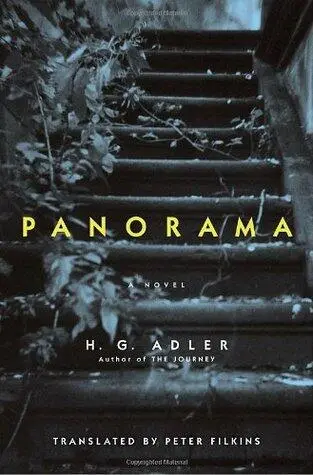
- Название:Panorama
- Автор:
- Издательство:Random House
- Жанр:
- Год:2011
- ISBN:нет данных
- Рейтинг книги:4 / 5. Голосов: 1
-
Избранное:Добавить в избранное
- Отзывы:
-
Ваша оценка:
Panorama: краткое содержание, описание и аннотация
Предлагаем к чтению аннотацию, описание, краткое содержание или предисловие (зависит от того, что написал сам автор книги «Panorama»). Если вы не нашли необходимую информацию о книге — напишите в комментариях, мы постараемся отыскать её.
, and a direct literary descendant of Kafka.
When
was discovered in a Harvard bookshop and translated by Peter Filkins, it began a major reassessment of the Prague-born H. G. Adler by literary critics and historians alike. Known for his monumental
, a day-by-day account of his experiences in the Nazi slave-labor community before he was sent to Auschwitz, Adler also wrote six novels. The very depiction of the Holocaust in fiction caused furious debate and delays in their publication. Now
, his first novel, written in 1948, is finally available to convey the kinds of truths that only fiction can.
A brilliant epic,
is a portrait of a place and people soon to be destroyed, as seen through the eyes of young Josef Kramer. Told in ten distinct scenes, it begins in pastoral Word War I — era Bohemia, where the boy passively witnesses the “wonders of the world” in a thrilling panorama display; follows him to a German boarding school full of creeping xenophobia and prejudice; and finds him in young adulthood sent to a labor camp and then to one of the infamous extermination camps, before he chooses exile abroad after the war. Josef’s philosophical journey mirrors the author’s own: from a stoic acceptance of events to a realization that “the viewer is also the participant” and that action must be taken in life, if only to make sure the dead are not forgotten.
Achieving a stream-of-consciousness power reminiscent of James Joyce and Gertrude Stein, H. G. Adler is a modern artist with unique historical importance.
is lasting evidence of both the torment of his life and the triumph of his gifts.
Panorama — читать онлайн бесплатно полную книгу (весь текст) целиком
Ниже представлен текст книги, разбитый по страницам. Система сохранения места последней прочитанной страницы, позволяет с удобством читать онлайн бесплатно книгу «Panorama», без необходимости каждый раз заново искать на чём Вы остановились. Поставьте закладку, и сможете в любой момент перейти на страницу, на которой закончили чтение.
Интервал:
Закладка:
Everything quiets down after Rumpler’s departure. Herr Schrimpl sits comfortably at his desk, unfolding a newspaper and casually unpacking items from a package, reading as simultaneously ten pieces of cake and torte from a bakery appear, at which Schrimpl tells Michel to bring a pitcher of water, but let the tap run so it’s cold. Josef asks whether Dr. Horn is in, to which Schrimpl replies, yes indeed, but no one can enter right now, because he just had a visitor and needs a moment to himself, Josef asking for Herr Klinger, though he learns that he’s been down in the cinema for a while. Josef then explains what he’s there for, namely about Herr Krönert, at which Schrimpl laughs, knowing the man still doesn’t have his loge seats and asking Josef to show him the note, at which he observes, aha, once again Lawetzer has refused to accept Auer’s signature, adding, “Herr Dr. Kramer, every new employee at the Cultural Center has stumbled much like you. This mishap has occurred because Lawetzer used to give out free tickets for the most preposterous of reasons conjured up by everyone here, until Rumpler threw a huge fit. We’ll just ring Lawetzer again.” Herr Schrimpl chews his cake piece by piece and doesn’t move from his spot, even though Josef says that Herr Krönert must indeed be growing impatient downstairs, Schrimpl chuckling, yes, one needs patience around here, you can’t just lock horns with anyone, for even if you don’t the Professor will badger you anyway, but first Schrimpl needs to eat, and then he will call Lawetzer, though Josef grows truly impatient, until at last Schrimpl says good-naturedly, “Hand the note here.”
Schrimpl slowly turns in his seat in order to reach for the telephone, and then he slowly explains to the obviously upset cashier that she shouldn’t make a fuss, everything is okay, he has a contract with Herr Professor Rumpler, the proper notice will soon follow, Schrimpl is initialing the note, she should just give the tickets to Krönert. After this Schrimpl turns back and scratches something onto the note. The order now has a grease stain as he continues to eat his cake, he advising Josef not to hurry, here such eagerness is uncalled for. Josef takes the note and thanks him as if Schrimpl had personally done him a special favor, and then heads off to Frau Lawetzer, who at the moment is free and issues the tickets while gabbing away, though Josef excuses himself, saying he’s in a hurry, Frau Lawetzer calling after him, saying that he should stop by again, she’ll be expecting him.
Josef wants to hand over the tickets, but Krönert is nowhere to be found in the vestibule, two attendants listening as he asks if they noticed a man who looks like such and such, but they know nothing, one of them saying there must be some mistake, the other saying that you can’t keep track of everyone. Then Josef runs over to Puttrich, the concierge, but he has not seen Herr Krönert from inside his booth, and Josef shouldn’t give himself any gray hair over it, for there have been many who have left the Cultural Center before they got their promised free tickets, in such situations it being best to give the tickets back to Lawetzer, because sometimes people come back to ask for them again. Josef thanks the concierge and decides to follow his advice, but Puttrich wants to ask Josef what he was really supposed to be doing, for he had already spent the whole afternoon running around. Josef explains that he will start the next day, and then he’s asked what he wants to work on, lectures or courses, film or radio? Josef can’t really say, he hasn’t talked with the Professor about it, though it probably won’t be the cinema, which Puttrich thinks is a big mistake, that’s the only thing that does well, Herr Klinger being paid the most and able to do what he wants at the Cultural Center, everyone else having to follow orders, Rumpler chasing them this way and that, the salaries and wages miserable, everyone having to think of doing a little business on the side. Josef says he wants to work hard so that he can accomplish something, but the concierge laughs at this, for if Josef will take some advice he shouldn’t strain himself very much, the best work is in the cinema as an usher, there you get tips, the students who help out now and then actually making a little money. Puttrich is convinced that Josef has taken a position at the Cultural Center only out of great need. “Stay with Klinger. It’s a nice place to work.”
Josef then goes to the cashier and gives her the tickets, she complaining what a pain it is, now she has to take the tickets back, the fool standing around for half an hour before he decided to buy the tickets, then she having to send Josef to get some change, and why had it all taken so long? Auer had given her the runaround on the phone, followed by Schrimpl, there being no way for Frau Lawetzer to keep the man from going upstairs, he was worried about his money. Josef tries to explain to the old woman that none of it was his fault, he was only trying to help out and wasn’t meant to be starting work today, causing the cashier to then wonder, “If you are not yet on board, then take it from an old woman, don’t be the first to jump on board!” Josef asks in reply, “What’s all the fuss about here?”—“You’ll soon see, Herr Doctor! What do you think? I’m not here for my own pleasure. I’m a widow, my husband fell at Przemsyl. I also have a crippled daughter. That’s why I sit in this booth. Sometimes I have trouble figuring the take, since I have such bad eyes. So then I have to make up the difference. And almost everyone gets on me. Herr Klinger and Herr Krupka continually, as well as Herr Schrimpl. But Auer is an arrogant slut, her head full of nothing but men and always her difficulties with squaring the books. Horn seems extremely sweet, but he is a beast. He’s run by the old man, who whistles his commands, but he does his bidding more than he should. Horn is always broke and borrows where he can. He’s always after me, as well as the old man: How many tickets have you sold, Frau Lawetzer? How many do you still have? Everything is a mess. How should I know? They give me blocks of tickets that are stamped wrong or they change the prices. Then everything has to go back upstairs. Then there are events for which I get an almost empty block, because so many free tickets have been given away. It’s often unbearable. And then when the old man … Herr Doctor, you won’t squeal on me, will you? Not a word! Off with you, so that I don’t talk so much.”
The cashier is mortified that she has let her tongue run so freely, asking the now distant Josef to return as she praises Rumpler and Horn, saying they are lovely men who are only a bit high-strung. Then some people arrive at the booth, Frau Lawetzer quickly wrapping three cigarettes in tinfoil. “This is for Fräulein Auer. Tell her that’s all I have for today.” Josef once again returns to the office, where Fräulein Auer greets him in a huff. “Well, you seem a fine fool and quite the gossip! What did you get me into with this Krönert and his money? Getting into bed with the Professor is no way to build camaraderie, my friend.” Josef bristles at the somewhat opaque accusations, he has no idea how business is done here, the incident with Krönert having nothing to do with him, Josef having helped out only out of goodwill and having come to the business office because the Professor had sent him to Herr Krupka, though it was Fräulein Auer who had sent Josef to the cashier. He is angry and wants to throw the cigarettes into the Fräulein’s face, but instead he holds them out to her, saying, “A gift from Frau Lawetzer.” The Fräulein is as if transformed, three cigarettes at once, and she is pleased as she says, “You are a little angel, Doctor! How did you manage that?”—“I stated your wish and this is what I got.” Fräulein Auer lights up a cigarette right away, then gives another to Josef. “Bring this to Horn, but tell him it’s only a loan! And you and I are friends. Whenever you need an advance, and the Professor won’t approve one, then come see me. I’ll get it out of him. Horn and Klinger live on advances. Klinger has two and Horn has taken part of his salary for the next four months.”
Читать дальшеИнтервал:
Закладка:
Похожие книги на «Panorama»
Представляем Вашему вниманию похожие книги на «Panorama» списком для выбора. Мы отобрали схожую по названию и смыслу литературу в надежде предоставить читателям больше вариантов отыскать новые, интересные, ещё непрочитанные произведения.











Обсуждение, отзывы о книге «Panorama» и просто собственные мнения читателей. Оставьте ваши комментарии, напишите, что Вы думаете о произведении, его смысле или главных героях. Укажите что конкретно понравилось, а что нет, и почему Вы так считаете.