Reif Larsen - I Am Radar
Здесь есть возможность читать онлайн «Reif Larsen - I Am Radar» весь текст электронной книги совершенно бесплатно (целиком полную версию без сокращений). В некоторых случаях можно слушать аудио, скачать через торрент в формате fb2 и присутствует краткое содержание. Год выпуска: 2015, Издательство: Penguin Press, Жанр: Современная проза, на английском языке. Описание произведения, (предисловие) а так же отзывы посетителей доступны на портале библиотеки ЛибКат.
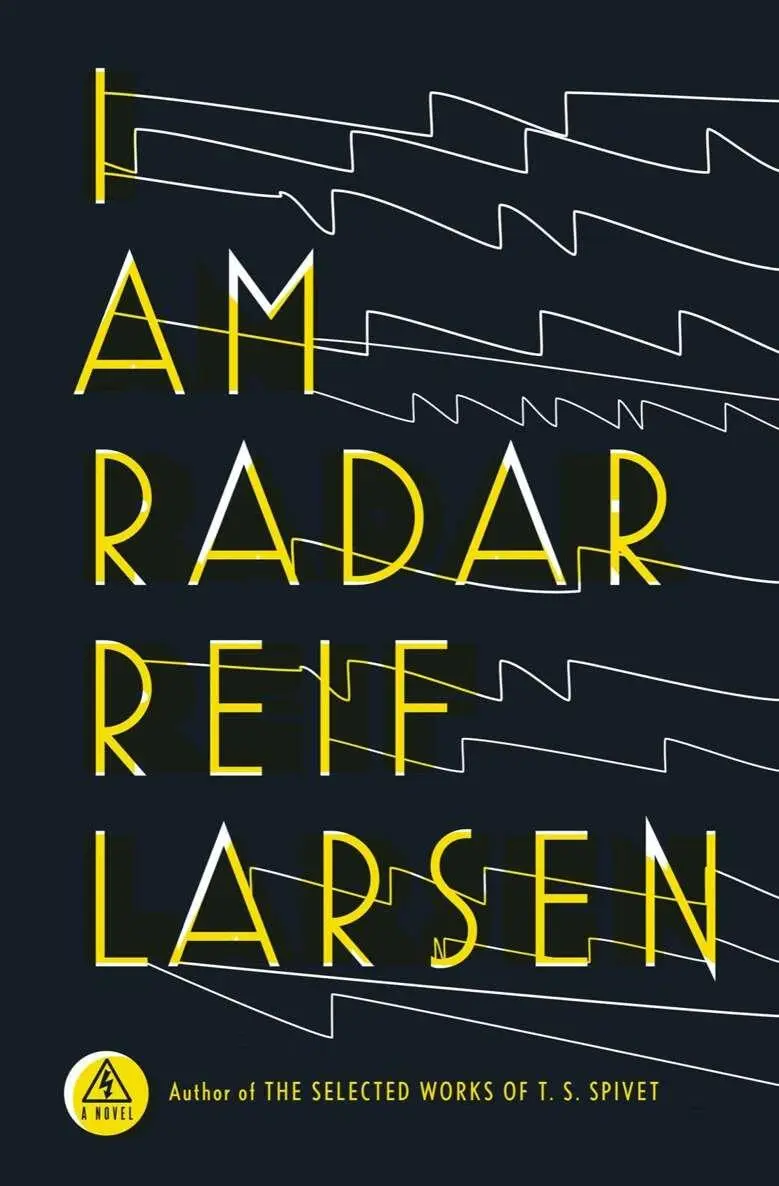
- Название:I Am Radar
- Автор:
- Издательство:Penguin Press
- Жанр:
- Год:2015
- ISBN:нет данных
- Рейтинг книги:3 / 5. Голосов: 1
-
Избранное:Добавить в избранное
- Отзывы:
-
Ваша оценка:
I Am Radar: краткое содержание, описание и аннотация
Предлагаем к чтению аннотацию, описание, краткое содержание или предисловие (зависит от того, что написал сам автор книги «I Am Radar»). Если вы не нашли необходимую информацию о книге — напишите в комментариях, мы постараемся отыскать её.
I Am Radar Deep in arctic Norway, a cadre of Norwegian schoolteachers is imprisoned during the Second World War. Founding a radical secret society that will hover on the margins of recorded history for decades to come, these schoolteachers steal radioactive material from a hidden Nazi nuclear reactor and use it to stage a surreal art performance on a frozen coastline. This strange society appears again in the aftermath of Cambodia’s murderous Khmer Rouge regime, when another secret performance takes place but goes horrifically wrong. Echoes of this disaster can be heard during the Yugoslavian wars, when an avant-garde puppeteer finds himself trapped inside Belgrade while his brother serves in the genocidal militia that attacks Srebrenica. Decades later, in the war-torn Congo, a disfigured literature professor assembles the largest library in the world even as the country around him collapses. All of these stories are linked by Radar — now a gifted radio operator living in the New Jersey Meadowlands — who struggles with love, a set of hapless parents,and a terrible medical affliction that he has only just begun to comprehend.
I Am Radar — читать онлайн бесплатно полную книгу (весь текст) целиком
Ниже представлен текст книги, разбитый по страницам. Система сохранения места последней прочитанной страницы, позволяет с удобством читать онлайн бесплатно книгу «I Am Radar», без необходимости каждый раз заново искать на чём Вы остановились. Поставьте закладку, и сможете в любой момент перейти на страницу, на которой закончили чтение.
Интервал:
Закладка:
“When you’re in the paper, I guess you don’t have to go to school anymore.”
“But where does he live?”
The student shrugged. He stopped moving the ball across his hands. From out of his bag he produced a lackluster ferret, which he held up to Danilo, as if offering it to him for a good price.
• • •
AROUND HIM, the city practiced a restrained form of agitation. International sanctions and the toll of an uncertain war had led to a volatile hyperinflation of the dinar. Money that was worth something this morning might be worth nothing this afternoon. It seemed like every couple of months the government would revaluate the currency at a rate of 1 million to 1, so that everyone would instantly become a million times poorer than they had been the day before. The government was thus forced to issue larger and larger denominations; this culminated in “the poet of sympathy,” Jovan Jovanovic Zmaj, having the unfortunate distinction of appearing on the five-hundred-billion-dinar note. The constant uncertainty brought about by these daily fluctuations and the imminent threat of another devaluation left people in a perpetual state of apprehension, as if they were awaiting a terrible diagnosis from their doctor. They tried to go about their daily business, sipping coffee in cafés, window-shopping the wide promenade of Knez Mihailova, but no one bought anything. They were playing the role of citizens in a city that no longer belonged to them.
The little money Danilo had brought quickly evaporated, even when he was not using it. He would often see little torn-up bits of the old currency blowing through the streets like pollen; it was as if an entire civilization had once lived here but now was gone forever. One department store, in a gesture of black humor, wallpapered its window displays with the worthless dinars, a pink-and-violet iconostasis of fallen Yugoslav heroes: Zmaj, Tesla, Andric, a mournful Communist child staring into the future.
Grocery stores, more often than not, had no food on their shelves, and the little food they did have cost almost a month’s wages. Danilo stopped eating at night. He would lie on his cot wearing all of his clothes, shivering, reading from his Bible and praying as his stomach growled in protest. To think: a farmer who could not even feed himself. It was the worst humiliation imaginable.
He began to smoke. He, who had never smoked a cigarette in his life, even as every man in Yugoslavia had merrily puffed away. And now, when there were practically no cigarettes to be had, he had begun to smoke.
“It’s a beautiful habit,” said Ilija as he lit Danilo’s Marlboro. “Forget what the doctors say. They are just jealous. Smoking keeps you healthy as a bull.”
After observing others sifting through trash — respectable people, men in suits, women in hats — Danilo began to follow suit, searching for items that might be bartered for food and cigarettes. Old kerosene lamps. Broken radios. Tailors’ dummies. Cracked spyglasses. Only Gazur, the kind, paunch-laden owner of the Rijeka Café, on the River Sava, would accept his hodgepodge of defective items in exchange for a glass of black currant juice and a bowl of fish stew. It was clear that Gazur had no use for such things, but without fail, whenever Danilo showed up on the terrace, he glowed and began humming old folk songs.
“Would you like a table with a view?” Gazur would ask, relieving him of his latest tawdry procurement. All of the tables had a view of the river, the same view, but nonetheless the question gestured at a rare kind of decadence.
“Please,” said Danilo. “And a glass of black currant juice.”
“Of course! The usual!” And Gazur would go to the kitchen and order the busboy to come out with his accordion and play a song, and Danilo would sit there drinking his juice and then quickly suck on his cigarette so that the smoke entangled with the dying sour notes on the back of his tongue. Danilo could not even say he liked the flavor of smoke and currant together, but he found himself compelled to create this pairing every time, as if pressing at an old wound.
“The river’s beautiful, yes?” Gazur would say.
“Yes.”
“And the music?” The busboy was earnestly banging out the Macedonian song “Zajdi, zajdi, jasno sonce.” Darinka had sung this song to him at night when he could not sleep.
“The music is nice, thank you.”
“Eder likes the turbo-folk, but I tell him, ‘No, you must play the old ones. Play the old ones so we don’t forget.’”
Danilo often wondered, as he watched the river and thought of all that had gone on in the past year, what the source of Gazur’s kindness was. It would have been much easier to let him starve with the rest.
• • •
HE SPENT HIS DAYS wandering the city, searching the unhappy faces for a version of his son. Once, an old woman carrying a basket of stuffed rabbits came up to Danilo on the street. She touched his hand, startling him with the sudden intimacy of this contact.
“My son,” she said, peering into his face.
For a moment he wondered if this woman could be Darinka, whether there had been some colossal mistake and she had never in fact died — she could not die, because she wore the red handkerchief with the little cross. Yet this woman was not wearing a red handkerchief. And then he saw in her eyes that even as she was staring at him, she did not see him. She had the eyes of a child. She was a vagabond. A miscreant. Did others now see him this way, too? When they passed him in the street, did mothers pull their children closer and avert their eyes?
After another moment, the woman let him go. He watched her shuffle away, orbiting a telephone pole before dissolving back into the weary stream of men.
• • •
SLOBODAN  FACE was everywhere. Those imploring eyes, the certainty of his uncertain gaze. You could find him splashed across billboards, newspapers, and television screens as he declared one victory after another for Mother Serbia. Yet Danilo also heard a surprising amount of dissent with
  ’s version of events on his little radio in the warehouse. He listened as academics and activists argued passionately about the injustice of such a war.
“We are witnessing a state suicide. The snake has bitten off its own head. These are the spasms of an animal that is already dead,” a poet said during a talk show.
One night, in a vision probably informed by his flat’s frigid temperatures, Danilo dreamed he was hiking through snowcapped mountains with . They were trying to find his wife’s body. Only knew where the body was hidden. They kept walking and walking, and —sipping from a bottomless thermos of tea — kept promising that the body was just over the next rise, but that summit would only reveal more mountains that closely resembled those from which they had just come. Eder, the busboy from the Rijeka, was also there with his accordion, trying to keep up with them. Eventually he fell in the snow, his accordion making a last gasp as he collapsed, and they left him where he was.
Интервал:
Закладка:
Похожие книги на «I Am Radar»
Представляем Вашему вниманию похожие книги на «I Am Radar» списком для выбора. Мы отобрали схожую по названию и смыслу литературу в надежде предоставить читателям больше вариантов отыскать новые, интересные, ещё непрочитанные произведения.










Обсуждение, отзывы о книге «I Am Radar» и просто собственные мнения читателей. Оставьте ваши комментарии, напишите, что Вы думаете о произведении, его смысле или главных героях. Укажите что конкретно понравилось, а что нет, и почему Вы так считаете.