Reif Larsen - I Am Radar
Здесь есть возможность читать онлайн «Reif Larsen - I Am Radar» весь текст электронной книги совершенно бесплатно (целиком полную версию без сокращений). В некоторых случаях можно слушать аудио, скачать через торрент в формате fb2 и присутствует краткое содержание. Год выпуска: 2015, Издательство: Penguin Press, Жанр: Современная проза, на английском языке. Описание произведения, (предисловие) а так же отзывы посетителей доступны на портале библиотеки ЛибКат.
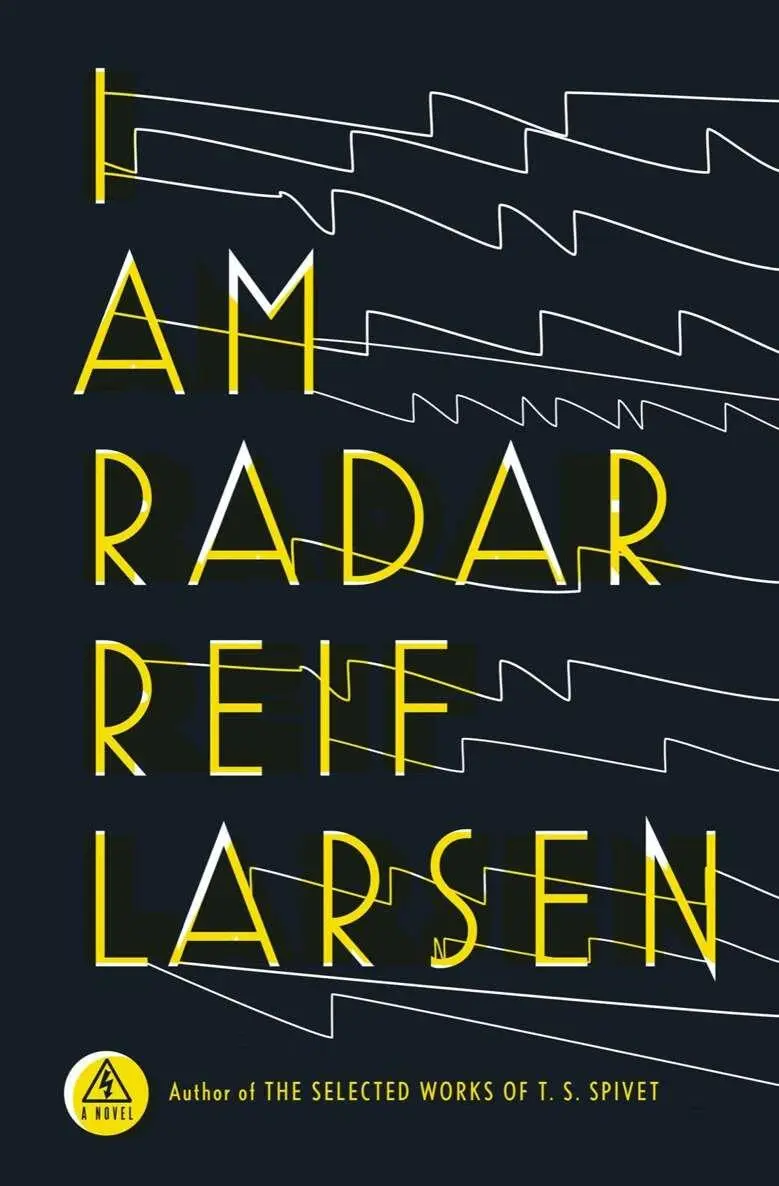
- Название:I Am Radar
- Автор:
- Издательство:Penguin Press
- Жанр:
- Год:2015
- ISBN:нет данных
- Рейтинг книги:3 / 5. Голосов: 1
-
Избранное:Добавить в избранное
- Отзывы:
-
Ваша оценка:
I Am Radar: краткое содержание, описание и аннотация
Предлагаем к чтению аннотацию, описание, краткое содержание или предисловие (зависит от того, что написал сам автор книги «I Am Radar»). Если вы не нашли необходимую информацию о книге — напишите в комментариях, мы постараемся отыскать её.
I Am Radar Deep in arctic Norway, a cadre of Norwegian schoolteachers is imprisoned during the Second World War. Founding a radical secret society that will hover on the margins of recorded history for decades to come, these schoolteachers steal radioactive material from a hidden Nazi nuclear reactor and use it to stage a surreal art performance on a frozen coastline. This strange society appears again in the aftermath of Cambodia’s murderous Khmer Rouge regime, when another secret performance takes place but goes horrifically wrong. Echoes of this disaster can be heard during the Yugoslavian wars, when an avant-garde puppeteer finds himself trapped inside Belgrade while his brother serves in the genocidal militia that attacks Srebrenica. Decades later, in the war-torn Congo, a disfigured literature professor assembles the largest library in the world even as the country around him collapses. All of these stories are linked by Radar — now a gifted radio operator living in the New Jersey Meadowlands — who struggles with love, a set of hapless parents,and a terrible medical affliction that he has only just begun to comprehend.
I Am Radar — читать онлайн бесплатно полную книгу (весь текст) целиком
Ниже представлен текст книги, разбитый по страницам. Система сохранения места последней прочитанной страницы, позволяет с удобством читать онлайн бесплатно книгу «I Am Radar», без необходимости каждый раз заново искать на чём Вы остановились. Поставьте закладку, и сможете в любой момент перейти на страницу, на которой закончили чтение.
Интервал:
Закладка:
“She’s already been identified.”
“But what if she’s not dead?”
“She’s dead. It’s my job,” said the man. His voice turned soft and instructive as he handed Danilo the papers. “I know this can be difficult, but you must sign here, please. The signature is the first step in the process.”
• • •
AT THE FUNERAL, Danilo wore his only suit. Stoja had helped him choose it for their wedding. Only Dragan, his parents, and a handful of friends attended. Stoja’s two boys were not present to see their mother being put to rest. Their closest neighbors were also conspicuously absent, perhaps fearful of how their presence might be interpreted by Lukic and his men.
• • •
SOMEONE HAD NESTLED A vase of wild lilacs into the dirt of the freshly dug grave. The doll made of wood and string that they had seen next to the red bicycle was sitting against the vase. There was no note.
Halfway through the service, it began to rain. The priest paused in his sermon to look up at the sky. His tongue slipped out between his lips and caught a drop of water, and then he bowed his head and began again.
5
Less than a month later, as an unusually cold, early fall descended upon them, Danilo sold his last cow to Slavko Novakovic.
“Where are you headed?” Slavko asked, rubbing the side of the animal.
“To find my son,” said Danilo.
He found locks for the farmhouse and the barn. He had never locked these buildings before, and the click of the mechanism made his blood run cold. Before he closed up the barn, he stood before Stoja’s altar. The wax frozen into white rivers. He looked up and saw the elephant watching him through the dust-filled darkness. He touched its lone ear. A certain kind of warmth.
“Someday, you will walk the bridge,” he said. “I promise.”
He took down one of her icons and slipped it into his bag.
At the bus stop, two idle young men in White Eagle uniforms sat on the hood of a car, picking at the remains of what looked like a chocolate cake. They watched the line of people shuffling onto the bus. As he boarded, Danilo glanced back. One of the men blew him a kiss.
• • •
MANY HOURS LATER, after passing through what seemed like dozens of army checkpoints, in which IDs were shown and reshown and a man he did not recognize was dragged screaming from the bus by his legs, they finally arrived in the city. Rolling past row after row of tall buildings, Danilo realized he hadn’t been to Belgrade since that trip with his mother to see the illuminated manuscript forty years ago. Had it really been that long? He tried to decide what was worse: having never left Višegrad or not realizing he had never left Višegrad.
He was gathering up his two small bags from beneath the bus when he heard someone yell his name.
“Danilo! Danilo Danilovic!”
He turned and saw Ilija Dragonovic trundling toward him in a suit that could barely contain his great body. Ilija was a distant relative who had left for the city twenty years ago. Danilo had written to him about his arrival but had never received a reply.
“Danilo Danilovic!” Ilija hugged Danilo as if they were brothers. “Welcome to Belgrade. Everything is such shit, but welcome.”
Ilija was over two meters tall. He was a former basketball player who had flirted with playing on the national team before a blown-out knee destroyed his jump shot. Now he made a living selling washing machines.
“Business is no good,” he said, weaving his car through the crowded streets. “No one wants to buy a new unit. Do you want to buy a new unit? No, because maybe a bomb will fall on your house tomorrow and then your new unit is totally fucked. I understand. But I’m still pissed off — WATCH OUT, LADY!” He swerved, then smiled at a terrified Danilo. “It’s important to remind people of life, yes?”
They arrived at Ilija’s warehouse in Vracar, where Danilo would stay until he got his feet on the ground. When Ilija rolled up the graffitied garage door to the storage room, Danilo saw a small army cot among the stacks of plastic-wrapped washing machines. He could see his breath.
“There’s a shower and toilet in the back,” said Ilija. “Hold down the handle for at least three seconds; otherwise it all comes up again. It’s not the good kind of déjà vu.”
“Okay,” said Danilo.
“I used to come here to think,” said Ilija, lighting a cigarette. “But I don’t think anymore, so there you are.”
“Thank you,” said Danilo. “It’s only for the time being. Until I find Miroslav.”
“You know, I was so sorry to hear about Stojanka,” said Ilija. “I always liked her. She was a beautiful woman.”
“Thank you, Ilija.”
“Shit, man,” said Ilija, shaking his head. “I just can’t believe it. One day she is here, and then she’s gone.”
The warehouse was sandwiched between a tennis club and a train yard filled with rusting boxcars. The nets at the club had all been taken down for the season, but despite the frigid temperatures, a single old man still showed up each day in tennis whites to serve a bucket of balls across the court. Danilo would watch him rumble through his routine, tightening and snapping his body like whip. The balls made a light and easy sound coming off the man’s racket. Every serve looked good, but then, there was no net to halt the ball’s progress.
It was freezing in the storage room. There was a single radiator that sputtered and spat but only grew tepid to the touch. Danilo shivered through the nights, and, in an act of midnight desperation, he ripped open a carton of hand towels and carefully spread them over his blanket in rows, like uncooked bacon. He lay on his cot in the darkness, mummified and alone.
Soon after his arrival, he took a bus over to the university at Studentski Trg. The bus was shockingly crowded. Danilo found himself standing with his face inside another man’s armpit, barely able to breathe. After two minutes he knew he would die inside this bus along with everyone else. He looked down and saw a small child crammed among a sea of legs, twirling a leaf between his fingers.
When the doors finally opened, he tumbled out into the air of the world, gasping. He vowed never to take another bus again. He would walk one hundred kilometers if he had to. Grateful to be alive, he circled the Brutalist buildings of the university square, trying to find the philosophy department and a clue to his son’s whereabouts. Next to a bookstore, there was a two-story mural of a man entering a doorway at the end of a long path. The man appeared decapitated, for his head had already disappeared into the darkness of the doorway.
Danilo asked a student lounging beneath the mural whether he knew Miroslav. Who? Miroslav Danilovic. He did not. Danilo asked another, with similar results. Maybe Miroslav had never even come to the university. Maybe he was no longer in Belgrade.
He was just about to give up when he saw a man wearing eyeliner and army fatigues, smoking a cigarette and rolling a ball across his hands, theatrically, as if he was doing it for money, though there was no place to leave money. If anyone knew where Miroslav was, it would be this man. As Danilo approached, he saw that the man was really no more than a kid.
“He’s the puppeteer, right? Who never says anything?” the kid said after Danilo asked him about his son. He did not look up from his ball play.
“That’s right,” said Danilo, wondering if this was true. “Where does he live?”
“He was in the papers for something or other,” the kid said, still rolling his ball. “He became kind of famous.”
“What do you mean, kind of famous ?” asked Danilo.
But the kid didn’t know anything else. He hadn’t seem him around in months.
Читать дальшеИнтервал:
Закладка:
Похожие книги на «I Am Radar»
Представляем Вашему вниманию похожие книги на «I Am Radar» списком для выбора. Мы отобрали схожую по названию и смыслу литературу в надежде предоставить читателям больше вариантов отыскать новые, интересные, ещё непрочитанные произведения.









Обсуждение, отзывы о книге «I Am Radar» и просто собственные мнения читателей. Оставьте ваши комментарии, напишите, что Вы думаете о произведении, его смысле или главных героях. Укажите что конкретно понравилось, а что нет, и почему Вы так считаете.