Reif Larsen - I Am Radar
Здесь есть возможность читать онлайн «Reif Larsen - I Am Radar» весь текст электронной книги совершенно бесплатно (целиком полную версию без сокращений). В некоторых случаях можно слушать аудио, скачать через торрент в формате fb2 и присутствует краткое содержание. Год выпуска: 2015, Издательство: Penguin Press, Жанр: Современная проза, на английском языке. Описание произведения, (предисловие) а так же отзывы посетителей доступны на портале библиотеки ЛибКат.
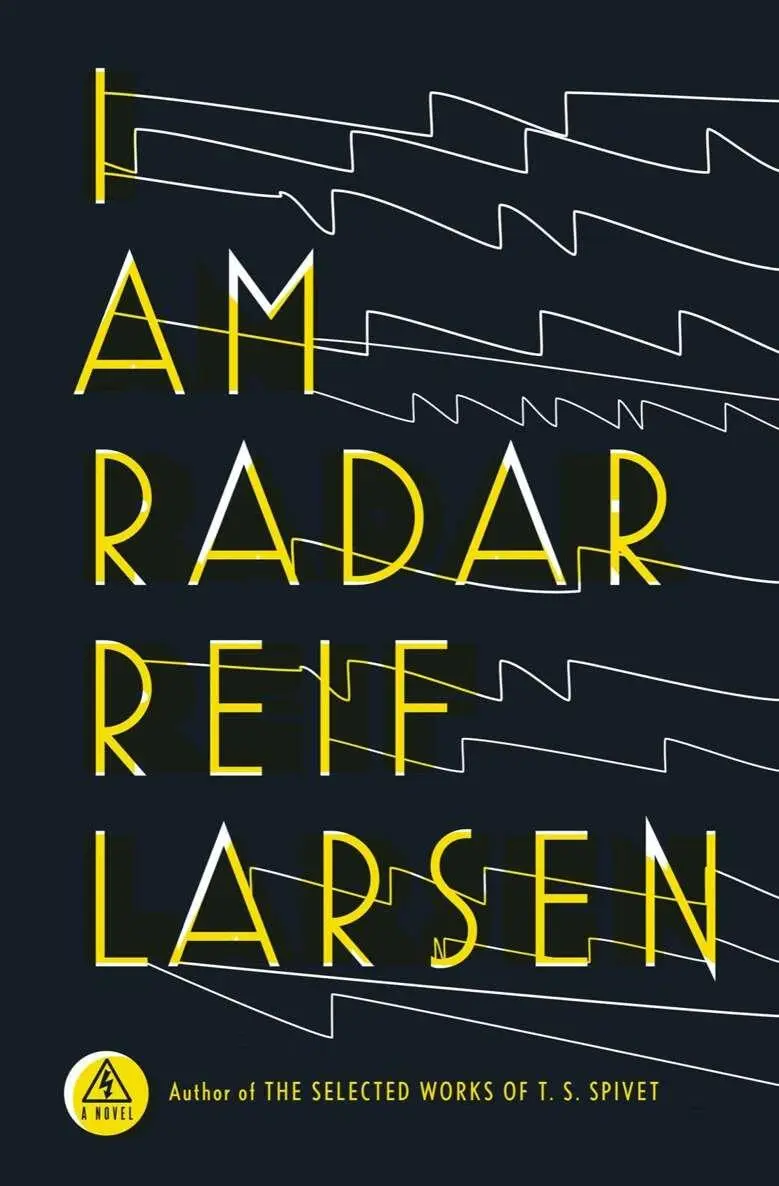
- Название:I Am Radar
- Автор:
- Издательство:Penguin Press
- Жанр:
- Год:2015
- ISBN:нет данных
- Рейтинг книги:3 / 5. Голосов: 1
-
Избранное:Добавить в избранное
- Отзывы:
-
Ваша оценка:
I Am Radar: краткое содержание, описание и аннотация
Предлагаем к чтению аннотацию, описание, краткое содержание или предисловие (зависит от того, что написал сам автор книги «I Am Radar»). Если вы не нашли необходимую информацию о книге — напишите в комментариях, мы постараемся отыскать её.
I Am Radar Deep in arctic Norway, a cadre of Norwegian schoolteachers is imprisoned during the Second World War. Founding a radical secret society that will hover on the margins of recorded history for decades to come, these schoolteachers steal radioactive material from a hidden Nazi nuclear reactor and use it to stage a surreal art performance on a frozen coastline. This strange society appears again in the aftermath of Cambodia’s murderous Khmer Rouge regime, when another secret performance takes place but goes horrifically wrong. Echoes of this disaster can be heard during the Yugoslavian wars, when an avant-garde puppeteer finds himself trapped inside Belgrade while his brother serves in the genocidal militia that attacks Srebrenica. Decades later, in the war-torn Congo, a disfigured literature professor assembles the largest library in the world even as the country around him collapses. All of these stories are linked by Radar — now a gifted radio operator living in the New Jersey Meadowlands — who struggles with love, a set of hapless parents,and a terrible medical affliction that he has only just begun to comprehend.
I Am Radar — читать онлайн бесплатно полную книгу (весь текст) целиком
Ниже представлен текст книги, разбитый по страницам. Система сохранения места последней прочитанной страницы, позволяет с удобством читать онлайн бесплатно книгу «I Am Radar», без необходимости каждый раз заново искать на чём Вы остановились. Поставьте закладку, и сможете в любой момент перейти на страницу, на которой закончили чтение.
Интервал:
Закладка:
As they pulled into the parking lot, Stoja saw a girl come out onto one of the balconies. She had short brown hair, cut close to her head. The girl watched them come to a stop in front of the hotel and then disappeared back into the room.
As soon as they were stopped, a man with black paint on his face came at them with a machine gun and ordered them off the truck. Remiza began to weep. She begged the man to take her but leave her daughter. The man leaped up onto the back of the truck and rammed the butt of his gun into her head. He did this easily, without effort. Remiza fell down onto her side. She lay there, unconscious. Her daughter collapsed onto her, weeping.
“Shut up,” the man said to them. “When we want you to talk, we’ll ask you to talk. But we’ll never ask you to talk, so you will never talk.”
He grabbed the girl by the back of her neck and pulled her off the truck. Then he turned to Stoja.
“Please,” she said. “There has been some mistake. I’m a Serb. I’m like you.”
“You’re nothing like me,” said the man.
The last thing she saw before the darkness came was a red car driving up the hill, and in that split second she could not help but hope that whoever it was had come to rescue her.
• • •
IN THE AFTERNOON, when Stoja had still not returned, Danilo grew nervous. Maybe she had gone back to the church? He should have figured as much. Then he found her ID card on the bureau. He stared at her picture.
“Stoja,” he said.
Their truck was not working, so he ran over to his cousin Dragan’s house and asked him for his car. Dragan insisted on coming along. They first drove to the church but found it locked. They tracked down the caretaker, who opened it up for them, but the church was empty, the candles unlit. Danilo’s mouth went dry.
They slowly drove down the road that led to the river.
“There,” said Danilo, pointing. “Stop.”
It was Stoja’s red bicycle. Leaning against a tree, as if waiting for its rider to return. An open suitcase lay by the side of the road, its contents strewn into the ditch. Children’s clothes. A little doll made of sticks and strings sat by one wheel of the bicycle.
They searched up and down the road. All the way to the river and back, until it grew too dark to see. Their headlights began to make every mound, every irregularity, look like a possible body.
“She’s not here,” said Dragan. “Maybe she went into town.”
“Why would she go there?” said Danilo. “I told her not to go there.”
“Maybe she had dinner with a friend?”
“I told her not to go there. I told her just to the river and back.” Danilo brought his hands to his face. “Oh, this is my fault. It told her to go.”
“It’s not your fault, cousin,” said Dragan. “We’ll find her.”
They drove into town. Past burnt and gutted houses. A couch sitting upright against a doorway. The streets were deserted. Dogs running around, searching for scraps.
A soldier came up and waved for them to stop.
“There’s a curfew,” the soldier said. “Go home.”
“I’m looking for my wife.” Danilo leaned over to the window. “She was bicycling today. She hasn’t come back. Her name’s Stojanka Danilovic. Have you seen her?”
The soldier stared at him. He looked shocked. Then he raised his gun and pointed it at them. “You can’t be out now. Go home.”
“But she’s my wife! She left her ID card. I’m very worried she—”
“We’ve got to go back,” said Dragan.
“But I’m just worried something’s happened to her. Have you heard anything?”
“No one is allowed to be out.” The soldier’s eyes flicked back and forth between them. He was young, with a birthmark on his temple. They heard him click off the safety of the rifle.
“Danilo!” said Dragan. “We can come back in the morning.”
They left the car at Danilo’s house. Dragan tapped his cousin on the shoulder.
“Everything will be all right,” he said. “What did your mother say? ‘The Danilovics are survivors.’”
“My mother was a liar.”
Danilo fell asleep sitting up, in a chair facing their bed. Before the sun had fully risen, he awoke, made himself some coffee, and washed his hands. Then he took down an alabaster jar that they kept hidden inside the ceiling. Inside the jar was a roll of deutsche marks. He took all the money and his wife’s ID card and drove Dragan’s car down to the police station in town, where he waited all morning for them to open.
At eleven o’clock, a large man pulled up in front of the station in a small blue VW Golf. The man looked tired. He spent some time in the car before he struggled to pry himself from the front seat. He headed to the locked door of the police station. Danilo got out. He tried not to run.
“Please,” he said, approaching the man. “My wife has gone missing.”
The man showed no interest in this news. He busied himself with unlocking the door.
“Please,” Danilo tried again. “There’s been a mistake. We’re Serbian. Here’s her card.”
“I don’t know anything about this,” the policeman said. “Why are you telling me this?”
Danilo took out half of the money in his pocket and showed it to the man. “Please,” he said. “There’s been a mistake. Can you help me?”
The policeman, who walked stiffly, as if one of his legs could no longer bend, took Danilo down the block to an old hotel that smelled of dried sweat and blood sausage. A small radio was playing Herzegovinian folk music in one corner. The policeman left Danilo sitting in the lobby and headed upstairs. When he came back down, he said, “Lukic will see you.” He stood, waiting. Danilo reached into his pocket and gave him several more bills. The policeman left without giving any further instructions.
Danilo waited in the lobby. Men came and went, many of them bearded. They wore all sorts of military uniforms. Sometimes their tops did not match their bottoms, as if their clothes had become mixed up in the wash. Many of them wore the patch of the White Eagles, and almost everyone carried a gun. He did not see the young man who had stopped them the night before.
Finally, one of the men came into the lobby and motioned for Danilo to stand and follow him up the stairs. The man, smoking a cigarette, roughly patted Danilo down for weapons, then he pushed him into one of the hotel rooms.
Lukic was a large, clean-shaven man, with a broad, flat nose and surprisingly soft eyes. He looked like a father who had not yet become a father. He smiled slightly when Danilo entered the room, and Danilo saw the flash of a rotten tooth that had turned blue. Lukic sat in an armchair. He wore camouflage pants and a grey sweatshirt that was marked by several indecipherable stains. The bed next to him was covered with ammunition and handguns of varying sizes. Danilo briefly wondered if this was how he slept, in a sea of bullets. On the table next to the bed, a lone plastic flower stood at attention inside its vase.
In a voice that he tried to keep strong, Danilo said that he had known Lukic’s uncle in grade school.
Lukic smiled. “Pluto.”
“Yes, Pluto,” said Danilo. “He’s a nice man.”
“He was a terrible man. A sadist. But he’s dead now,” Lukic said with a smile.
“Oh. Well. I’m sorry to hear this,” said Danilo.
“What can I do for you?”
He told Lukic that he was looking for his wife, Stojanka, who had disappeared the previous day. He explained that her two sons had moved away; one had joined the Chetniks up in Croatia — he lingered on this word, Chetniks —and the other had moved to Belgrade to study at the university. His wife had been distraught for several months. It was unlike her to be so on edge. She was just going out for a little bicycle ride to clear her head and she forgot her ID card. Simple as that. He didn’t care what had happened. Or who had done what. He just wanted to bring her home.
Читать дальшеИнтервал:
Закладка:
Похожие книги на «I Am Radar»
Представляем Вашему вниманию похожие книги на «I Am Radar» списком для выбора. Мы отобрали схожую по названию и смыслу литературу в надежде предоставить читателям больше вариантов отыскать новые, интересные, ещё непрочитанные произведения.










Обсуждение, отзывы о книге «I Am Radar» и просто собственные мнения читателей. Оставьте ваши комментарии, напишите, что Вы думаете о произведении, его смысле или главных героях. Укажите что конкретно понравилось, а что нет, и почему Вы так считаете.