Reif Larsen - I Am Radar
Здесь есть возможность читать онлайн «Reif Larsen - I Am Radar» весь текст электронной книги совершенно бесплатно (целиком полную версию без сокращений). В некоторых случаях можно слушать аудио, скачать через торрент в формате fb2 и присутствует краткое содержание. Год выпуска: 2015, Издательство: Penguin Press, Жанр: Современная проза, на английском языке. Описание произведения, (предисловие) а так же отзывы посетителей доступны на портале библиотеки ЛибКат.
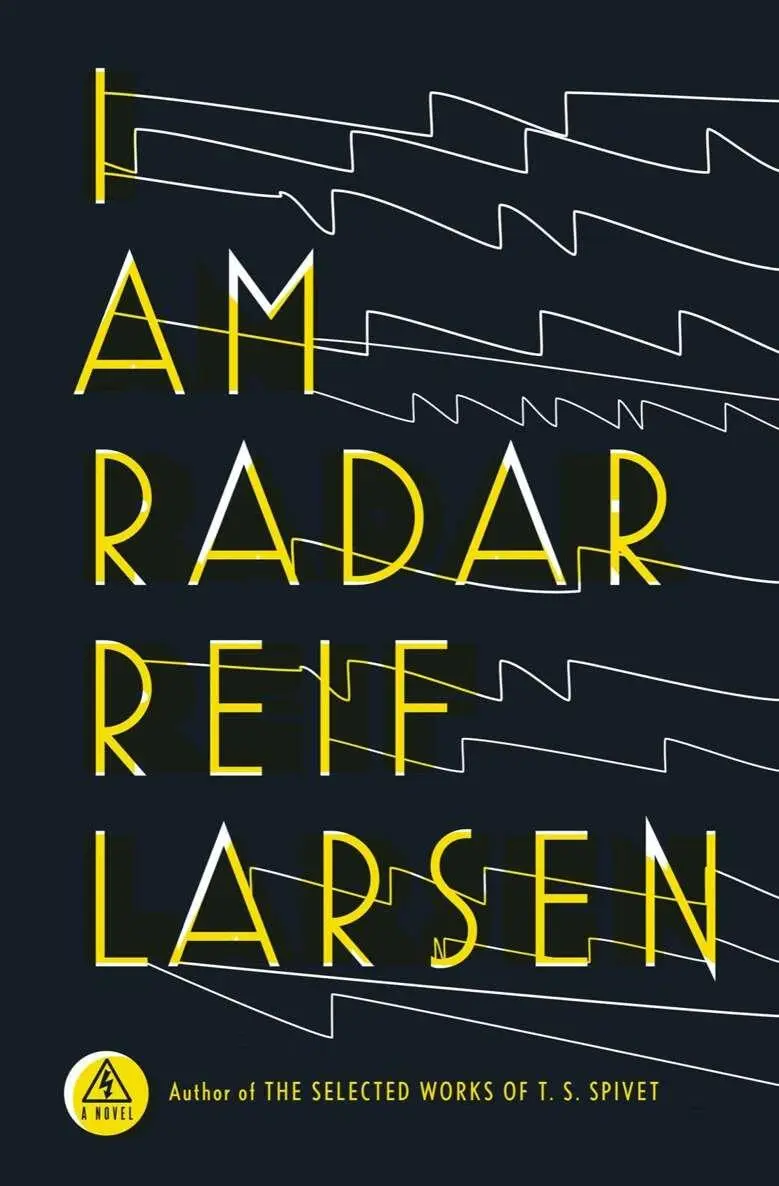
- Название:I Am Radar
- Автор:
- Издательство:Penguin Press
- Жанр:
- Год:2015
- ISBN:нет данных
- Рейтинг книги:3 / 5. Голосов: 1
-
Избранное:Добавить в избранное
- Отзывы:
-
Ваша оценка:
I Am Radar: краткое содержание, описание и аннотация
Предлагаем к чтению аннотацию, описание, краткое содержание или предисловие (зависит от того, что написал сам автор книги «I Am Radar»). Если вы не нашли необходимую информацию о книге — напишите в комментариях, мы постараемся отыскать её.
I Am Radar Deep in arctic Norway, a cadre of Norwegian schoolteachers is imprisoned during the Second World War. Founding a radical secret society that will hover on the margins of recorded history for decades to come, these schoolteachers steal radioactive material from a hidden Nazi nuclear reactor and use it to stage a surreal art performance on a frozen coastline. This strange society appears again in the aftermath of Cambodia’s murderous Khmer Rouge regime, when another secret performance takes place but goes horrifically wrong. Echoes of this disaster can be heard during the Yugoslavian wars, when an avant-garde puppeteer finds himself trapped inside Belgrade while his brother serves in the genocidal militia that attacks Srebrenica. Decades later, in the war-torn Congo, a disfigured literature professor assembles the largest library in the world even as the country around him collapses. All of these stories are linked by Radar — now a gifted radio operator living in the New Jersey Meadowlands — who struggles with love, a set of hapless parents,and a terrible medical affliction that he has only just begun to comprehend.
I Am Radar — читать онлайн бесплатно полную книгу (весь текст) целиком
Ниже представлен текст книги, разбитый по страницам. Система сохранения места последней прочитанной страницы, позволяет с удобством читать онлайн бесплатно книгу «I Am Radar», без необходимости каждый раз заново искать на чём Вы остановились. Поставьте закладку, и сможете в любой момент перейти на страницу, на которой закончили чтение.
Интервал:
Закладка:
Above them, the great elephant loomed against the flicker of the candles. A line of saints stared at his wife, who was kneeling, hands clutched in prayer.
“You have to move to live,” he said.
He put a hand on her shoulder. A dankness in the air.
“Please,” he said.
“Where can I go?” she said, staring at the saints. “It’s too dangerous to go anywhere.”
“Just don’t go into town. Take a bicycle. You can ride to the river. The weather’s nice today.”
“I don’t have a bicycle.”
“Take Miša’s. Ride to the river and then come right back. It isn’t far. It’ll be good for you. You’ve got to move around or else you’ll shrivel up into a nothing.”
“I like being here.”
“If you don’t want to do it for yourself, then do it for me.”
• • •
SHE CHANGED into a summer dress. She put on earrings. Danilo found the red bicycle in the shed. He inflated the tires. He lowered the seat with a wrench and squeezed a drop of oil into the gears.
“You see?” he said, spinning the pedals. “Like new.”
“I haven’t ridden in years,” she said. “Since I was a girl.”
“You don’t forget,” he said, kissing her forehead. “Go. I love you. Take care. And bring your ID card. They’re checking everyone these days.”
She followed the road down into the valley. The air felt cool and light on her face. Danilo had been right: she had lost herself somewhere along the way. The barn, the candles, the elephant — it was a trap, she could see that now. She smiled, feeling the ground slip beneath her. She felt as though she could ride clear across the world like this. If she could just keep riding, everything would be normal again. And when she went back home, she would find that both of her sons had returned, and they would run out of the house to greet her.
As she got down to the main road, she saw a car stopped in front of four men armed with machine guns. She caught her breath. The men had strung barbed wire across the road. They were talking to someone in the car, which she could see was stuffed to the brim with suitcases. Through the back window she could see a small white dog. It seemed to be barking, but she couldn’t hear any sound. One of the men saw her coming down the road on her bicycle, and he waved with his gun for her to dismount.
“Oy,” said the man, approaching her. He was wearing camouflage and a traditional Šajkaca army hat, like the ones she remembered seeing in history books. This had to be one of those White Eagles that everyone was talking about. She had never seen one of them up close before.
“What’s your name?” he said. He had a splotchy mark on his temple, the color and shape of an overripe raspberry. She could see how young he was. Young and foolish, just like Miša.
“Stojanka Danilovic. I live there,” she said and pointed back to where she had come from. She wanted to tsk this boy for dressing up in such a stupid costume. For playing games. Why had his mother let him do such a foolish thing?
He asked to see her ID card. Stoja reached into her pocket, but even as she did this, she realized she had left the card on her bureau. She had picked up the card and then set it down when she put on her earrings. She could see the card lying on the wooden bureau. She could see the grainy photograph staring back at her, her smile that was not quite a smile. She hated that picture, though Danilo had said it was not far from the truth.
“I don’t have it,” she said, her heart dropping. “I left it on the bureau.”
“What?” he said, moving closer.
As calmly as she could, she explained to the young man that she was the wife of Danilo Danilovic, that she lived just over the hill, that she had not planned on seeing anyone, she was merely trying to ride to the river, “to get the air back into my lungs.” This was how she said it. She was a Serb in good standing, she said. She was an Orthodox Christian. A believer. Had he not seen her holding vigil at her manoualia in St. Stephen’s? She pulled out the little silver cross around her neck to show him. A gift from Danilo. She had never been more grateful for it than now.
She thought that everything would be right then. This stupid boy would understand and let her go and she would turn her bike around and tell Danilo all about this. The White Eagles are everywhere! she would say. And they are using children to fight for them!
But the young man did not wave her through. He looked concerned. He took a step forward and grasped the cross in one of his hands. He was close to her now. She could smell the rancid stink of alcohol and dried meat on his breath. God bless, how could they let such a boy drink? The boy’s fingers, covered in a deep layer of grime, fumbled with the small silver object. He turned the cross over, as if to find proof of its authenticity on the reverse side. When she looked up at him, he was not looking at the cross but at her.
“Please,” she said quietly. “God bless.”
“You’re a liar. I can hear your accent,” he said and ripped the chain from around her neck. Her head snapped forward. She could feel the burn on the back of her neck where the chain had split.
“Please. Listen. I’m a Serb. I promise,” she said, and tried not to let the fear split open the seams of her words. What he heard was true: she had been born in Trebinje, near the Montenegro border, and so her accent was foreign. Not quite foreign, but peculiar.
Oh Danilo, Danilo, what shall I do? This boy has no idea!
“You’re lying. You carry this cross to hide yourself.” He held up the necklace. “You should be ashamed.”
“I’m a Serb, I swear to you. I’m a devout Christian. I hadn’t been until recently, but now it’s all I have. My sons left me. My youngest is your age. He’s fighting like you.”
“You’re an old, filthy, lying whore is what you are,” the boy said. He stepped forward and grabbed the space between her legs. The force with which his hand moved emptied the air from her lungs. His lust, fetid, like a whiff of curdled milk. The blindness of his fingers, kneading at her. He brought his mouth very close to her ear, breathing raggedly, the raspberry splotch on his temple trembling with each pulse. She was gathering her strength to scream when he pushed her to the ground.
“Here’s another Turkish whore for Lukic,” he said to the others.
“Fine, fine,” said one of the soldiers. “Let’s go back. It’s enough for now.”
They loaded her into the back of the truck with a mother and a daughter whom they had taken from the car. Stoja recognized them from the market. They were Muslim, she knew. The mother’s name was Remiza. Remiza was holding on to her daughter’s hand so hard that her knuckles were turning white. Remiza’s husband stood by the car and watched them go, his hands on his hips, his face registering nothing at all.
The truck drove through the valley and then turned up a steep road. A stream flowed nearby, the water thick with bright green algae. There was no wind in the trees, and she could smell the thickness of the minerals in the water. Stoja tried to smile at Remiza, to let her know that she was with them, but the woman held on to her daughter and looked right through her.
They came to a hotel, looming in a clearing of the forest like the hull of a great beached ship. The facade of the hotel was bright white, the top floors lined with concrete balconies, their railings painted red. All of the curtains behind the balconies were drawn closed. From somewhere there came a cry, and then silence. Around the hotel, men lay sleeping, sunning themselves. Some wore ski masks pulled up above their faces. Stoja had heard of this place. Before the war, people had come to heal themselves in the thermal pools. They had come from all over, as far as Austria and Hungary and Romania. Somewhere nearby, the Turks had built a hammam hundreds of years ago. The waters from inside these mountains could supposedly cure all ills.
Читать дальшеИнтервал:
Закладка:
Похожие книги на «I Am Radar»
Представляем Вашему вниманию похожие книги на «I Am Radar» списком для выбора. Мы отобрали схожую по названию и смыслу литературу в надежде предоставить читателям больше вариантов отыскать новые, интересные, ещё непрочитанные произведения.











Обсуждение, отзывы о книге «I Am Radar» и просто собственные мнения читателей. Оставьте ваши комментарии, напишите, что Вы думаете о произведении, его смысле или главных героях. Укажите что конкретно понравилось, а что нет, и почему Вы так считаете.