Reif Larsen - I Am Radar
Здесь есть возможность читать онлайн «Reif Larsen - I Am Radar» весь текст электронной книги совершенно бесплатно (целиком полную версию без сокращений). В некоторых случаях можно слушать аудио, скачать через торрент в формате fb2 и присутствует краткое содержание. Год выпуска: 2015, Издательство: Penguin Press, Жанр: Современная проза, на английском языке. Описание произведения, (предисловие) а так же отзывы посетителей доступны на портале библиотеки ЛибКат.
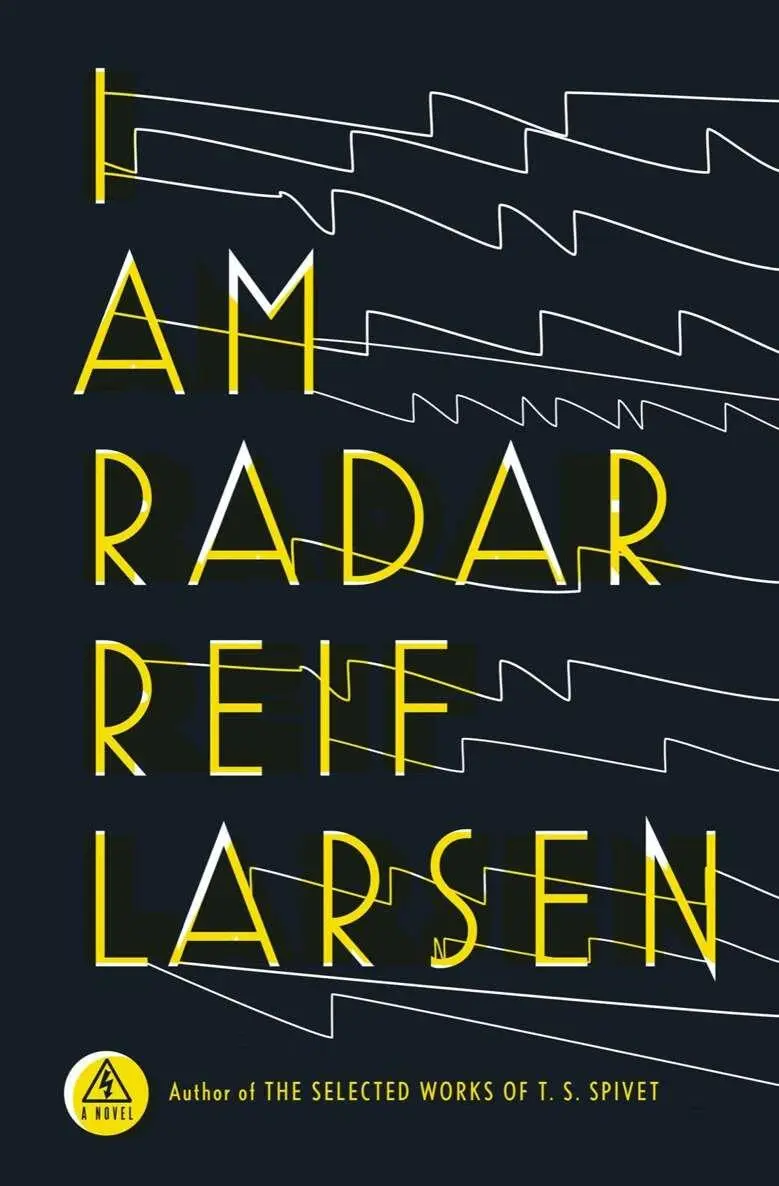
- Название:I Am Radar
- Автор:
- Издательство:Penguin Press
- Жанр:
- Год:2015
- ISBN:нет данных
- Рейтинг книги:3 / 5. Голосов: 1
-
Избранное:Добавить в избранное
- Отзывы:
-
Ваша оценка:
I Am Radar: краткое содержание, описание и аннотация
Предлагаем к чтению аннотацию, описание, краткое содержание или предисловие (зависит от того, что написал сам автор книги «I Am Radar»). Если вы не нашли необходимую информацию о книге — напишите в комментариях, мы постараемся отыскать её.
I Am Radar Deep in arctic Norway, a cadre of Norwegian schoolteachers is imprisoned during the Second World War. Founding a radical secret society that will hover on the margins of recorded history for decades to come, these schoolteachers steal radioactive material from a hidden Nazi nuclear reactor and use it to stage a surreal art performance on a frozen coastline. This strange society appears again in the aftermath of Cambodia’s murderous Khmer Rouge regime, when another secret performance takes place but goes horrifically wrong. Echoes of this disaster can be heard during the Yugoslavian wars, when an avant-garde puppeteer finds himself trapped inside Belgrade while his brother serves in the genocidal militia that attacks Srebrenica. Decades later, in the war-torn Congo, a disfigured literature professor assembles the largest library in the world even as the country around him collapses. All of these stories are linked by Radar — now a gifted radio operator living in the New Jersey Meadowlands — who struggles with love, a set of hapless parents,and a terrible medical affliction that he has only just begun to comprehend.
I Am Radar — читать онлайн бесплатно полную книгу (весь текст) целиком
Ниже представлен текст книги, разбитый по страницам. Система сохранения места последней прочитанной страницы, позволяет с удобством читать онлайн бесплатно книгу «I Am Radar», без необходимости каждый раз заново искать на чём Вы остановились. Поставьте закладку, и сможете в любой момент перейти на страницу, на которой закончили чтение.
Интервал:
Закладка:
Once inside, Danilo found himself in complete darkness. It was like diving into a deep well. He fought the urge to whip the curtain off his head. He waited. Nothing happened. He breathed. He could smell the stuffiness of his exhalations.
“What am I looking at?” he asked from beneath the curtain.
“Patience,” he heard from somewhere in the world beyond.
And then, from out of the gloom, he saw tiny figures appearing. A bird. Shivering. It was a crow, pecking nervously at the ground. Looking up at him, pecking again. The movements were so natural — the bird was alive, but it was impossible for this bird to be alive, because it must’ve been less than a centimeter tall. Pecking. Ruffling its feathers. The beat of a heart.
The whole scene gradually became illuminated. A wooden farmhouse. The walls streaked with age. A woman emerging, kerchiefed. Danilo marveled at the detail. He could see her breathing. She swept the threshold with her little broom, rested a moment on its handle, looking up at the sky. Danilo tried to look up with her, but he realized he was not part of the scene. He felt altogether massive, a clumsy, towering presence in this minuscule world. The woman shook her head, gave the threshold one last sweep, and then disappeared back into the house. From somewhere off to the side he heard the rustle of wind in the trees, though he could not decide if this was from her world or his own.
Footsteps. A man came from around the corner of the house. Bearded. Wearing a peasant’s cap, with a rifle draped over his shoulder. When he saw the crow, the man stopped. Silence. Then the man’s arms, tiny, moving, lifting the gun, aiming. The crow looked up and saw the gun. The bird lifted its wings, but it did not fly.
Then: everything went black. The kind of black that happens just after a dream. Danilo heard the sound of two gunshots. He jumped, peering into the dark, trying to see the body of the bird. He couldn’t see anything. He breathed. He could feel his pulse thumping. He waited.
The curtain was lifted off his head. A rush of light.
“So?” said Miroslav.
“How did you make it so small?”

Fig. 2.6. “M. Danilovic´’s Black Box Theater”
From Røed-Larsen, P., Spesielle Partikler, p. 974
“It’s not that small. We’re big, is all.”
“Where are the strings?”
“There are no strings. But what did you think?”
“I’ve never seen anything like it. That bird? What happened?”
“It’s a secret, Tata.”
Stoja donned the curtain and viewed the scene. She came out, blinking, tears in her eyes.
“We’ve missed you so much, Miro,” she said.
“Don’t call me Miro,” he said.
• • •
THE WEEKEND WAS UNPLEASANT for all. After the brief magic gifted by the black box, Miroslav seemed to slide backwards into the safety of unpleasantries. He drank often and in great amounts. He swore. He did not help to clear the table. He had begun smoking, which he did indoors, without asking for permission, leaving his cigarette butts strewn about the house. It was as if their son had been replaced by another, a copy that was not quite right.
“Does he have an accent?” Stoja whispered to her husband as they lay in bed.
“It’s not an accent.”
“He smells different.”
“It’s the city.”
“Do you think he’s taking drugs?”
“It’s the city.”
“He might have an accent.”
“He doesn’t have an accent.”
During dinner on the second night, Danilo looked over and noticed his son’s hands were shaking.
“Your hands,” said Danilo.
“My hands?” said Miroslav, and for the first time he looked like their child again.
Danilo went to pour his son more šljivovica, but Stoja grabbed his arm and shook her head.
“Your elephant’s still in the barn,” said Danilo. “What shall we do with it?”
“My elephant,” said Miroslav, shaking his head. “My elephant. You can burn it.”
“You don’t want it?” said Stoja.
“No.”
“I thought you were going to walk it over the bridge,” said Danilo.
“I can’t stand that fucking bridge,” said Miroslav.
“Watch your language,” said Danilo.
They ate the burek in silence.
“ Has Miša written to you again?” asked Danilo after a while.
“Has he written to you?”
“No.”
“He must be busy, then.”
“Too busy for his own mother?” said Stoja.
“You know there’s a vast fucking world outside of this little shit town of yours.”
“Miroslav!” Danilo yelled. “Don’t speak to your mother like this.”
Miroslav offered a smile. “Sorry, Mama. I haven’t heard from him, either.”
“I light a candle every day,” said Stoja. “He doesn’t know what he’s gotten into.”
“He’s okay, Mama. He’s okay. You can stop lighting your candles.”
She nodded. She wiped at her eyes and split open a piece of bread. “And you’ve met girls in Belgrade?”
“I’m not looking for girls, Mama. I have an audience. This is much better than girls,” he said. “They’re hungry for something new. And I give them something new.”
“Is that right?” she said. “So you’re learning new things?”
Miroslav leaned back in his chair. “Yes, many things. I’m learning that nearly everyone is an asshole. And I’m learning this country enjoys fucking itself in its own ass.”
Danilo put down his fork. “I won’t say it again. Watch your mouth,” he said. “This is still a house of God. We’ll not tolerate such language. If I hear it one more time, you can find your own roof to sleep under.”
“A house of God?” said Miroslav.
“When you’re under my roof, you follow my rules. You can go back to the city and live however you like, but here you show respect.”
“Tata, wake up! This town is full of whores. The city is filled with hypocrites. The priests are war criminals, and the war criminals are priests. So good luck with your whole house of God there. This house will be the last one standing when everything around it fucking crumbles into shit.”
Danilo stood up, furious. “Get out.”
Miroslav picked up a piece of bread.
“This is where you came from, Miroslav Danilovic. This is the house you came from. Don’t ever desecrate your own home. Now get out.”
Miroslav rose from the table.
“Danilo, we can’t—” Stoja began.
“You are a Danilovic,” he said to his son. “You will always be a Danilovic.”
“Believe me, I know. Why do you think I left?” He kicked his chair and stalked out of the house.
Miroslav spent an hour shivering in the barn with the ghost of the elephant. Once he had calmed down, he came back and knocked contritely on the door of the house. Stoja answered.
“I’m sorry, Mama,” he said. “I didn’t know what I was saying.”
“Miro,” she said. She reached across the threshold and took him in her arms. “My baby.”
Danilo came down and saw them like this. He put his hands on his kin and whispered his love. The three of them stood together in the doorway until the cold wind blowing into the house forced them to swing the door shut.
• • •
THE NIGHT BEFORE MIROSLAV was to return to the city, Stoja wept in bed.
Danilo tried to reassure her. “It’s natural. He’s making his own way. He needs to separate himself from us,” he said.
“But he’s my son! He’s Miro! How can he be like this?”
“Give him some time. You’ll see.”
Читать дальшеИнтервал:
Закладка:
Похожие книги на «I Am Radar»
Представляем Вашему вниманию похожие книги на «I Am Radar» списком для выбора. Мы отобрали схожую по названию и смыслу литературу в надежде предоставить читателям больше вариантов отыскать новые, интересные, ещё непрочитанные произведения.









Обсуждение, отзывы о книге «I Am Radar» и просто собственные мнения читателей. Оставьте ваши комментарии, напишите, что Вы думаете о произведении, его смысле или главных героях. Укажите что конкретно понравилось, а что нет, и почему Вы так считаете.