Reif Larsen - I Am Radar
Здесь есть возможность читать онлайн «Reif Larsen - I Am Radar» весь текст электронной книги совершенно бесплатно (целиком полную версию без сокращений). В некоторых случаях можно слушать аудио, скачать через торрент в формате fb2 и присутствует краткое содержание. Год выпуска: 2015, Издательство: Penguin Press, Жанр: Современная проза, на английском языке. Описание произведения, (предисловие) а так же отзывы посетителей доступны на портале библиотеки ЛибКат.
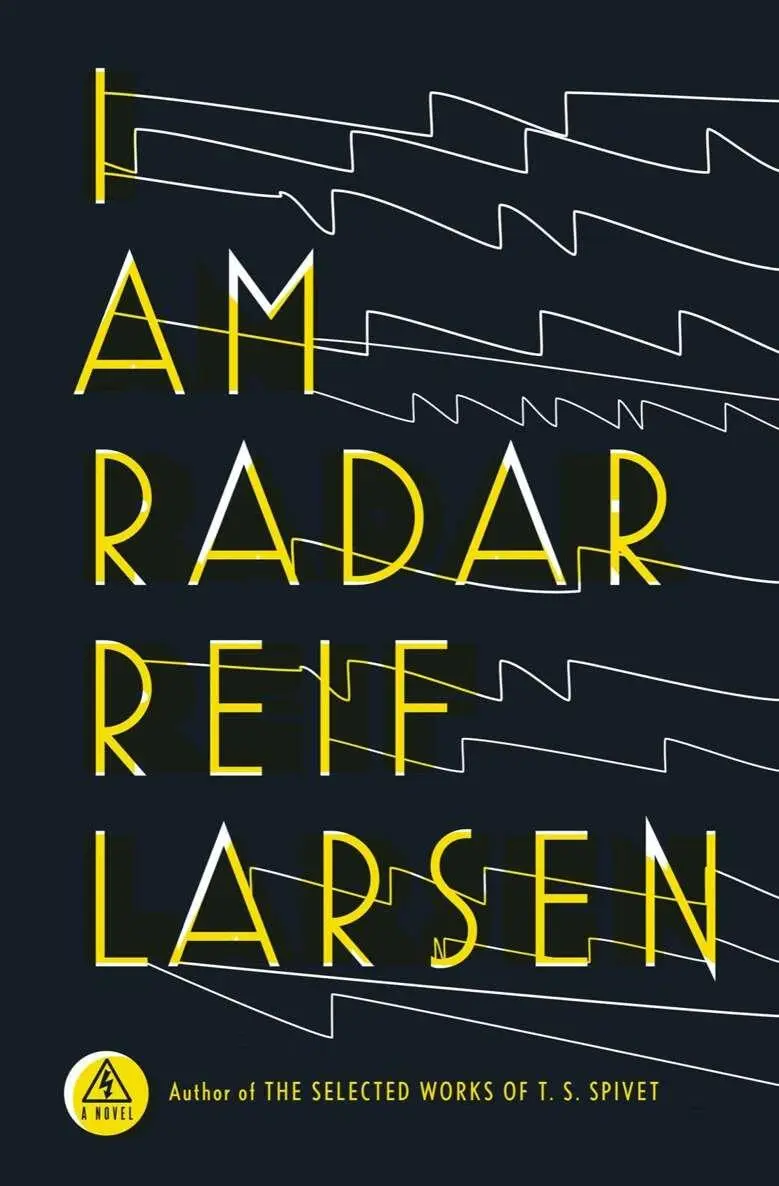
- Название:I Am Radar
- Автор:
- Издательство:Penguin Press
- Жанр:
- Год:2015
- ISBN:нет данных
- Рейтинг книги:3 / 5. Голосов: 1
-
Избранное:Добавить в избранное
- Отзывы:
-
Ваша оценка:
I Am Radar: краткое содержание, описание и аннотация
Предлагаем к чтению аннотацию, описание, краткое содержание или предисловие (зависит от того, что написал сам автор книги «I Am Radar»). Если вы не нашли необходимую информацию о книге — напишите в комментариях, мы постараемся отыскать её.
I Am Radar Deep in arctic Norway, a cadre of Norwegian schoolteachers is imprisoned during the Second World War. Founding a radical secret society that will hover on the margins of recorded history for decades to come, these schoolteachers steal radioactive material from a hidden Nazi nuclear reactor and use it to stage a surreal art performance on a frozen coastline. This strange society appears again in the aftermath of Cambodia’s murderous Khmer Rouge regime, when another secret performance takes place but goes horrifically wrong. Echoes of this disaster can be heard during the Yugoslavian wars, when an avant-garde puppeteer finds himself trapped inside Belgrade while his brother serves in the genocidal militia that attacks Srebrenica. Decades later, in the war-torn Congo, a disfigured literature professor assembles the largest library in the world even as the country around him collapses. All of these stories are linked by Radar — now a gifted radio operator living in the New Jersey Meadowlands — who struggles with love, a set of hapless parents,and a terrible medical affliction that he has only just begun to comprehend.
I Am Radar — читать онлайн бесплатно полную книгу (весь текст) целиком
Ниже представлен текст книги, разбитый по страницам. Система сохранения места последней прочитанной страницы, позволяет с удобством читать онлайн бесплатно книгу «I Am Radar», без необходимости каждый раз заново искать на чём Вы остановились. Поставьте закладку, и сможете в любой момент перейти на страницу, на которой закончили чтение.
Интервал:
Закладка:
“Wherever you go,” said Danilo, “you cannot leave those lungs behind. So you better get used to them.”
9. ALL CHEMICAL PROCESSES ARE REVERSIBLE, ALTHOUGH SOME PROCESSES HAVE SUCH AN ENERGY BIAS THEY ARE ESSENTIALLY IRREVERSIBLE.
On the seventeenth of August 1991, Miroslav loaded a single battered suitcase, the professor’s box of philosophy books, and a jar of his mother’s slatko juniper preserves into the luggage compartment of the express bus bound for Belgrade. The four of them stood together awkwardly, saying nothing until Miša went to his brother and hugged him.
“Burazeru,” he said. “Will you come back?”
“Of course I’ll come back,” said Miroslav. He pointed at their parents. “Take care of them.”
Miša nodded, tears in his eyes. “I’ll miss you.”
As the bus pulled away, he ran alongside it, banging on the luggage compartment before flashing his brother the peace sign, although he could not see through the glare whether Miroslav was looking back at him. The bus upshifted and moved out onto the road. Danilo hugged Stoja, who wept heavily in his arms. Then he walked back to their car before the bus had even passed the old pump station, leaving his wife and son standing alone to watch its final disappearance.
10. ANY EFFECTIVELY GENERATED THEORY CANNOT BE BOTH CONSISTENT AND COMPLETE.
After his brother left for the city, Miša shaved his head and began calling himself Danilo.
Like his father and his father before. And his father before and his father before that. He gave no reason for this change, but he no longer responded to Miša or Mihajlo. On several occasions, he expressed his desire to visit his older brother in Belgrade. Stoja forbade it.
“You must stay close,” she said. “I’m not going to lose you, too.”
When it was clear this was not negotiable, he took a mug and threw it at the wall with such force that it left a hole in the plaster in the shape of a sinking ship. Later he would apologize, crying like a baby, surprised by the permanent wake of such fleeting rage.
Stoja could now be found most days at the church. She went to confession every day at 11 A.M., though there was never anything to confess. Her husband was a religious man, but even he sensed something was amiss in the persistence of her visits.
“You know God is everywhere?” he said. “Not just at St. Stephen’s? We can pray here as well.”
Her collection of candles had grown. Now there were ten that she lit each day in the manoualia. In her mind, each candle no longer represented an individual prayer; rather, it was their collectivity that came to stand in for all things. Ten candles would be lit — no fewer, no more. She would stay until they had all burned right down to the wick, until she could hear the hiss and see the puff of smoke that signaled their extinction.
If you had asked her long ago, at that Makavejev screening in the Dom Kulture, whether she thought she would be one of those kerchiefed babas who whittled away their days praying in church, she would’ve laughed at you. And yet sometimes we become the person we most dread. Or maybe we dread most the person we know we are to become.
11. THE PATH TAKEN BY A RAY OF LIGHT BETWEEN TWO POINTS IS THE PATH THAT CAN BE TRAVERSED IN THE LEAST TIME.
On the first of October, the JNA began its seven-month siege of Dubrovnik, Croatia’s Adriatic jewel. It was a symbolic attack, for the town was without strategic importance; the siege was intended solely to damage Dalmatia’s biggest tourist attraction. Of the 824 buildings in the old town, 563 were hit by shells, and 114 people lost their lives during the bombardment, including the poet Milan Milišic, translator of The Hobbit and close friend of the writer Danilo Kiš. Milišic died in his wife’s arms after a 120-millimeter shell landed on the threshold of their kitchen at No. 7 Župska Street.
His second-to-last poem was titled “And Outside”:
In the room it is night
And it is day outside
The three tumble outside
And the table sniffles inside
Something new is going on outside
In the room, only partially
There is no window in the room
That can be seen from the street.
12. EVERY INDIVIDUAL POSSESSES A PAIR OF ALLELES FOR ANY PARTICULAR TRAIT. EACH PARENT PASSES A RANDOMLY SELECTED COPY OF ONLY ONE OF THESE TO ITS OFFSPRING.
(Mihajlo) Danilo Danilovic began spending all his time with his friends from Cˇuvari Mosta, who had become increasingly radicalized since the outbreak of war.
With the beginning of the new season, football matches were now highly choreographed scenes of nationalism and elaborate xenophobia. Arkan guided the discourse from his refuge at the Cetinje monastery. New banners were unfurled, listing the populations of Croats in various towns in Krajina; these numbers shrank with each passing game. Chants were repeated and repeated again until they became something close to true. At halftime, as Stojanovic — who still remained despite the rumors of his imminent departure — puffed his three and a half cigarettes in the locker room, the crowd, hands held high, thumb and two fingers extended in the Chetnik salute, gloried in the singing of “Vostani Serbije” (“Arise Serbia”) and “Marš na Drinu” (“March on the River Drina”):
Poj, poj Drino, pricaj rodu mi
Kako smo se hrabro borili
Pevao je stroj, vojev’o se boj
Kraj hladne vode
Krv je tekla
Krv je lila
Drinom zbog slobode.
Sing, sing, Drina, tell the generations
How we bravely fought
The front sang, the battle was fought
Near cold water
Blood was flowing,
Blood was streaming
By the Drina for freedom!
It was an old song written by Stanislav Binicki to honor the Serbians who had fought the Austro-Hungarians in the Battle of Cer in 1914. But this old song had been given new life and new meaning by a group of frantic young men inside a half-empty stadium.
Blood was flowing, they chanted. Blood was streaming by the Drina for freedom!
Danilo the elder did not approve of such appropriation.
“Those idiots,” he said to his son. “They have crazy ideas in their heads. They’re talking about medieval battles and old wars that have nothing to do with us.”
“You’re the one who’s always saying history is so important.”
“Not when you make it up! Those people have no idea about history.”
“Tata, we’ve got to protect ourselves. You saw what happened in Krajina. The same thing’ll happen here if we’re not careful.”
“I didn’t see anything in Krajina. I’ve never been to Krajina.”
“The Muslims have an army. They’re organizing a jihad.”
Danilo stared at his son. “You’re not allowed to go to any more games.”
“What? You can’t do that!”
“I can do whatever I want. I’m your father, Mihajlo. You are fifteen years old. You know nothing.”
“My name’s Danilo.”
“Your name’s Mihajlo.”
“My name’s also Danilo. You gave me this name. You can’t deny that.”
“Why do you want to be Danilo all of a sudden?”
“Why did you name me Danilo?”
“It was for your grandmother.”
“You see. Everything has a reason.”
Danilo pressed his hands together. “Be careful, my son. Be very careful with this.”
“We’re making a stand, Tata. Someone has to. At least my boys believe in something.”
“Please. It’s not about believing,” said Danilo. “Belief on its own is a house with no foundation.”
Читать дальшеИнтервал:
Закладка:
Похожие книги на «I Am Radar»
Представляем Вашему вниманию похожие книги на «I Am Radar» списком для выбора. Мы отобрали схожую по названию и смыслу литературу в надежде предоставить читателям больше вариантов отыскать новые, интересные, ещё непрочитанные произведения.









Обсуждение, отзывы о книге «I Am Radar» и просто собственные мнения читателей. Оставьте ваши комментарии, напишите, что Вы думаете о произведении, его смысле или главных героях. Укажите что конкретно понравилось, а что нет, и почему Вы так считаете.