Reif Larsen - I Am Radar
Здесь есть возможность читать онлайн «Reif Larsen - I Am Radar» весь текст электронной книги совершенно бесплатно (целиком полную версию без сокращений). В некоторых случаях можно слушать аудио, скачать через торрент в формате fb2 и присутствует краткое содержание. Год выпуска: 2015, Издательство: Penguin Press, Жанр: Современная проза, на английском языке. Описание произведения, (предисловие) а так же отзывы посетителей доступны на портале библиотеки ЛибКат.
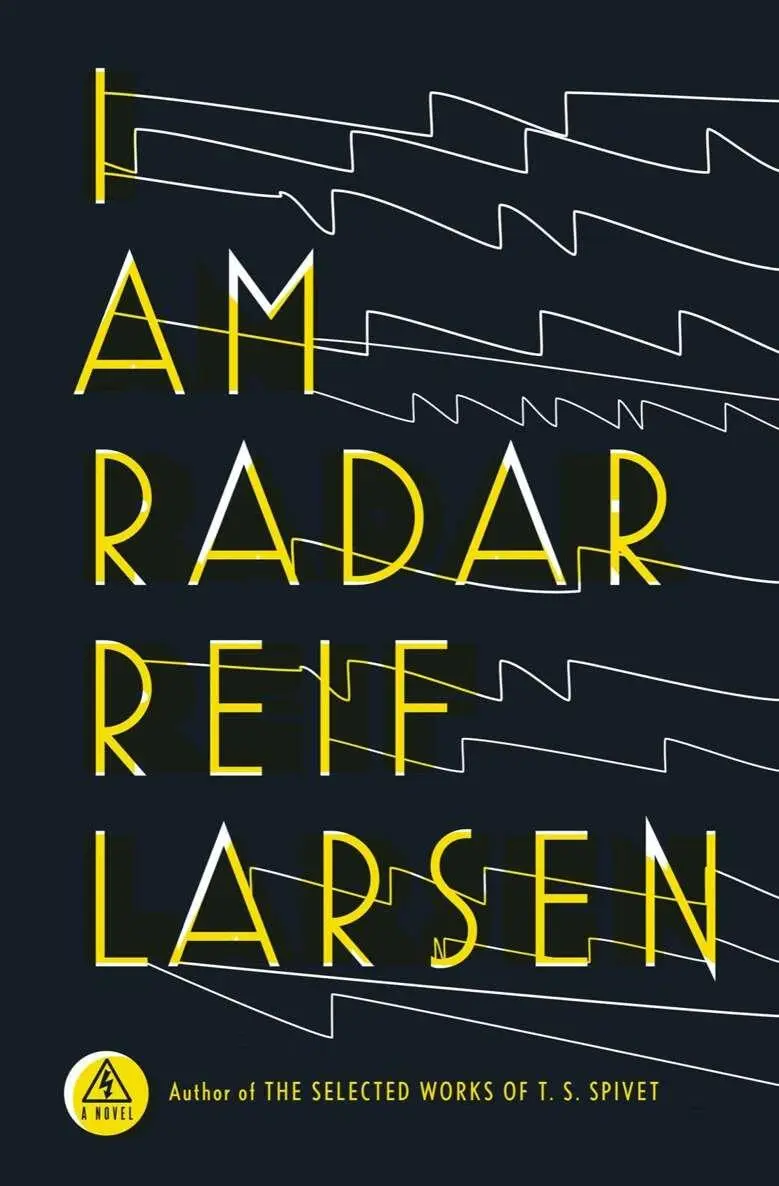
- Название:I Am Radar
- Автор:
- Издательство:Penguin Press
- Жанр:
- Год:2015
- ISBN:нет данных
- Рейтинг книги:3 / 5. Голосов: 1
-
Избранное:Добавить в избранное
- Отзывы:
-
Ваша оценка:
I Am Radar: краткое содержание, описание и аннотация
Предлагаем к чтению аннотацию, описание, краткое содержание или предисловие (зависит от того, что написал сам автор книги «I Am Radar»). Если вы не нашли необходимую информацию о книге — напишите в комментариях, мы постараемся отыскать её.
I Am Radar Deep in arctic Norway, a cadre of Norwegian schoolteachers is imprisoned during the Second World War. Founding a radical secret society that will hover on the margins of recorded history for decades to come, these schoolteachers steal radioactive material from a hidden Nazi nuclear reactor and use it to stage a surreal art performance on a frozen coastline. This strange society appears again in the aftermath of Cambodia’s murderous Khmer Rouge regime, when another secret performance takes place but goes horrifically wrong. Echoes of this disaster can be heard during the Yugoslavian wars, when an avant-garde puppeteer finds himself trapped inside Belgrade while his brother serves in the genocidal militia that attacks Srebrenica. Decades later, in the war-torn Congo, a disfigured literature professor assembles the largest library in the world even as the country around him collapses. All of these stories are linked by Radar — now a gifted radio operator living in the New Jersey Meadowlands — who struggles with love, a set of hapless parents,and a terrible medical affliction that he has only just begun to comprehend.
I Am Radar — читать онлайн бесплатно полную книгу (весь текст) целиком
Ниже представлен текст книги, разбитый по страницам. Система сохранения места последней прочитанной страницы, позволяет с удобством читать онлайн бесплатно книгу «I Am Radar», без необходимости каждый раз заново искать на чём Вы остановились. Поставьте закладку, и сможете в любой момент перейти на страницу, на которой закончили чтение.
Интервал:
Закладка:
“I’m thankful for your efforts,” Danilo said to his eldest son. “I really am. But I must ask you to remove those wires. You’re killing my crops.”
After this, Miroslav swore off farming for good. He retreated to the back of the barn, where he began building a life-size elephant puppet that could be operated by its rider. He planned to walk it across the Turkish Bridge and then push it into the river, in an homage to Tuffi the elephant’s famous fall from the Schwebebahn in Wuppertal. It would be his swan song to Višegrad.
“Why an elephant?” Stoja asked, surveying the huge metal skeleton taking shape in the barn.
“Elephants never forget,” said Miroslav. “They’ve witnessed all of history. Only they can read the river.”

Fig. 2.5. Tuffi plunging from the Schwebebahn into the River Wupper (1950)
From Røed-Larsen, P., Spesielle Partikler, p. 962
“I see,” said Stoja, though she did not. At St. Stephen’s, which had become her regular place of refuge, she began lighting a third candle alongside those for her two sons, though even she was not entirely sure if this was for the elephant, the river, or the country.
When Miša had finally recovered, he joined Danilo in the fields again, digging out the ditches, coaxing what was left of the water to run across their land. In the end, it was all for naught: one day the stream finally dried up for good. The grass shriveled and died. Three of their cattle collapsed from dehydration. They found one of them dead in the morning, its hindquarters devoured by a wolf.
3. FOR EVERY ACTION THERE IS AN EQUAL AND OPPOSITE REACTION.
FK Drina HE’s ultrafans were known as the  Mosta, the “Guardians of the Bridge.” They had recently aligned themselves with Red Star’s Delije ultras, run by Arkan, the notorious criminal turned paramilitary leader. During the last game of the season, a crowd of Mosta beat a Muslim man unconscious during a match against Sloboda Tuzla. The man did not die, but he would suffer from chronic cluster migraines and never see out of his left eye again. There was no police investigation. Miša was present for the match, but he claimed he was too busy watching the game and did not even know about the beating until much later. He was much more concerned with rumors that Stojanovic had already signed a contract that would send him to Italy.
“He’s a traitor!” he wailed. “Doesn’t he know he’s one of us?”
4. A BODY’S MASS MULTIPLIED BY THE SQUARE OF THE SPEED OF LIGHT EQUALS THE POTENTIAL ENERGY OF THAT MASS.
In the back of the barn, the elephant continued to grow.
5. IF TWO SYSTEMS ARE IN THERMAL EQUILIBRIUM WITH A THIRD SYSTEM, THEY MUST BE IN THERMAL EQUILIBRIUM WITH EACH OTHER.
Most people heard the announcement that Slovenia and Croatia had declared independence from Yugoslavia on the radio. The newsman’s disembodied broadcast, quivering the little porous speaker on the mantel, informed them that Tito’s kingdom was finally unraveling. The radio gave the news a certain air of inevitability: it felt at once like a tale of fiction and an eternal truth. People could not believe what they were hearing, and yet they also could not remember a time when it had not been so.
In the days that followed, as Slovenia successfully defended itself against the JNA during the Ten-Day War, as tensions rose all across Croatia and tanks were moved into position throughout Dalmatia, people milled around nervously, lingering in bakeries, staring at the bends of the Drina, holding their lovers a second too long. Everyone wondered if Bosnia would get caught in the trouble brewing to the west.
Despite a three-month moratorium on independence, in August war broke out in Krajina between Croats and ethnic Serbs. Each claimed an ancient right to their homeland; each claimed the other had taken what did not belong to him. After the first weeks of fighting — in which almost the entire population of Višegrad did not move from in front of their radios, in which everyone was hungry for any new scrap of detail concerning the distant violence, in which the term “ethnic cleansing” was first used in all seriousness — people began to slowly accept that this would now be a part of their reality. Through the daily rhythm of their lives, they separated themselves from the fighting, hoping it would never come their way. Violence could happen only far away and over the mountains, in the valleys where evil like this had always lurked.
“It’s a Croatian problem,” one person would say, and wave his hand like a conductor. And his partner would clap, once, twice, as if to wake someone up from a light slumber, and respond: “Yes. Life never changes.” But even as they said this, they knew that life always changes, that life had already changed and would never be the same again.
It was also true that certain Muslim residents of Višegrad had already received veiled threats. A crude skull was spray-painted on the Selimovic house in Drinsko. And Alija Kujovic found a decapitated bat on his doorstep. Perhaps the bat had decapitated itself through a failure of echolocation. But it must also be said that these events were few and far between. The people of Višegrad had lived with their neighbors for a long time, and despite the vague rumblings of nationalism, there was still a pervasive belief — based on the slow thrum of proximity, based on the cushion of a handshake repeated ten thousand times — that everyone in their heart was decent and that a man could not turn on another man he had known his entire life.
6. THE FORCE OF FRICTION IS INDEPENDENT OF THE APPARENT AREA OF CONTACT.
That whole summer, the brothers did not speak of what had happened on the riverbank.
For Miša, such silence was an attempt to erase the event from his memory. If it remained unspoken, then maybe it had never happened at all. He played football and worked in the fields and fell in love with a girl from town who kissed him on a rock by the riverside and then broke his heart when a week later she was seen with an older boy on the same rock. But when the darkness came, he could not forget: he would dream of the gypsy’s body drifting in the current, the slight, tetrahedral mounds of the shoulder blades peeking above the water, the man’s long hair floating on the surface of the river like a black jellyfish. In the dream, he would run out into the river and lift the man’s head from the water and find that he was not a gypsy at all — he was Miroslav. He would cradle his brother’s head and then look back to the shore and the gypsy would be standing there naked, laughing at him.
For Miroslav, the memory of the killing was more complicated. He knew that he would never be able to forgive the world for directing such violence at his kin, that there was no way to return to the neutral ignorance that had enshrouded his life thus far. On the one hand, the echoes of the attack brought with them a great sense of shame and guilt; he could not rid himself of the feeling that his actions were somehow to blame for the natural and political disasters that were slowly enveloping their world. He was not superstitious like his poor baka back in Trebinje, who crossed and recrossed every threshold twice so as to confuse the trailing spirits — he did not actually believe in curses, and yet he was fairly certain that it was he who was directly responsible for the evil that everyone felt blowing in from across the river. He could not explain this knowledge in any rational terms, though he felt it in his heart, and this angered him. Why must he be the one who was held karmically accountable? Weren’t there much worse people in the world than him?
Читать дальшеИнтервал:
Закладка:
Похожие книги на «I Am Radar»
Представляем Вашему вниманию похожие книги на «I Am Radar» списком для выбора. Мы отобрали схожую по названию и смыслу литературу в надежде предоставить читателям больше вариантов отыскать новые, интересные, ещё непрочитанные произведения.










Обсуждение, отзывы о книге «I Am Radar» и просто собственные мнения читателей. Оставьте ваши комментарии, напишите, что Вы думаете о произведении, его смысле или главных героях. Укажите что конкретно понравилось, а что нет, и почему Вы так считаете.