Reif Larsen - I Am Radar
Здесь есть возможность читать онлайн «Reif Larsen - I Am Radar» весь текст электронной книги совершенно бесплатно (целиком полную версию без сокращений). В некоторых случаях можно слушать аудио, скачать через торрент в формате fb2 и присутствует краткое содержание. Год выпуска: 2015, Издательство: Penguin Press, Жанр: Современная проза, на английском языке. Описание произведения, (предисловие) а так же отзывы посетителей доступны на портале библиотеки ЛибКат.
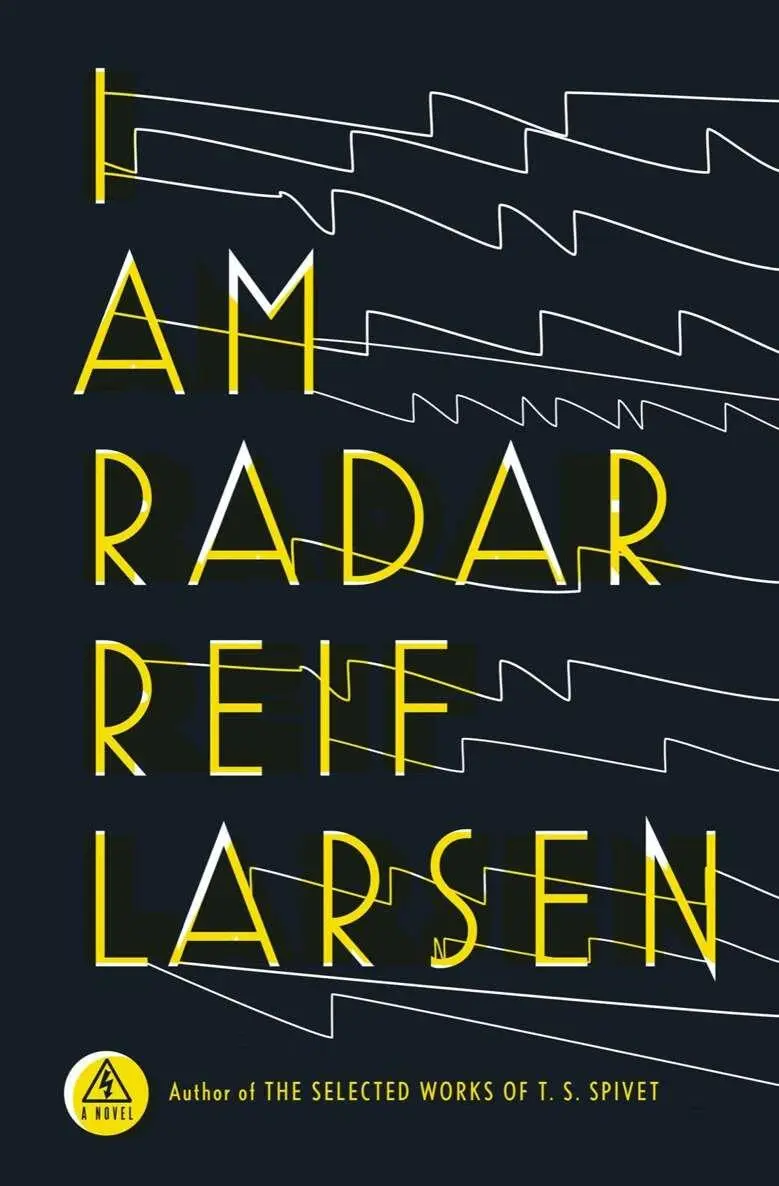
- Название:I Am Radar
- Автор:
- Издательство:Penguin Press
- Жанр:
- Год:2015
- ISBN:нет данных
- Рейтинг книги:3 / 5. Голосов: 1
-
Избранное:Добавить в избранное
- Отзывы:
-
Ваша оценка:
I Am Radar: краткое содержание, описание и аннотация
Предлагаем к чтению аннотацию, описание, краткое содержание или предисловие (зависит от того, что написал сам автор книги «I Am Radar»). Если вы не нашли необходимую информацию о книге — напишите в комментариях, мы постараемся отыскать её.
I Am Radar Deep in arctic Norway, a cadre of Norwegian schoolteachers is imprisoned during the Second World War. Founding a radical secret society that will hover on the margins of recorded history for decades to come, these schoolteachers steal radioactive material from a hidden Nazi nuclear reactor and use it to stage a surreal art performance on a frozen coastline. This strange society appears again in the aftermath of Cambodia’s murderous Khmer Rouge regime, when another secret performance takes place but goes horrifically wrong. Echoes of this disaster can be heard during the Yugoslavian wars, when an avant-garde puppeteer finds himself trapped inside Belgrade while his brother serves in the genocidal militia that attacks Srebrenica. Decades later, in the war-torn Congo, a disfigured literature professor assembles the largest library in the world even as the country around him collapses. All of these stories are linked by Radar — now a gifted radio operator living in the New Jersey Meadowlands — who struggles with love, a set of hapless parents,and a terrible medical affliction that he has only just begun to comprehend.
I Am Radar — читать онлайн бесплатно полную книгу (весь текст) целиком
Ниже представлен текст книги, разбитый по страницам. Система сохранения места последней прочитанной страницы, позволяет с удобством читать онлайн бесплатно книгу «I Am Radar», без необходимости каждый раз заново искать на чём Вы остановились. Поставьте закладку, и сможете в любой момент перейти на страницу, на которой закончили чтение.
Интервал:
Закладка:
“Miša crushed the rabbits. We couldn’t eat them.”
“Two brothers in the same family, and each grows up to be the head of a different religion. It just goes to show you that nothing is decided when you’re born. Everything is still possible. If you decide to change your life, you can.”
“Or maybe everything is decided already. How do you know that they weren’t always going to end up like that?”
Danilo thought about this. “That could be. Who’s to say how God works his plans?”
“Is that a true story?”
“Of course it’s true. Why would I make something like that up?”
“It sounds like bullshit.”
“I told you to watch your mouth.”
“Sorry, but it does.”
“You think I’m lying to you? Then what about the bridge? You think the bridge is a lie?”
“What bridge?”
“The Turkish Bridge! This is Mehmed-paša Sokolovic’s bridge! He never forgot the dream of his mother saying she must see him again, nor did he forget the image of the women wailing on the banks of the river as he was being taken away. This image haunted him for the rest of his days, and so when he became grand vizier, he ordered a bridge to connect the two sides of the Drina. The sad part of the story is that when he came back to see his bridge completed, his mother was already dead. It was too late. He, too, wept on the banks of the river, and dedicated the bridge to her memory. And it was the story of this bridge that won Ivo Andric his Nobel Prize. Stories are powerful things. But you knew this. You read his book in school.”
Miroslav shook his head. “I pretended to read it. It was too boring to read. All I remember is about that black Arab who lived inside the bridge.”
“What? You didn’t read it? But that book’s our history! Andric is our most famous writer! How could you not read it?”
“How do we know Andric wasn’t also full of bullshit?”
“Miroslav! I won’t say it again.”
“I’m just saying. That was a novel. Everyone acts like this was true, but no one knows what was really true.”
“How can you say this? You can see our history with your very own eyes. You can walk to the kapija of the bridge and read the inscription in Turkish from the sixteenth century. You can look out at the river and see. A river cannot forget. It remembers every person who has ever put their foot in it. It’s like a book of all time.”
“That’s not true.”
“It is true,” said Danilo. “And this hammam — the one we’re in right now — this was also built by Mehmed-paša. We’re sitting in history. We’re sitting in the middle of the story. You can feel the water on your skin. So don’t tell me this isn’t true when it clearly is.”
They sat. The waters steamed.
“It’s a good story, Tata,” said Miroslav finally.
“I’m not telling you any more stories,” said Danilo. “You can find your own stories.”
Miroslav closed his eyes and thought of the Turkish Bridge, where he had learned to fish with wire and string. He wondered if a river could actually have a memory, then he held his breath and submerged himself in the scalding waters. For the first time in his life, he felt mind and body separating. He had found the secret. He floated above himself, among the clouds of steam, watching his body sink down and down, further and further, three thousand meters into the center of the earth, into a small, hot place from which all things would eventually arise again.
• • •
AFTER THE VISIT to the hammam, Miroslav stopped running completely. He hung up his pale blue trainers and did not touch them again. He no longer needed them.
“What did you say to him?” asked Stoja.
“Nothing, nothing,” said Danilo. “Children just change, that’s all.”
“He needs to be with people his own age. He needs a girlfriend.”
“Give him time. Boys will be boys.”
But Miroslav did not find a girlfriend, nor anyone, for that matter. He became obsessed with building his robots. Soon the house was overrun with little four-wheeled electrical creations. The robots would wheel and bump into walls and fall down the stairs, and sometimes they would make strange noises in the night. He worked three jobs in town just so he would have enough money for his obscure electrical parts, which he ordered from Germany and sometimes Japan, because the Japanese loved robots more than anyone else in the world. He would collect these boxes, with their strange lettering, at the post office in Višegrad, and the postmaster would make the same joke every time about him being an undercover terrorist.
One day, after nearly breaking his neck tripping down the stairs, Danilo stormed into Miroslav’s room, the offending robot in hand. “Miroslav! What’s all of this nonsense?”
“They’re for my show,” said Miroslav.
“Things can’t go on like this!” said Danilo. Then: “What show?”
“You’ll see.”
His “show” turned out to be a dark, post-apocalyptic production of The Nutcracker in the Dom Kulture that utilized six ambimobile rat robots and twenty-four ballerina puppets manipulated by a modified Jacquard loom. He performed the entire show by himself, his legs pumping the clattering loom backstage as he manically worked a board of remote controls. It was a veritable feat of athletic engineering, and he broke a pinkie on opening night. In spite of the injury and in spite of the Rat King badly malfunctioning and falling off the proscenium into an old woman’s lap, the play awed the small audience, for it offered that rare glimpse into a world blessed with only the echoes of humans. After a glowing, if befuddled, write-up in the local newspaper, the story of Miroslav and his performing robots was picked up by the national news station RTV Sarajevo, which referred to him as “Robot Djecak” and “Genij Višegrada.”2
These nicknames would be lovingly recounted and modified at the Danilovic dinner table. Even if they did not entirely understand it, Stoja and Danilo could not help but have a certain pride in their son’s accomplishment. Maybe he had found his path, however unorthodox. Girls, friends, happiness would all soon follow.
Due to popular demand, Nutcracker Automata came back and ran for a week of sold-out shows. It was the kind of production that would still be recalled by audience members many years later. At the final curtain call, Miša was the one to hand his brother a bouquet of roses, and Miroslav responded by having one of the ballerina puppets walk up and stroke his leg.
It was a leg worth stroking. Miša had become a bruising center-back for the junior Drina HE football team. The beba džin was feared on football pitches throughout the land. Miša was almost twice as big as anyone on the field yet nimble enough to keep up with the skimpy strikers who tried to negotiate his turf, but more often than not would end up sniffling on the ground.
He was a great fan of Drina HE’s senior side, Višegrad’s decidedly mediocre semi-professional club. Most of his friends followed the more glamorous Red Star Belgrade, but he steadfastly supported the local team, even if they had finished middle of the table for the past four years. His favorite striker was Vladimir Stojanovic, an absurdly talented button of a man who would play well only if he was allowed three and a half cigarettes at halftime — no more, no less. During the war, he would go on to have a successful career for Cosenza, in Italy’s Serie B, but for the time being he was happy to wow the home crowd with his God-gifted skill and his occasional histrionics. Stojanovic always went to his left foot — all the defenders knew this, and still they could not defend him.
“Always to the left!” Miša would shout as he shot penalties at Danilo, standing in the cockeyed goal that Miša had sloppily painted across the barn. And this meant: I cannot be stopped no matter what you do. Miša was not naturally left-footed, but in honor of his hero he trained himself to use only his weaker foot. Eventually his weaker foot became his stronger foot.
Читать дальшеИнтервал:
Закладка:
Похожие книги на «I Am Radar»
Представляем Вашему вниманию похожие книги на «I Am Radar» списком для выбора. Мы отобрали схожую по названию и смыслу литературу в надежде предоставить читателям больше вариантов отыскать новые, интересные, ещё непрочитанные произведения.








Обсуждение, отзывы о книге «I Am Radar» и просто собственные мнения читателей. Оставьте ваши комментарии, напишите, что Вы думаете о произведении, его смысле или главных героях. Укажите что конкретно понравилось, а что нет, и почему Вы так считаете.