Reif Larsen - I Am Radar
Здесь есть возможность читать онлайн «Reif Larsen - I Am Radar» весь текст электронной книги совершенно бесплатно (целиком полную версию без сокращений). В некоторых случаях можно слушать аудио, скачать через торрент в формате fb2 и присутствует краткое содержание. Год выпуска: 2015, Издательство: Penguin Press, Жанр: Современная проза, на английском языке. Описание произведения, (предисловие) а так же отзывы посетителей доступны на портале библиотеки ЛибКат.
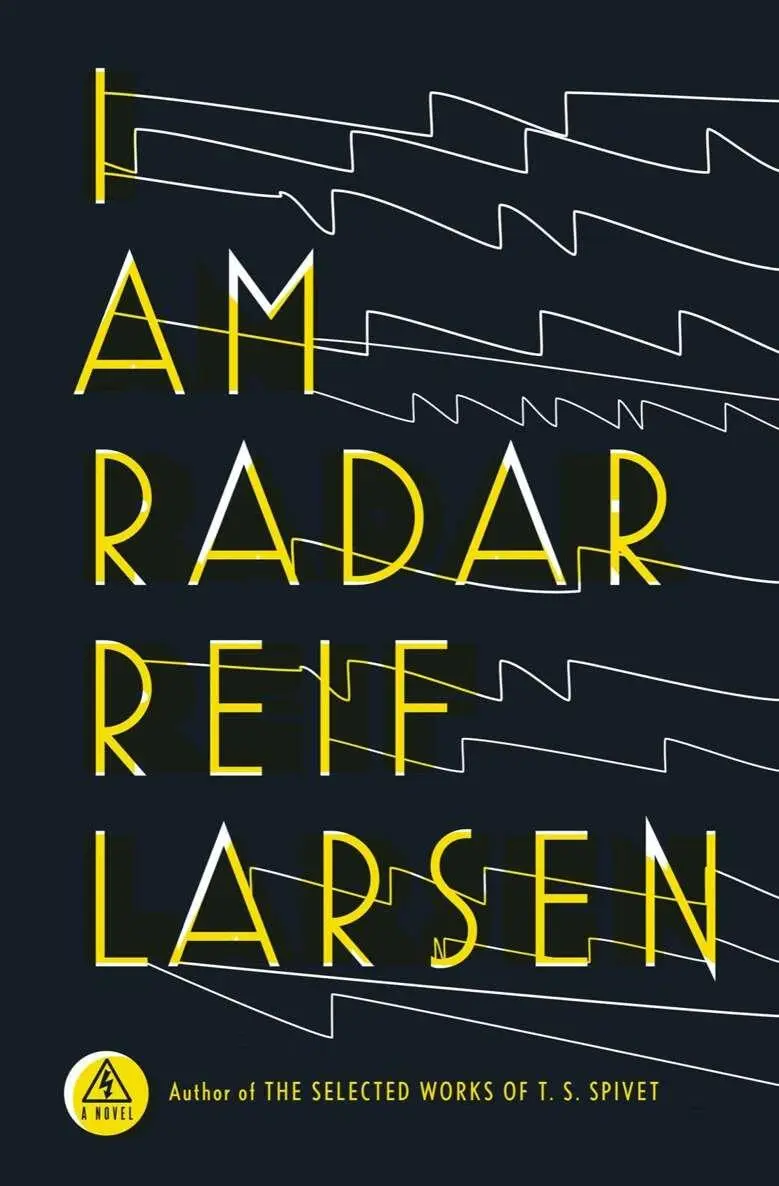
- Название:I Am Radar
- Автор:
- Издательство:Penguin Press
- Жанр:
- Год:2015
- ISBN:нет данных
- Рейтинг книги:3 / 5. Голосов: 1
-
Избранное:Добавить в избранное
- Отзывы:
-
Ваша оценка:
I Am Radar: краткое содержание, описание и аннотация
Предлагаем к чтению аннотацию, описание, краткое содержание или предисловие (зависит от того, что написал сам автор книги «I Am Radar»). Если вы не нашли необходимую информацию о книге — напишите в комментариях, мы постараемся отыскать её.
I Am Radar Deep in arctic Norway, a cadre of Norwegian schoolteachers is imprisoned during the Second World War. Founding a radical secret society that will hover on the margins of recorded history for decades to come, these schoolteachers steal radioactive material from a hidden Nazi nuclear reactor and use it to stage a surreal art performance on a frozen coastline. This strange society appears again in the aftermath of Cambodia’s murderous Khmer Rouge regime, when another secret performance takes place but goes horrifically wrong. Echoes of this disaster can be heard during the Yugoslavian wars, when an avant-garde puppeteer finds himself trapped inside Belgrade while his brother serves in the genocidal militia that attacks Srebrenica. Decades later, in the war-torn Congo, a disfigured literature professor assembles the largest library in the world even as the country around him collapses. All of these stories are linked by Radar — now a gifted radio operator living in the New Jersey Meadowlands — who struggles with love, a set of hapless parents,and a terrible medical affliction that he has only just begun to comprehend.
I Am Radar — читать онлайн бесплатно полную книгу (весь текст) целиком
Ниже представлен текст книги, разбитый по страницам. Система сохранения места последней прочитанной страницы, позволяет с удобством читать онлайн бесплатно книгу «I Am Radar», без необходимости каждый раз заново искать на чём Вы остановились. Поставьте закладку, и сможете в любой момент перейти на страницу, на которой закончили чтение.
Интервал:
Закладка:
“Where did you run today?” Danilo finally asked.
“Down to Rudo.” Only Miroslav’s face floated above the surface, as if the rest of him no longer existed. His voice echoed off the ceiling.
“Rudo?” Danilo raised his eyebrows. “That’s a long way.”
“Not so long.”
“Why do you run so much?”
“I don’t know,” he said. “It makes me feel good.”
They were quiet, and then Danilo said, “When the Turks still ruled this area, that place was called Sokol.”
Miroslav made a slight groan that curled and ended in a gurgle of water. His father liked telling stories about old things, things that happened so long ago they did not matter anymore. How often had he heard the story about the first Danilo Danilovic, who had defeated the Turks and built a church on an island? One hundred times? Two hundred times? It was enough to drive a man insane.
“Did you know that once upon a time there were two brothers who lived in Sokol?” said Danilo.
“Tata!” said Miroslav. “Please. I really don’t want to hear about them. Let’s just enjoy ourselves.”
“I am enjoying myself,” said Danilo. “The brothers’ names were Makarije and Bajo.”
“ Please, Tata. No one cares about them. They’re dead. They died a long time ago. Let’s talk about something real.”
“What is real? Soon we’ll all be dead. Don’t you want to be remembered?”
“I’m sure they’ll say the same thing about us—‘Why are you telling me this stupid story about Miroslav Danilovic? What does this have to do with me?’”
“Just listen to the story. Don’t be so critical all the time. It isn’t good for you.”
Miroslav ducked his head into the water and spat a thin stream across the pool. “Okay, go ahead, Tata. I’m listening. Tell me about Makarije and Milo.”
“ Bajo . Makarije and Bajo ,” said Danilo. “They came from a poor family. A family with nothing. And so their father, who was a true believer in the mercy of God, sent them away to study at the Mileševa Monastery. This monastery was famous — it was a great honor for them to be admitted there, and the father was rightfully proud. Maybe one day his sons would become priests.”
“That is usually why you go to live in a monastery.”
“Usually. But these were not usual times. While they were there, the Turks came on one of their devsirmeler . You know what a devsirme is?”
“Yes, Tata, I know.”
“You and Miša are lucky they don’t have these anymore. Imagine — just when you were getting comfortable at school, in come the Turks on a devsirme and they snatch you boys up like a pack of animals. They do this to all the Christian boys they can find — they throw them into the back of a prison cart and drag them across the country. And behind the cart, a long line of weeping mothers begins to form. The women beg for the return of their sons. They offer anything — money, their homes, even their own bodies. And the Turkish guards keep them back with whips. Whips! Can you believe it? The women are bleeding from the whips, but still they follow. And when the cart is full, they return to Istanbul and they force the boys into Islam. They force them to become Islamic priests or warriors. Imagine this! How would you like to be kidnapped and forced to believe in something you don’t believe?”
“It doesn’t sound so bad. It’s a free ticket out of here. And I hear Istanbul was pretty nice back then.”
Danilo flicked some water at his son. “Ah! You have no idea. You’re too spoiled to even understand what it’d be like. A belief in God is the closest thing to your heart. No one can tell you what to believe. That is the one truth in life. But the devsirme was how the Turks kept these lands under their control. They were very smart. They kept us in fear by taking our boys, the same boys who might grow up to cause them trouble. Fear is the most powerful weapon, more powerful than any weapon you can hold in your hands.”
He paused. They listened to the water churtling down the chute into the pool.
“So here come the Turks, into the Mileševa Monastery, and they tell the two boys: ‘You must come with us.’ And you know what Bajo, the eldest, says? He says, ‘I’ll go. Take only me. Leave my brother.’”
“No way I’d do that. I’d be like, ‘Take him — look how big that guy is. Leave me; I’d be a shitty warrior.’”
“Watch your language.”
“That’s what I would say.”
“No, you wouldn’t. You’d do the same thing as Bajo.”
“How do you know?”
“Miroslav, just let me tell the story. This story has a certain rhythm to it and you’re ruining it.”
“I’m just saying that you don’t know what I’d do.”
“So the Turks, they actually listen to Bajo. They take him away to Istanbul and leave Makarije behind. And on their journey back, they of course must pass through Višegrad. But this was before the bridge was built. They have to ferry across the Drina. And the mothers who are following them, they cannot go any farther. They’re left weeping on the shore, watching their sons disappear across the river, disappear forever into Islam. And Bajo remembers this image of his mother weeping with the others.”
“The mothers could swim.”
“That isn’t the point. The Drina’s too dangerous to swim there. The current’s too strong.”
“Not so dangerous for a mother who’s crazy with grief.”
“The mothers don’t swim, okay? They’re stuck on the shore. Let me tell the story. You can tell the next story, but I’m telling this one now, and the teller gets to make the rules. That’s how it works.” Danilo paused, scratching at his shoulder as if trying to remember what happens next. “So Bajo arrives in Istanbul and begins to study the Ottoman system. At first he is confused, hopeless. He contemplates stealing a guard’s knife and plunging it into his own heart. But one night he’s visited by his mother in a dream, and she says that he must survive so that she can one day see him again. And when he wakes from this dream, he makes a decision: not only will he cooperate with his captors — he will defeat them at their own system. And this is what he does. Little by little, Bajo learns their ways. He discovers he has a natural gift for learning their Turkish methods of law. In fact, he’s so good that they quickly recognize his talents and they begin to promote him through the ranks. He gains influence with the inner court and develops a reputation for fairness in all matters. As the years go by, he continues to rise, leaving his rivals in the dust. Soon he becomes a governor and then eventually a third vizier and then a second vizier and then finally, after many years, he becomes the grand vizier. He’s now the chief adviser to the sultan himself, but everyone knows the grand vizier makes everything happen. And by this time he has a new name: Mehmed-paša Sokolovic. Once a poor boy from Sokol, an Orthodox Serb, and now responsible for the whole Ottoman Empire. Rich and powerful, able to affect the course of time itself!”
“So what?” said Miroslav.
“ So what? Are you listening to anything I’ve just said? He decided to become someone who no one thought he could be. This, my son, is incredible.”
“Not so incredible for the other brother.”
“What do you mean?”
“He was left in the monastery. He didn’t become the grand vizier. His brother was trying to help him, but he ended up screwing him over.”
“Ah! Well, this is where the story gets interesting. Many considered Makarije to maybe not be so wise as his brother Bajo. He was even thought by some to be a little dim-witted. Maybe he was a bit overweight. But he did not do so bad for himself, either. He stayed in the monastery and studied very hard, and slowly he rose up through the levels of the church, one by one. Nothing was given to him by favor, nothing came easily. He earned everything through his patience, through his loyalty, through his utter devotion to God. And at the end of his life, he was ordained as the Serbian patriarch. Saint Makarije of Pec. This is the same Makarije, the same poor boy from Sokol, brother of Bajo. We celebrate his feast on the twelfth of September. Remember, when we roasted Dragan’s pig? And Miša caught the rabbits?”
Читать дальшеИнтервал:
Закладка:
Похожие книги на «I Am Radar»
Представляем Вашему вниманию похожие книги на «I Am Radar» списком для выбора. Мы отобрали схожую по названию и смыслу литературу в надежде предоставить читателям больше вариантов отыскать новые, интересные, ещё непрочитанные произведения.











Обсуждение, отзывы о книге «I Am Radar» и просто собственные мнения читателей. Оставьте ваши комментарии, напишите, что Вы думаете о произведении, его смысле или главных героях. Укажите что конкретно понравилось, а что нет, и почему Вы так считаете.