Reif Larsen - I Am Radar
Здесь есть возможность читать онлайн «Reif Larsen - I Am Radar» весь текст электронной книги совершенно бесплатно (целиком полную версию без сокращений). В некоторых случаях можно слушать аудио, скачать через торрент в формате fb2 и присутствует краткое содержание. Год выпуска: 2015, Издательство: Penguin Press, Жанр: Современная проза, на английском языке. Описание произведения, (предисловие) а так же отзывы посетителей доступны на портале библиотеки ЛибКат.
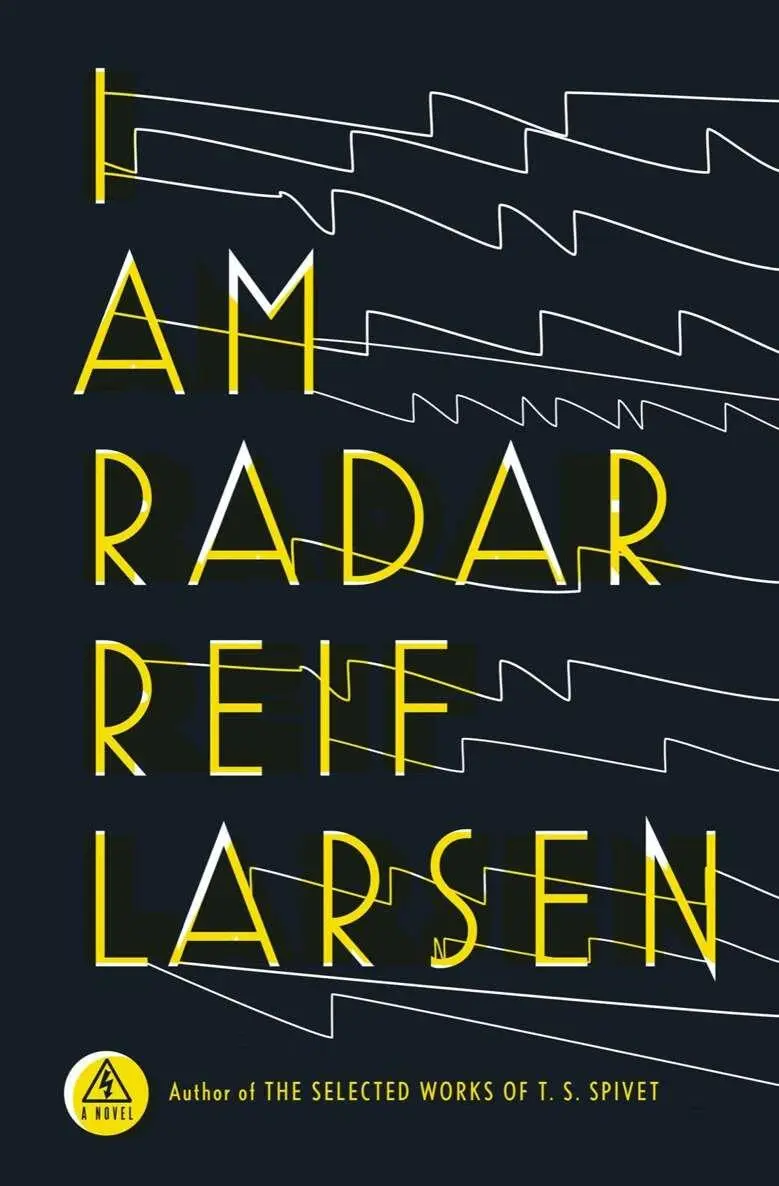
- Название:I Am Radar
- Автор:
- Издательство:Penguin Press
- Жанр:
- Год:2015
- ISBN:нет данных
- Рейтинг книги:3 / 5. Голосов: 1
-
Избранное:Добавить в избранное
- Отзывы:
-
Ваша оценка:
I Am Radar: краткое содержание, описание и аннотация
Предлагаем к чтению аннотацию, описание, краткое содержание или предисловие (зависит от того, что написал сам автор книги «I Am Radar»). Если вы не нашли необходимую информацию о книге — напишите в комментариях, мы постараемся отыскать её.
I Am Radar Deep in arctic Norway, a cadre of Norwegian schoolteachers is imprisoned during the Second World War. Founding a radical secret society that will hover on the margins of recorded history for decades to come, these schoolteachers steal radioactive material from a hidden Nazi nuclear reactor and use it to stage a surreal art performance on a frozen coastline. This strange society appears again in the aftermath of Cambodia’s murderous Khmer Rouge regime, when another secret performance takes place but goes horrifically wrong. Echoes of this disaster can be heard during the Yugoslavian wars, when an avant-garde puppeteer finds himself trapped inside Belgrade while his brother serves in the genocidal militia that attacks Srebrenica. Decades later, in the war-torn Congo, a disfigured literature professor assembles the largest library in the world even as the country around him collapses. All of these stories are linked by Radar — now a gifted radio operator living in the New Jersey Meadowlands — who struggles with love, a set of hapless parents,and a terrible medical affliction that he has only just begun to comprehend.
I Am Radar — читать онлайн бесплатно полную книгу (весь текст) целиком
Ниже представлен текст книги, разбитый по страницам. Система сохранения места последней прочитанной страницы, позволяет с удобством читать онлайн бесплатно книгу «I Am Radar», без необходимости каждый раз заново искать на чём Вы остановились. Поставьте закладку, и сможете в любой момент перейти на страницу, на которой закончили чтение.
Интервал:
Закладка:
“Get out of here, shithead!” Miroslav yelled after another entanglement had halted the battle. Miša, banished and inconsolable, would retreat to the safe space of the chicken coop.
A temporary truce was usually called between the brothers each Christmas. On Christmas Eve, it was custom for the eldest son to go with the father into the woods and cut down the badnjak, the oak tree branch that would serve as the Yule log. But Miroslav showed little interest in this tradition, and so it was Miša who eagerly climbed the tree, bow saw in hand, and felled the branch onto the snowy ground. He would wrap the branch in a blanket like a child and show it to his brother upon his return.
“It’s a good one, Miša,” Miroslav would say, knowing how much each and every word meant to his younger brother. “You can name him Otik.”
“Otik?” repeated Miša in wonder.
“If you wish hard enough, he’ll come alive,” said Miroslav.
“Okay,” said Miša, and off he would go to stare at the branch for hours.
Christmas Eve was also the time to bring out the vertep, the traditional puppet theater, which the boys of the town would use to tell the story of the nativity. Children would don paper crowns and fashion wooden swords for themselves, pretending they were the Persian kings on their way to see the Christ child. Predictably, most household vertep performances were rudimentary at best, with a few hand puppets utilized in haphazard fashion. Many kids simply used the occasion as an excuse to go around town and sword-fight with one another.
In contrast to those of his peers, Miroslav’s vertep was a fully automated electromechanical puppet theater with multiple hidden compartments, elaborate lighting and synthesized sound effects, and a loudspeaker from which he could perform the voice of God. His nativity productions soon became legendary in Višegrad, where he would perform several shows to a packed audience in the town square. Miša was his loyal if clumsy stagehand, though this relationship ended one Christmas Eve when Miša tripped and knocked over the entire stage during a matinee.
Afterwards, Danilo found his younger son on the kapija of the Turkish Bridge, tears streaming down his face, staring at those oxen hands.
Danilo sat down beside Miša. He was silent, listening to the quiet hush of the river, and then he said, “Your brother is a Danilovic, but he is not a Danilo Danilovic.”
This might have seemed like an odd thing to say had it not been for the convolutions of their family’s history: Danilo Danilovic’s father had also been named Danilo Danilovic, as had his father, as had his father, as had his father, Rabbi Danilo, who at one time had been one of only two rabbis living in all of Montenegro. This history was the source of much contention in the Danilovic family, particularly for Darinka, Danilo’s now deceased mother, who staunchly denied the presence of Jews anywhere in their lineage.
Rabbi Danilo’s ancestors were Sephardic Jews who had been living in Dubrovnik for more than three hundred years before Austrian annexation in 1814 withdrew the few rights granted by Napoleon to the territory’s Jewish citizenry. A subsequent confrontation with a Habsburg minister led to Rabbi Danilo’s public denouncement, forcing him to flee the city under a cloud of scrutiny. He moved his congregation east, to Perast, on the Bay of Kotor, a calm strip of sea flanked by mountains on all sides, leading some to label it (incorrectly) Europe’s southernmost fjord. In the middle of this bay, there was a small island shaped like a waxing moon. Legend has it that the island was completely man-made, created by superstitious fishermen over many hundreds of years, who had thrown a stone into the water every time they left and returned from their journeys. Those who did not add to the pile did so at their own peril and would die terrible deaths, devoured by sea monsters with poisonous horns, it was said. And so an island took shape, and it was on this island that Rabbi Danilo built a limestone synagogue among the linden trees.

Fig. 2.1. “Karta Oticic´a Abrahama” (1853)
From Mladinov, T. S. (1962), Židovstvo u južnoj Dalmaciji 3: 23
“Only God can reach us here,” Rabbi Danilo famously said after those gathered had consecrated the temple by circumnavigating it seven times and then throwing a stone into the waters just beyond. Thereafter, every Friday evening, they would hire a local fisherman to row the small congregation (only ten of them had followed the rabbi to Montenegro, the very minimum necessary for a minyan ) out to the island, now named Oticica Abrahama, to hold Shabbat. Afterwards, they would throw a stone into the bay, and then the fisherman would row them back to town before sunset, two candled lanterns flickering at their helm.
When the Montenegrin state required all of its citizens to take a surname for the 1855 census — to essentially create a history out of nothing — Rabbi Danilo, after some deliberation, assumed the Russian-style patronymic of Danilo Danilovic.
“Because I am my own father now,” he liked to joke to those assembled on the dock of their little island as they sipped lozovaca on Sunday afternoons.
The rabbi, to no one’s surprise, named his own son Danilo Danilovic. And so a tradition was born: Danilo Danilovic (the second), a clockmaker, also named his son Danilo Danilovic. Danilo Danilovic (the third) was a stiff-headed bastard who fought for the First Serbian Army in the Toplica Uprising of 1917. Following the war, he discarded his grandfather’s Jewish faith as if it were an ill-fitting jacket, moved to Višegrad, and embraced Christian Orthodoxy. But he did fulfill his duty in one respect: he named his only son Danilo Danilovic. Danilo Danilovic (the fourth) had slimmer shoulders than his father and spoke in soft tones, like a man delivering bad news. He married a beauty named Darinka, a devoutly religious woman who would not let Danilo touch her during their long forest walks before they were properly wedded. When Germany invaded Yugoslavia and another war began, Danilo joined the nascent anti-fascist Partisan movement recently formed near Mount Ozren. Darinka became pregnant during one of his visits home, and he instructed her, by letter, on what she must name their child in the event that he did not return from the war.
“And what if it is a girl?” she wrote in reply, though her husband would never receive the letter, for he was killed by a sniper in Operation Rösselsprung, in May of 1944.
Danilo Danilovic (the fifth), born in September during the middle of an Allied air raid, would suffer from a fear of loud noises for the rest of his life but would also be blessed with the knowledge that all things must end. Darinka raised her son by herself; she taught him, above all else, to be thankful for God’s mercy. Her religion had been hardened by her husband’s death, and so in the years after the war, when the church was all but banned by the Communist Party, she nurtured her son’s faith behind closed doors.
“Tito is confused,” she would say to him. “He’ll come to find God soon enough. God is the one thing that cannot be forgotten.” As living proof of this, she proudly wore her husband’s red handkerchief every day. Others assumed that this was to signal her membership in the party, but Darinka knew better — through the presence of a small, nearly invisible cross that she had stitched into one of its corners, the handkerchief represented for her God’s almighty omnipotence, even in the depths of a misguided ideology.
Читать дальшеИнтервал:
Закладка:
Похожие книги на «I Am Radar»
Представляем Вашему вниманию похожие книги на «I Am Radar» списком для выбора. Мы отобрали схожую по названию и смыслу литературу в надежде предоставить читателям больше вариантов отыскать новые, интересные, ещё непрочитанные произведения.











Обсуждение, отзывы о книге «I Am Radar» и просто собственные мнения читателей. Оставьте ваши комментарии, напишите, что Вы думаете о произведении, его смысле или главных героях. Укажите что конкретно понравилось, а что нет, и почему Вы так считаете.