Reif Larsen - I Am Radar
Здесь есть возможность читать онлайн «Reif Larsen - I Am Radar» весь текст электронной книги совершенно бесплатно (целиком полную версию без сокращений). В некоторых случаях можно слушать аудио, скачать через торрент в формате fb2 и присутствует краткое содержание. Год выпуска: 2015, Издательство: Penguin Press, Жанр: Современная проза, на английском языке. Описание произведения, (предисловие) а так же отзывы посетителей доступны на портале библиотеки ЛибКат.
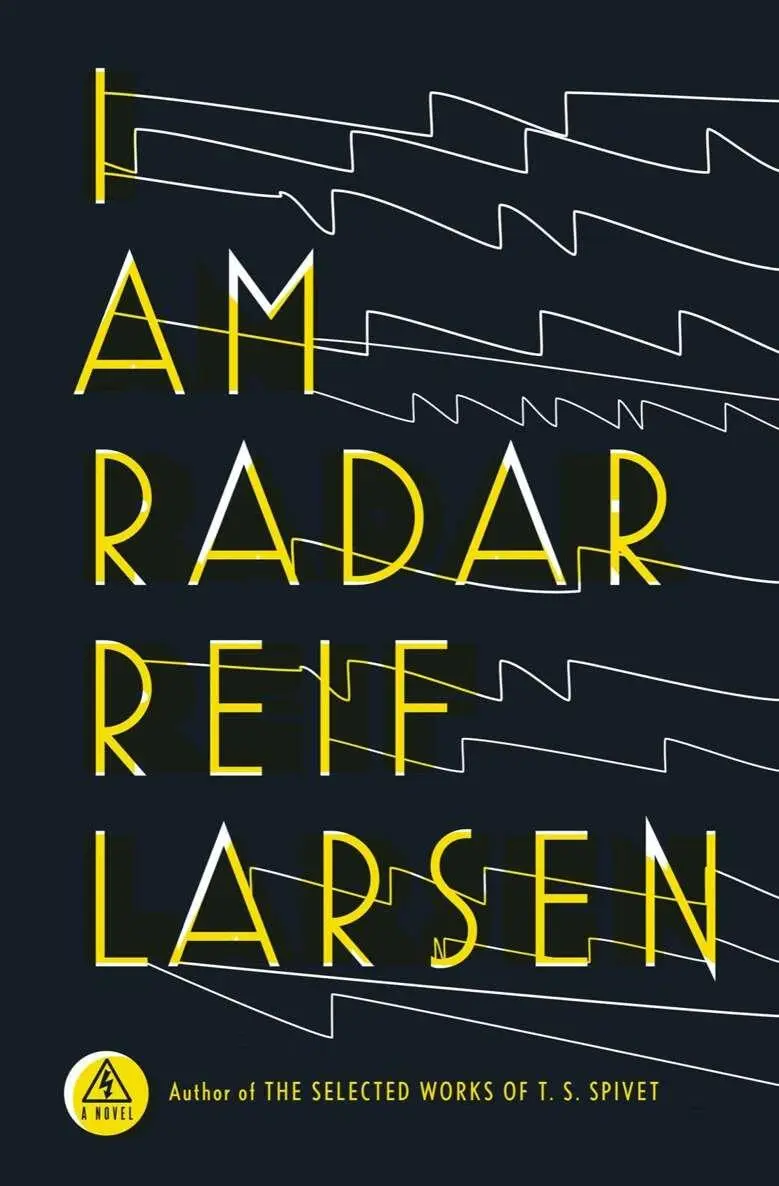
- Название:I Am Radar
- Автор:
- Издательство:Penguin Press
- Жанр:
- Год:2015
- ISBN:нет данных
- Рейтинг книги:3 / 5. Голосов: 1
-
Избранное:Добавить в избранное
- Отзывы:
-
Ваша оценка:
I Am Radar: краткое содержание, описание и аннотация
Предлагаем к чтению аннотацию, описание, краткое содержание или предисловие (зависит от того, что написал сам автор книги «I Am Radar»). Если вы не нашли необходимую информацию о книге — напишите в комментариях, мы постараемся отыскать её.
I Am Radar Deep in arctic Norway, a cadre of Norwegian schoolteachers is imprisoned during the Second World War. Founding a radical secret society that will hover on the margins of recorded history for decades to come, these schoolteachers steal radioactive material from a hidden Nazi nuclear reactor and use it to stage a surreal art performance on a frozen coastline. This strange society appears again in the aftermath of Cambodia’s murderous Khmer Rouge regime, when another secret performance takes place but goes horrifically wrong. Echoes of this disaster can be heard during the Yugoslavian wars, when an avant-garde puppeteer finds himself trapped inside Belgrade while his brother serves in the genocidal militia that attacks Srebrenica. Decades later, in the war-torn Congo, a disfigured literature professor assembles the largest library in the world even as the country around him collapses. All of these stories are linked by Radar — now a gifted radio operator living in the New Jersey Meadowlands — who struggles with love, a set of hapless parents,and a terrible medical affliction that he has only just begun to comprehend.
I Am Radar — читать онлайн бесплатно полную книгу (весь текст) целиком
Ниже представлен текст книги, разбитый по страницам. Система сохранения места последней прочитанной страницы, позволяет с удобством читать онлайн бесплатно книгу «I Am Radar», без необходимости каждый раз заново искать на чём Вы остановились. Поставьте закладку, и сможете в любой момент перейти на страницу, на которой закончили чтение.
Интервал:
Закладка:
The book is not easy to get ahold of . Spesielle Partikler has been out of print for more than ten years and can be found only with some luck, in certain catalogs and rare Norwegian bookshops, where its list price is often well over 3,500 Norwegian kroner. The sole library copy at the Nasjonalbiblioteket, in Oslo, has been listed as “missing and/or damaged” for years, with no apparent attempt to replace and/or repair the inventory.

Fig. 1.5. “Gåselandet/Novaja Zemlya Kart Series #4”
From Røed-Larsen, P., Spesielle Partikler, p. 221
If one is lucky enough to track down a copy, Spesielle Partikler quickly reveals itself to be a most beguiling piece of scholarship. The rise and fall of the Kirkenesferda puppet troupe is documented in detail, obsessively so, with exhaustive accounts of each bevegelse, including intricate analyses of the scientific concepts involved in the performance; charts and maps documenting the means of transport utilized to move equipment to these remote locations; blueprints and an inventory of materials involved in constructing the troupe’s mobile “theater wagon”; and even tables showing the kilowatts used by each electronic puppet-object.
At the end of chapter 18, before turning his attention to the buildup of Kirkenesferda Fire in Sarajevo, Røed-Larsen meticulously describes how the December 1979 Cambodia show — performed for the exiled Khmer Rouge leadership in their mountain hideaway north of Anlong Veng — ended in catastrophe, as nearly all of the troupe’s members were shot and killed in the middle of the night, including its founder, Dr. Leif Christian-Holtsmark. After this tragedy, Røed-Larsen claims, the Bjørnens Hule was abandoned. The camp was destroyed in a fire in 1982, and its Wardenclyffe tower was dismantled and removed “for international safety reasons,” presumably because of its proximity to the Russian frontier, although, according to Røed-Larsen, its circle of concrete feet (with their wires extending deep into the earth) are still visible “somewhere near the Finnish/Norwegian border zone” (295). When Kirkenesferda miraculously resurfaced fifteen years later for Kirkenesferda Fire, it would keep its name but no longer be run out of Norway. Its base of operations was now split between Belgrade and New Jersey.
Mr. Røed-Larsen’s devotion to his subject is quite evident in the long, digressive footnotes and nearly 340 pages of bibliographic end matter, but even a cursory meta-analysis of his vast collection of sources highlights certain inconsistencies and raises serious methodological questions about his scholarship. Many of the documents he cites either do not exist or are so obscure as to essentially be impossible to review. In his harsh review of Spesielle Partikler in the November 1997 issue of Vinduet, Tofte-Jebsen asserts that reading the book and its end matter confirmed for him that “the whole endeavor of documentation is a farce, a lie repeated and repeated into the dark” ( “en løgn gjentas og gjentas i mørket” ). “To write is to lie,” Tofte-Jebsen writes. “There can be no other way.”
Indeed, you would expect such dubious sourcing to cause any serious scholar to dismiss Spesielle Partikler outright, but after spending a fair amount of time immersed in Røed-Larsen’s bibliographic sleight of hand, a strange phenomenon begins to take hold of the reader: one starts to feel as if one has entered into an uncannily familiar reality with a consistent internal logic all its own — a reality that begins to feel as potentially valid as the one that we now inhabit. Since the form of Røed-Larsen’s account is so obsessive, so thorough, so exhaustively cross-referenced as to be almost mind-numbing, the overall effect of the monograph is to make one steadily question one’s fundamental assumptions about what is and what is not possible, what has happened and what may happen yet. This unease is exacerbated by Røed-Larsen’s tendency to use maxims from science in lieu of sectional headings (“3. For Every Action There Is an Equal and Opposite Reaction,” etc.). Pairing observed, functional certainties from the world of physics against the most suspect of claims at first creates a kind of conjectural dissonance, but after a while the reader cannot help but wonder how anyone could be so committed to something if it were not, at least in some sense, true . Devotion, at its core, must be a kind of truth. In this way, Spesielle Partikler can be hailed as an achievement of psychological engineering, if not quite a piece of historiography. It is a proposal of an alternate existence that abuts our own — lurking, never very far away from the room in which we now breathe — and as such, it is also a window, giving us our reflection even as we look through it into an invented world just beyond our reach.
Many years later, in 1998, Charlene Radmanovic would discover a copy of Spesielle Partikler inside an unmarked box on her front stoop. There were no postal markings on the package, nor any return address listed. She never told anyone about the book’s arrival. After spending some time trying to decipher its contents, she would eventually hide the book in the small, crowded space beneath the floor of her bedroom.
PART 2. THE ELEPHANT & THE RIVER
1. VIŠEGRAD, BOSNIA
April 17, 1975

On the day they brought home his younger brother from the hospital, Miroslav Danilovic, barely three years old, swallowed the key to the cabinet that held the family’s rifle. The brass key, itself shaped like a small pistol, hung on a hook in the kitchen that was normally out of young Miroslav’s reach, but while they were busy fussing with the newborn, he slid over the chair, unleashed the key from its resting place, and promptly swallowed it whole.
“I ate it!” he announced, triumphant, as Stoja nursed baby Mihajlo at her breast.
“Ate what?” said Danilo.
Miroslav showed his father the chair and the empty hook.
The Ukrainian doctor in Višegrad urged patience and calm. The key would pass.
The doctor made a small circle with his thumb and finger. “If it’s smaller than this, fine. If it’s larger than this, then we’ll have problems,” he said, which did not really make sense to Stoja, given the irregular shape of the key. Depending on which way you looked at it, the key could be many different keys. There was no telling which one he had swallowed.
Thereafter, Miroslav was forced to squat and shit into a paper bag. Stoja would put Mihajlo down, don her gardening gloves, and search Miroslav’s excrement for the offending object.
“You’re a good mother,” Danilo said to her. “Your patience is a curse.”
“I’m a mother,” she said, hushing the baby to sleep. “My patience is all I have left.”
Weeks went by. The key made no appearance. Miroslav’s appetite had decreased since the incident, but he did not seem particularly ill. Nor did he suffer from the kinds of gastrointestinal pains that the doctor had warned them about. After several months, Stoja threw up her hands.
“The key has moved on,” she concluded. And so must she. Still, in spite of her reasonable, almost stoic nature, in spite of her declaration that the episode was now closed, Stoja could not shake the lingering threat of that gun-shaped key — for the rest of her life, she was awoken by the same nightmare, in which a metallic bug would crawl up her son’s throat, choking him while he slept.
Читать дальшеИнтервал:
Закладка:
Похожие книги на «I Am Radar»
Представляем Вашему вниманию похожие книги на «I Am Radar» списком для выбора. Мы отобрали схожую по названию и смыслу литературу в надежде предоставить читателям больше вариантов отыскать новые, интересные, ещё непрочитанные произведения.










Обсуждение, отзывы о книге «I Am Radar» и просто собственные мнения читателей. Оставьте ваши комментарии, напишите, что Вы думаете о произведении, его смысле или главных героях. Укажите что конкретно понравилось, а что нет, и почему Вы так считаете.