Reif Larsen - I Am Radar
Здесь есть возможность читать онлайн «Reif Larsen - I Am Radar» весь текст электронной книги совершенно бесплатно (целиком полную версию без сокращений). В некоторых случаях можно слушать аудио, скачать через торрент в формате fb2 и присутствует краткое содержание. Год выпуска: 2015, Издательство: Penguin Press, Жанр: Современная проза, на английском языке. Описание произведения, (предисловие) а так же отзывы посетителей доступны на портале библиотеки ЛибКат.
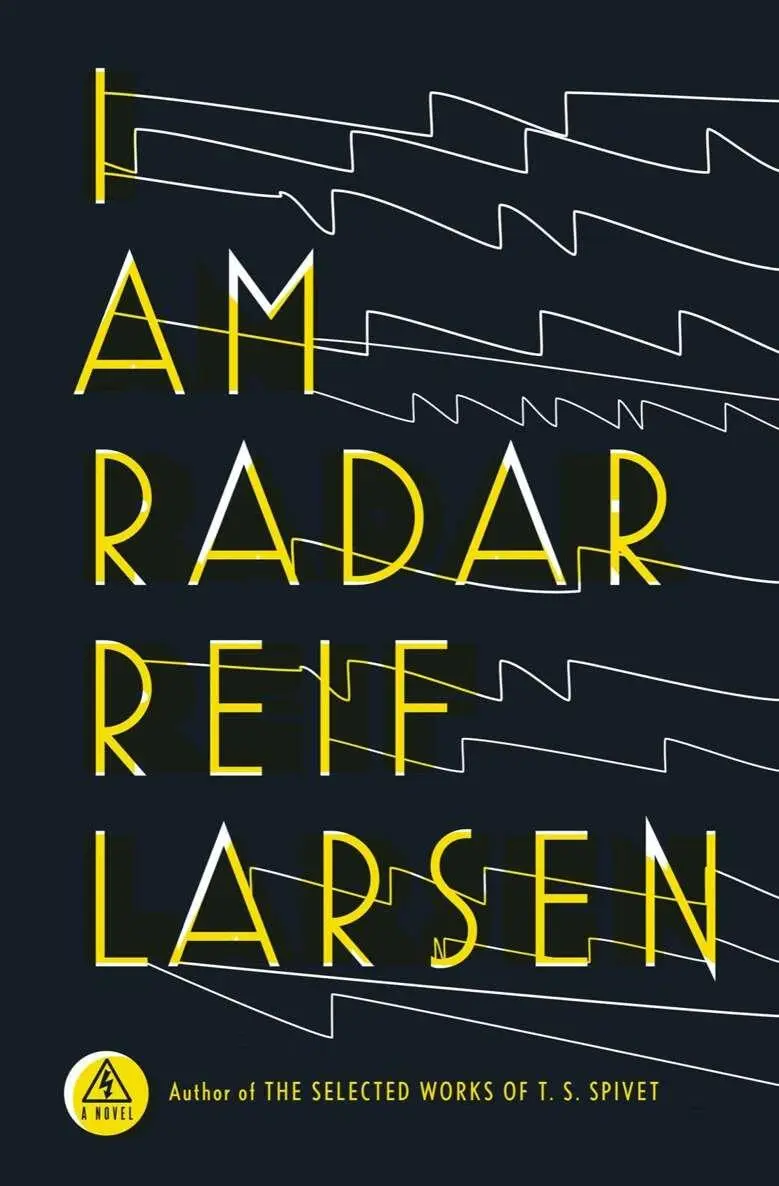
- Название:I Am Radar
- Автор:
- Издательство:Penguin Press
- Жанр:
- Год:2015
- ISBN:нет данных
- Рейтинг книги:3 / 5. Голосов: 1
-
Избранное:Добавить в избранное
- Отзывы:
-
Ваша оценка:
I Am Radar: краткое содержание, описание и аннотация
Предлагаем к чтению аннотацию, описание, краткое содержание или предисловие (зависит от того, что написал сам автор книги «I Am Radar»). Если вы не нашли необходимую информацию о книге — напишите в комментариях, мы постараемся отыскать её.
I Am Radar Deep in arctic Norway, a cadre of Norwegian schoolteachers is imprisoned during the Second World War. Founding a radical secret society that will hover on the margins of recorded history for decades to come, these schoolteachers steal radioactive material from a hidden Nazi nuclear reactor and use it to stage a surreal art performance on a frozen coastline. This strange society appears again in the aftermath of Cambodia’s murderous Khmer Rouge regime, when another secret performance takes place but goes horrifically wrong. Echoes of this disaster can be heard during the Yugoslavian wars, when an avant-garde puppeteer finds himself trapped inside Belgrade while his brother serves in the genocidal militia that attacks Srebrenica. Decades later, in the war-torn Congo, a disfigured literature professor assembles the largest library in the world even as the country around him collapses. All of these stories are linked by Radar — now a gifted radio operator living in the New Jersey Meadowlands — who struggles with love, a set of hapless parents,and a terrible medical affliction that he has only just begun to comprehend.
I Am Radar — читать онлайн бесплатно полную книгу (весь текст) целиком
Ниже представлен текст книги, разбитый по страницам. Система сохранения места последней прочитанной страницы, позволяет с удобством читать онлайн бесплатно книгу «I Am Radar», без необходимости каждый раз заново искать на чём Вы остановились. Поставьте закладку, и сможете в любой момент перейти на страницу, на которой закончили чтение.
Интервал:
Закладка:
Miroslav, a slender boy to begin with, never fully recovered his taste for food. Getting him to eat became a daily negotiation, involving bribery and complex feats of logical reasoning. A bowl of pasulj was traded for an extra half hour of drawing time before bed. In contrast to Miroslav, little Miša — who was not all that little — would eat anything that was put before him, like a goat. This indiscriminateness brought its own problems. Once, when he was four, he ate a whole roast chicken, bones and all. Yet no one was really worried for Miša, even as he cried out in pain on the toilet. Miša was going to survive whatever the world might throw at him. He was born to be a Danilovic, with the same protruding jaw, the same large eyes, the same tuberous forehead as his father. If there was a crowd of boys at school, Danilo could always point to broad-shouldered Miša and say, “There — there is my son.” And nobody in the village could disagree.
Things had always been different with his eldest. Miroslav did not have the Danilovic jaw. His cheeks disappeared into his neck without much enthusiasm. His forehead was long and narrow. While Mihajlo easily became “Miša” to everyone, only Stoja called Miroslav “Miro.” Perhaps the diminutive didn’t stick, due to his air of unsettling politeness — he would formally address the women of the village as “Gospoda,” bowing slightly in the old way, as if greeting them at a ball.
How strange, whispered the people of the village. Did you know that he’s a podmece ?
This was the unfortunate term for the victim of a maternity ward swap, of which there had recently been several high-profile cases. There was no concrete evidence that Miroslav had shared their fate, but if such a thing was said often enough, it no longer mattered what was true and what was not.
Yes. I heard that. I heard his real mother was a Hungarian Jew.
Their scrutiny did not go unnoticed by Miroslav. Even before his younger brother came along, he had always sensed the narrow chasm of incongruity, the painful gap between himself and the idea of who he should be; yet, being so young, he lacked the language to articulate such existential displacement. To calm his unease, he had taken to playing with wires and string, sculpting tiny men of varying shapes and sizes and naming them all Miroslav. Danilo would help him suspend these figures from the ceiling of his bedroom, like a constellation of possible selves.
Though he was three years Miroslav’s junior, Mihajlo Danilo Danilovic — known to everyone simply as Miša or sometimes Miš Miš, or even beba džin, “the baby giant”—was already four centimeters taller than his older brother by the time he turned six. Whereas Miša spent all his time outdoors, shadowing their father in the fields, killing sparrows with his slingshot, playing football with boys twice his age, there were many days when Miroslav would not even leave his bedroom.
“Children are meant to move,” said Stoja, wise as always.
“His mind is moving,” Danilo replied, unconvincingly. Indeed, Miroslav was exceptionally bright — this much had been clear from the beginning, and more than one of his teachers had called him the most naturally gifted child they had ever seen — but he was also prone to bouts of melancholy, stubbornness, and obsessive behavior.
Instead of performing his farm chores, he would draw great maps of the Yugoslav People’s Army (JNA) fighting off various invading hordes on the walls of his bedroom. At first, this practice was forbidden, but you could steer a horse away from water only so many times. Tired of rapping his knuckles, Danilo and Stoja eventually relented, and Miroslav began covering his bedroom with endless battlefield minutiae as he listened to old Partisan fight songs on his transistor. Every man, every gun, every trigger needed to be sketched, or else they wouldn’t exist and that side might lose the war because they were one soldier short. But just as soon as one soldier was added, the tides shifted, and another soldier had to be added to the other side. It was a never-ending task. A perpetual fractal of warfare. The hens would go hungry as Miroslav spent hours rendering the thousands of tiny soldiers, each with gun, trigger, backpack — stars on the hats of the JNA, squares on the hats of the invading foreigners.
No manner of beating could sway the child from his task, and there came a point at which Danilo found it was hopeless. He would be what he would be.
“Feed the chickens, would you, Miša?” Danilo sighed. “I don’t know what to do with your brother.” And Miša ran off without complaint, eager as ever to please the man he would one day become.
Soon the walls of Miroslav’s bedroom could no longer contain the war. He began to build armies of soldiers from screws and paper clips and bottle caps and bits of clay — thousands of them lining his desk and then his floor, arranged into elaborate formations, poised to attack and counterattack. Yet somehow, their static nature bothered him much more than the two-dimensional figures on the walls. Now that his men were rendered in three dimensions, he became all the more aware of their lifelessness. Simply moving them with his hands was both unsatisfying and inefficient: he was always conscious of his intervention, and he could move only a handful of men at a time. He stood at an impasse: how to control his men without implicating himself as the control?
His first tactic employed an old electric football game. When switched on, the vibrating metal pitch would cause his army of wary soldiers to tremble as if possessed by an evil spirit. They would chatter across the board, occasionally colliding with one another in a meager display of hand-to-hand combat. More often than not, however, the random shudderings from the electric game would result in the soldiers spinning in circles before collapsing and spasming in place, seemingly felled by their own volition. Miroslav could not stand such incoherence. He needed to be able to control his men, not watch them suffer the random consequences of electrical pulses. He shelved the game and searched for another way to gain complete command over his domain.
A solution came to him after watching a television program about a Volkswagen assembly plant in Sarajevo, in which cars were swung from station to station suspended on tracks. Inside his bedroom, Miroslav hung a series of coat hangers on four long rods that could slide back and forth using a system of pulleys. He then attached a tiny thread to each soldier and tied these threads to the rods above. In this way, he could manipulate the pulleys to draw the two armies into battle, and while he could move the soldiers only one company at a time, and while their battling was still limited to awkward, imprecise collisions, he could use his imagination to soften the clumsiness of his system and fill in the gaps of real warfare. When a tank blasted an artillery shell into the enemy ranks, he would release a string and a whole swath of soldiers would collapse to the ground, bloodied and wailing. Later, he would tug on the strings, and their souls, as one, would gently float to heaven. This was how he started to give life and death to the lifeless things around him. It was also where he came up against the essential dilemma of the puppeteer: that is, the governance of objects that have no minds to be governed.
From the moment Miša entered the world, he had idolized his brother, despite the vast chasm between their proclivities, outlooks, manners, bodies, and minds. In his eyes, his brother could do no wrong. “Miša would drink Miroslav’s bathwater,” as Danilo once put it. But such adoration was hardly mutual. Miroslav showed little patience for his brother’s clumsiness and lack of imagination. When Miša tried to join in one of his elaborate battlefield maneuvers, Miroslav would quickly become furious at how his brother was breaking the strict rules of engagement or letting the strings get tangled or moving too many men or too few. His hands were much too big for such delicate matters, and there was little room for error with a system as delicate as mass warfare.
Читать дальшеИнтервал:
Закладка:
Похожие книги на «I Am Radar»
Представляем Вашему вниманию похожие книги на «I Am Radar» списком для выбора. Мы отобрали схожую по названию и смыслу литературу в надежде предоставить читателям больше вариантов отыскать новые, интересные, ещё непрочитанные произведения.








Обсуждение, отзывы о книге «I Am Radar» и просто собственные мнения читателей. Оставьте ваши комментарии, напишите, что Вы думаете о произведении, его смысле или главных героях. Укажите что конкретно понравилось, а что нет, и почему Вы так считаете.