Reif Larsen - I Am Radar
Здесь есть возможность читать онлайн «Reif Larsen - I Am Radar» весь текст электронной книги совершенно бесплатно (целиком полную версию без сокращений). В некоторых случаях можно слушать аудио, скачать через торрент в формате fb2 и присутствует краткое содержание. Год выпуска: 2015, Издательство: Penguin Press, Жанр: Современная проза, на английском языке. Описание произведения, (предисловие) а так же отзывы посетителей доступны на портале библиотеки ЛибКат.
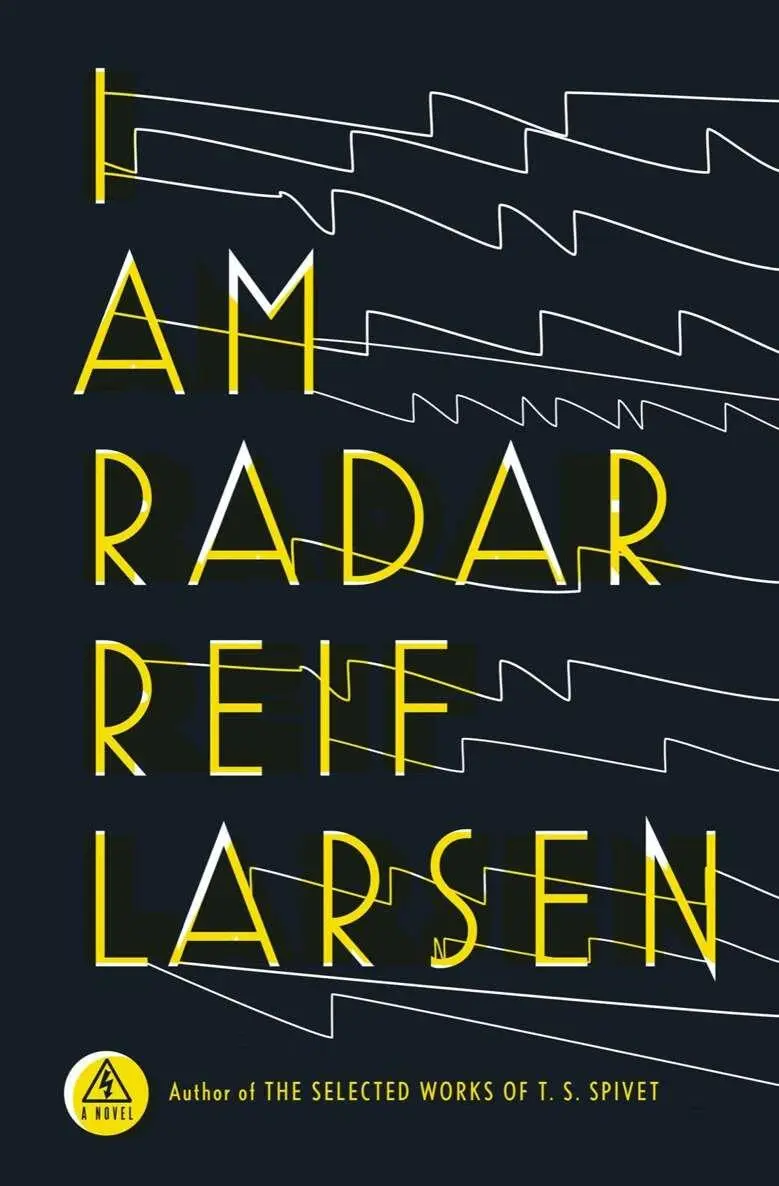
- Название:I Am Radar
- Автор:
- Издательство:Penguin Press
- Жанр:
- Год:2015
- ISBN:нет данных
- Рейтинг книги:3 / 5. Голосов: 1
-
Избранное:Добавить в избранное
- Отзывы:
-
Ваша оценка:
I Am Radar: краткое содержание, описание и аннотация
Предлагаем к чтению аннотацию, описание, краткое содержание или предисловие (зависит от того, что написал сам автор книги «I Am Radar»). Если вы не нашли необходимую информацию о книге — напишите в комментариях, мы постараемся отыскать её.
I Am Radar Deep in arctic Norway, a cadre of Norwegian schoolteachers is imprisoned during the Second World War. Founding a radical secret society that will hover on the margins of recorded history for decades to come, these schoolteachers steal radioactive material from a hidden Nazi nuclear reactor and use it to stage a surreal art performance on a frozen coastline. This strange society appears again in the aftermath of Cambodia’s murderous Khmer Rouge regime, when another secret performance takes place but goes horrifically wrong. Echoes of this disaster can be heard during the Yugoslavian wars, when an avant-garde puppeteer finds himself trapped inside Belgrade while his brother serves in the genocidal militia that attacks Srebrenica. Decades later, in the war-torn Congo, a disfigured literature professor assembles the largest library in the world even as the country around him collapses. All of these stories are linked by Radar — now a gifted radio operator living in the New Jersey Meadowlands — who struggles with love, a set of hapless parents,and a terrible medical affliction that he has only just begun to comprehend.
I Am Radar — читать онлайн бесплатно полную книгу (весь текст) целиком
Ниже представлен текст книги, разбитый по страницам. Система сохранения места последней прочитанной страницы, позволяет с удобством читать онлайн бесплатно книгу «I Am Radar», без необходимости каждый раз заново искать на чём Вы остановились. Поставьте закладку, и сможете в любой момент перейти на страницу, на которой закончили чтение.
Интервал:
Закладка:

Fig. 2.2. Miroslav of Hum’s Gospels (1168)
From Beardsman, T. (1956), A History of Illumination, p. 144
Once, on a trip to Belgrade, Darinka took Danilo to see an old illuminated manuscript inside a large museum. It was a book of the Gospels created for Miroslav of Hum, a twelfth-century prince from Herzegovina. At first reluctant and bored by the echoing halls of the museum, Danilo was startled by the book’s beauty beneath its glass case — he stared at the images of saints grouped in curious orbit around the thick Gothic strokes of the text. The museum guard, perhaps drawn in by Darinka’s beauty, offered to unlatch the case and turn the pages of the ancient book. So captured was he by the shimmering images that bent and swayed across the paper, Danilo did not notice the guard leering at his mother as he showed them each page, nor did he notice the man’s hand creeping up her thigh or how she let the hand linger for just a moment before discreetly brushing it away. Danilo was too transfixed by the miracle before him: Hum’s manuscript made him realize for the first time that if such beauty could exist in the world, then God must exist as well.
They moved to a two-story farmhouse in the hills above Višegrad. Even without a father to guide him, Danilo Danilovic sensed the way the earth breathed. He implicitly understood the angle of the sun, how a season always began during the season before, how water did not always run downhill. Holding his mother’s hand, he would kneel at the threshold of his bedroom and pray every morning and every night. Before the sun rose on Sundays, they would walk the four kilometers through the pines to attend the small, secret services at the village church, those assembled whispering their prayers to the dusty icons above, which were normally closed and shuttered to keep the party administrators at bay.
During the summer of 1972, Danilo attended an unsanctioned screening of Dušan Makavejev’s W.R. - Misterije organizma ( W.R.: Mysteries of the Organism ) at the Dom Kulture in Višegrad. He was not even supposed to be there, but someone had told him that they were showing a movie banned by Tito himself and that this movie would most likely change his life. Afterwards, he stood bewildered in a corner, trembling, awash in the utter innocence of his upbringing. He did not understand all of what he had just seen, but what he did understand made him fearful, and what he did not understand filled him with a great loneliness, as if the world had suddenly left him behind. It was then that a beautiful woman approached him. She was smoking a long, thin cigarette and wearing a JNA army cap. For a moment he was afraid that this was the woman from the movie who had been decapitated, that she had found some way to reattach her head and walk out of the screen and into the Dom Kulture.
“You look as if you’ve just seen a ghost,” she said to him.
Her name was Stojanka Stevovic. She was from Trebinje. Her mother was a Catholic Croat, her father was a Communist Serb, and she spoke like a Montenegrin, but she called herself a Yugoslav. Danilo was smitten by the strength of her eyes. Every time she opened her mouth, a little vacuum of space opened up inside his chest.
“Don’t go with her,” his mother warned when it was clear he was going with her.
“Why?”
“She’s not a believer.”
“That’s not a good reason.”
“That’s the only reason. If you go with her, I will never speak to you again.”
He called his mother’s bluff and went with her. He had no choice. She had seen him see the ghost. And she went with him, despite her ideological resistance to becoming a farmer’s wife. Stoja had always maintained a vague dream of moving to Belgrade and becoming a movie star, smoking her long, thin cigarettes in the Danube clubs as men hung on her every word. She would later say she never made it to the city because she was scared, because she did not trust herself enough to be on-screen, but this was not true, for she trusted herself completely.
Danilo asked for her hand in marriage on the banks of the Drina. It was early evening — the time of day when light moved slowly, laterally, striking the earth with such acuity of angle that everything was forced to step back and glow in wonder. They had just been for a swim, and they lay on the rocks soaking up the last of the day’s heat, watching the bugs spiral across the surface of the water, their paths now and again igniting into silver pinpricks of luminescence. Nervous at the absence of words in his head, Danilo wiped some moisture from his lip and tried to say what he meant to say in the right way, but in doing so said it all wrong, which turned out to be the right way after all. Technically, she did not give an answer, but it was clear from her smile and the heat of her silence that she would be bound to him until her last breath.
There was just one problem with their union: when the priest at the local Orthodox church heard of Stoja’s questionable lineage, he refused to marry them. Danilo suspected Darinka’s influence in the matter, so to spite her, he married Stoja in a civil service, where the Lord’s name was mentioned only once, and then only because there was a clerical error in the document read by the flighty municipal clerk.
After a period of time just long enough to make them both nervous that such a thing might never be possible, Stoja became pregnant. When a baby boy emerged into the world — small, thin-boned, but otherwise healthy — Danilo Danilovic made a decision that startled even himself: the child would not be named Danilo. They would call him Miroslav, though Danilo insisted that this was not after Miroslav of Hum, creator of the illuminated book that had so transfixed him as a child, nor even — as everyone would later assume — for Miroslav Stevovic, Stoja’s father. The child was simply named Miroslav, for himself.
“Are you sure?” offered Stoja. “We don’t have to. I don’t even mind the name Danilo. I married you, after all.”
“Every tradition is meant to be broken,” said Danilo, though he was not sure — nor would he ever be sure — if such a thing was true.
Darinka, on the other hand, was so upset that she refused to attend the baptism and did not lay eyes on her grandchild for the first six months of his life.
When their second child came along, she again intervened.
“There’s still a chance for you to honor your father,” she said.
Danilo thought about this long and hard. He came back to his mother with an offering.
“His name will be Mihajlo Danilo. Danilo will be his second name.”
“What is a second name?” Darinka asked, furious. “And who is Mihajlo?”
“Mihajlo is my son.” Mihajlo, the name of no one, and this was exactly the point.
“You’re a wicked man, Danilo Danilovic. I didn’t know this about you until now. You spit on your father’s memory. On your grandfather’s memory. On all of their memories.”
“I hope you’ll find room to love them, Mama.”
She would not find room to love them, at least not in this life, for she died a week later from a massive heart attack that killed her while she was sitting on the toilet, her skirt at her ankles, the red bandanna with its secret cross still hanging from her throat. The thread of time had been cut.
2
On Miroslav’s fourteenth birthday, Miša gave his older brother a pair of trainers. For weeks, Miša had been bubbling with the excitement of giving this most perfect of gifts.
“He can run everywhere in them,” he said.
Читать дальшеИнтервал:
Закладка:
Похожие книги на «I Am Radar»
Представляем Вашему вниманию похожие книги на «I Am Radar» списком для выбора. Мы отобрали схожую по названию и смыслу литературу в надежде предоставить читателям больше вариантов отыскать новые, интересные, ещё непрочитанные произведения.










Обсуждение, отзывы о книге «I Am Radar» и просто собственные мнения читателей. Оставьте ваши комментарии, напишите, что Вы думаете о произведении, его смысле или главных героях. Укажите что конкретно понравилось, а что нет, и почему Вы так считаете.