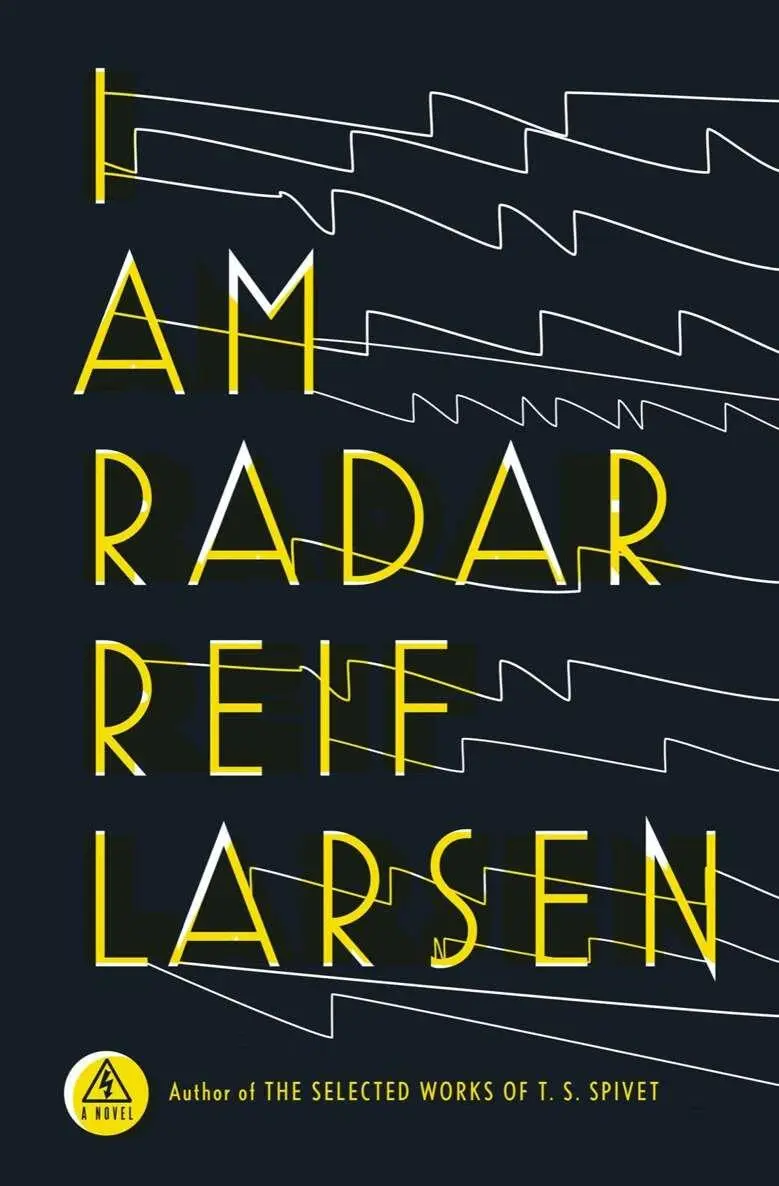
Reif Larsen - I Am Radar
Здесь есть возможность читать онлайн «Reif Larsen - I Am Radar» весь текст электронной книги совершенно бесплатно (целиком полную версию без сокращений). В некоторых случаях можно слушать аудио, скачать через торрент в формате fb2 и присутствует краткое содержание. Год выпуска: 2015, Издательство: Penguin Press, Жанр: Современная проза, на английском языке. Описание произведения, (предисловие) а так же отзывы посетителей доступны на портале библиотеки ЛибКат.
- Название:I Am Radar
- Автор:
- Издательство:Penguin Press
- Жанр:
- Год:2015
- ISBN:нет данных
- Рейтинг книги:3 / 5. Голосов: 1
-
Избранное:Добавить в избранное
- Отзывы:
-
Ваша оценка:
I Am Radar: краткое содержание, описание и аннотация
Предлагаем к чтению аннотацию, описание, краткое содержание или предисловие (зависит от того, что написал сам автор книги «I Am Radar»). Если вы не нашли необходимую информацию о книге — напишите в комментариях, мы постараемся отыскать её.
I Am Radar Deep in arctic Norway, a cadre of Norwegian schoolteachers is imprisoned during the Second World War. Founding a radical secret society that will hover on the margins of recorded history for decades to come, these schoolteachers steal radioactive material from a hidden Nazi nuclear reactor and use it to stage a surreal art performance on a frozen coastline. This strange society appears again in the aftermath of Cambodia’s murderous Khmer Rouge regime, when another secret performance takes place but goes horrifically wrong. Echoes of this disaster can be heard during the Yugoslavian wars, when an avant-garde puppeteer finds himself trapped inside Belgrade while his brother serves in the genocidal militia that attacks Srebrenica. Decades later, in the war-torn Congo, a disfigured literature professor assembles the largest library in the world even as the country around him collapses. All of these stories are linked by Radar — now a gifted radio operator living in the New Jersey Meadowlands — who struggles with love, a set of hapless parents,and a terrible medical affliction that he has only just begun to comprehend.
I Am Radar — читать онлайн бесплатно полную книгу (весь текст) целиком
Ниже представлен текст книги, разбитый по страницам. Система сохранения места последней прочитанной страницы, позволяет с удобством читать онлайн бесплатно книгу «I Am Radar», без необходимости каждый раз заново искать на чём Вы остановились. Поставьте закладку, и сможете в любой момент перейти на страницу, на которой закончили чтение.
Интервал:
Закладка:
Danilo remained skeptical. He thought such a gift would be wasted on his eldest, with his staid body and his wandering mind, but in the end, he gave Miša the money and sent him to procure the shoes from the sparsely stocked sporting goods store in town. Miša came back proudly toting his prize, elaborately hiding and re-hiding the box beneath his bed so that his brother would not discover it prematurely.
When Miroslav tore through Miša’s ungainly wrapping job that evening, his eyes lit up as he touched the new trainers, gingerly, carefully, as one would touch a newborn animal. The trainers were a pale shade of blue, the color of shallow water in the early morning. Miša’s pronouncement proved more true than he could have ever known, for Miroslav had been stuck on a project for several months now: how to perfectly replicate the movement of a man in motion. He had been studying Eadweard Muybridge’s famous sequences, frame by frame, trying to build a mechanical automaton that could jog a dozen paces without intervention from its creator.
The problem was proving terrifically difficult. Apparently a team had achieved the feat in Tokyo, but then, this team was Japanese, with all the resources afforded the Japanese, and Miroslav was convinced they had cheated anyhow. He was hung up on just three engineering challenges: the balance of the torso, the airborne transition from one foot to the other, and the limited flexibility of the knee joint. As it turned out, these three problematic areas were also the essential components of the humanoid stride. Without them, you merely had a body that tumbled earthward again and again and again.
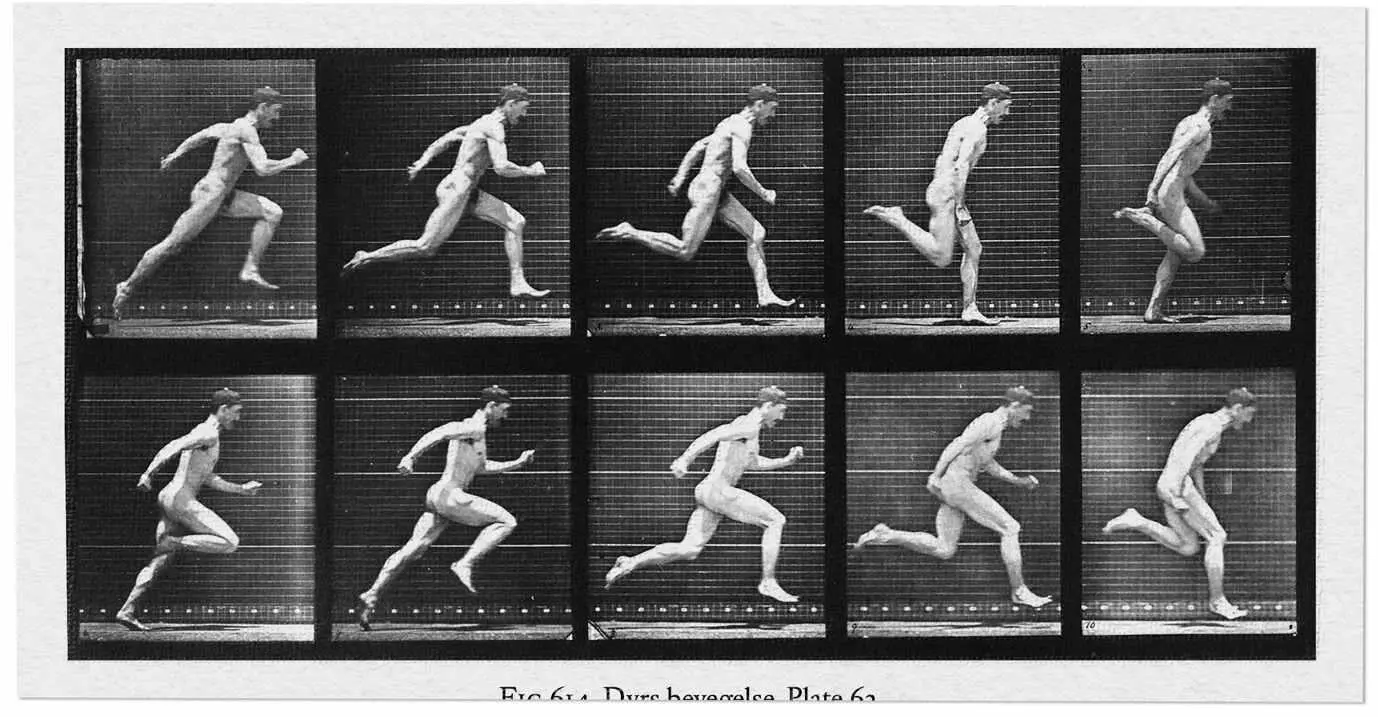
Fig. 2.3. Eadweard Muybridge, “Animal Locomotion. Plate 63” (1887)
From Røed-Larsen, P., Spesielle Partikler, p. 960
Yet Miša’s gift awakened something within him. The trainers made him realize the solution had been right in front of him all this time: he would become the automaton. He did not need to build a running man when he himself could be that man. All he needed to do was separate the him part of himself from his body and he would essentially have the perfect robot, one that could mimic nearly all human movement. He would be his own puppet.
Except that excising the him from himself — leaving only a body in motion — proved more difficult than designing any automaton. His lanky frame and obsession for repetition made him perfectly suited for cross-country running, but as he covered ever longer distances, he could never quite outrun himself. He went wherever his body went.
I am not the runner, he would repeat over and over again in his head. But he did not believe it. And so he ran farther and still farther, propelling himself forward with an existential urgency that defied both space and time.
At first, Miša tried to run with his brother, but after only a week he found that even he, athletic as he was, could not keep up. Miroslav could run forever. He would run for whole days through the countryside, over mountains, across the frontier and into Serbia, even, drifting through alpine meadows and interrupting the deer and the bears in their slumber. Strangely, his incredible journeys did not increase his appetite. He would run fifty, sixty, seventy kilometers and then eat like a bird. It was remarkable. Energy was not being conserved. Or at least he was drawing upon some unseen source for his perpetual momentum. And still he could not run from himself.
After a while, Danilo and Stoja began to worry. All he did was run. He had no interest in taking part in races for his school; he simply wanted to run alone. His teachers had begun to notice. He no longer turned in work. He slept through class. He talked back. When forced to sit still for any length of time, he constantly tapped his foot in a heel-toe stutter step, as if signaling some kind of code. It didn’t matter how bright he was — at this rate he would not make it through his studies.
“I have this feeling,” said Stoja, “that one day he might start running and never come back.”
What she was noticing without being able to say as much was that with each kilometer covered, Miroslav was running further and further away from the polite little child who had bowed to the women and greeted the postman’s arrival every afternoon. With the end of his youth also came an apparent end of his interest in the well-being of others. He was, for lack of a better term, becoming mean .
Secretly, Stoja blamed herself. She had given up everything for her children, given up a life that may or may not have come to pass, and she had grown into and accepted this choice until the choice had become no choice at all. But watching her son slip away like this shook her to her core. Stoja, who had never been a true believer, who had grown up a modern secular woman, began stealing out to pray at St. Stephen’s alone. She would light a candle at the manoualia and stare into the burning wick. By both being and not being there at the same time, the flame’s flicker consoled her.
“We must do something,” she said finally to her husband one day. “He’s my Miro.”
“All right,” said Danilo. “I’ll handle it.”
After one of Miroslav’s long runs, Danilo met his son at the top of their road.
“Come,” he said. “We’re going to a place.”
“To what place?” Miroslav asked, breathless. “I need to stretch.”
“Come,” said Danilo.
“Where’s Miša?”
“He’s working.”
“Can’t you take him to this place?”
“No.”
They took a local grunt bus that hugged the long curve of the river northward and then disembarked at the beginning of an old dirt road, which they started following up into the hills. A thick forest surrounded them. To their left, a small creek bubbled, its waters green with algae.
“Where are we going, Tata?” asked Miroslav. Walking was making him more tired than running.
“Your mother’s worried about you.”
“She’s always worried.”
“She doesn’t want you to run so much.”
“I like running.”
“She worries about you. She cannot help herself.”
“I know. But that isn’t my fault,” said Miroslav. “Where are we going, Tata?”
“To the source,” said Danilo.
Finally, after about half an hour, they came upon a small, ancient domed building. Moss and a wash of mineral deposits spilled down its weathered sides. Steam rose gently from a broken window.
Danilo gestured at the building. “This is a hammam. Built by the Turks who lived here five hundred years ago. They understood the heat of the waters. It will calm your muscles.”
“My muscles feel calm.”
“It will calm your soul.”
“And what if I am soulless?”
Danilo looked at his son. “We’re going inside.”
“What’s up there?” Miroslav pointed above them, where they could see a large, modern building peeping through the trees.
“Ah! Don’t look at that. That’s a resort. They built an ugly hotel so the tourists could soak in the hot springs and then eat some sirnica in the cafeteria. But this isn’t how it’s meant to be done. They’re stupid. They’re only interested in making money. We’re going to the real place.”
They pushed open the rotting door and shed their clothes and then slid into the ancient, recessed pool. A small stone chute poured water in from the underground hot springs. They soaked. The steam rose around them like silent music, swirling against the arched ceiling above their heads. They breathed, letting the wet silence shift and settle into the pores of their skin.
Читать дальшеИнтервал:
Закладка:
Похожие книги на «I Am Radar»
Представляем Вашему вниманию похожие книги на «I Am Radar» списком для выбора. Мы отобрали схожую по названию и смыслу литературу в надежде предоставить читателям больше вариантов отыскать новые, интересные, ещё непрочитанные произведения.










Обсуждение, отзывы о книге «I Am Radar» и просто собственные мнения читателей. Оставьте ваши комментарии, напишите, что Вы думаете о произведении, его смысле или главных героях. Укажите что конкретно понравилось, а что нет, и почему Вы так считаете.