Reif Larsen - I Am Radar
Здесь есть возможность читать онлайн «Reif Larsen - I Am Radar» весь текст электронной книги совершенно бесплатно (целиком полную версию без сокращений). В некоторых случаях можно слушать аудио, скачать через торрент в формате fb2 и присутствует краткое содержание. Год выпуска: 2015, Издательство: Penguin Press, Жанр: Современная проза, на английском языке. Описание произведения, (предисловие) а так же отзывы посетителей доступны на портале библиотеки ЛибКат.
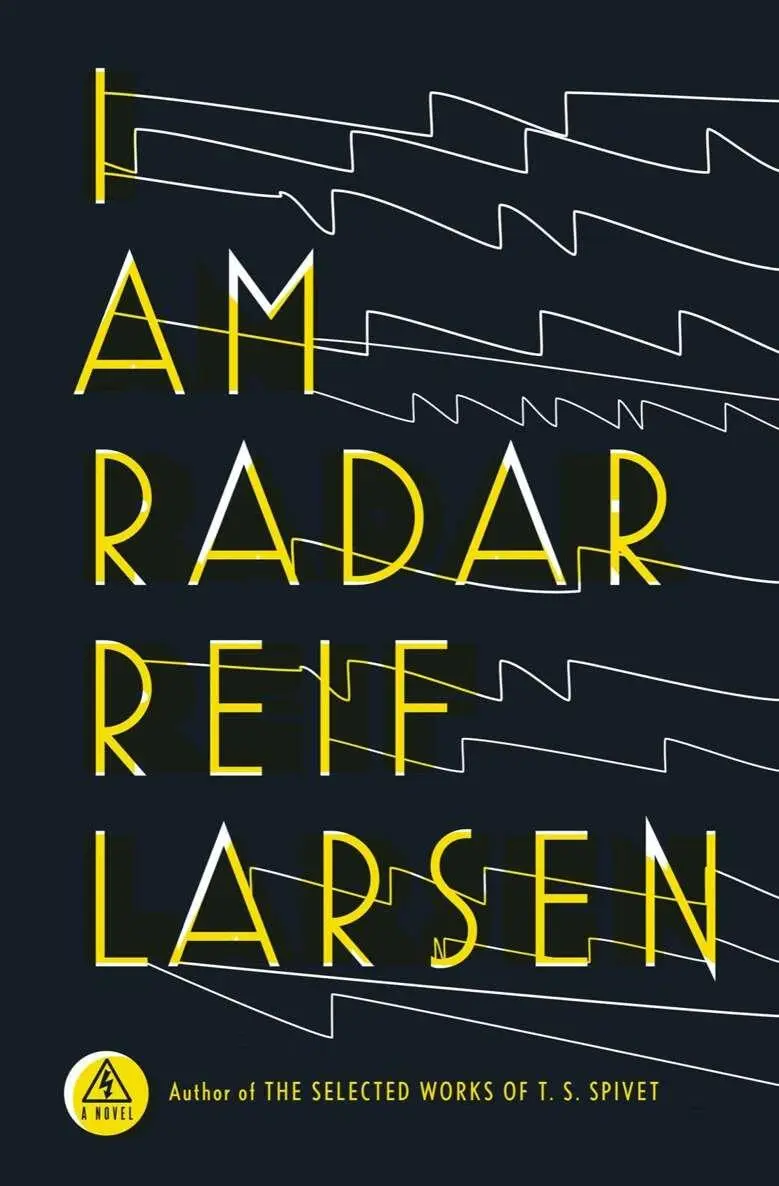
- Название:I Am Radar
- Автор:
- Издательство:Penguin Press
- Жанр:
- Год:2015
- ISBN:нет данных
- Рейтинг книги:3 / 5. Голосов: 1
-
Избранное:Добавить в избранное
- Отзывы:
-
Ваша оценка:
I Am Radar: краткое содержание, описание и аннотация
Предлагаем к чтению аннотацию, описание, краткое содержание или предисловие (зависит от того, что написал сам автор книги «I Am Radar»). Если вы не нашли необходимую информацию о книге — напишите в комментариях, мы постараемся отыскать её.
I Am Radar Deep in arctic Norway, a cadre of Norwegian schoolteachers is imprisoned during the Second World War. Founding a radical secret society that will hover on the margins of recorded history for decades to come, these schoolteachers steal radioactive material from a hidden Nazi nuclear reactor and use it to stage a surreal art performance on a frozen coastline. This strange society appears again in the aftermath of Cambodia’s murderous Khmer Rouge regime, when another secret performance takes place but goes horrifically wrong. Echoes of this disaster can be heard during the Yugoslavian wars, when an avant-garde puppeteer finds himself trapped inside Belgrade while his brother serves in the genocidal militia that attacks Srebrenica. Decades later, in the war-torn Congo, a disfigured literature professor assembles the largest library in the world even as the country around him collapses. All of these stories are linked by Radar — now a gifted radio operator living in the New Jersey Meadowlands — who struggles with love, a set of hapless parents,and a terrible medical affliction that he has only just begun to comprehend.
I Am Radar — читать онлайн бесплатно полную книгу (весь текст) целиком
Ниже представлен текст книги, разбитый по страницам. Система сохранения места последней прочитанной страницы, позволяет с удобством читать онлайн бесплатно книгу «I Am Radar», без необходимости каждый раз заново искать на чём Вы остановились. Поставьте закладку, и сможете в любой момент перейти на страницу, на которой закончили чтение.
Интервал:
Закладка:
“Is it painful?” she asked him as he led Radar away.
“Completely painless.”
“Are you sure?”
“He won’t feel a thing. We don’t have nerve sensors for this kind of current.”
And then the door swung shut and they were gone.
Charlene was left with her watch and the horrors of time. The next twenty-one and a half minutes proved to be the most difficult of Charlene’s life. As Kermin clung to his shitty little radio, she alone faced a thousand possibilities and non-possibilities. She defeated them all and in turn was defeated right back. She wound herself into such a frenzy, she had to take off her shoes. Eleven minutes had passed since that door had swung shut. Still she waited, shoeless, confronting the possibility of a child fundamentally altered. Charlene realized for the first time how lucky she was to have a son exactly like Radar Radmanovic. She would not change one single thing. She would not alter a hair on his head. She wanted to cancel the entire procedure, to yell, Stop! Stop! Paralyzed, she did nothing except hate herself for doing nothing, for having done nothing, for having done this .
Twenty-one and a half minutes later, Radar emerged. She ran up and hugged him, prodding at his thin little bones until he began to squirm. There was a new scent about him that she could not identify, but otherwise he seemed unchanged.
“Dat machine make me crackle!” he declared proudly.
“He did fine, just fine,” said Leif.
“You are still you?” She was weeping at his sameness.
“I need to go the pee-potty,” said Radar.
“Thank you, Leif,” she said, smiling through her tears.
“It will take some time,” he said, misunderstanding her relief. “The effects are not instantaneous.”
Kermin stood some distance away, watching Radar and Charlene. He came up and touched his son’s head carefully, with the tips of his fingers, as one examines a melon, and then he nodded at Leif and walked back to their cabin.
• • •
IN THEIR CLOSING MEETING, Leif warned of the possibility of “dermal peeling” in the coming months and said it was a natural part of the melanosomal adjustment process. Charlene did not believe him, but she could not help loving him for having total confidence in his quack methodology. His faith in electricity was endearing. He had given her the greatest gift by making her realize what she already had.
It was strange, given all the endless space that Kirkenesferda had at their disposal, how cramped Leif’s office was. Every shelf seemed to be filled with papers, books, journals, notebooks, boxes of photographs, and reels of eight-millimeter film. There was a pair of limbless mannequin torsos, one of which had its forehead painted with the eye. There was a deflated barrel organ, a whole box of polished black stones, a bushel of branches tied up in the corner, as if a Russian peasant woman had temporarily deposited her burden.
As was her wont whenever a library presented itself, Charlene got up and examined the collection of books. It was often easier to discover someone through his books rather than his words, to see the overlap and divergence between one’s taste and another’s and then to triangulate the rest of that person’s self appropriately. She had slept with plenty of people simply on the merits of their literary curation.
There was no obvious method of organization. Many of the titles were familiar; these were the same books that lived behind the sheets in her own home. Except that here, many of the standbys that had at one time nourished or tormented her were translated into Norwegian. A shadow army of all the classics, rendered through a peculiar Norse lens. She enjoyed trying to guess what each title was. She recognized Turgenev’s Fedre og sønner, Vonnegut’s Slaktehus-5, eller Barnekorstoget: en pliktdans med døden, Bulgakov’s Mester og Margarita, Calvino’s De Usynlige Byer, Conrad’s Det inderste mørke . Could these possibly be the same books that she had read? Had he ingested what she had ingested? She realized that with several of these books, she had fallen in love with a translation that did not exist in the original language, a fact that irked her to no end. Staring at this Arctic library, rendered so beautifully in a tongue she did not comprehend, she found herself wondering: When did a book — ushered across linguistic oceans by the unsteady sloop of translation — stop being the same book?
Leif saw her looking at his shelves. “If you can believe it, there used to be about twice this many,” he said. “I recently sent a shipment down to Africa, to a monk who is building a library along the Congo River.”
“How generous of you,” she said.
In contrast to the light chaos that ruled the rest of the room, she was surprised to find one large shelf in pristine order. Everything was arranged in neat little rows, with not one spine out of place. A shelf of twenty-five numbered binders. It was as if this section belonged to another person who was merely renting the shelf space. Charlene pulled down a thin purple volume, feeling almost guilty for disrupting the order.
GÅSELANDET: TEORIER OM IKKE-DELTAKENDE DRAMA OG ERFARRING, PER RØED-LARSEN
She looked at another. This one was also by Per Røed-Larsen. She looked again. Every single book on the shelf was by him. There were hundreds of them.
“Per Røed-Larsen,” she said aloud. It was not quite an answer, nor really a question.
“Yes,” said Leif. “He has set about the task of writing our history. Though if you ask me, his manner is a bit excessive. Not everything must be documented in such detail. Sometimes a receipt is just a receipt, if you know what I mean.”
“Why do you have all of his books here?”
“Per once wrote to me, ‘If it is not documented, then it never happened.’ Of course, I disagree, but I suppose it’s important for someone to record all of this. Sometimes you learn things when you see your work through the eyes of another. It offers a new perspective.”
“And Brusa? Do you also have his books?”
Leif walked over to another shelf, one of those that had fallen prey to bedlam. “His works are not as conducive to indexing. They impress an order of their own. But most everything is here.”
Charlene looked around the room. “So is anything in here written by you?”
“Surprisingly little. In keeping this place running, performing all of my roles, I can barely find time for myself.”
• • •
THE FOLLOWING DAY, Leif shepherded them back to the airport. They drove through a tundra of moss and lichen, tinged by tight clusters of black crowberry and nascent birch. The trees gradually grew denser until they found themselves back in the soft pine envelope of the taiga. Kermin sat up front, chattering away with their host about the secrets of miniature-television repair. It was in stark contrast to his silence on the ride in, several days before.
In the back of the jeep, Radar slept in Charlene’s lap. Since the procedure, he had been sleeping nearly all the time. Leif had assured them that this, too, was natural.
“His cells are busy at work. It’s exhausting to metamorphose — just ask a caterpillar.” The joke felt oddly misplaced. “But when the butterfly is revealed, all becomes worth it.”
Charlene leaned over and sniffed her son. The new scent had lingered, despite several vigorous baths. A scent gathered in transit. It left her uneasy. Smells are transitory by nature; they should not endure.
At the airfield, Leif wished them well and asked Kermin to stay in touch. “I wish you lived a bit closer,” he said. “We could use someone like you on the team. A genius with screens.”
“Not genius,” said Kermin. “I understand them, like we are friends. That’s it. No: like we are relation. We are family, with the same blood.”
Читать дальшеИнтервал:
Закладка:
Похожие книги на «I Am Radar»
Представляем Вашему вниманию похожие книги на «I Am Radar» списком для выбора. Мы отобрали схожую по названию и смыслу литературу в надежде предоставить читателям больше вариантов отыскать новые, интересные, ещё непрочитанные произведения.










Обсуждение, отзывы о книге «I Am Radar» и просто собственные мнения читателей. Оставьте ваши комментарии, напишите, что Вы думаете о произведении, его смысле или главных героях. Укажите что конкретно понравилось, а что нет, и почему Вы так считаете.