Reif Larsen - I Am Radar
Здесь есть возможность читать онлайн «Reif Larsen - I Am Radar» весь текст электронной книги совершенно бесплатно (целиком полную версию без сокращений). В некоторых случаях можно слушать аудио, скачать через торрент в формате fb2 и присутствует краткое содержание. Год выпуска: 2015, Издательство: Penguin Press, Жанр: Современная проза, на английском языке. Описание произведения, (предисловие) а так же отзывы посетителей доступны на портале библиотеки ЛибКат.
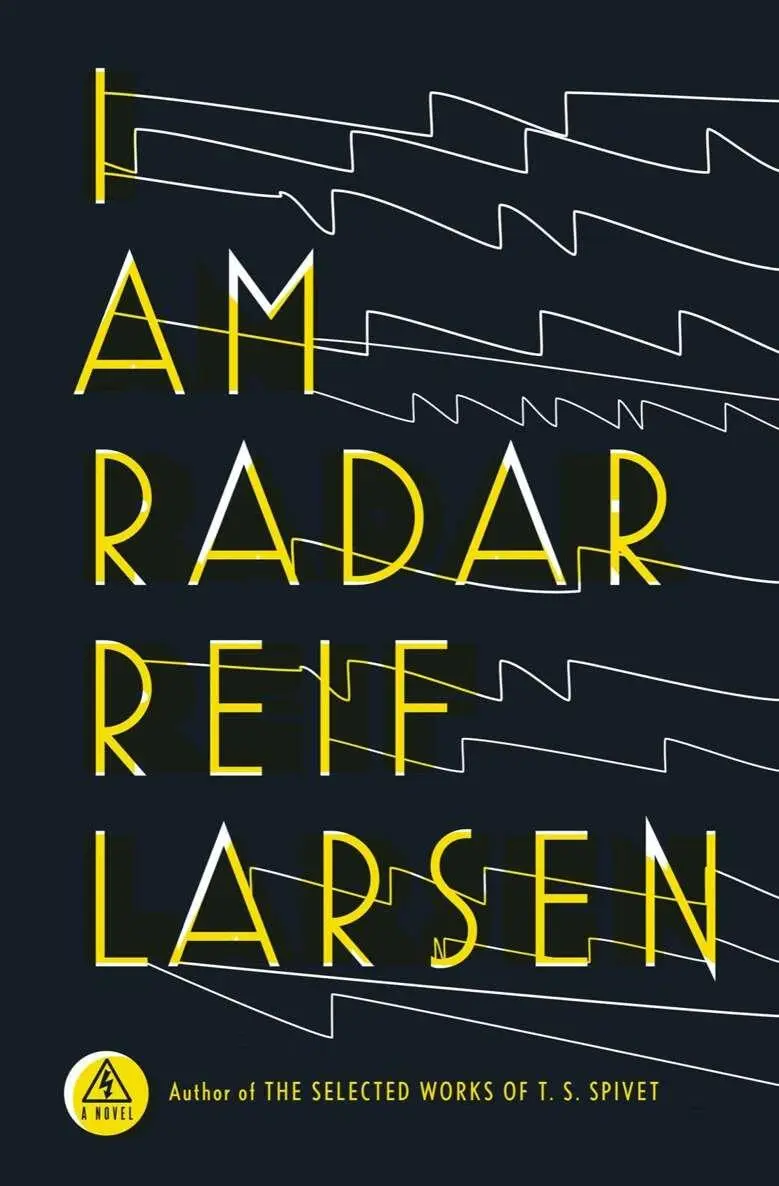
- Название:I Am Radar
- Автор:
- Издательство:Penguin Press
- Жанр:
- Год:2015
- ISBN:нет данных
- Рейтинг книги:3 / 5. Голосов: 1
-
Избранное:Добавить в избранное
- Отзывы:
-
Ваша оценка:
I Am Radar: краткое содержание, описание и аннотация
Предлагаем к чтению аннотацию, описание, краткое содержание или предисловие (зависит от того, что написал сам автор книги «I Am Radar»). Если вы не нашли необходимую информацию о книге — напишите в комментариях, мы постараемся отыскать её.
I Am Radar Deep in arctic Norway, a cadre of Norwegian schoolteachers is imprisoned during the Second World War. Founding a radical secret society that will hover on the margins of recorded history for decades to come, these schoolteachers steal radioactive material from a hidden Nazi nuclear reactor and use it to stage a surreal art performance on a frozen coastline. This strange society appears again in the aftermath of Cambodia’s murderous Khmer Rouge regime, when another secret performance takes place but goes horrifically wrong. Echoes of this disaster can be heard during the Yugoslavian wars, when an avant-garde puppeteer finds himself trapped inside Belgrade while his brother serves in the genocidal militia that attacks Srebrenica. Decades later, in the war-torn Congo, a disfigured literature professor assembles the largest library in the world even as the country around him collapses. All of these stories are linked by Radar — now a gifted radio operator living in the New Jersey Meadowlands — who struggles with love, a set of hapless parents,and a terrible medical affliction that he has only just begun to comprehend.
I Am Radar — читать онлайн бесплатно полную книгу (весь текст) целиком
Ниже представлен текст книги, разбитый по страницам. Система сохранения места последней прочитанной страницы, позволяет с удобством читать онлайн бесплатно книгу «I Am Radar», без необходимости каждый раз заново искать на чём Вы остановились. Поставьте закладку, и сможете в любой момент перейти на страницу, на которой закончили чтение.
Интервал:
Закладка:
Lukic listened politely and took Stoja’s ID card when Danilo showed it to him. He studied it closely, holding it up to the light.
When Danilo was finished speaking, he reached into his pocket and took out the money, which had somehow gotten wet. Lukic took the damp deutsche marks from him and dropped them on the bed without looking at them.
“Go on,” said Lukic.
Danilo shrugged. “There is nothing more to say.”
Lukic picked at something beneath his fingernail and suddenly made a little chuckle, as if he had just remembered a joke. Then he looked Danilo in the eye.
“Okay, so first you must know this: I like you,” said Lukic. “I like that you came here and had the courage to talk. So this is why I’ll tell you what I will tell you now. Otherwise, you have to know, you’d already be dead. So today is your lucky day. This is the first thing you must know.”
Then he went on to talk about the war for a while, about the justness of their cause but also the difficulties of conflict, about how sometimes things happened that were regrettable, and that no one could be said to be responsible for these things when they happened in the heat of battle. It was difficult enough to maintain order in a town when no one knew whom to trust. Mistakes would inevitably be made. It was the way of things. But they were doing their best. Višegrad was in very good hands, this much he could say.
Danilo grew impatient. “So then you know what happened to her?” he said.
“I’m not saying that; I’m just saying you must understand the circumstances. We’re looking after many people right now. We’re making sure this country’s safe to live in. It’s not an easy job. The Turks let this place go to shit. So you must understand our situation.”
“But she’s done nothing!” said Danilo, exasperated. “Stoja’s innocent!”
“I understand your opinion. But I must disagree. She was without ID, as you say.”
“I told you. She forgot it. She was just—”
“And, as you say, she looks like a Turk.”
“I didn’t say that.”
“She even talks like a Turk. And this is not my fault. This, of course, is asking for trouble. You can imagine how difficult it would be if all the Turks had no identification and they claimed they were not Turks and we had to check each one. It would be madness. It would not be good,” Lukic said, but very kindly, as if he were doing Danilo a favor. “You have to understand the Turkish mind. I understand this mind. It’s my business to understand the Turkish mind.”
“What have you done with her? Please? Just give her back. I just want her back in the house. She’s a good woman. Her sons went away and—”
“Why would you let a woman out like that without an ID? Don’t you love your wife at all?”
Danilo fell to the floor. He clasped his hands together. “Please. I just wanted her to get some air. She was not herself. . she was praying all the time. .”
“Look, look. I’ll see what I can do,” said Lukic sympathetically. He placed a hand on Danilo’s shoulder. “But if you want my opinion, it was her own fault for coming from a mixed family. This was a disaster waiting to happen.”
Danilo stared up at him. He was filled with a sudden, unbearable hatred. He had never before felt such venom in his blood. If he had had a knife, he would’ve plunged it into this man’s heart.
“Not all of it is your fault,” Lukic was saying, “but you must think about these kinds of things before you marry a woman like that.”
“Like what?” Danilo could feel his body shaking. He was worried what he might do next.
Lukic studied him calmly. “A man can never change who he really is.”
“People change all the time,” said Danilo. “I’ve seen good people become very bad.”
“Maybe they were bad to begin with,” said Lukic. He picked up one of the guns from the bed and began to play with it. “We’re making right what was wrong. That’s all. Nothing more. Now get out before you disappear. I’m being so nice right now my balls are beginning to hurt.” A man came back into the room. He grabbed one of Danilo’s arms and hinged it up into his back, painfully.
They pushed him out into the street. He stumbled, righted himself, and then let himself fall. He felt as if he could destroy a thousand men if only he had the strength. But he did not have the strength, and so he sat on the sidewalk next to a bright red Passat and wept. He wept for his wife, and he wept for the town that was once his home, the town that now watched him silently.
Danilo got up and began to walk through the streets of Višegrad. Only a few souls had ventured outside. He passed the Dom Kulture and the restaurant where Darinka had taken him on his sixteenth birthday. He passed the town square where his boys had put on the Christmas vertep performances. He passed the sporting goods store where Miša had bought his brother those blue trainers. It was now closed for good, its shelves overturned, its windows broken.
He came upon a woman selling ragged beets from a basket. Danilo handed her a coin and smiled through his tears.
“Be well, Danilo Danilovic,” she mumbled.
With the beet in his hand, he came around the corner, and there was the bridge. Mehmed-paša’s bridge. Empty. As always, the Drina flowed silently beneath. Not for the first time, Danilo was struck by the feat of building such a massive stone construction all those years ago. He thought of all the lives sacrificed in order to erect a road from this side to the other. Danilo made his way out to the kapija, halfway between the two banks. He did not care if they shot him. To die crossing the bridge — this could be the most noble of all deaths.
They did not shoot him. He stood with his beet and placed his hand on the cold stone of the bridge, scrubbed clean of its blood. He watched the river. A few pages from a forgotten book were floating on its surface.
“Stoja,” he said. And he knew then that she was still alive.
• • •
THAT NIGHT, HE AGAIN tried to call his son. The phone line clicked and popped, but finally, through some miracle of the wires, his call connected. Miroslav’s roommate picked up. He said Miroslav had moved out of the flat two weeks earlier. He didn’t know to where. He didn’t have a new number.
“This is an emergency,” said Danilo hopelessly. “I need to know where he lives. Who knows where he lives now?”
“No offense to you, but your son’s a bit of an asshole,” said the roommate. “He didn’t pay rent for six months, so we kicked him out.”
“He’s a good boy,” said Danilo. “It’s not easy.”
“He’s a dick. I’m not saying it’s your fault. Some people are just dicks,” the roommate said and hung up.
• • •
TWO DAYS LATER, Danilo awoke to Dragan knocking on his door.
“They found her,” he said.
“Where?”
“In the river.”
“In the river?” said Danilo. “Are you sure it’s her?”
“They say it’s her.”
“Did she suffer?”
“She’s not suffering now.”
“Oh, Stoja!” He leaned against the threshold. “Stoja, my Stoja.”
His cousin kissed his cheek, and the two men stood like this for some time.
• • •
THE POLICE, WHO SUPPOSEDLY had found the body in the river and deemed the death an accidental drowning, had sealed the body in a coffin and then delivered the coffin to the town morgue, with strict instructions to keep the coffin shut.
“I’d like to see her,” Danilo said to the mortician when he went to identify the body and sign the paperwork.
“I’m afraid that’s impossible,” said the mortician.
“But how do I know it’s her?” said Danilo.
Читать дальшеИнтервал:
Закладка:
Похожие книги на «I Am Radar»
Представляем Вашему вниманию похожие книги на «I Am Radar» списком для выбора. Мы отобрали схожую по названию и смыслу литературу в надежде предоставить читателям больше вариантов отыскать новые, интересные, ещё непрочитанные произведения.









Обсуждение, отзывы о книге «I Am Radar» и просто собственные мнения читателей. Оставьте ваши комментарии, напишите, что Вы думаете о произведении, его смысле или главных героях. Укажите что конкретно понравилось, а что нет, и почему Вы так считаете.