Reif Larsen - I Am Radar
Здесь есть возможность читать онлайн «Reif Larsen - I Am Radar» весь текст электронной книги совершенно бесплатно (целиком полную версию без сокращений). В некоторых случаях можно слушать аудио, скачать через торрент в формате fb2 и присутствует краткое содержание. Год выпуска: 2015, Издательство: Penguin Press, Жанр: Современная проза, на английском языке. Описание произведения, (предисловие) а так же отзывы посетителей доступны на портале библиотеки ЛибКат.
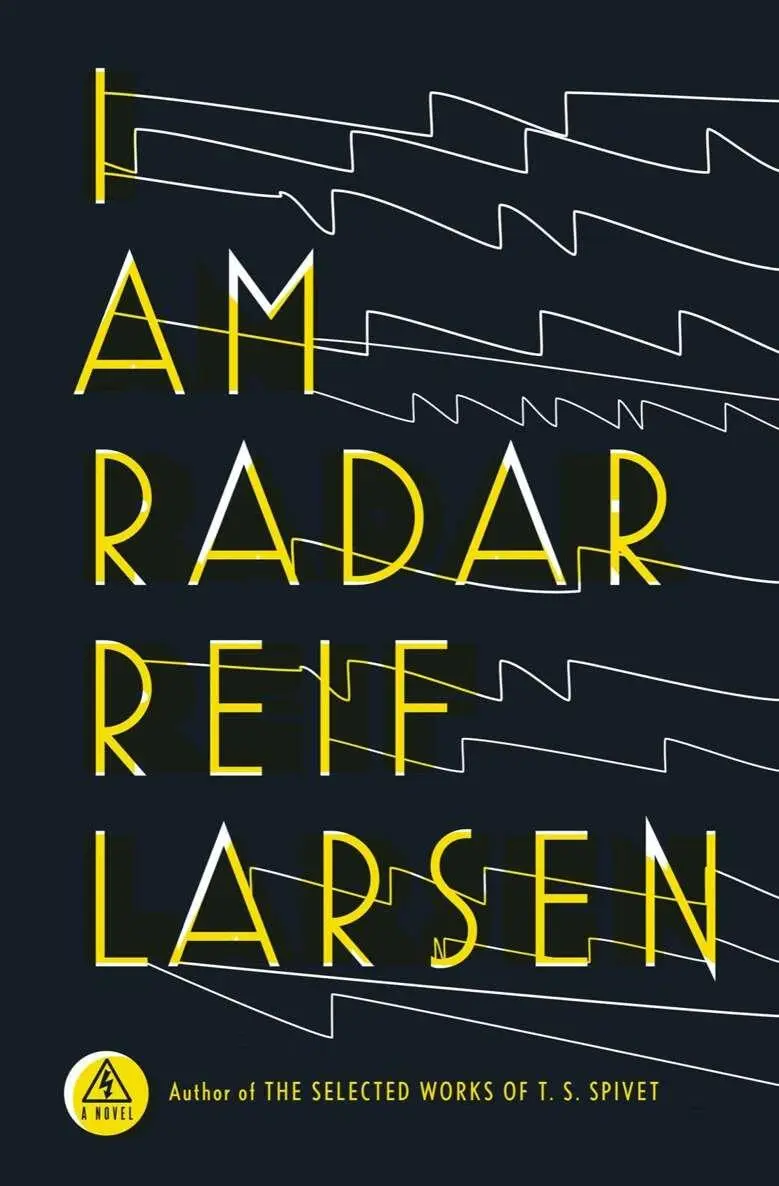
- Название:I Am Radar
- Автор:
- Издательство:Penguin Press
- Жанр:
- Год:2015
- ISBN:нет данных
- Рейтинг книги:3 / 5. Голосов: 1
-
Избранное:Добавить в избранное
- Отзывы:
-
Ваша оценка:
I Am Radar: краткое содержание, описание и аннотация
Предлагаем к чтению аннотацию, описание, краткое содержание или предисловие (зависит от того, что написал сам автор книги «I Am Radar»). Если вы не нашли необходимую информацию о книге — напишите в комментариях, мы постараемся отыскать её.
I Am Radar Deep in arctic Norway, a cadre of Norwegian schoolteachers is imprisoned during the Second World War. Founding a radical secret society that will hover on the margins of recorded history for decades to come, these schoolteachers steal radioactive material from a hidden Nazi nuclear reactor and use it to stage a surreal art performance on a frozen coastline. This strange society appears again in the aftermath of Cambodia’s murderous Khmer Rouge regime, when another secret performance takes place but goes horrifically wrong. Echoes of this disaster can be heard during the Yugoslavian wars, when an avant-garde puppeteer finds himself trapped inside Belgrade while his brother serves in the genocidal militia that attacks Srebrenica. Decades later, in the war-torn Congo, a disfigured literature professor assembles the largest library in the world even as the country around him collapses. All of these stories are linked by Radar — now a gifted radio operator living in the New Jersey Meadowlands — who struggles with love, a set of hapless parents,and a terrible medical affliction that he has only just begun to comprehend.
I Am Radar — читать онлайн бесплатно полную книгу (весь текст) целиком
Ниже представлен текст книги, разбитый по страницам. Система сохранения места последней прочитанной страницы, позволяет с удобством читать онлайн бесплатно книгу «I Am Radar», без необходимости каждый раз заново искать на чём Вы остановились. Поставьте закладку, и сможете в любой момент перейти на страницу, на которой закончили чтение.
Интервал:
Закладка:
Finally, Danilo turned on his guide, ready to kill him with a knife that had appeared in his hand, only to realize at the last moment that it had not been  this whole time, but Miša. The last image before he woke up was his son’s terrified expression as the blade came down upon him.
6
The next morning, a scissor-sharp October morning, Danilo drifted through the city toward Nikola Pašic Square and the Parliament building, as if to confront the real about Stoja’s whereabouts. With the last of his money he bought some warm nuts from a one-eyed vendor of uncertain descent, possibly a Gypsy, possibly a Turk.
“Please enjoy,” the vendor said with great kindness.
Danilo was studying the majesty of the olive-colored Parliament dome when he noticed a small group of onlookers clustered just off the square, next to a children’s playground. The crowd was focused intently on something in their midst. Danilo walked over, casually munching on his bag of nuts, letting their oily warmth settle into the foundation of his teeth.
When he got closer, he caught his breath.
The crowd was assembled around a black box. A man was hunched next to the box, his head covered by a velvet curtain.
Danilo ran up to them.
“Miroslav!” he yelled. Those assembled stared at him warily.
“Miroslav!” he called again. He grabbed the man beneath the curtain and pulled him up. It was an old man with a gold tooth.
“Did I do it wrong?” said the man.
“Where’s the puppeteer?” asked Danilo.
The man looked confused. “I’m sorry. I did not have enough,” he said.
“What?”
The man pointed to a handwritten sign propped up on the ground:
I WILL BE RIGHT BACK.
FEEL FREE TO WATCH THE SHOW.
PLEASE, BE GENTLE WITH THE BOX
AND ONLY 1 AT A TIME.
SUGGESTED DONATION:

Next to the sign was a little wooden cashbox with a slit on top.
“Is that Tesla?” said Danilo.
“It means ten billion dinars. That’s the note Tesla’s on,” someone said behind him.
“That was the old bill. Tesla’s on the five-thousand-dinar now,” said a woman.
“No, it’s the thousand-dinar bill,” said another. “But it’s worth more than before.”
“No. That was the old currency.”
“Well, it’s too much, whatever it is. Who would pay that?”
“It doesn’t mean that,” said a man with a mustache. “It’s not referring to money . It’s a metaphor. It means you must bring your imagination to the box. That’s what my friend said.”
“Can I see?” said Danilo to the old man whom he had interrupted.
“There’s a line,” said the woman.
“But my son made this.”
Their collective groan made it clear that the people did not believe him. Embarrassed, he slipped behind them, awaiting his turn, glancing around nervously, half expecting his son to materialize out of the city at any moment.
Nearly everyone put something into the cashbox, though it was clear that most were just getting rid of old worthless bank notes, whether they featured Tesla or not. They would then hunch over, duck their heads beneath the black curtain, and emerge five minutes later wearing a dazed look. One woman waited for her friend to watch, then they embraced and moved to the nearby playground, where they spoke excitedly, occasionally gesturing at the box. After watching the show, the man with the mustache circled the box six or seven times, inspecting it from all angles before finally shaking his head and walking away.
When it was finally his turn, Danilo bypassed the cashbox altogether, not caring what the others might think, and hastily threw the curtain over his head.
He was met with darkness and silence, tempered only by the faintest of rumbles from the city beyond. Danilo was suddenly struck by how vulnerable he was, crouched like this in the middle of the street. Anyone could come up behind him and punch him, rob him, kill him. There were others to protect him, to shelter him, but maybe they were pointing at him as he stood beneath the curtain: That one. He’s the crazy one. He’s the one who didn’t pay. Him. Take him.
He waited patiently, but the darkness remained. Perhaps the box was broken. Perhaps the whole point was to get strangers to crouch down in this ridiculous posture, to pay money, thinking some little entertainment was coming simply because others had done it before them, but in the end there was no entertainment, and this expectation of entertainment was what had so upset people.
And then: soft music, coming from just in front of his ear. The sound of a few violins joined by a pair of cellos and then an accordion. The music felt very close but very far away at the same time. The song being played was familiar, though Danilo could not name the tune. Maybe it did not have a name.
The darkness was softening. But this was not quite right: the darkness was no longer darkness. There was a feeling of rising from the depths. A sense of shape. An awakening into form.
A scene appeared before him. Danilo could see a river. Not an image of a river, but an actual river. He could see the water moving, turning back into itself as water does. There was a river somewhere inside that box. But how could it be? From where, and to where, did it flow? And now he could see there was a bridge over this river. Not just any bridge: the bridge . The Turkish Bridge. Tiny, resplendent, complete with its kapija, and the central pillar beneath with its grated opening, inside which a black Arab was supposedly imprisoned. It was the one detail Miroslav had remembered from the book. Had he also included a miniature Arab inside that pillar? An Arab who stared longingly at the river that flowed into the distant sea?
Danilo began to cry. How he missed his home! How he missed her! How he missed the life they had once lived!
He was again taken by the scene. How on earth had Miroslav made a river inside a box?
Something was moving slowly into the frame. At first Danilo could not tell what it was, but then he saw it, unmistakable and true: an elephant. Yes — there was the trunk, the flapping of the ears. A tiny elephant, no more than five centimeters tall, walking along the road. It was all so real, so perfect — the way the elephant leaned heavily into each step, the left front leg slightly lame, the little tail now and then fluttering away at the invisible flies. Its walk was a kind of dance, in time to the lilt of the music. And as with the box he had seen back home, there weren’t any strings. No wires or tracks or anything to betray the presence of a controller. The elephant moved on its own. Although this was not quite true: the elephant had a rider on its back. A minuscule man with a whip. The rider was directing the elephant to walk across the bridge. Danilo sensed some hesitancy in the animal, as if it knew what would happen next. Would the bridge hold? It must. It had been used for so many years. Hundreds and hundreds of years. But then Danilo remembered that this bridge was not the bridge back home, that this bridge had not been built by the hands of slaves and artisans and soldiers and thieves. This bridge could fit in his lap, and so: could this bridge, this whisper of a bridge, hold an elephant ridden by a man?
Читать дальшеИнтервал:
Закладка:
Похожие книги на «I Am Radar»
Представляем Вашему вниманию похожие книги на «I Am Radar» списком для выбора. Мы отобрали схожую по названию и смыслу литературу в надежде предоставить читателям больше вариантов отыскать новые, интересные, ещё непрочитанные произведения.









Обсуждение, отзывы о книге «I Am Radar» и просто собственные мнения читателей. Оставьте ваши комментарии, напишите, что Вы думаете о произведении, его смысле или главных героях. Укажите что конкретно понравилось, а что нет, и почему Вы так считаете.