Reif Larsen - I Am Radar
Здесь есть возможность читать онлайн «Reif Larsen - I Am Radar» весь текст электронной книги совершенно бесплатно (целиком полную версию без сокращений). В некоторых случаях можно слушать аудио, скачать через торрент в формате fb2 и присутствует краткое содержание. Год выпуска: 2015, Издательство: Penguin Press, Жанр: Современная проза, на английском языке. Описание произведения, (предисловие) а так же отзывы посетителей доступны на портале библиотеки ЛибКат.
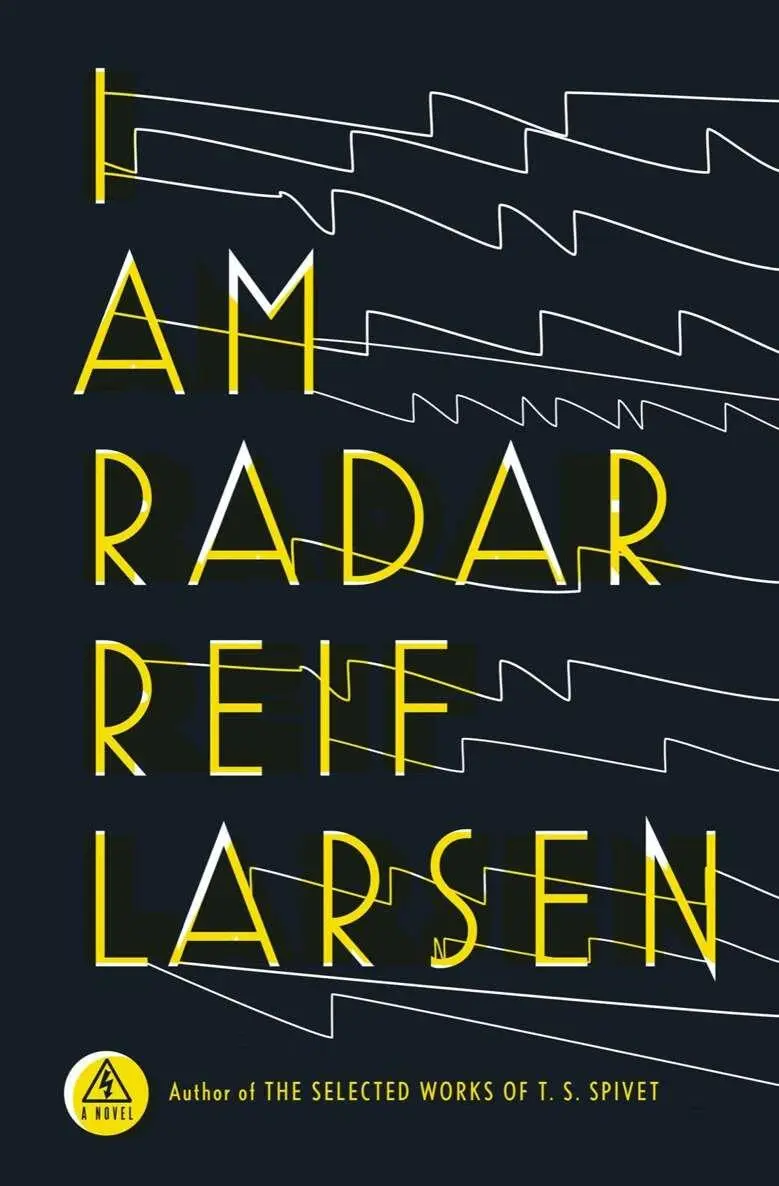
- Название:I Am Radar
- Автор:
- Издательство:Penguin Press
- Жанр:
- Год:2015
- ISBN:нет данных
- Рейтинг книги:3 / 5. Голосов: 1
-
Избранное:Добавить в избранное
- Отзывы:
-
Ваша оценка:
I Am Radar: краткое содержание, описание и аннотация
Предлагаем к чтению аннотацию, описание, краткое содержание или предисловие (зависит от того, что написал сам автор книги «I Am Radar»). Если вы не нашли необходимую информацию о книге — напишите в комментариях, мы постараемся отыскать её.
I Am Radar Deep in arctic Norway, a cadre of Norwegian schoolteachers is imprisoned during the Second World War. Founding a radical secret society that will hover on the margins of recorded history for decades to come, these schoolteachers steal radioactive material from a hidden Nazi nuclear reactor and use it to stage a surreal art performance on a frozen coastline. This strange society appears again in the aftermath of Cambodia’s murderous Khmer Rouge regime, when another secret performance takes place but goes horrifically wrong. Echoes of this disaster can be heard during the Yugoslavian wars, when an avant-garde puppeteer finds himself trapped inside Belgrade while his brother serves in the genocidal militia that attacks Srebrenica. Decades later, in the war-torn Congo, a disfigured literature professor assembles the largest library in the world even as the country around him collapses. All of these stories are linked by Radar — now a gifted radio operator living in the New Jersey Meadowlands — who struggles with love, a set of hapless parents,and a terrible medical affliction that he has only just begun to comprehend.
I Am Radar — читать онлайн бесплатно полную книгу (весь текст) целиком
Ниже представлен текст книги, разбитый по страницам. Система сохранения места последней прочитанной страницы, позволяет с удобством читать онлайн бесплатно книгу «I Am Radar», без необходимости каждый раз заново искать на чём Вы остановились. Поставьте закладку, и сможете в любой момент перейти на страницу, на которой закончили чтение.
Интервал:
Закладка:
Turn back! Don’t run over there!
She saw the soldiers standing amid the blood and stopped. She was already a quarter of the way across the bridge. She looked back in the direction of Danilo.
He saw then that the woman was his wife.
Stoja.
Good God, Stoja! Turn back! Run! Get out of there!
The men approached her.
“Turn around! Run!” he yelled, his voice damp and close beneath the cloth.
Stoja froze. The cello, waiting, held its note. She looked up at the sky.
“I’m here,” he said. “I can see you, Stoja. I’m here with you.”
She did not hear him. The cello sounded a ferocious chord, and Stoja bowed her head and ran toward the bridge’s parapet, one foot on its top, and then she leaped. Her body making an arc in the air, gravity’s rainbow catching her in slow motion — yes, Danilo was sure that she was falling more slowly than normal. She splashed into the water. The White Eagles were running to the parapet, guns drawn.
“Stoja!” he yelled.
He saw her surface and begin to swim. The sound of tiny gunshots. He winced, transfixed, but she continued to swim until she reached the central pillar of the bridge, with the small grated opening above. This was the buttress that held the Arab. She grasped the stone, pulling herself from the water. The men were looking down at her, aiming, ready to kill her. And then, at the last moment, she slipped through a narrow opening and disappeared into the bridge.
“Stoja!”
His hand thwacked against a thin pane of glass. He swore he could see the figures jostle, as if an earthquake had hit — the bridge trembling, the White Eagles confused — but then the lights and the music abruptly cut out and everything was black again.
Something had gone wrong. It was not meant to end like this.
He took off the curtain, touched the box, looking for her, for a sign, then got back inside the curtain. He waited for ten minutes, but the show would not go on. After hesitating, he shook the box with both hands. A faint rattle. He had broken it. And now Stoja was trapped. She was trapped inside the bridge with the Arab. What would he do to her? Was she safer in there than outside, with the soldiers? He contemplated ripping the whole thing open to rescue her, but instead he fell to his knees and prayed.
Eventually others arrived to see the box. Some he recognized from the day before. Some had been told about the elephant and were eager to see it for themselves. But everyone who put their head under the curtain waited and waited, and nothing happened. And even then, more people came, having heard rumors of the wonders inside the box. They too waited in vain.
“It must be broken,” one said to his companion.
“You were telling me a lie, weren’t you? You were teasing me,” said the companion.
“I was not. I swear. Yesterday there was an elephant. You wouldn’t believe. It was alive. I swear to you.”
“Maybe no one paid enough money,” someone said. “Typical. People are selfish.”
“I paid!”
“I paid twice!” said another.
The crowd grew restless, and Danilo, feeling infinitely guilty for having caused all of this, found himself trying to calm a woman down.
“The show will be on tomorrow,” he said.
“How do you know?” she asked.
“It’s my son’s show.”
“Who’s your son?”
“Miro.” He wasn’t sure why he gave only his son’s nickname, but there it was.
Others came up to him with questions. How did he do it? What was the secret?
He tried to answer as best he could, until he saw an angry man in a beard go up to the box and shake it violently.
“All right!” he yelled to everyone. “The show’s been canceled for today. I’m sorry. We’ve had technical difficulties. Please come back tomorrow. I’m sorry for the inconvenience.”
“Who are you?”
“I work for the artist.”
“Who’s the artist?”
“His name is Miro.”
“Where is he now?”
“He’s gone to get new parts. Please. Come back tomorrow. Everything will be fine tomorrow.”
They left, eventually, grumbling. Danilo found an old newspaper and a pen and wrote out CANCELED TODAY and posted it on top of the sign. Then he went across the street and waited.
Someone tapped him on the shoulder.
“I’m going, I’m going,” said Danilo.
It was a reporter. The man wanted to know whether it was true that Danilo worked for Miro, the artist who had made this cabinet of wonders.
“Cabinet of wonders?” said Danilo.
“That’s what they’re calling it. What would you call it?”
“That sounds good to me.”
“Can you tell us more about Miro?”
“He was born in Višegrad.”
“But how does he do it?”
“Do what?”
“Make them move like that? There are no strings.”
“You can’t see the strings.”
“So there are strings?”
“You’ll have to talk to him about that.”
There were more questions, but, realizing he might have already said too much, Danilo declined to answer them. He told the man to come back the next day. “The artist will be here tomorrow and will be happy to answer any questions.”
“I think your Miro will be a famous man someday,” said the reporter as he left.
Night fell again. The streetlights came on. Danilo had brought warmer clothes this time, and he settled down in the park, a good ways from the box and the playground, but not so far that he couldn’t see it. He waited, watching the changing of the guards in front of Parliament. An ambulance went by. More policemen. At some point, without meaning to, he drifted off to sleep.
When he awoke again, it was still dark. His body was freezing. He opened and closed his fingers and slapped at his legs, trying to conjure some kind of circulation. The soft halo of a streetlight caught the outline of a feral dog slipping into the park. The dog threw him a glance before trotting off. The streets were empty save for the guardsmen in front of Parliament and a lone taxi driver asleep in his cab.
Danilo walked over to the box. He noticed immediately that his announcement about the cancellation had been removed. There was only the original sign. He looked around but saw no one. Then he ducked beneath the curtain.
The darkness had shifted again. He heard gypsy music. Two horns. The quiver of a drum. An accordion.
The lights rose. Again, the bridge.
There were two figures on the bridge. Not soldiers this time. The blood had been scrubbed away. Only a faint stain remained. Danilo rubbed his eyes, shivered. Trying to blink away the blur. The men, familiar but too small to recognize. He thumbed out the sleep and looked again.
Yes.
It was Miroslav. An older version of Miroslav, to be sure, but there was no doubt it was him. The angle of the jawline. It did not change, even at such a size.
Next to him, a big mass of a man, rendered in miniature. Those shoulders. Such shoulders. Danilovic shoulders.
Seeing the two of his boys together, moving together, made him wish they all could be together again. If they were together, then they would all get through this, he knew.
He wanted to tell them that their mother was trapped in the bridge beneath them, but Miša and Miroslav were bending over, lifting something up. It looked to be a body. A body of a man! Who was he? But it was all too quick. They were heaving, rolling the body up and over the wall of the bridge. The body fell. Danilo half expected the scene to cut off then, but the man continued to fall, and there was the sound of a splash and then the body was floating in the river. Danilo again wondered how he had created such a river. A river with no beginning or end?
Читать дальшеИнтервал:
Закладка:
Похожие книги на «I Am Radar»
Представляем Вашему вниманию похожие книги на «I Am Radar» списком для выбора. Мы отобрали схожую по названию и смыслу литературу в надежде предоставить читателям больше вариантов отыскать новые, интересные, ещё непрочитанные произведения.








Обсуждение, отзывы о книге «I Am Radar» и просто собственные мнения читателей. Оставьте ваши комментарии, напишите, что Вы думаете о произведении, его смысле или главных героях. Укажите что конкретно понравилось, а что нет, и почему Вы так считаете.