Reif Larsen - I Am Radar
Здесь есть возможность читать онлайн «Reif Larsen - I Am Radar» весь текст электронной книги совершенно бесплатно (целиком полную версию без сокращений). В некоторых случаях можно слушать аудио, скачать через торрент в формате fb2 и присутствует краткое содержание. Год выпуска: 2015, Издательство: Penguin Press, Жанр: Современная проза, на английском языке. Описание произведения, (предисловие) а так же отзывы посетителей доступны на портале библиотеки ЛибКат.
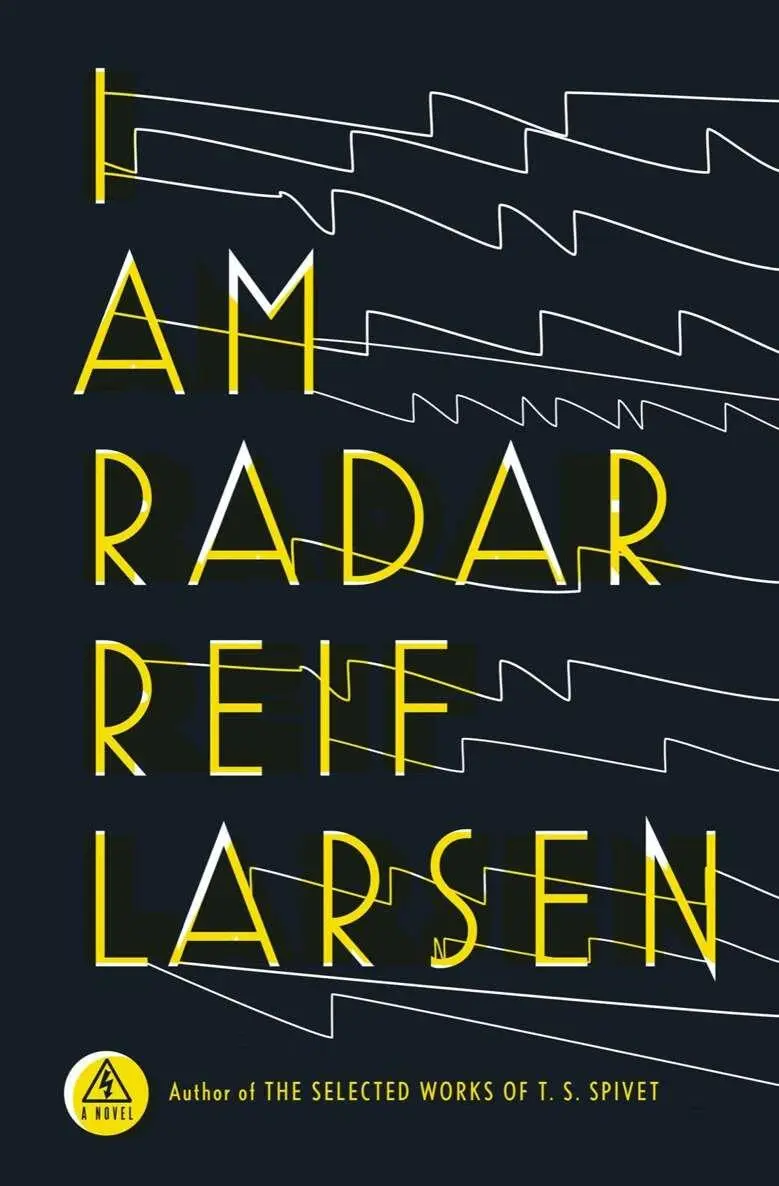
- Название:I Am Radar
- Автор:
- Издательство:Penguin Press
- Жанр:
- Год:2015
- ISBN:нет данных
- Рейтинг книги:3 / 5. Голосов: 1
-
Избранное:Добавить в избранное
- Отзывы:
-
Ваша оценка:
I Am Radar: краткое содержание, описание и аннотация
Предлагаем к чтению аннотацию, описание, краткое содержание или предисловие (зависит от того, что написал сам автор книги «I Am Radar»). Если вы не нашли необходимую информацию о книге — напишите в комментариях, мы постараемся отыскать её.
I Am Radar Deep in arctic Norway, a cadre of Norwegian schoolteachers is imprisoned during the Second World War. Founding a radical secret society that will hover on the margins of recorded history for decades to come, these schoolteachers steal radioactive material from a hidden Nazi nuclear reactor and use it to stage a surreal art performance on a frozen coastline. This strange society appears again in the aftermath of Cambodia’s murderous Khmer Rouge regime, when another secret performance takes place but goes horrifically wrong. Echoes of this disaster can be heard during the Yugoslavian wars, when an avant-garde puppeteer finds himself trapped inside Belgrade while his brother serves in the genocidal militia that attacks Srebrenica. Decades later, in the war-torn Congo, a disfigured literature professor assembles the largest library in the world even as the country around him collapses. All of these stories are linked by Radar — now a gifted radio operator living in the New Jersey Meadowlands — who struggles with love, a set of hapless parents,and a terrible medical affliction that he has only just begun to comprehend.
I Am Radar — читать онлайн бесплатно полную книгу (весь текст) целиком
Ниже представлен текст книги, разбитый по страницам. Система сохранения места последней прочитанной страницы, позволяет с удобством читать онлайн бесплатно книгу «I Am Radar», без необходимости каждый раз заново искать на чём Вы остановились. Поставьте закладку, и сможете в любой момент перейти на страницу, на которой закончили чтение.
Интервал:
Закладка:
Great blocks of color. A perfect field of red.
“I’ve wasted my life,” said Ilija.
It was the sound of their feet on the polished floor that made Danilo remember Miroslav of Hum’s illuminated manuscript. This was the same museum he had visited as a child.
He found the book inside a glass case in the same room on the second floor where he had seen it forty years ago. Open to the same page, even. The saints, lugubrious, resplendent as ever. Aware of all that had gone on, but unchanged in posture and expression.
His mother had stood right there.
“Do you see, Ilija?” whispered Danilo. “It’s from 1186.”
“I keep telling you: we come from great people. Look at this book we made,” Ilija said, his face glowing from the light coming off the page. “We’ve just lost our way. That’s all.”
He put his hand on his heart and began to sing “Uz Maršala Tita.”
“What’re you doing?” said Danilo. “This is a museum. You can’t sing in here.”
“This is our palace. As king, I can do whatever I want.”
He began to sing again, louder this time, and after a moment of staring at his friend, Danilo joined him. Together they belted out Tito’s anthem, serenading Miroslav’s saints, who looked bemused and even a touch flattered:
Rod prastari svi smo, a Goti mi nismo.
Slavenstva smo drevnoga cest.
Ko drukcije kaže, klevece i laže,
Našu ce osjetit’ pest.
Of an ancient kindred we are, but Goths we are not.
Part of ancient Slavdom are we.
Whoever says otherwise slanders and lies,
and will feel our fist.
Danilo made an appointment to return. And return again. Just so he could stand near the book. He even took Miroslav to see his namesake’s manuscript. His son was underwhelmed.
“You named me after a tyrant.”
“I didn’t name you for him.”
“It doesn’t matter who you named me for. I’m still named after him.”
“Forget him and just look at the book.”
“That’s not how it works. The book is nothing without its maker.”
• • •
DANILO RETURNED so many times to see Miroslav’s Gospels that the museum staff got to know him well. The guard who had first let them in was named Boris.
“Hey, Dino,” said Boris. This was what he called him. “Dino , you should work here.”
“What do you mean?”
“I mean, you should work here. They got someone else, but he’s a drunk. He can’t hardly stand up. You can stand up, right?”
“Yes.”
“It’s a lock. The job’s yours, I’m telling you.”
So Danilo became a guard at the museum. They gave him a uniform with a tie clip. It was two sizes too large, but it was still a uniform with a tie clip. On the day the museum was open to the public (this changed regularly, but usually it was a Tuesday or a Wednesday), he had to work all three floors, though he would always try to maneuver himself to the station on the second floor when a patron came through. He liked to be there when they walked into the room containing Miroslav’s Gospels. He would quietly stand at the doorway, watching them watch the book. If visitors looked particularly transfixed, he would go over and offer to show it to them.
“I don’t normally do this,” he would say.
Then he would carefully lift off the glass case, put on a pair of white gloves, and turn the pages of the great book for them. He was fairly sure that if his boss caught him doing this, he would be fired instantly. But it was worth it.
“It’s from 1186,” he said to a young woman and her son.
“It’s beautiful,” said the woman. “Isn’t it beautiful, Danilo?”
“Yes,” said the boy.
“His name is Danilo?”
“It’s a family name,” the woman said.
The three of them stood and stared at the book in silence.
• • •
A YEAR WENT BY. The dinar — now the novi dinar — had stabilized, officially pegged 1:1 to the deutsche mark. After bouncing around on several astronomical banknotes, Nikola Tesla now presided calmly on the five-novi-dinar bill. Though there was still a shortage of food, and though public buses were still stuffed dangerously full of people, and though there were still only a few cars on the streets because of the oil embargo, people had grown used to the struggle of wartime life. There was even a kind of humorous nostalgia for it, although the war was not over. Turbo-folk singers lamented the end of difficult times that still remained.
On four separate occasions, Danilo had written Miša a letter to explain all that had happened. He had sent these to a variety of Srpska army bases in eastern Bosnia, but none of the letters had gotten through. This became evident when Miša again wrote to Miroslav in the late spring, saying he had been stationed above Sarajevo next to the 1984 Winter Olympics bobsled track, where he would loft mortars down into Stari Grad. He said he was now being moved to Srebrenica, where there were “still some problems to be solved.” The joyous news of his son’s still being alive was tempered by these details of his involvement in the horrors of war.
I might be able to get some time off and come see you in Belgrade soon if things don’t get busy again here. There’s never time to leave because the fight is too important right now. . Commander Vukov says we are close to winning.
If you speak with Mama or Tata, tell them I say hello and I love them. I wrote to them but wasn’t sure if they received my letter. I hope they are fine.
Your brother,
Danilo
“He still doesn’t know,” said Danilo when Miroslav showed him the letter. “In his world, she is still alive.”
He thought of his letters lying in bags in the back rooms of Srpska army bases as mortars rattled the ceilings. He thought of those bags, filled with undelivered letters, filled with impossible truths.
• • •
IN LATE JULY, Danilo and Miroslav met at the Rijeka. Miroslav ordered a cappuccino and Danilo ordered a black currant juice. As soon as they were sitting, Gazur sent Eder out to play his reluctant accordion, a rendition of “Stani, stani Ibar vodo.” Danilo, thinking Miroslav would not approve, was about to wave Eder away, but his son’s expression seemed content with the music.
It was early evening. They smoked and watched the light come in off the Sava. A lone canoeist was working his way northward to the point where the two rivers met. It occurred to Danilo then that all rivers were the same river.
“I heard from Miša again,” said Miroslav.
“Why doesn’t he ever write to me?”
“He did write to you. He doesn’t know you’re in Belgrade.”
“He didn’t mention Stoja?”
“No.”
“What about that mess in Srebrenica?”
“He didn’t say anything about that. He said he had been blessed by a priest and that because of this, a Muslim soldier had fired at him from close range and missed. He said he was down in Žepa and even got to swim in the Drina, but he didn’t make it to Višegrad to see you.”
“I’m not in Višegrad.”
“He doesn’t know that.”
“Višegrad,” said Danilo. “I wonder what’s become of it.”
“But he sounded fine, considering.”
“Mihajlo. Danilo .” Turning over the name. “What could I have done?”
“Don’t worry, Tata. He’ll be all right.”
Danilo shook his head. “You can tell they aren’t saying what happened in Srebrenica.”
“An American said ten thousand Muslims were killed in six days. They were hunting them in the forest. Children too.”
“Good God.” Danilo closed his eyes then shook out another cigarette. “Miša didn’t say anything about that?”
Читать дальшеИнтервал:
Закладка:
Похожие книги на «I Am Radar»
Представляем Вашему вниманию похожие книги на «I Am Radar» списком для выбора. Мы отобрали схожую по названию и смыслу литературу в надежде предоставить читателям больше вариантов отыскать новые, интересные, ещё непрочитанные произведения.








Обсуждение, отзывы о книге «I Am Radar» и просто собственные мнения читателей. Оставьте ваши комментарии, напишите, что Вы думаете о произведении, его смысле или главных героях. Укажите что конкретно понравилось, а что нет, и почему Вы так считаете.