Reif Larsen - I Am Radar
Здесь есть возможность читать онлайн «Reif Larsen - I Am Radar» весь текст электронной книги совершенно бесплатно (целиком полную версию без сокращений). В некоторых случаях можно слушать аудио, скачать через торрент в формате fb2 и присутствует краткое содержание. Год выпуска: 2015, Издательство: Penguin Press, Жанр: Современная проза, на английском языке. Описание произведения, (предисловие) а так же отзывы посетителей доступны на портале библиотеки ЛибКат.
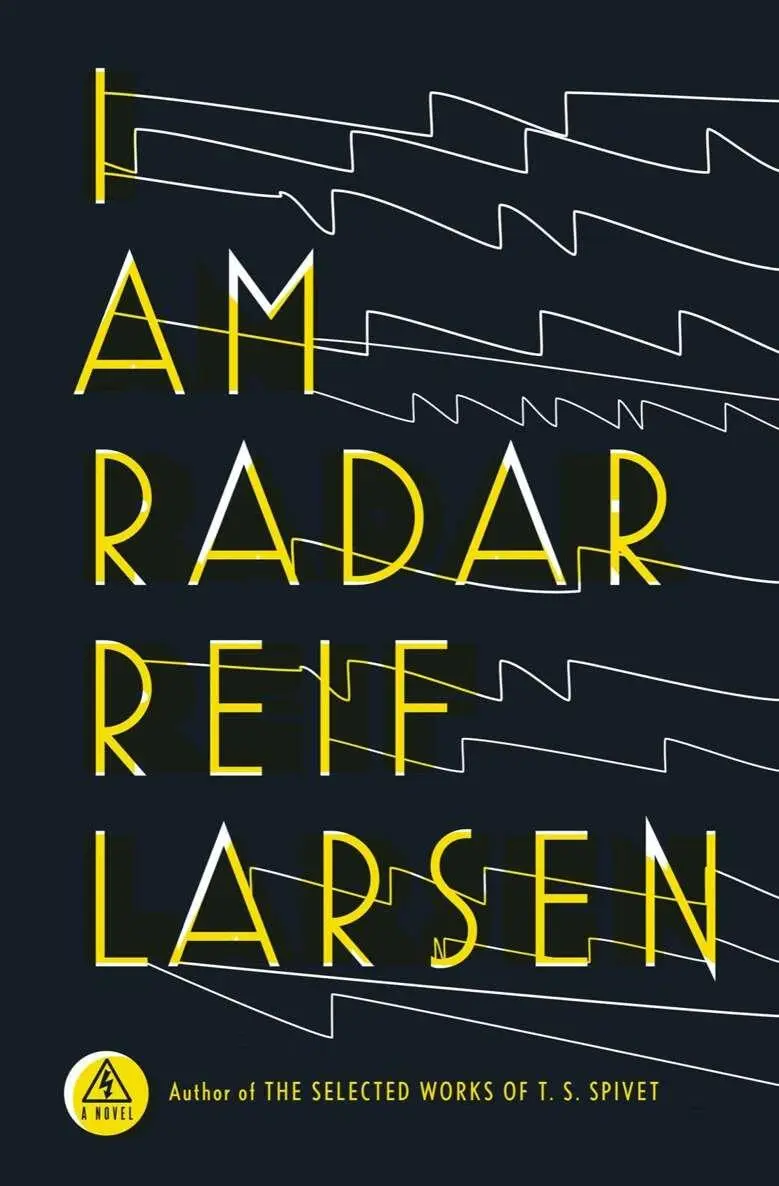
- Название:I Am Radar
- Автор:
- Издательство:Penguin Press
- Жанр:
- Год:2015
- ISBN:нет данных
- Рейтинг книги:3 / 5. Голосов: 1
-
Избранное:Добавить в избранное
- Отзывы:
-
Ваша оценка:
I Am Radar: краткое содержание, описание и аннотация
Предлагаем к чтению аннотацию, описание, краткое содержание или предисловие (зависит от того, что написал сам автор книги «I Am Radar»). Если вы не нашли необходимую информацию о книге — напишите в комментариях, мы постараемся отыскать её.
I Am Radar Deep in arctic Norway, a cadre of Norwegian schoolteachers is imprisoned during the Second World War. Founding a radical secret society that will hover on the margins of recorded history for decades to come, these schoolteachers steal radioactive material from a hidden Nazi nuclear reactor and use it to stage a surreal art performance on a frozen coastline. This strange society appears again in the aftermath of Cambodia’s murderous Khmer Rouge regime, when another secret performance takes place but goes horrifically wrong. Echoes of this disaster can be heard during the Yugoslavian wars, when an avant-garde puppeteer finds himself trapped inside Belgrade while his brother serves in the genocidal militia that attacks Srebrenica. Decades later, in the war-torn Congo, a disfigured literature professor assembles the largest library in the world even as the country around him collapses. All of these stories are linked by Radar — now a gifted radio operator living in the New Jersey Meadowlands — who struggles with love, a set of hapless parents,and a terrible medical affliction that he has only just begun to comprehend.
I Am Radar — читать онлайн бесплатно полную книгу (весь текст) целиком
Ниже представлен текст книги, разбитый по страницам. Система сохранения места последней прочитанной страницы, позволяет с удобством читать онлайн бесплатно книгу «I Am Radar», без необходимости каждый раз заново искать на чём Вы остановились. Поставьте закладку, и сможете в любой момент перейти на страницу, на которой закончили чтение.
Интервал:
Закладка:
“They aren’t.”
“But I saw you. I saw you and Miša throw that man into the river.”
Miroslav’s eyes went wide.
“I saw you in the box,” said Danilo. “You threw him off the bridge. You turned and Miša stayed. I saw it.”
Miroslav stared at his father. The corner of his mouth was quivering. He suddenly looked angry, as if he might strike his father, and then he said, very quietly: “I killed him, Tata.”
Danilo nodded. “Only God can save us now,” he said and crossed himself.
“No. You don’t understand. It was true. I made this all happen.”
“Made what happen?”
“I killed a gypsy. I killed him and then I pushed him into the Drina.”
“What’re you talking about?”
“You’re the only one who knows. Besides Miša. I killed him. And then the war came.”
“Miro, what are you talking about?”
“That day Miša was stabbed. It wasn’t a bull. It was the gypsy.”
Danilo’s face fell into comprehension. He folded his arms. “I knew it wasn’t a bull,” he said.
“He had a knife and he was robbing us. And then he attacked Miša, and I killed him. I took a tree branch and I crushed his head. And then I pushed him into the river.”
“Who was he?”
“I don’t know. A gypsy. But I killed him. I made all of this happen. I’m the one to blame. . for Mama. . for everything.”
“Stop it,” said Danilo. “You can’t think like this. It’s not how it works. Do you know how much evil there’s been in this country? It’s not any one man’s doing. It’s the work of many. None of us can say we’re innocent anymore.”
“But it’s because of me! I started it. I know this . It’s why she died. Something needed to happen. Something needed to be taken away again. That’s how it works .” His voice was rising. The waitress was staring at them.
“Miroslav,” said Danilo. “Only God knows how it works.”
“There is no God,” said Miroslav.
“Miro—”
“I don’t believe what you believe.”
Danilo was too tired to argue. “Okay,” he said. “Okay. I’ve missed you, my son. How are you feeling? You look tired.”
“The boxes tear me apart. They’re very difficult to make. I leave a part of myself in them.”
“I can imagine,” said Danilo. He thumbed at the droplet of pasulj sitting on the tablecloth. “Wait — when did this happen?”
“When did what happen?”
“You and Miša. With the man by the river.”
“I told you. It was last April. Before the drought.”
Danilo thought about this. “That must’ve been the Selimovics’ son. That was Mahir. He was found downstream, near Žepa. Everyone thought he was the first.”
“Mahir?”
“Didn’t you hear about that?”
“No.”
“You remember Mahir, though.”
“Mahir?”
“You went to primary school with him. Everyone thought the Serbs had killed him. He was the first Muslim to die in the Drina. After him, there were hundreds. There was a man in Žepa who would fish them out of the river every day and then bury them. That’s all he did. He would give them a Muslim burial. Mahir was the first person he buried.”
Miroslav blinked at his father. “Yes, but the man I killed was a gypsy. I know who Mahir is, and this wasn’t Mahir.”
“He was found in the river, downstream. His head was knocked in. You don’t remember this? They said he was the first.”
“It wasn’t Mahir.”
“Okay,” said Danilo.
“It wasn’t Mahir.”
“Okay,” Danilo said again. “It wasn’t Mahir.”
Miroslav stared at his soup.
“Your brother has done far worse things than you,” Danilo said quietly.
“You don’t know that.”
Danilo reached across the table and touched his son’s hand. The nails were bitten to the quick, the palm soft and damp. Such a foreign hand.
“Miroslav,” he said. His son was crying.
“Miroslav!”
His son looked up at him.
“Your mother loved you. To the very end. I know this. There’s evil in this world, and we cannot solve this evil, but don’t forget your mother. Don’t forget her. Speak her name to everyone you meet. We must not forget her, even if this is all that we can do. She’s the reason I live now. She’s with me when I wake up, when I take a step, when I take breath into my lungs. You may not believe in a God, but I do. I do, and He tells me that she’s here. She’s with us. I saw her in your box. I see her everywhere.”
Miroslav held his father’s hand. “Will you tell me a story, Tata?”
Danilo shook his head. “I’ve no more stories to tell.”
• • •
AFTER THAT, THEY MET every week. When the weather became warmer, they would walk along the Danube, past the shuttered houseboats, pausing to watch the children do their exercises in the fields. Danilo would occasionally ask what his son was doing, but Miroslav would say little, only that he was working on “a show that was going to change everything.”
When Danilo was not with his son, he spent much of his time alone in the storage room, reading his Bible and smoking. In one corner he had set up a little altar to Stoja, with a photograph of her taken one Christmas, smiling next to her two boys. To one side was the icon he had taken from the barn and a couple of candles that he had swiped from a local church.
The weeks and months passed. Without running water or a proper razor, he grew a beard, just like his son. Ilija began to call him Moses.
“Hey Moses, we need to get some culture!” Ilija declared one morning after rolling open the garage door to the warehouse. “No more praying.”
Danilo blinked at the rush of light. “What culture?”
“ Museum culture,” said Ilija. “Otherwise we’ll forget we’re a civilized people.”
“I don’t forget.”
“Well, I forget,” said Ilija. “And if you spend enough time with me, you’ll forget too.”
But the source of their culture, the National Museum, was closed.
The sign on the door read:
WE’RE SORRY, BUT DUE TO BUDGETARY CUTS THE MUSEUM IS OPEN ONLY ONE DAY A WEEK, OR BY APPOINTMENT.
It did not list which day of the week the museum would be open.
“Complete and utter bullshit,” said Ilija to the guard out front.
“I just do what they tell me,” said the guard.
“Can we make an appointment?”
“You have to do that before you come.”
“I want to make an appointment with you.”
“It’s impossible.”
“Listen to me: nothing is impossible. If I’ve learned anything from the washing machine, it’s this. Together, you and I can make a deal.”
“I don’t know anything about that,” said the guard.
“Do you know about this ?” Ilija said. He handed the guard a wad of bills. The man looked around, pocketed the money, and then opened the door.
“We can be open for a little bit,” he said.
They walked up the grand staircase, past a series of towering marble sculptures, past a shuttered ticket booth, into a room with a vaulted glass ceiling. They were completely alone.
“Imagine. This is my palace, and I’m the king,” said Ilija.
“Why are you the king?”
“You can be a prince,” said Ilija. “Believe me, it’s a much better job. You have no responsibility. All you have to do is make love to beautiful women and ride your horse in the parade.”
They wandered through the halls. Their solitude made the great works of art at once personal and impossibly distant, as if they had broken into another man’s house and were perusing his private collection.
They stopped in front of Composition II, by Mondrian.
Читать дальшеИнтервал:
Закладка:
Похожие книги на «I Am Radar»
Представляем Вашему вниманию похожие книги на «I Am Radar» списком для выбора. Мы отобрали схожую по названию и смыслу литературу в надежде предоставить читателям больше вариантов отыскать новые, интересные, ещё непрочитанные произведения.








Обсуждение, отзывы о книге «I Am Radar» и просто собственные мнения читателей. Оставьте ваши комментарии, напишите, что Вы думаете о произведении, его смысле или главных героях. Укажите что конкретно понравилось, а что нет, и почему Вы так считаете.