Reif Larsen - I Am Radar
Здесь есть возможность читать онлайн «Reif Larsen - I Am Radar» весь текст электронной книги совершенно бесплатно (целиком полную версию без сокращений). В некоторых случаях можно слушать аудио, скачать через торрент в формате fb2 и присутствует краткое содержание. Год выпуска: 2015, Издательство: Penguin Press, Жанр: Современная проза, на английском языке. Описание произведения, (предисловие) а так же отзывы посетителей доступны на портале библиотеки ЛибКат.
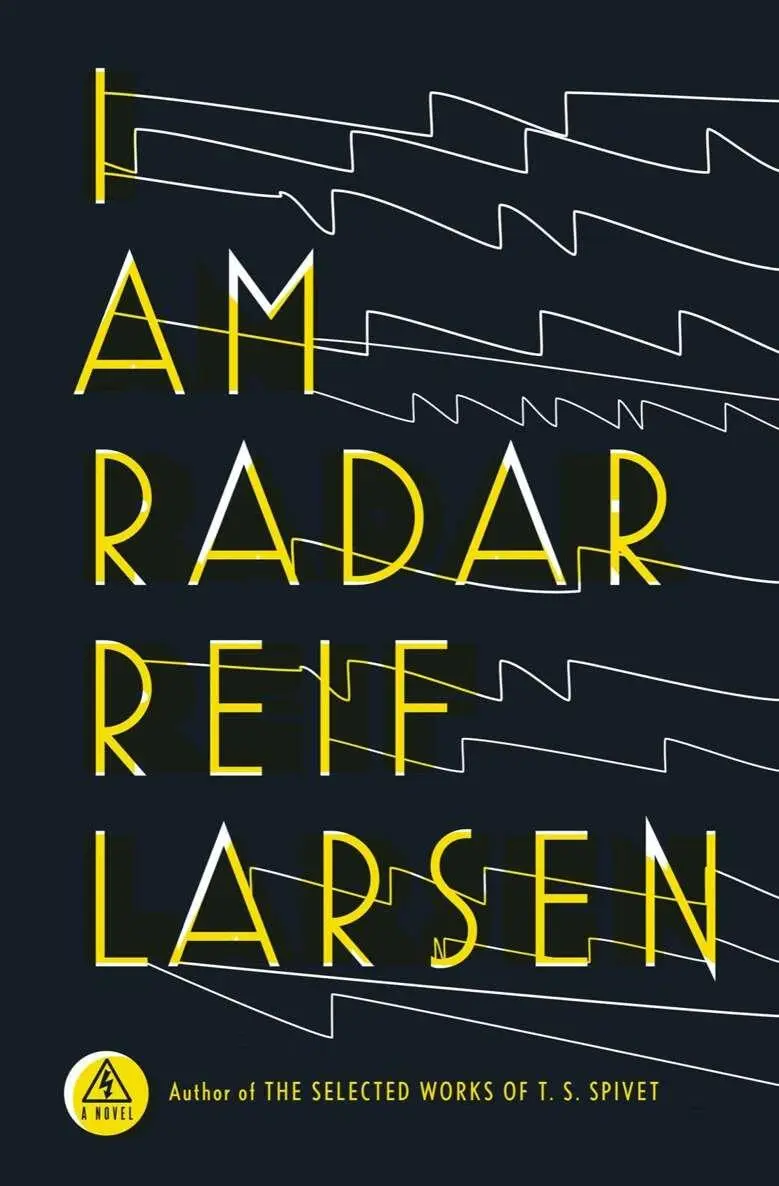
- Название:I Am Radar
- Автор:
- Издательство:Penguin Press
- Жанр:
- Год:2015
- ISBN:нет данных
- Рейтинг книги:3 / 5. Голосов: 1
-
Избранное:Добавить в избранное
- Отзывы:
-
Ваша оценка:
I Am Radar: краткое содержание, описание и аннотация
Предлагаем к чтению аннотацию, описание, краткое содержание или предисловие (зависит от того, что написал сам автор книги «I Am Radar»). Если вы не нашли необходимую информацию о книге — напишите в комментариях, мы постараемся отыскать её.
I Am Radar Deep in arctic Norway, a cadre of Norwegian schoolteachers is imprisoned during the Second World War. Founding a radical secret society that will hover on the margins of recorded history for decades to come, these schoolteachers steal radioactive material from a hidden Nazi nuclear reactor and use it to stage a surreal art performance on a frozen coastline. This strange society appears again in the aftermath of Cambodia’s murderous Khmer Rouge regime, when another secret performance takes place but goes horrifically wrong. Echoes of this disaster can be heard during the Yugoslavian wars, when an avant-garde puppeteer finds himself trapped inside Belgrade while his brother serves in the genocidal militia that attacks Srebrenica. Decades later, in the war-torn Congo, a disfigured literature professor assembles the largest library in the world even as the country around him collapses. All of these stories are linked by Radar — now a gifted radio operator living in the New Jersey Meadowlands — who struggles with love, a set of hapless parents,and a terrible medical affliction that he has only just begun to comprehend.
I Am Radar — читать онлайн бесплатно полную книгу (весь текст) целиком
Ниже представлен текст книги, разбитый по страницам. Система сохранения места последней прочитанной страницы, позволяет с удобством читать онлайн бесплатно книгу «I Am Radar», без необходимости каждый раз заново искать на чём Вы остановились. Поставьте закладку, и сможете в любой момент перейти на страницу, на которой закончили чтение.
Интервал:
Закладка:
“It’ll all be finished soon. Before the year’s out,” said Miroslav.
“You think so?”
“  ’s pushing his luck. Even Clinton— dickless, prickless Clinton —won’t be able to put up with him much longer.”
“I never knew you were such an optimist, Miro.” Twining the smoke with a sip of juice and wincing at the terrible beauty of it all.
Eder started in on “Ajde Slušaj, Slušaj Kaleš Bre And¯o,” and Gazur came over with two slices of cherry štrudla .
“A gift,” he said. “Compliments of the house.”
“I might be dead without that man,” Danilo said as he watched Gazur waddle away. “Everything has been compliments of the house.”
“Well, it’s a big house. You know he runs one of the biggest black market rings in the city.”
“No!”
“I thought you knew. It’s how he and Ilija know each other. Why do you think he has so many compliments to give?”
“Gazur? But he’s such a good man.”
“To you, maybe.”
“I don’t believe it.”
“They say he was born a Jew but renounced his faith.”
“Now you’re lying.”
“This is only what they say.”
Miroslav seemed to grow serious. He took down the last of his cappuccino and then looked at his father. “Look, Tata. I have to go away for a while.”
“What do you mean?”
Miroslav looked over at Eder on the accordion. “You can’t tell anyone,” he said. “No reporters. Not Ilija. Not anyone.”
“Where are you going?”
“Sarajevo.”
Danilo blinked. “Sarajevo? But it’s under siege.”
“Oh, is it? I hadn’t heard.”
“It’s not safe, Miroslav. You’ve seen the pictures. They’re shelling it from—”
“Tata, it’s not safe anywhere. The Americans could drop a bomb on us right now. So should we not sit here? Should we not sit here and take our drinks because of a bomb that may never come?”
“But you can’t even get near there. How will you get inside the city?”
“You can always get inside. Getting inside isn’t the problem.”
“And then? And then what’re you going to do?”
“Tata, I need you to promise you won’t say anything. I mean, it would be very bad if they found out I told you.”
“If who found out? What are you talking about, Miroslav?”
“I need you to promise.”
“Okay,” he said. “I promise. I won’t say anything.”
Miroslav shifted in his chair. “Last year I was contacted by some men who are living in the United States. They’re a very important group — they’ve done incredible work all over the world. I saw a video once of this miniatures installation they did in northern Russia in the 1960s. It was in the middle of a nuclear test explosion. The installation was destroyed by the blast. You can see the bomb and then the blast coming. . Well, it changed everything for me. I mean, you see something like that and it’s as if there’s your life before and then your life after. Things could never be the same again. And I knew what I was supposed to do.”
“You mean make those boxes.”
“Yes, but it’s more than that. . It was like I saw the world in a different light, a different set of possibilities. Suddenly there was a way for me to be me.”
“And so these people. . they contacted you?”
“They had heard about my work through a professor in the philosophy department here. He knows these guys, he’s a great admirer of theirs, and now they asked me for help putting on their show in Sarajevo. I mean, it’s a huge honor. These are my heroes.”
“But of all the places in the world, why would you want to put on a show in Sarajevo? You could be killed!”
Miroslav shook his head. “Oh, never mind, Tata. Forget I even told you.”
“I’m sorry,” said Danilo. “Where are you going to do it? On the street? Are there snipers?”
“We’re performing in the National Library. It’s burned down, but the shell of the building’s still there. It’s a magnificent space. Here, look.” He slid a photograph across the table. “Can you imagine?”
Danilo examined the photo. “You’ll put a black box in there ?”
“No, no. They have a whole show. They’ll use some of my technology, but they have an agenda. They have a whole plan.”
“What’s the show about?”
“Many things. It’s about many things.”
“Like what?”
“Like many things. String theory. Neutrinos.”
“Neutrinos?”
“Invisible particles that pass through everything.”

Fig. 2.7. National Library of Bosnia and Herzegovina, Winter 1993
Photo by R. Richards, from Røed-Larsen, P., Spesielle Partikler, p. 988
Danilo returned the photograph. “Can’t you wait until the war is finished to do this?”
“No. It has to be now. That’s the whole point.”
“But do people really want to watch something like that during a war? If I’m trying to survive, maybe I just want food and water instead of a show about neutrons.”
“Neutrinos,” said Miroslav. “But this is what this group does. The whole performance is what it is because of where it’s taking place.”
“Well, it doesn’t sound right to me.”
“Fine,” said Miroslav. “It doesn’t sound right to you. Let’s just forget it, okay?”
“Okay.”
They ate the pie and smoked and listened to Eder working the accordion.
Gazur came over. “How is the štrudla ?”
“Delicious,” said Danilo.
“The river’s beautiful today, isn’t it?”
“It’s always beautiful.”
“Your father’s a real man,” Gazur said to Miroslav. “I meet a lot of men, but none like your father. The world needs more men like him, wouldn’t you agree?”
“He’s a real man,” Miroslav agreed.
“Father and son.” Gazur smiled. “It’s good to see.”
When he had gone again, Danilo turned to Miroslav. “He’s really into the black market?”
“He’s the biggest there is. He has a whole warehouse of guns. Drugs. Prostitutes. Everything.”
“Gazur,” said Danilo, shaking his head. “What next?”
After a while, he said, “You know, back home, your elephant’s still in the barn.”
Miroslav laughed. “That old thing. I told you to burn it!”
“I’ll never burn it. So long as I live. Stoja’s altar is there.”
Miroslav nodded. His face grew somber.
“I miss her,” he said.
“Yes,” said Danilo. Then: “This group from the U.S., they like you?”
“They said I was the best they’ve ever seen.”
“They did?”
“It’s a chance of a lifetime, Tata. It will be my greatest achievement.”
“I’m proud.”
“Thank you.”
“You’ve become a man now.”
“Why does everyone keep saying that?”
“You’ll be careful?”
“Of course, Tata,” he said. “I’m always careful.”
“I can’t lose everything again.”
8
The next week, Danilo found a homemade postcard slipped beneath the door to the storage house.

Fig. 2.8. Postcard of Neutrino Collision, Hydrogen Bubble Chamber (1970)
From Røed-Larsen, P., Spesielle Partikler, p. 991
Читать дальшеИнтервал:
Закладка:
Похожие книги на «I Am Radar»
Представляем Вашему вниманию похожие книги на «I Am Radar» списком для выбора. Мы отобрали схожую по названию и смыслу литературу в надежде предоставить читателям больше вариантов отыскать новые, интересные, ещё непрочитанные произведения.








Обсуждение, отзывы о книге «I Am Radar» и просто собственные мнения читателей. Оставьте ваши комментарии, напишите, что Вы думаете о произведении, его смысле или главных героях. Укажите что конкретно понравилось, а что нет, и почему Вы так считаете.