Reif Larsen - I Am Radar
Здесь есть возможность читать онлайн «Reif Larsen - I Am Radar» весь текст электронной книги совершенно бесплатно (целиком полную версию без сокращений). В некоторых случаях можно слушать аудио, скачать через торрент в формате fb2 и присутствует краткое содержание. Год выпуска: 2015, Издательство: Penguin Press, Жанр: Современная проза, на английском языке. Описание произведения, (предисловие) а так же отзывы посетителей доступны на портале библиотеки ЛибКат.
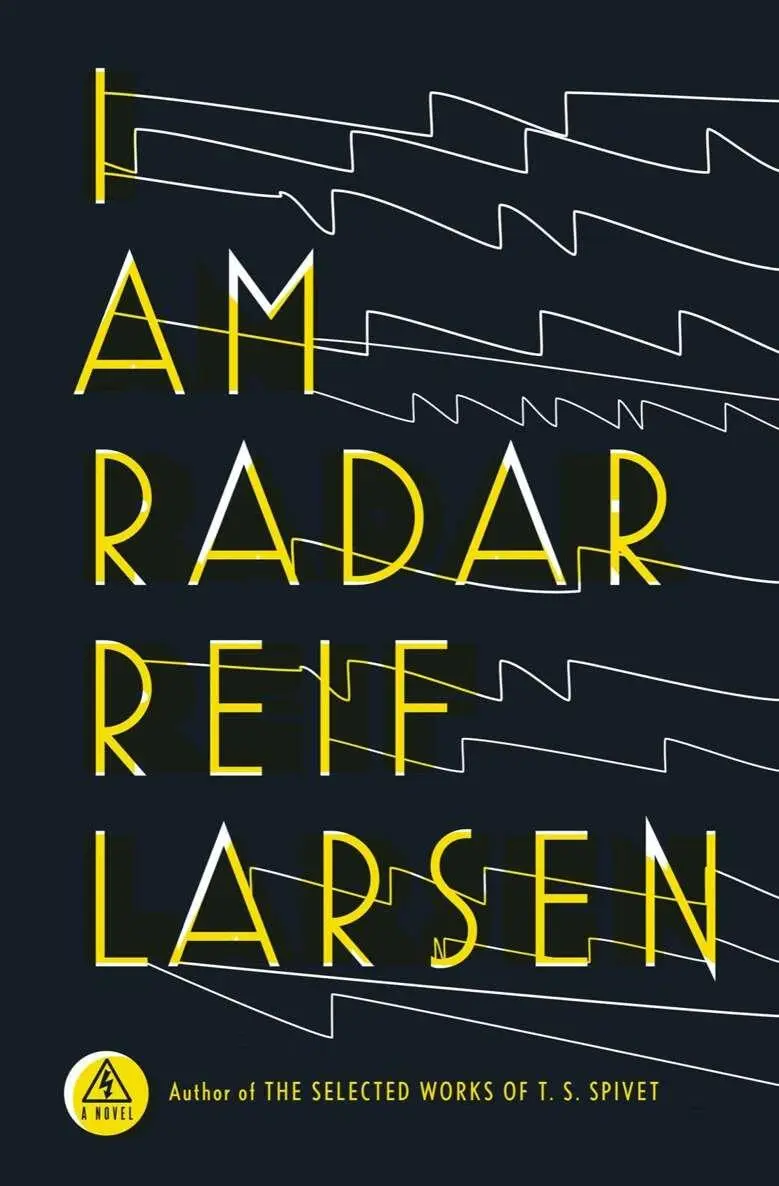
- Название:I Am Radar
- Автор:
- Издательство:Penguin Press
- Жанр:
- Год:2015
- ISBN:нет данных
- Рейтинг книги:3 / 5. Голосов: 1
-
Избранное:Добавить в избранное
- Отзывы:
-
Ваша оценка:
I Am Radar: краткое содержание, описание и аннотация
Предлагаем к чтению аннотацию, описание, краткое содержание или предисловие (зависит от того, что написал сам автор книги «I Am Radar»). Если вы не нашли необходимую информацию о книге — напишите в комментариях, мы постараемся отыскать её.
I Am Radar Deep in arctic Norway, a cadre of Norwegian schoolteachers is imprisoned during the Second World War. Founding a radical secret society that will hover on the margins of recorded history for decades to come, these schoolteachers steal radioactive material from a hidden Nazi nuclear reactor and use it to stage a surreal art performance on a frozen coastline. This strange society appears again in the aftermath of Cambodia’s murderous Khmer Rouge regime, when another secret performance takes place but goes horrifically wrong. Echoes of this disaster can be heard during the Yugoslavian wars, when an avant-garde puppeteer finds himself trapped inside Belgrade while his brother serves in the genocidal militia that attacks Srebrenica. Decades later, in the war-torn Congo, a disfigured literature professor assembles the largest library in the world even as the country around him collapses. All of these stories are linked by Radar — now a gifted radio operator living in the New Jersey Meadowlands — who struggles with love, a set of hapless parents,and a terrible medical affliction that he has only just begun to comprehend.
I Am Radar — читать онлайн бесплатно полную книгу (весь текст) целиком
Ниже представлен текст книги, разбитый по страницам. Система сохранения места последней прочитанной страницы, позволяет с удобством читать онлайн бесплатно книгу «I Am Radar», без необходимости каждый раз заново искать на чём Вы остановились. Поставьте закладку, и сможете в любой момент перейти на страницу, на которой закончили чтение.
Интервал:
Закладка:
At first he thought it might be from Miša, and his heart began to race, but when he flipped it over there was no stamp or address, only the minuscule handwriting of his eldest:
Vraticu se uskoro.
— M.
“I’m sorry,” said Ilija later that day at the Rijeka. “Where did he go?”
“I’m not supposed to say.”
Ilija looked down at his hands, then reached into his bag.
“I wasn’t going to show you this. A friend found it. From last year. You said Miroslav had been in the papers.”
“That’s right.”
Ilija handed him a rumpled copy of Naša Borba, a leftist monthly.
On the cover was a picture of Miroslav and an older man, each holding a pipe; Miroslav’s was grotesquely larger than the other man’s. The older man was wearing some kind of peasant’s costume. He looked strangely familiar. The two men stood next to a wall, which was covered in a black-and-red graffito.
“Ja nisam takav sin oca,” it read—“I am not my father’s son.” This was also the title of the article.
“Who’s that other man?” said Danilo.
“He looks like you, doesn’t he? That’s what I thought.”
“But what does it mean?”
“Everyone said this was a big antiwar statement. I thought it was stupid. I didn’t realize it was him.”
Danilo read the article. In the accompanying interview, Miroslav claimed his graffito was not a play on the common phrase “Kakav otac takav sin” (“Like father, like son”), but rather that he was paraphrasing another famous graffito, seen on the crumbled wall of the Berlin Zoo in the aftermath of World War II: “Sind wir mehr als dieses Erbe. .” (“We are more than this gift. .”).
N.B.: But this doesn’t seem like a paraphrase.
M.D.: Well, exactly, exactly. We can no longer paraphrase our parents’ generation. And the generation before. We see what happens. We repeat their mistakes. Carnage.
N.B.: Would you say you have a political agenda?
M.D.: I have no agenda. I’m an artist.
N.B.: Surely everyone has an agenda, whether they’re willing to state it publicly or not.
M.D.: My job is to make my work. The audience can decide what it means. I can’t control their reaction.
N.B.: Do you think the artist becomes more critical to society in wartime?
M.D.: The artist is always critical to society, even though the artist must end up hating society. War happens when society forgets its artists.
N.B.: War happens for many reasons.
M.D.: War happens for only one reason: we cannot see past our own death.3
“No offense, but your son has always rubbed me the wrong way,” said Ilija when Danilo looked up from the paper. “I never knew where he stood. I never saw him with any girls.”
“He’s a good boy.”
“Yes, yes, of course. I meant no offense,” said Ilija. He grunted, clapping his hands. “Aye. I’m so constipated I could punch a horse. Gazur! Gazur. . come here. Do you have something to get this train started again?”
• • •
DANILO BEGAN to collect newspapers. He started listening to the radio again. There were more reports of mass graves being found in Srebrenica. Even some of the Serbian press began to call it an atrocity, though others claimed it was revenge for a previous massacre performed by the Muslims. Perhaps sensing an endgame,  had begun to slowly distance himself in his speeches from Radovan Karadžic and the Bosnian Serbs.
But no news came from Sarajevo. No news of a show in the library that was no longer a library. Danilo lay on his back and listened to the radio, but there was nothing. No mention of either of his sons. He lay among the washing machines and smoked and listened and waited.
Then, on August 28, a 120-millimeter mortar fell onto Mula Mustafe Bašeskije Street, just outside the busy Markale Market, in the heart of Sarajevo. Thirty-seven people were killed, and nearly one hundred wounded. The news over the radio was sketchy at first; the newsman initially claimed the attack had been perpetrated by Bosnian authorities on their own people, to garner sympathy from the international community. This would later be meticulously refuted during the 2006 ICTY appeal case of Stanislav Galic via a thorough analysis of the depth of the impact crater (22cm ±2cm), the angle of descent (60º ±5º), the bearing of the shell (20º ±3º), and the charge of the mortar (0 ±3), narrowing the Markale projectile’s origins to two possible positions above the city, both of which were held by Srpska troops in August 1995.4
Prompted by the Markale massacre, on August 30, after years of waiting on the sidelines, NATO began Operation Deliberate Force, a comprehensive air offensive against Bosnian Serb positions. Belgrade ground to a halt, wondering if the bombs would soon drop on them.
• • •
DANILO SAT in the Rijeka, listening to the peculiar silence of the city. Even Gazur’s customary cheer came off as oddly hollow.
“The river’s still beautiful,” he said. “No matter what happens.”
“Where’s Eder?”
“He left. He didn’t want to play the old songs anymore. So he quit and went to war.” Gazur waved his hand dismissively. “ Bah! Now he can play all the turbo-folk he wants. This war kills me.”
“But a war can also be profitable, yes?” said Danilo.
“Nothing is worth the price of life, my friend. I would trade everything I have for peace tomorrow.”
Danilo drank his black currant juice and smoked. He put his hand on the morning’s newspaper but did not open it. The night before he had dreamed he was floating down a river. Not the Sava or the Drina, but a mighty river in a jungle. At some point he looked up and saw that the river abruptly vanished into thin air. In the dream, he wondered if he was actually inside one of Miroslav’s black boxes. Whether he was tiny now. He had awoken just before he got to the point where the water ended. He did not get to see what was beyond the box.
Ilija came out onto the terrace.
“Ilija,” said Danilo, surprised. “Come, join me. Let me tell you about my dream. You can tell me what it means.”
“Hello, friend,” said Ilija.
“There’s no music. Eder has gone to war. .” He saw the expression on Ilija’s face. “What is it?”
“Your son,” said Ilija.
“My son?” Visions of Miša, shot in a field. “Which son?”
“Miroslav.”
“Miroslav?”
At this precise moment, Gazur came up to the two men, but, seeing their expressions, he froze, understanding everything, and withdrew.
Ilija wiped some sweat from his brow and grimaced. “I’m so sorry, my friend,” he said. “They found him in his flat. They said he had suffocated.”
“Suffocated?” Danilo’s body froze. “How?”
“That’s all they said. My friend’s a policeman. He called me just now. I went to the warehouse to find you.” Ilija shook his head. “This world is such shit.”
“But he was supposed to be in Sarajevo! Are you sure it was him?”
“A neighbor found him in his flat. The door was open.”
“What happened?”
“I don’t know. My friend didn’t know anything more. He’s expecting you to call.” He handed Danilo a slip of paper.
Danilo looked at the number. “He didn’t even tell me he was back!”
“I’m very sorry, my friend,” said Ilija. “I wish I could do something more. His body is at the morgue in St. Sava’s hospital. I can drive you there if you’d like.”
Читать дальшеИнтервал:
Закладка:
Похожие книги на «I Am Radar»
Представляем Вашему вниманию похожие книги на «I Am Radar» списком для выбора. Мы отобрали схожую по названию и смыслу литературу в надежде предоставить читателям больше вариантов отыскать новые, интересные, ещё непрочитанные произведения.








Обсуждение, отзывы о книге «I Am Radar» и просто собственные мнения читателей. Оставьте ваши комментарии, напишите, что Вы думаете о произведении, его смысле или главных героях. Укажите что конкретно понравилось, а что нет, и почему Вы так считаете.