Reif Larsen - I Am Radar
Здесь есть возможность читать онлайн «Reif Larsen - I Am Radar» весь текст электронной книги совершенно бесплатно (целиком полную версию без сокращений). В некоторых случаях можно слушать аудио, скачать через торрент в формате fb2 и присутствует краткое содержание. Год выпуска: 2015, Издательство: Penguin Press, Жанр: Современная проза, на английском языке. Описание произведения, (предисловие) а так же отзывы посетителей доступны на портале библиотеки ЛибКат.
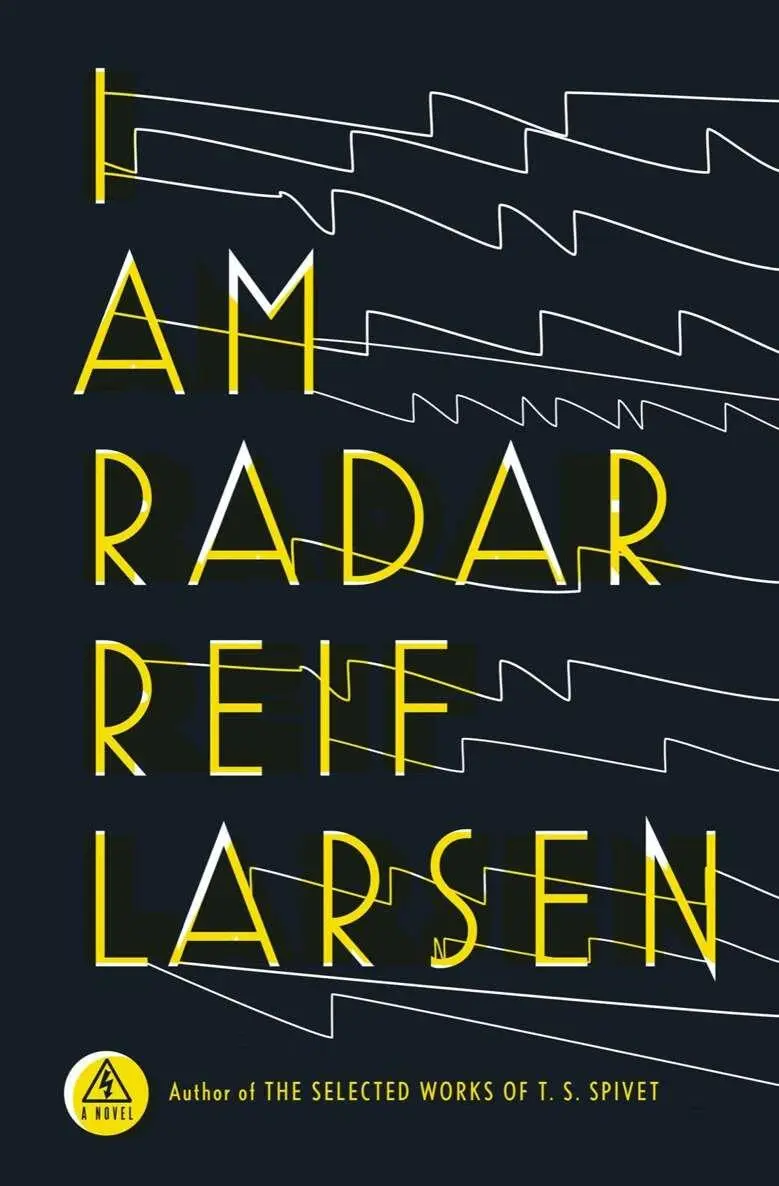
- Название:I Am Radar
- Автор:
- Издательство:Penguin Press
- Жанр:
- Год:2015
- ISBN:нет данных
- Рейтинг книги:3 / 5. Голосов: 1
-
Избранное:Добавить в избранное
- Отзывы:
-
Ваша оценка:
I Am Radar: краткое содержание, описание и аннотация
Предлагаем к чтению аннотацию, описание, краткое содержание или предисловие (зависит от того, что написал сам автор книги «I Am Radar»). Если вы не нашли необходимую информацию о книге — напишите в комментариях, мы постараемся отыскать её.
I Am Radar Deep in arctic Norway, a cadre of Norwegian schoolteachers is imprisoned during the Second World War. Founding a radical secret society that will hover on the margins of recorded history for decades to come, these schoolteachers steal radioactive material from a hidden Nazi nuclear reactor and use it to stage a surreal art performance on a frozen coastline. This strange society appears again in the aftermath of Cambodia’s murderous Khmer Rouge regime, when another secret performance takes place but goes horrifically wrong. Echoes of this disaster can be heard during the Yugoslavian wars, when an avant-garde puppeteer finds himself trapped inside Belgrade while his brother serves in the genocidal militia that attacks Srebrenica. Decades later, in the war-torn Congo, a disfigured literature professor assembles the largest library in the world even as the country around him collapses. All of these stories are linked by Radar — now a gifted radio operator living in the New Jersey Meadowlands — who struggles with love, a set of hapless parents,and a terrible medical affliction that he has only just begun to comprehend.
I Am Radar — читать онлайн бесплатно полную книгу (весь текст) целиком
Ниже представлен текст книги, разбитый по страницам. Система сохранения места последней прочитанной страницы, позволяет с удобством читать онлайн бесплатно книгу «I Am Radar», без необходимости каждый раз заново искать на чём Вы остановились. Поставьте закладку, и сможете в любой момент перейти на страницу, на которой закончили чтение.
Интервал:
Закладка:
Danilo noticed then that the elephant was not right. Half of its body looked as if it had been eaten away by wolves. There was a great hole in its stomach, and you could see inside it, even as it was walking past the last building and onto the first stretch of the bridge. There were no guts or blood inside the animal, only metal, mechanics, pulleys. He noticed then that the elephant had only one ear.
Yes . He understood now. This elephant was the elephant in the barn. Incomplete, but complete. Moving. Walking .
He leaned in, staring at the rider on top, who was no taller than a thimble. He could almost see it. He cursed the age of his eyes. He squinted. Yes. It was. It had to be. It was his son. Beneath the black curtain, Danilo crossed himself twice.
The elephant had arrived at the center of the bridge, next to the kapija . It stopped, flapping its ears. The music, too, hung still, waiting. The tiny Miroslav seemed to gesture with his whip, and then the elephant shook its head and Miroslav gestured again and whipped the elephant’s back, and slowly the animal turned, shuffling to its left, placing one, then two of its feet onto the bridge’s parapet. The violins rising, urged on by the hook-slant caress of the accordion.
“No,” he whispered.
The elephant seemed to hear him, for it paused, its body open to the world, straining. He could see the whirring gears inside its rib cage. The music gathering force, the cello working itself into a frenzy, the violins everywhere at once, and then the creature was lifting itself, up and over the parapet, and Miroslav was urging it onward, whipping the creature with a whip the size of a thread. The music crescendoed as gravity caught the elephant and it started to fall toward the surface of the water and then—
Black . The violins sounded once more and everything went quiet.
Danilo waited for the light to return, but there was no more. A click from somewhere in the darkness, a flipping of a switch. He could hear the muffled traffic again. The show was over.
He lifted his head from beneath the curtain, blinking at the dingy city that greeted him. A woman with several shopping bags full of bottled water looked at him impatiently. He stepped aside so that she could have her turn.
• • •
DANILO WAITED by the black box all day. There was always a small line of people, and passersby would see the line and stop and talk and then begin to wait themselves. Occasionally children would swing on the swings in the little playground and then come over, curious, and they too would put the curtain over their heads and watch the show, and some would come out crying, running back to their parents.
At one point, a photographer came up and snapped photos of the box and of those waiting to see it. Shortly after, a group of soldiers, on their way to guard the Parliament building, stopped and examined the box, poking at the curtain with the muzzles of their guns, though none of them stayed to watch the show.
Some patrons put money into the little wooden box. Some did not. One man slipped in a letter. Danilo began to predict who would give money and who would not. There was a recurring conversation about what was meant by the picture of Tesla and, by extension, how much the show was worth.
“Nothing is worth anything,” a woman in dark glasses declared, and she looked as if she meant it, though she stayed to watch the show three times.
Danilo himself rewatched the elephant perhaps a dozen times. Each time, it was the same: the creature reached the point of falling and then the scene went dark, never allowing the animal to complete its fall. And there was never any evidence of previous falls. He began to look for clues, to watch the rider’s movements, to stare at the meticulously rendered houses in the background. He noticed more things: laundry drying on balconies, a crow watching from a nearby tree. After witnessing the interrupted fall for the fifth time, he knew the movements and the timing so well, it was like watching a recurring dream. After a certain point, he could not be sure it was not a recurring dream.
Miroslav never showed. Danilo marveled at how he could leave something so remarkable and precious out on the street like this, where anyone could steal it, where anyone could take the money in the wooden case, even if this money did not amount to much. And yet the box remained. Where was the creator of all this? No one could say. The sign, it turned out, was a lie: he would not be right back.
Night fell. Danilo was hungry. The vendor selling nuts had already packed up his cart, but Danilo did not dare search for food, fearing that as soon as he left, his son would come back and fetch his box.
The streetlights sputtered, popped on, one by one. Danilo sat on the sidewalk, watching the box. The number of people on the street had thinned. A policeman came up to him and nudged him with his baton, telling him to move on.
“I’m waiting for my son,” he said.
“Where is he?”
“He told me to watch his puppet box while he was gone.” He pointed across the street, though the black box had been swallowed by shadows. The policeman looked confused.
“Have you seen it?” said Danilo. “It’s really something. My son is a great artist.”
“Get out of here, old man,” said the policeman.
Danilo drifted to a park across the street. From such a distance, he could just barely make out the silhouette of the box. He was hungry and cold. He sat on a bench and felt sleep coming, though he was afraid to close his eyes. Finally, reluctantly, he walked back through the city to his storage room, which felt comparatively balmy. The little sleep he got was interrupted by an insistent vision of his son coming to take the box away in the middle of the night, leaving nothing behind but an empty sidewalk.
At first light, he jumped up and ran back to Nikola Pašic Square. To his relief, the box was still there. The same sign, the same wooden cashbox, although when he shook it, he found the cashbox was empty. Someone had taken the money! Or maybe Miroslav had visited while he was gone. The thought gave him hope. There was no line to view the box, so Danilo dipped his head under the curtain and waited for the elephant to appear.
As soon as he entered the curtain, he noticed that the smell had changed. Or maybe it was the darkness itself. He waited. This time, when the music came, there was only a lone cello, surfacing from the deep as the light gradually rose. It was the same Turkish Bridge, the same small Drina, though the water was darker, reddish this time, filled with the mud from a heavy rain.
There were people on the bridge. The sky had changed. By the pinkness of the stone, Danilo guessed it to be early evening. He had been to the bridge many times at this hour; it was one of his favorite times to visit, to feel the valley slinking toward nightfall.
Fighting the soft blur in his eyes, Danilo squinted and saw that the people on the bridge were soldiers. He recoiled. They were White Eagles. The soldiers were standing and talking, their guns slung casually across their backs. But surely they could not see him. They were inside, and he was outside. He leaned in again, marveling at their littleness, the independence of their movement. Who controlled these men? If he reached out and smashed them with his hand, would they fight back? Would they shoot him with their tiny guns?
And then he saw the blood. The bridge was stained dark crimson with blood. They were standing in the blood, talking casually, smoking.
The cello dipped and swirled with the muddy current of the river.
A woman appeared. From the near bank, where the elephant had walked the day before. She was running, looking back in the direction from which she had come. Her clothes were torn, and she was wearing no shoes. She moved quickly, up and onto the bridge, in the direction of the soilders. Danilo wanted to warn her not to run toward them.
Читать дальшеИнтервал:
Закладка:
Похожие книги на «I Am Radar»
Представляем Вашему вниманию похожие книги на «I Am Radar» списком для выбора. Мы отобрали схожую по названию и смыслу литературу в надежде предоставить читателям больше вариантов отыскать новые, интересные, ещё непрочитанные произведения.










Обсуждение, отзывы о книге «I Am Radar» и просто собственные мнения читателей. Оставьте ваши комментарии, напишите, что Вы думаете о произведении, его смысле или главных героях. Укажите что конкретно понравилось, а что нет, и почему Вы так считаете.