Reif Larsen - I Am Radar
Здесь есть возможность читать онлайн «Reif Larsen - I Am Radar» весь текст электронной книги совершенно бесплатно (целиком полную версию без сокращений). В некоторых случаях можно слушать аудио, скачать через торрент в формате fb2 и присутствует краткое содержание. Год выпуска: 2015, Издательство: Penguin Press, Жанр: Современная проза, на английском языке. Описание произведения, (предисловие) а так же отзывы посетителей доступны на портале библиотеки ЛибКат.
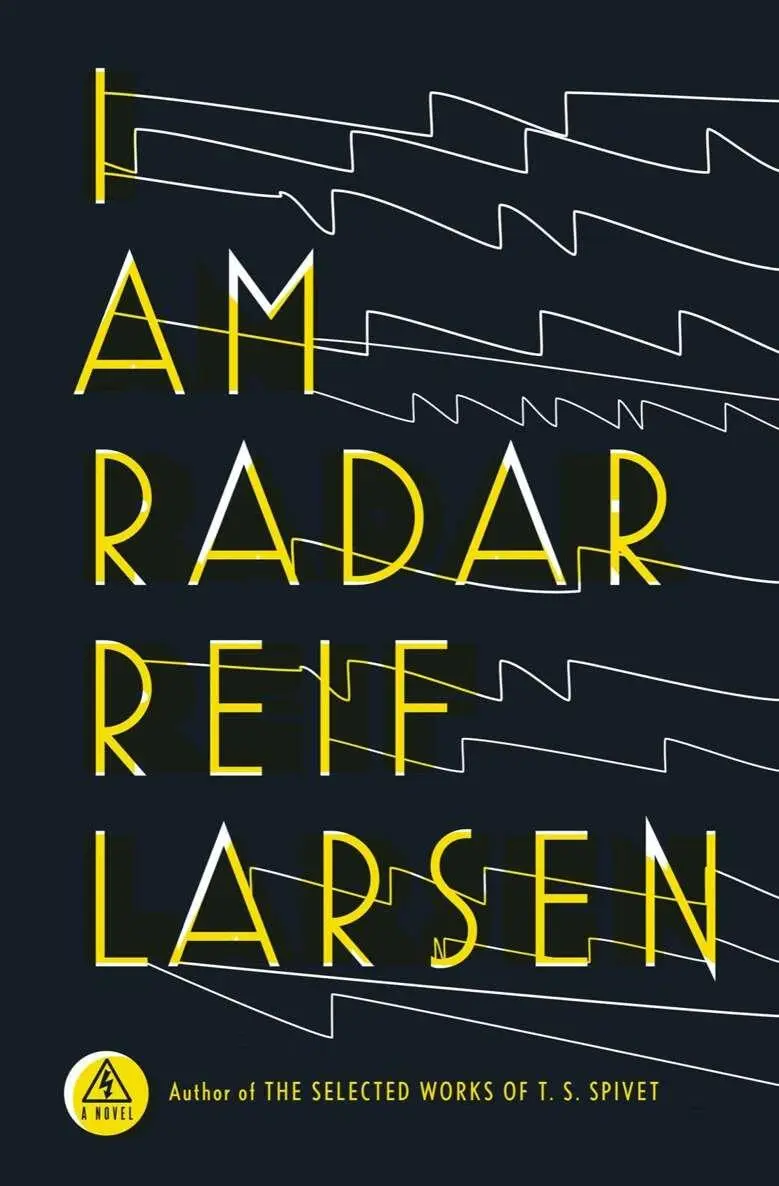
- Название:I Am Radar
- Автор:
- Издательство:Penguin Press
- Жанр:
- Год:2015
- ISBN:нет данных
- Рейтинг книги:3 / 5. Голосов: 1
-
Избранное:Добавить в избранное
- Отзывы:
-
Ваша оценка:
I Am Radar: краткое содержание, описание и аннотация
Предлагаем к чтению аннотацию, описание, краткое содержание или предисловие (зависит от того, что написал сам автор книги «I Am Radar»). Если вы не нашли необходимую информацию о книге — напишите в комментариях, мы постараемся отыскать её.
I Am Radar Deep in arctic Norway, a cadre of Norwegian schoolteachers is imprisoned during the Second World War. Founding a radical secret society that will hover on the margins of recorded history for decades to come, these schoolteachers steal radioactive material from a hidden Nazi nuclear reactor and use it to stage a surreal art performance on a frozen coastline. This strange society appears again in the aftermath of Cambodia’s murderous Khmer Rouge regime, when another secret performance takes place but goes horrifically wrong. Echoes of this disaster can be heard during the Yugoslavian wars, when an avant-garde puppeteer finds himself trapped inside Belgrade while his brother serves in the genocidal militia that attacks Srebrenica. Decades later, in the war-torn Congo, a disfigured literature professor assembles the largest library in the world even as the country around him collapses. All of these stories are linked by Radar — now a gifted radio operator living in the New Jersey Meadowlands — who struggles with love, a set of hapless parents,and a terrible medical affliction that he has only just begun to comprehend.
I Am Radar — читать онлайн бесплатно полную книгу (весь текст) целиком
Ниже представлен текст книги, разбитый по страницам. Система сохранения места последней прочитанной страницы, позволяет с удобством читать онлайн бесплатно книгу «I Am Radar», без необходимости каждый раз заново искать на чём Вы остановились. Поставьте закладку, и сможете в любой момент перейти на страницу, на которой закончили чтение.
Интервал:
Закладка:
“There’s no normal when it comes to the sea,” said Daneri.
“The radar didn’t see much,” said Akaki, the chief mate.
“The radar never sees much,” said the captain. “We’re in for one tonight.”
Ivan, seeing the alarm on Radar’s face, leaned over and whispered, “I wouldn’t worry.”
Back in Moby-Dikt, Otik, who had not been present at dinner, had already imploded into the sinkhole of his nausea. He lay on his cot, pale and moaning, one paw gripping the rim of his vomit bucket.
“Please,” he mumbled, delirious. “Tell my father. .”
“He’ll be all right,” said Lars.
But Otik did not look all right. “Tell my father. . to meet me at the café,” he whispered.
Lars tried to continue at the workbench, though even his normally glowing Nordic countenance had faded to a pale shade of avocado. The pitching grew worse, and his tools began to slide off the bench and clatter onto the floor.
With nothing else to do, Radar burrowed down into his bed and tried to sleep. As he lay supine, the boat’s roll and pitch became magnified. He closed his eyes, trying to reassure himself with the protection offered by these great layers of steel wrapped around his little cot. Surely such an awesome creation of man was immune to the forces of nature? He thought of the Titanic and its own claims to invincibility. The Aleph was no Titanic. She was made of much weaker stock. A shiver passed through him. Outside their container, the ship creaked and groaned. When Radar finally drifted off, his dreams were, as usual, fitful, incomprehensible affairs marked by leaks sprouting in hulls, horses swimming in open oceans, German U-boats breaching the surface in an explosion of foam.
After several hours of tossing and being tossed, Radar was awoken by a sharp, stabbing pain on his forehead. He opened his eyes to find the inside of the container in chaos, the world tipping upward at an impossible angle. It was as if a giant had decided to pick up the opposite corner of the box in order to get a peek at him. The downward slope had caused much of the equipment to come off the walls and the chairs to all slide up against his cot. In his bed he found several tools, including the one that had apparently attacked him: a silver T square. He touched his fingers to his head. They came away wet with blood.
Just when it appeared as if the world could not possibly tip any more, lest the floor become the ceiling and visa versa, they reached a kind of equilibrium point. There was a moment of rest, and then the container began to pitch steadily back in the other direction. The loose tools, the teakettle, and the conference of chairs dutifully complied with this new incline by sliding away to the opposite wall. Radar saw one of his boots tumble by. Again, just when it seemed the container would flip entirely, the angle of repose was reached, and the chairs came sliding back to him. Radar gripped the edge of the cot, transfixed by this display of inanimate migration.
“Help me with. . would you?” he heard someone shout.
He looked up and saw Lars pressed against a rack of tools. Lars’s legs were dancing about as if he were a drunkard, flailing against the extreme rolls of the boat. His furious effort to contain the remaining tools was proving futile.
“What’s going on?” Radar shouted. A stupid question.
“It’s. . storm,” yelled Lars. This word did not come close to capturing what was taking place inside the container. To be sure, the ship had been engaged in a slight roll and pitch ever since their departure, a vectoring that Radar had steadily grown accustomed to, unlike poor Otik. But this was such a grotesque display of the sea’s violence that the situation would have been laughable if it weren’t so utterly, utterly terrifying.
“When did it get so bad?” Radar shouted. The container had reached its angular apogee and was now lurching in the other direction, causing the chairs to march away again. More clattering and a crash as the lathe toppled over onto a computer.
“The. . half an hour. . so. . can’t.” Lars moved to the lathe, trying to extricate it from the IBM.
“What?” Radar yelled. He realized he couldn’t hear what Lars was saying because of the incredible racket that was reverberating throughout the container. It was one of the more horrible sounds he had ever heard — a groan sustained and amplified into a curdling wail that came and went, came and went, like the wail of a mother who has just lost her son. Except that this wail came not from any living creature but from the ship itself. The bones of the ship were crying.
“Where’s Otik?” yelled Radar over the noise. Otik’s cot was empty save for fifty or so errant bird heads, which rolled and tumbled across the sheets.
Lars pointed.
Beneath the terrible yowl of the wind, Radar heard a noise. It was a human wheeze. An escaping of air from parted lips.
“Otik?”
Radar stumbled over to the cot, dodging the minefield of detritus on the move, and found him on the floor, half wrapped in a top sheet, facedown, bird heads all around, a thin puddle of merguez-colored vomit spilling from his mouth like a speech bubble.
Otik murmured something inaudible.
“What?” Radar leaned in. The man’s giant back was hot to the touch. The ship reached the peak of its roll, hung, and came hurtling down again, bird heads tumbling everywhere. A chair hit them and Radar winced, trying to shield himself.
“Molim te,” Otik wheezed. “Ja umirem.”
“You’re going to be okay, Otik,” said Radar, rubbing his back. “It’s just a storm. It won’t be long now.” He had no idea how long it would be. The storm felt like it might last forever.
“I’m dying,” wheezed Otik.
“You’re not dying, Otik,” said Radar. He blundered across the room and grabbed a towel. Scrambling back to Otik, nearly falling into him, he began to wipe at the vomit smeared across the floor.
“Lars!” he yelled. “We need to get out of here!”
“Ostavi me,” mumbled Otik. “Reci im da mi je žao. Reci im da nisam kreten.”
“Don’t say that, Otik. You’re going to be fine.”
“Ja sam Dubre ,” Otik wheezed.
“You’re doing good work,” said Radar. “You’re doing great work. No one can do what you do.”
“Ja nisam dobra osoba.”
“Ti si dobar covek, Charlie Brown,” said Radar. It was one of the few lines he could say in Serbian.
Otik opened his eyes and looked up at Radar. He was crying. Radar tried to heave him off the floor. It was like trying to lift a small car.
“Lars!” he called. “We need to get him out of here. The tools—” He ducked as a bow saw came flying off its hook and twanged against the table.
Lars had a rope in his hand and was attempting to lash the lathe to the wall. The lights inside the container suddenly flickered and went out. Radar felt his heart sink. Not another blackout. Here? In the middle of the ocean? In the middle of the storm of all storms? He could think of nothing worse.
The lights blinked and buzzed back on again. Radar looked up. The birds. He had forgotten about the birds. They still hung from the ceiling, swaying wildly about, palindroming with the sea.
“Lars!”
“What?”
“We’ve got to get him out of here!” he yelled.
With much effort, they managed to half-carry, half-drag Otik out the door.
“Ostavite me,” he kept saying. “Ostavite me, ostavite me.”
Outside, in cargo hold number four, there were no flying projectiles, but the sound was even more hellacious than inside the container. The wail had turned into a full-pitched scream, and Radar could hear the ribs of the ship straining, their fibers pulled and compressed to the breaking point. It was like being in the belly of a dying whale. At the next roll, Radar tripped and fell and immediately found himself soaked. The floor of the hold was covered in seawater. The water quickly slopped away as the roll reached its vertex and then just as quickly came spilling back onto him. The beams, the bulwark, the very superstructure of the ship screeched in protest. From somewhere ahead, what sounded like an essential support cracked, and the cargo hold around him gave what could only be described as a death rattle.
Читать дальшеИнтервал:
Закладка:
Похожие книги на «I Am Radar»
Представляем Вашему вниманию похожие книги на «I Am Radar» списком для выбора. Мы отобрали схожую по названию и смыслу литературу в надежде предоставить читателям больше вариантов отыскать новые, интересные, ещё непрочитанные произведения.











Обсуждение, отзывы о книге «I Am Radar» и просто собственные мнения читателей. Оставьте ваши комментарии, напишите, что Вы думаете о произведении, его смысле или главных героях. Укажите что конкретно понравилось, а что нет, и почему Вы так считаете.