Reif Larsen - I Am Radar
Здесь есть возможность читать онлайн «Reif Larsen - I Am Radar» весь текст электронной книги совершенно бесплатно (целиком полную версию без сокращений). В некоторых случаях можно слушать аудио, скачать через торрент в формате fb2 и присутствует краткое содержание. Год выпуска: 2015, Издательство: Penguin Press, Жанр: Современная проза, на английском языке. Описание произведения, (предисловие) а так же отзывы посетителей доступны на портале библиотеки ЛибКат.
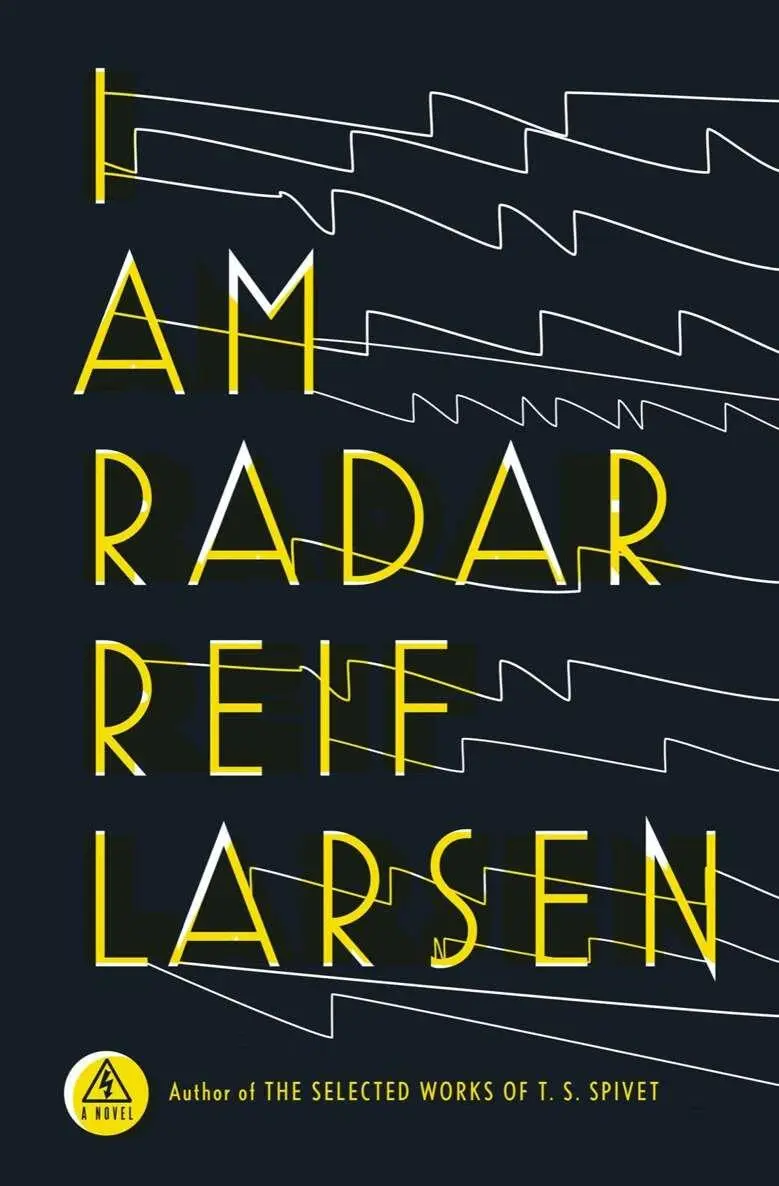
- Название:I Am Radar
- Автор:
- Издательство:Penguin Press
- Жанр:
- Год:2015
- ISBN:нет данных
- Рейтинг книги:3 / 5. Голосов: 1
-
Избранное:Добавить в избранное
- Отзывы:
-
Ваша оценка:
I Am Radar: краткое содержание, описание и аннотация
Предлагаем к чтению аннотацию, описание, краткое содержание или предисловие (зависит от того, что написал сам автор книги «I Am Radar»). Если вы не нашли необходимую информацию о книге — напишите в комментариях, мы постараемся отыскать её.
I Am Radar Deep in arctic Norway, a cadre of Norwegian schoolteachers is imprisoned during the Second World War. Founding a radical secret society that will hover on the margins of recorded history for decades to come, these schoolteachers steal radioactive material from a hidden Nazi nuclear reactor and use it to stage a surreal art performance on a frozen coastline. This strange society appears again in the aftermath of Cambodia’s murderous Khmer Rouge regime, when another secret performance takes place but goes horrifically wrong. Echoes of this disaster can be heard during the Yugoslavian wars, when an avant-garde puppeteer finds himself trapped inside Belgrade while his brother serves in the genocidal militia that attacks Srebrenica. Decades later, in the war-torn Congo, a disfigured literature professor assembles the largest library in the world even as the country around him collapses. All of these stories are linked by Radar — now a gifted radio operator living in the New Jersey Meadowlands — who struggles with love, a set of hapless parents,and a terrible medical affliction that he has only just begun to comprehend.
I Am Radar — читать онлайн бесплатно полную книгу (весь текст) целиком
Ниже представлен текст книги, разбитый по страницам. Система сохранения места последней прочитанной страницы, позволяет с удобством читать онлайн бесплатно книгу «I Am Radar», без необходимости каждый раз заново искать на чём Вы остановились. Поставьте закладку, и сможете в любой момент перейти на страницу, на которой закончили чтение.
Интервал:
Закладка:
The world had slowly shrunk to only this particular patch of sea. Land became a memory, true and not quite true at the same time. Those afternoons on the quarterdeck with the sun on his face and the seabirds hang-gliding next to the railings as if they were unaware of gravity’s embrace — those afternoons flowed together into one long, long day, a day that included all days before and all days after. The ocean of water melded with the text of the book, and he was a helmsman in each, making his way through a vast wilderness to a forever unattainable point on the horizon.
201-998-2666:Dear Mom, I’ve been reading the book you gave me. Not really reading, more like taking it in. I don’t understand everything (or anything) but it’s somehow wonderful. Thank you. Did you find Tata yet? I just wonder what could have happened to him?? He never went anywhere. And the lights? Are they back on? I left you in such a terrible place. Why did you tell me to go??? [Message not sent.]
201-998-2666:Dear Ana Cristina, do you think we could be happy together? Like really happy? Would you grow tired of me? I would never grow tired of you. I would find something new about you every day. [Message not sent.]
201-998-2666:Sorry about the last text. I guess I shouldn’t treat these like journal entries. But if you will never get them and if no one will ever read them except me does it really matter? Let’s test it: I love you, Ana Cristina, I love you. [Message not sent.]
4
When he was not at his spot on the quarterdeck, Radar roamed the many passageways of the Aleph . The 456-foot ship was a maze of steam and boilers and valves, and he would wander through it all, laying his hands on random pipes and the walls of containers just to see if he could discern what lurked within. Sometimes the pipes were hot. Sometimes the containers were cold.
The Aleph flew a Liberian flag, was owned by a Portuguese shipping company based in China, and was skippered by an Argentinean who commanded a predominantly Russian and Estonian crew. For the number of tons of cargo she was hauling, the number of crewmen seemed ridiculously small — aside from the three of them, there were only fifteen men on board, including a full-time cook. The crew appeared to spend most of their time sanding rust off the decks and painting whatever lay beneath. Sometimes it felt as if the whole boat was made of rust. Radar wondered what would happen if they sanded it all away, slowly replacing the frame of the boat with paint, until she was composed only of latex. Would she still float? Would she still carry five above her summer Plimsoll? Or would she slowly sink — so slowly that no one would notice?
For the most part, the crew ignored him as he passed them sanding down the hallways. He could not read their expressions beneath their ventilator masks, but he imagined that they regarded him like a feral dog that they must tolerate but might eventually have to put out of its misery. One day he, too, would be sanded away.
Only the second mate, Ivan Kovalyov, took a liking to him. Ivan had the face of a baby and the body of a wrestler. He was also missing his left pinkie. He was originally from Vanavara, a tiny town in the middle of Siberia on the banks of the Podkamennaya Tunguska River. He was the only man on the ship, besides Lars and himself, who did not drink.
“Where I come from, if you don’t take vodka. . well, this is actually worse than homosexual,” said Ivan. “I am outcast, you see. I am lamb.”
His only vice, he claimed, was music, but he pronounced this word as if it had an extra, secret syllable that only he knew about: myoo-zi-ka.
“When I was little, I spent all of my monies on compact discs,” he said. “Grigor and I would drive down to Krasnoyarsk and get all of the latest hits. Like Crash Test Dummies or Midnight Oil. These bands, I truly love. They are like family. Like fathers. Like my sisters.
“ Once there was this kid, who gets into an accident and he couldn’t go to school ,” he sang. He shook his head. “That is so beautiful and also so true.”
When he was not on watch, Ivan would sit against the bulwark of the poop deck and strum his battered guitar. He had discovered a specific spot where the acoustics caused the music to drift down into the ventilators and naturally amplify throughout the corridors of the ship so that you could hear him playing all the way down in Moby-Dikt. Ivan had a surprising number of original love songs in his repertoire. They were named after different women (“Nadja,” “Carolina,” “Julie Julie”), and they all sounded exactly alike.
“I have only four fingers,” he explained, holding up his hand. “So I must play simple songs.” He strummed a chord, as if to demonstrate. “Ooo-ooo-ooo, and her name was Nadja.”
“Have you met all of these women?” Radar asked Ivan.
“Not yet,” said Ivan. “ Ooo-ooo-ooo, and her name was Oleana. ”
But Ivan did not get many chances to play his songs, because Ivan’s true gift was in celestial navigation. Ivan could read the stars in his sleep, and thus he was always in demand on the bridge. Captain Daneri — who otherwise thought little of his “Red Army,” as he called the Russian crew — confirmed the astonishing nature of Ivan’s astral gifts:
“He’s the best I’ve ever seen. Sweet Jesus, that boy was born in the sky,” he said.
Radar greatly enjoyed watching Ivan shoot the heavens with his sextant. The indexing arm slid across the arc, the mirror clicked into place, and the course was confirmed.
“And what is that one?” Radar said from the deck one night. He was pointing at a star glowing just off their bow.
“That is Sirrah. It looks like one star, but she is actually two stars very close together, like this. Very close, so from ninety-seven light-years away, we see only one star. But you have to remember, you are seeing past right now. You are seeing very old light. Ninety-seven years old . So this light is from before World War I, when people still poop in holes,” he said. “I always like Sirrah. She is beautiful because she is in two constellations at once. She is head of Andromeda and she is also penis of Pegasus. She is both. One day, I will write song about this.”
Rarely did an exchange go by with Ivan that did not end in this phrase.
To really see Ivan at work, however, you needed to observe him in the chart room, with its drawers and drawers of maps covering nearly every coastline in the world. This was his true domain. Ivan spun his plotters in great pirouettes, cutting lines with his red pencil, tapping and wrapping the dividers across the great expanse of depth readings. All he needed was a single star and he could take you anywhere you wanted. The Aleph was equipped with various radar and GPS locating devices, but the electrical work was shoddy and sometimes the systems would fizzle out with no apparent warning, leaving them seemingly without a location. But with Ivan, there was no worry. With Ivan, they would always have a location, because Ivan did not fail.
“How did you learn how to read the stars?” Radar asked him at dinner one evening.
“You must understand that in Soviet Union we didn’t have very many things. But one thing we have more than anyone is space. I mean like literally outer space. Our space program was best in the world. We did not fake moon landing like the Americans. We send up Sputnik first and we send up Laika, first dog into space. And then we send up Yuri Gagarin, first man in space. After this, everyone believed anything is possible. So of course I wanted to be a cosmonaut when I was little. Just like every other Russian boy.”
Читать дальшеИнтервал:
Закладка:
Похожие книги на «I Am Radar»
Представляем Вашему вниманию похожие книги на «I Am Radar» списком для выбора. Мы отобрали схожую по названию и смыслу литературу в надежде предоставить читателям больше вариантов отыскать новые, интересные, ещё непрочитанные произведения.










Обсуждение, отзывы о книге «I Am Radar» и просто собственные мнения читателей. Оставьте ваши комментарии, напишите, что Вы думаете о произведении, его смысле или главных героях. Укажите что конкретно понравилось, а что нет, и почему Вы так считаете.