Reif Larsen - I Am Radar
Здесь есть возможность читать онлайн «Reif Larsen - I Am Radar» весь текст электронной книги совершенно бесплатно (целиком полную версию без сокращений). В некоторых случаях можно слушать аудио, скачать через торрент в формате fb2 и присутствует краткое содержание. Год выпуска: 2015, Издательство: Penguin Press, Жанр: Современная проза, на английском языке. Описание произведения, (предисловие) а так же отзывы посетителей доступны на портале библиотеки ЛибКат.
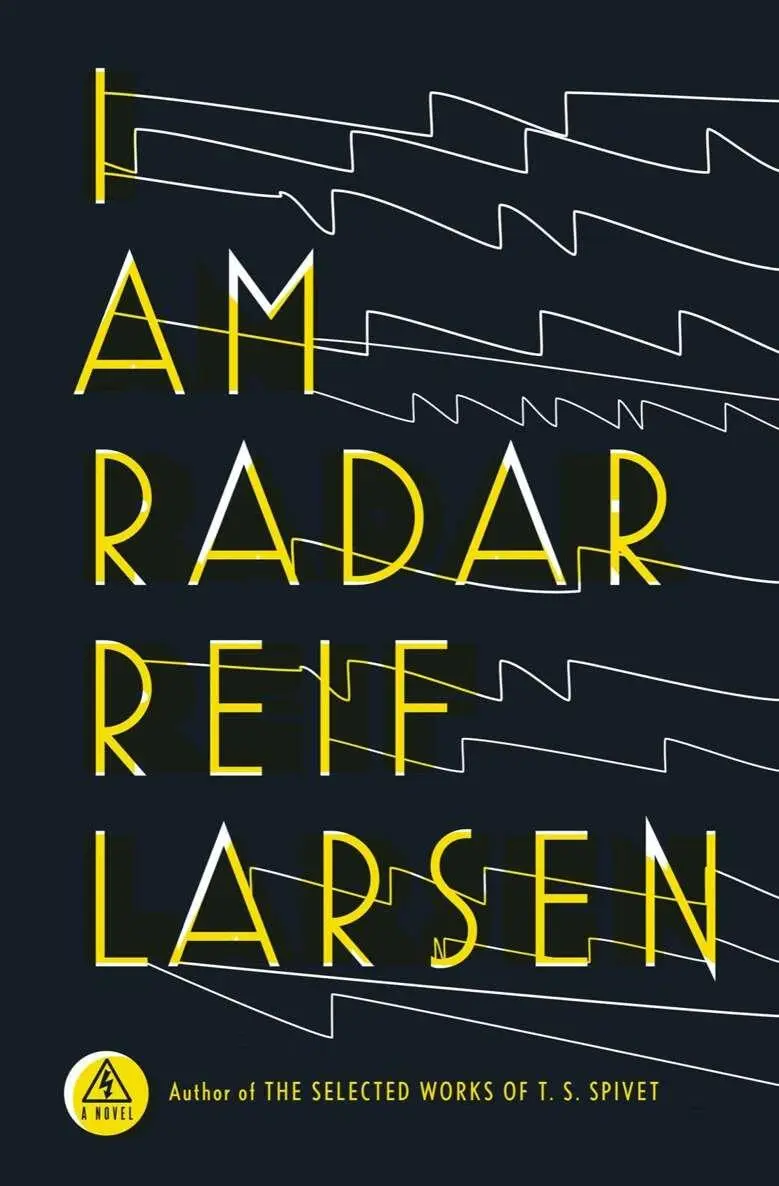
- Название:I Am Radar
- Автор:
- Издательство:Penguin Press
- Жанр:
- Год:2015
- ISBN:нет данных
- Рейтинг книги:3 / 5. Голосов: 1
-
Избранное:Добавить в избранное
- Отзывы:
-
Ваша оценка:
I Am Radar: краткое содержание, описание и аннотация
Предлагаем к чтению аннотацию, описание, краткое содержание или предисловие (зависит от того, что написал сам автор книги «I Am Radar»). Если вы не нашли необходимую информацию о книге — напишите в комментариях, мы постараемся отыскать её.
I Am Radar Deep in arctic Norway, a cadre of Norwegian schoolteachers is imprisoned during the Second World War. Founding a radical secret society that will hover on the margins of recorded history for decades to come, these schoolteachers steal radioactive material from a hidden Nazi nuclear reactor and use it to stage a surreal art performance on a frozen coastline. This strange society appears again in the aftermath of Cambodia’s murderous Khmer Rouge regime, when another secret performance takes place but goes horrifically wrong. Echoes of this disaster can be heard during the Yugoslavian wars, when an avant-garde puppeteer finds himself trapped inside Belgrade while his brother serves in the genocidal militia that attacks Srebrenica. Decades later, in the war-torn Congo, a disfigured literature professor assembles the largest library in the world even as the country around him collapses. All of these stories are linked by Radar — now a gifted radio operator living in the New Jersey Meadowlands — who struggles with love, a set of hapless parents,and a terrible medical affliction that he has only just begun to comprehend.
I Am Radar — читать онлайн бесплатно полную книгу (весь текст) целиком
Ниже представлен текст книги, разбитый по страницам. Система сохранения места последней прочитанной страницы, позволяет с удобством читать онлайн бесплатно книгу «I Am Radar», без необходимости каждый раз заново искать на чём Вы остановились. Поставьте закладку, и сможете в любой момент перейти на страницу, на которой закончили чтение.
Интервал:
Закладка:
Lars looked into his eyes. They stood like this, the tug twirling the boat around, and then Lars nodded and walked into the wheelhouse.
• • •
AS THEY SWUNG AROUND Bergen Point and headed toward the arched gateway of the Bayonne Bridge, Captain Daneri strode out onto the bridgewing, with Lars in tow.
“What’s this I hear about you jumping ship?” bellowed the captain. His posture had changed decidedly. Arms akimbo, he was all right angles and mariner’s scowl. His left eyebrow arched and trembling like a flag in a stiff wind.
“I’ve got to go back, I’m sorry,” said Radar, stepping backwards. “I don’t want to cause any—”
“May I ask why you got on my boat in the first place?” said the captain.
Radar looked around to see if anyone was watching. “I know, I’m sorry,” he said quietly. “I really am, but I’ve got to get off. Please .”
Lars was standing behind the captain, delivering a quiet glare in Radar’s general direction. It was the first time Radar had seen this side of him; in all other matters, even during the previous night’s gloomier episodes, Lars had been nothing but calm and cheerful, a steady rudder to Otik’s mania. But here was a glimpse of the fire within. Seeing that glower, Radar understood how a group as obscure and unfeasible as Kirkenesferda had persisted through the years. It was an indirect kind of rage, a seething generalis . He could feel himself shrinking beneath the onslaught.
Hearing the commotion, Otik abandoned his bird-watching and approached their little trio.
“What’s this?” he said.
“Apparently your compadre doesn’t want to voyage with us,” said the captain. The eyebrow twitched.
“I told you!” said Otik. “I told you, Lars. He is like the little child. He is half the man of his father. Less, probably. One quarter-half of one percent.”
Captain Daneri thrust a finger into Radar’s chest. “What’s eating at you, my boy?”
Radar opened his mouth but said nothing.
“Go on,” the captain said. “What’s got you turned around?”
“My father disappeared,” he said. “He’s the one who was supposed to be here, not me. I can’t just abandon my mother in the middle of a blackout. I have to go help her find him.”
“She told him to come,” said Lars.
“She was probably tired of dealing with him,” said Otik. “She wanted him kaput .”
“She didn’t know what she was saying,” said Radar. “Please, sir. Let me off. I won’t bother you anymore. I just need to go back. They don’t even want me here.”
“It’s not true,” said Lars. “We need you. And you need us.”
The Bayonne Bridge was above them. The metal laced into a perfect convex, launched lightly from either bank, unequivocal in its conceit. It was a dream of men. Of all men.
The captain went to the railing. He rubbed his beard with the palm of his hand.
“A nasty little strait, this Kill van Kull,” he said. “Straits are what get you. Your bow is pushed from shore and your stern is sucked in. You must go straight, but you cannot steer straight. So what do you do?” As he said this, he pointed at the wheelhouse, where the pilot was alternately giving commands and speaking of whores. Yet you could tell that he was completely in control from the ease with which he switched between his story and his directional orders. And so could the captain, apparently, who was comfortable enough to leave the pilot while he lingered out here with them.
“So what do you do?” repeated the captain.
“Sir?” said Radar.
“You don’t steer where you’re headed.” The captain hooked an eye on him. “We aren’t stopping. You can jump the Kill, but I don’t recommend it. Nasty currents. High traffic.”
“But—”
“Once a man signs up, he’s one of us. There can be no turning back. You sign up for a reason. You’ll get off when you’re ready.”
Radar was about to speak but realized there was nothing left to say. He briefly had the strange and wild urge to strike the captain, a dose of rage he did not know what to do with. But before he could do anything one way or another, the captain spun on his heel and returned to the wheelhouse.
“Looks like we’re stuck with you,” said Otik.
“It’s really for the best,” said Lars.
Radar looked back at the receding bridge, and then down into the opaque green churn of water. He thought of the horse jumping off the boat in Lagos. He lifted one foot onto the railing.
“Don’t,” said Lars, but Radar knew even before his foot had left the deck that he would never be able to do it. Resolve had never been his strong suit.
Soon they had cleared Constable Hook and found themselves out in the harbor. The pilot had negotiated the portside passing of two giant tankers and nimbly maneuvered around a stalled feeder ship in the Kill’s narrows. This balletic performance had done much to revive him; he had discarded his disheveled air, and now went around offering handshakes to the officers with all the gravitas of an ambassador.
“ Bon voyage, bon voyage, watch out for the pirates,” he called. “They will rape you if you give them half a chance.”
Captain Daneri clasped the pilot’s shoulder and kissed him on both cheeks.
“An honor,” said the captain. “Un piloto y su puerto.” His opinion had evidently softened.
They slowed and pitched as the pilot climbed down the ladder to meet his boat. He offered a final wave to the Aleph before disappearing into the boat’s cabin.
It was only after the pilot boat had pulled away and was speeding back to shore that Radar realized he could’ve left with them. Why hadn’t he?
You’ll get off when you’re ready.
The sun had already risen over the flats of Brooklyn, but Lady Liberty’s flame had not yet been extinguished. It burned and burned, wary of what the day might bring. She stood, steady and erect as ever, with a clean conscience and an open heart. Behind her gallant robes, the Manhattan skyline paid little heed to their imminent exit. The captain ordered full speed ahead, the engines were fired, and the Aleph turned south, to the gates of the Verrazano and the last buoy before the open sea.
3
Lars had christened their forty-foot container Moby-Dikt . On the second day, he even went so far as to paint on a pair of morose whale eyes at knee height, which always seemed to be watching you no matter where you stood. Moby-Dikt lay by itself on the bottom floor of the number-four cargo hold, just in front of the bridge castle, a full four stories below the quarterdeck. It was always slightly dank down there, and Radar imagined the steel ribs rising up the sides of the hull as if they were the ribs of a great and monstrous whale. A whale inside of a whale inside of a whale and so on, the universe nothing but a series of matryoshka’d leviathans. His vision was enhanced by the constant, ominous creaking of the Aleph ’s joints, which would echo and reverberate across the stacks of containers. The ship moaned, complained, howled. But she did not break. Not yet, at least.
Their container had been retrofitted as a hybrid living quarters and workshop, with a firm emphasis on the workshop part of the equation. It was packed to the gills with all manner of tools and mechanical detritus, including two soldering irons, a workbench, a wire draw, a hand loom, Otik’s vircator, two generators, six large speakers, an electric kettle, three computers in varying exploded states of repair, sixteen reams of old telegraph cable, and a full atelier featuring a band saw, a lathe, a power sander, and a spindle molder. There were also four djembe drums and a box of obscure musical instruments, which would occasionally rattle and shake as if of their own volition. In one corner, they had lashed down the gold-and-burgundy theater wagon — the same theater wagon used in Sarajevo. And then, of course, there were also the nearly fourteen hundred mechanical birds they had taken from Kermin’s shack, which now hung and swayed from the ceiling. The birds were still headless, their heads kept on six long racks by Otik’s cot. Radar never got used to this disembodied gallery of unblinking eyes.
Читать дальшеИнтервал:
Закладка:
Похожие книги на «I Am Radar»
Представляем Вашему вниманию похожие книги на «I Am Radar» списком для выбора. Мы отобрали схожую по названию и смыслу литературу в надежде предоставить читателям больше вариантов отыскать новые, интересные, ещё непрочитанные произведения.











Обсуждение, отзывы о книге «I Am Radar» и просто собственные мнения читателей. Оставьте ваши комментарии, напишите, что Вы думаете о произведении, его смысле или главных героях. Укажите что конкретно понравилось, а что нет, и почему Вы так считаете.