Reif Larsen - I Am Radar
Здесь есть возможность читать онлайн «Reif Larsen - I Am Radar» весь текст электронной книги совершенно бесплатно (целиком полную версию без сокращений). В некоторых случаях можно слушать аудио, скачать через торрент в формате fb2 и присутствует краткое содержание. Год выпуска: 2015, Издательство: Penguin Press, Жанр: Современная проза, на английском языке. Описание произведения, (предисловие) а так же отзывы посетителей доступны на портале библиотеки ЛибКат.
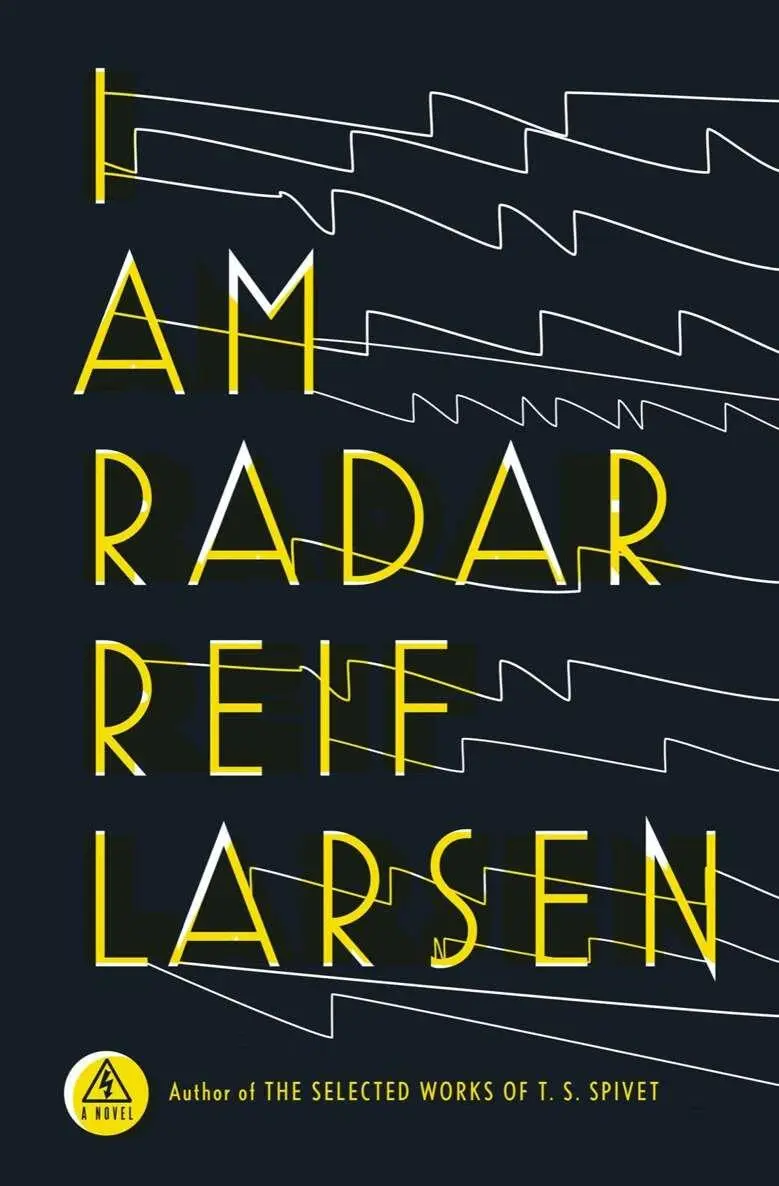
- Название:I Am Radar
- Автор:
- Издательство:Penguin Press
- Жанр:
- Год:2015
- ISBN:нет данных
- Рейтинг книги:3 / 5. Голосов: 1
-
Избранное:Добавить в избранное
- Отзывы:
-
Ваша оценка:
I Am Radar: краткое содержание, описание и аннотация
Предлагаем к чтению аннотацию, описание, краткое содержание или предисловие (зависит от того, что написал сам автор книги «I Am Radar»). Если вы не нашли необходимую информацию о книге — напишите в комментариях, мы постараемся отыскать её.
I Am Radar Deep in arctic Norway, a cadre of Norwegian schoolteachers is imprisoned during the Second World War. Founding a radical secret society that will hover on the margins of recorded history for decades to come, these schoolteachers steal radioactive material from a hidden Nazi nuclear reactor and use it to stage a surreal art performance on a frozen coastline. This strange society appears again in the aftermath of Cambodia’s murderous Khmer Rouge regime, when another secret performance takes place but goes horrifically wrong. Echoes of this disaster can be heard during the Yugoslavian wars, when an avant-garde puppeteer finds himself trapped inside Belgrade while his brother serves in the genocidal militia that attacks Srebrenica. Decades later, in the war-torn Congo, a disfigured literature professor assembles the largest library in the world even as the country around him collapses. All of these stories are linked by Radar — now a gifted radio operator living in the New Jersey Meadowlands — who struggles with love, a set of hapless parents,and a terrible medical affliction that he has only just begun to comprehend.
I Am Radar — читать онлайн бесплатно полную книгу (весь текст) целиком
Ниже представлен текст книги, разбитый по страницам. Система сохранения места последней прочитанной страницы, позволяет с удобством читать онлайн бесплатно книгу «I Am Radar», без необходимости каждый раз заново искать на чём Вы остановились. Поставьте закладку, и сможете в любой момент перейти на страницу, на которой закончили чтение.
Интервал:
Закладка:
Radar nodded. He feared he might collapse, but instead he closed his eyes and said, as coolly as he could manage: “I’m in.”
When he opened them again, he saw his mother dropping her poker and coming to him. Her arms drifted around his neck, and her face came to rest on his shoulder.
“I’m so proud of you,” she whispered.
Otik clapped his hands. “ Fine . If it means we go, then okay, he comes. But just know I am still lodging formal complaint, and I am not responsible for him.”
“Formal complaint noted,” said Lars. “And you are responsible for him. We’re all responsible for each other. This is how it works.”
Radar was looking at his mother. “What’re you going to do?”
“What I’ve always done,” she said.
“It could get bad here if the power doesn’t back come on.”
“Oh, I’ll be fine,” she said. “I have the Oldsmobile, don’t I? And they’ll figure it all out eventually. To be honest, I could use a little life without electricity. Maybe I’ll even read some poetry. Go back to Coleridge. It’ll be good for me. As long as I get my smell back, I don’t care about the rest.”
“But what about Tata? And his vircator? We need to hide what he’s done.”
“We can take care of that,” said Lars.
Radar nodded, though he was not sure what that would entail. “And what about him?”
“Kermin?” said Charlene. “Don’t you worry about him. When he comes back, I’ll give him a piece of my mind. I’ll let him know where you went. I’m sure he’ll understand.”
“But he is not coming back,” Otik said, and with that, he turned and headed back to the shack.
• • •
SO WENT THE NIGHT. Radar helped them load the van with the rest of the bird bodies. There were well over a thousand, and each needed to be hung up in a precise way, according to Otik’s instructions. When they were done, the back of the van resembled an avian congregation frozen in time.
“We’ll cover up the vircator in case anyone comes looking. You’d better get your things for the trip,” Lars said as they slammed the van doors shut. “Pack lightly.”
“Lightly?” Radar realized he had never packed for a journey before.
“Does your mother have a cell phone that works?” said Lars.
“I can give her the one I found in Kermin’s Faraday cage.”
“Good,” said Lars. “You can take this one. It should work where we’re going. You can give her the number in case she wants to be in touch. Here, it’s on this paper.”
“Thanks,” said Radar.
“But be quick,” Otik said, emerging from the back of the van. “We have four hours before boat leaves, and there’s still whole house to pack. So no dillydally.”
• • •
RADAR FOUND CHARLENE SEATED at the kitchen table, an array of her tea jars splayed out before her.
“Hi,” he said.
She looked up at him with sad eyes. “I still can’t smell anything,” she said.
“I’m sure it’ll come back.”
She nodded. “You’re leaving?”
“I don’t have to,” he said, sitting down next to her. “Truly. I can stay here with you. I can help you find him.”
“No,” she said. “No. Don’t miss this.”
“Why? What am I going to miss? Everything I want is here. Everyone I care about is here.”
“Radar,” she said. “One day you’ll wake up and your entire life will have gone by without you ever having lived it. Don’t make the same mistake I did. You have to get out of yourself to know who you are.”
He thought about this. Wondered if he should add it to his rule book.
“I’ve never been anywhere before,” he said.
“It’s not true,” she said. “We took you to Belgrade.”
“Oh, yeah.”
“And you’ve been to Norway.”
The only sound was the ticking of the grandfather clock in the other room.
“You know, he did it for me,” he said.
“Did what?”
“The blackout. He was trying to fix me. My epilepsy, I mean.”
Her face had fallen. “How?”
“He built a vircator, like what they used on me in Norway. . and he thought that if he made another one, he could fix me.”
“Did it work?” she said after a moment.
“Did what work?”
“Did it fix you?”
“I don’t think I can be fixed,” he said. “But he did manage to break New Jersey.”
He smiled. She saw this and snorted. Soon they were both laughing. They could not help themselves. The laughter was a substitute for sorrow, racking their bodies, great heaps of it rising from the depths. They were left gasping at the table.
“That man,” she wheezed. “That man.”
“He’s a good man,” Radar breathed, head resting against one of the radios on the table.
“Yes,” she whispered. “He’s the only one we’ve got.”
“I should go pack,” he said. “Lightly.”
“Make sure you bring enough socks.”
In the rush of things, he hurriedly stuffed his backpack full of socks and not much else. A sweatshirt. A cowboy hat. A toothbrush. He saw his pink Little Rule Book for Life and put that in, too. He knew he was doing a bad job planning for the future, but that took time, and he had no time.
Downstairs again, he saw that his mother had not moved from her spot in the kitchen.
“I almost forgot,” he said. He took Kermin’s phone out of his pocket. “They gave me one that will work over there. I’ll leave the number here. We can do the text.”
She smiled. “You finally learned how to say it properly.”
“Oh, Mom.” He hugged her. “I’ll miss you.”
She pushed him back. “I wanted to tell you. .”
“Yes?”
“About before. I didn’t want to give you the wrong idea. About. . T.K., I mean. I’ve no idea if he’s the one or not,” she said. “I just wanted to say that. I didn’t want you to believe something that might not be true.”
He was quiet, staring at the twin radios.
“It’s okay,” he said finally. “I kind of like the idea of having two fathers.”
“You don’t have two fathers.”
“I know,” he said. “Don’t worry. I know who’s the real one.”
He unzipped his backpack again and took out the pink notebook.
“For you,” he said, handing it to her. “It’s mostly stupid, but there’s a couple of good ones in there. Maybe you can read it while I’m gone.”
She opened to a page and read out loud: “Rule number forty-five: Cheese is important.”
He sighed. “Well, maybe not.”
“Rule number forty-six: Everything happens just once, until it happens again.”
“Okay, when you read them like that, they sound terrible!” he said. “Just forget it.”
“Are you sure you don’t want this? You might need it where you’re going.”
“I don’t think a book could help me now.”
She smiled, blinked. “I have something for you,” she said.
“I have to go.”
“I know; it’ll be quick.”
He followed her up to the bedroom. The stairs creaked beneath them, strange and loud in the darkness. Radar thought of the heavy toe-heel creaks his father made as he trudged up these same stairs. His mother always took the stairs like a bird, but his father’s footsteps sounded like those of a sullen pony. He wondered if he would ever hear those toe-heel creaks again.
In the bedroom, Charlene took his flashlight and went over to the hole in the floor. It gaped, darker than the rest of the dark, like a tear in the fabric of the space-time continuum. After rooting around, she came up holding a book.
“Here,” she said. “It’s for you.”
The book looked familiar. After a moment, he realized what it was: Spesielle Partikler: Kirkenesferda 1944–1995, by Per Røed-Larsen.
Читать дальшеИнтервал:
Закладка:
Похожие книги на «I Am Radar»
Представляем Вашему вниманию похожие книги на «I Am Radar» списком для выбора. Мы отобрали схожую по названию и смыслу литературу в надежде предоставить читателям больше вариантов отыскать новые, интересные, ещё непрочитанные произведения.











Обсуждение, отзывы о книге «I Am Radar» и просто собственные мнения читателей. Оставьте ваши комментарии, напишите, что Вы думаете о произведении, его смысле или главных героях. Укажите что конкретно понравилось, а что нет, и почему Вы так считаете.