Reif Larsen - I Am Radar
Здесь есть возможность читать онлайн «Reif Larsen - I Am Radar» весь текст электронной книги совершенно бесплатно (целиком полную версию без сокращений). В некоторых случаях можно слушать аудио, скачать через торрент в формате fb2 и присутствует краткое содержание. Год выпуска: 2015, Издательство: Penguin Press, Жанр: Современная проза, на английском языке. Описание произведения, (предисловие) а так же отзывы посетителей доступны на портале библиотеки ЛибКат.
- Название:I Am Radar
- Автор:
- Издательство:Penguin Press
- Жанр:
- Год:2015
- ISBN:нет данных
- Рейтинг книги:3 / 5. Голосов: 1
-
Избранное:Добавить в избранное
- Отзывы:
-
Ваша оценка:
I Am Radar: краткое содержание, описание и аннотация
Предлагаем к чтению аннотацию, описание, краткое содержание или предисловие (зависит от того, что написал сам автор книги «I Am Radar»). Если вы не нашли необходимую информацию о книге — напишите в комментариях, мы постараемся отыскать её.
I Am Radar Deep in arctic Norway, a cadre of Norwegian schoolteachers is imprisoned during the Second World War. Founding a radical secret society that will hover on the margins of recorded history for decades to come, these schoolteachers steal radioactive material from a hidden Nazi nuclear reactor and use it to stage a surreal art performance on a frozen coastline. This strange society appears again in the aftermath of Cambodia’s murderous Khmer Rouge regime, when another secret performance takes place but goes horrifically wrong. Echoes of this disaster can be heard during the Yugoslavian wars, when an avant-garde puppeteer finds himself trapped inside Belgrade while his brother serves in the genocidal militia that attacks Srebrenica. Decades later, in the war-torn Congo, a disfigured literature professor assembles the largest library in the world even as the country around him collapses. All of these stories are linked by Radar — now a gifted radio operator living in the New Jersey Meadowlands — who struggles with love, a set of hapless parents,and a terrible medical affliction that he has only just begun to comprehend.
I Am Radar — читать онлайн бесплатно полную книгу (весь текст) целиком
Ниже представлен текст книги, разбитый по страницам. Система сохранения места последней прочитанной страницы, позволяет с удобством читать онлайн бесплатно книгу «I Am Radar», без необходимости каждый раз заново искать на чём Вы остановились. Поставьте закладку, и сможете в любой момент перейти на страницу, на которой закончили чтение.
Интервал:
Закладка:
From Røed-Larsen, P., Spesielle Partikler, p. 768
The fiddle music returned, amplified and warped, as if fed through a synthesizer. The lights shifted, flickering; the steam billowed toward the audience. The Pol Pot puppets started to vibrate with increasing violence, and when the boiling reached a certain point, they collapsed onto the stage. An 8mm projector began projecting video of marching troops from Maoist China, superimposed on diagrams from Henrik Bohr (Niels’s son) and H. B. Nielsen’s “Hadron Production from a Boiling Quark Soup” ( Nuclear Physics, 1977), depicting the dissolution of quark soup bubbles and hadron decay immediately following the Big Bang.
As the smoke began to clear, the puppet bodies rose up again, but now their robes had come off, and the figures were revealed to be birdlike themselves — half avian and half humanoid, a circulatory system of electrical wires and twine intermingled within their skeletons. Yet by all accounts, what was astonishing about this part of the show, from both a technical and an emotional standpoint, was that the body parts of the figurines began to interchange: arms were traded between figures, heads were swapped. The stage, as Røed-Larsen writes, “had become an elaborate marketplace of beingness” (776).
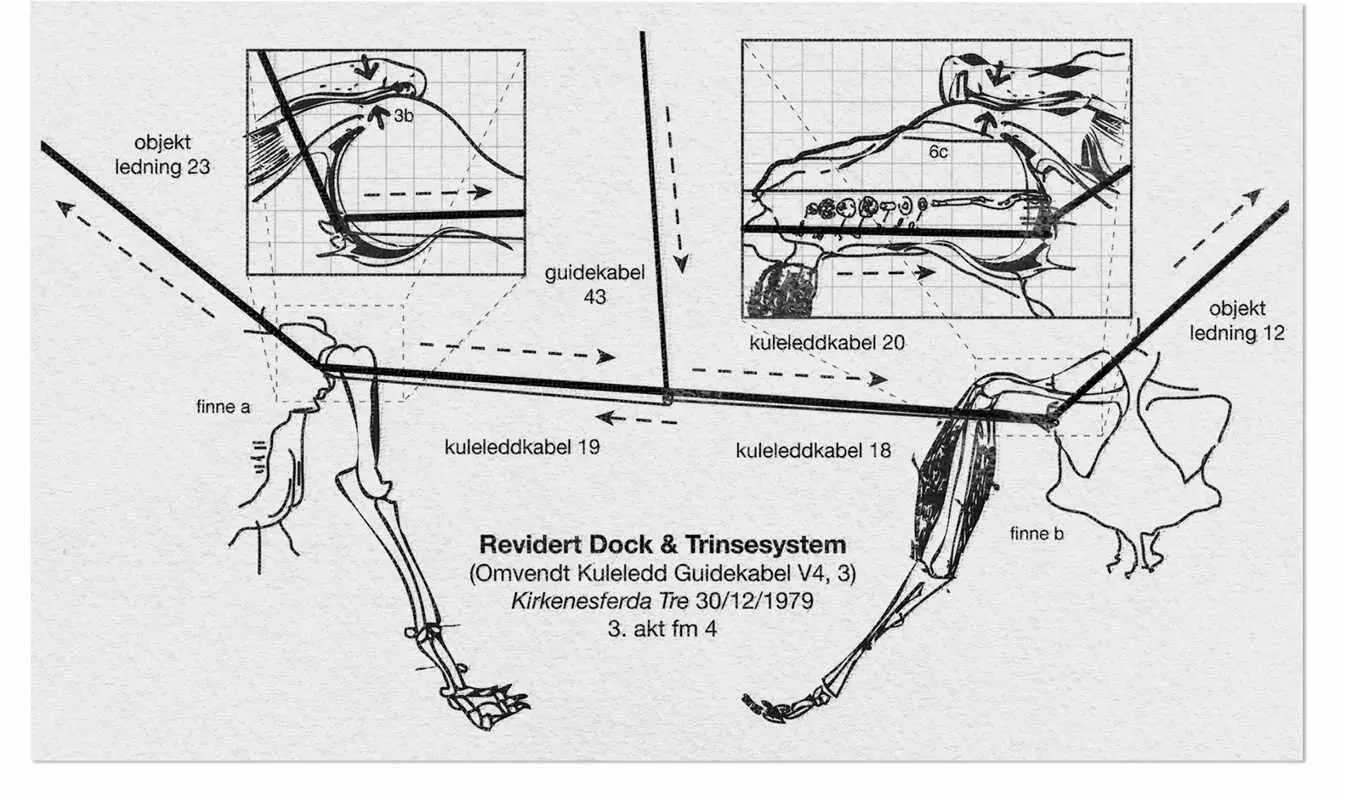
Fig. 4.16. “Revised Dock & Pulley System. Reverse Ball & Socket Joint Guywire v4.3.”
From Røed-Larsen, P., Spesielle Partikler, p. 777
While this flurry of exchange took hold of the puppets, the footage of Pol Pot’s face on the headscreens being passed back and forth was gradually replaced by images of prisoners from S-21, photographs that had been released only months before. The Khmer Rouge leaders were staring into the eyes of the very victims they had helped to execute. Yet these victims were not dead; they were performing in an act “of nostalgia-play, re-animation, re-appropriation. . the executed dancing for the executioners” (828).
Slowly, the trading of body parts diminished and each figure became identifiable again. The music stopped. The figures collected toward the front of the stage and formed a line, facing the audience. Their screens flickered and then, as one, displayed a long equation:

An expression of the uncertainty principle in harmonic analysis.
One of the puppets in the middle of the equation’s head was not like the others. His screen still showed a cheerful Pol Pot — the puppet had in fact been displaying this image the entire time. In an unsettling act of coordinated scrutiny, all the other puppets turned their screen heads toward him. Then his screen went blank, except for a dot, which winked out the Morse code:

Curtain down.
“A terrible silence followed,” writes Røed-Larsen. “You could hear a sewing pin drop — if such a sewing pin had still existed in Cambodia” (788). Everyone turned to Pol Pot, the impromptu guest of honor, in order to read his response to such an audacious display of insubordination. The small man sat perfectly still, and then his face broke into a broad grin and he started to clap, vociferously, as the Khmer Rouge were prone to do during important ceremonies. A sigh of relief must have passed over Khieu Samphan and his comrades. Everyone stood, joining in the applause. The crucial moment had passed.
Under orders, the assembled Khmer Rouge soldiers dispersed, preparing to secure the camp for the night. The Kirkenesferda troupe quietly went about the mundane task of disassembling their lights and packing up their theater wagon, though their heads and hearts were no doubt buzzing with that unique post-show mixture of adrenaline, sadness, hunger, and relief. Once they were finished, a Khmer Rouge cadre escorted them to their quarters.
Shortly after this (Røed-Larsen does not offer an exact amount of time), Ieng Sary approached Raksmey. His demeanor had changed drastically. He was now furious, and he accused the group of being CIA operatives.
“I have read my history,” Røed-Larsen reports Sary saying to Raksmey (801). “I know the puppeteers of Europe were also spies. They were the only ones who were allowed to cross over borders, because no one suspected them.” As evidence, he produced part of the telegraph wire that had been connected to the radio tower. Caught unaware, unsure whether such a wire was a fabrication, Raksmey did his best at damage control, assuring his hosts that if the wire had indeed existed, then certainly no message had been sent, and that their position had not been transmitted to a foreign entity (as Sary claimed). Raksmey promised a full report on the wire’s purpose. Sary, threatening imprisonment or worse, reluctantly retreated to discuss the situation with the senior Khmer Rouge officers, including Pol Pot, who presumably had been behind this sudden change in attitude.
Raksmey went directly to Dr. Christian-Holtsmark and informed him of the accusations. The troupe’s leader admitted that while the wire had been real, the transmission had been purely for dramatic purposes and had not contained any intelligence information. Tor Bjerknes was also alerted. He apologized for not asking permission before connecting the telegraph.
As they debated what to do, the group became aware of an intensifying light, at just the same time that young Lars Røed-Larsen raced into their guest hut and declared that the theater wagon was on fire. The entire troupe went outside to see that, sure enough, their wagon — the summation of years and years of labor — was now in flames, guarded by a ring of stiff-jawed Khmer Rouge guards. There would be no intervention. Their work was gone. Abandoning camp then and there was considered, but they discovered that their trucks had been moved to an unspecified location. The consensus was that they should wait until morning and then decide how to proceed.
The next few hours were restless ones. No longer was this regime a distant surrogate for reckless ideologism—“what was once theoretical had become intensely personal. . their hosts had become their potential judge, jury, and executioner” (822).
Sometime during the night — Røed-Larsen places it at 2:20, though this is without supporting evidence — Raksmey was visiting the outhouse when he met up with a young and frightened Lars, who, like the others, could not sleep and was additionally suffering from an upset stomach due to the foreignness of Khmer food. Raksmey reassured Lars that everything would work out in the end. At that point, the two of them heard “a series of loud pops” coming from the direction of the guest quarters. Lars attempted to run toward where his family was sleeping, but, realizing the pops were in fact gunshots, Raksmey instinctively held him back, pulling the boy into the shelter of the forest. Knowing that the group had been ambushed, Raksmey made the decision to take the by now extremely distraught Lars out of the camp immediately. They snuck through the forest, around the guard post, and headed back in the direction of the border. Avoiding roads and buildings, they did not have an easy time of it, and suffered multiple lacerations from barbed wire, vines, and low-hanging branches.
When they were only a hundred meters from the Thai border crossing, Raksmey stepped on a land mine. His left leg and part of his pelvis were liquefied by the explosion, and the left side of his face was partly sheared off. Hearing shots behind them, he waved for Lars to continue and leave him where he was. After attempting to drag Raksmey several meters, Lars finally gave up and, covered in blood, stumbled to the border crossing, where the stunned Thai officials took him into custody.
Читать дальшеИнтервал:
Закладка:
Похожие книги на «I Am Radar»
Представляем Вашему вниманию похожие книги на «I Am Radar» списком для выбора. Мы отобрали схожую по названию и смыслу литературу в надежде предоставить читателям больше вариантов отыскать новые, интересные, ещё непрочитанные произведения.










Обсуждение, отзывы о книге «I Am Radar» и просто собственные мнения читателей. Оставьте ваши комментарии, напишите, что Вы думаете о произведении, его смысле или главных героях. Укажите что конкретно понравилось, а что нет, и почему Вы так считаете.