Reif Larsen - I Am Radar
Здесь есть возможность читать онлайн «Reif Larsen - I Am Radar» весь текст электронной книги совершенно бесплатно (целиком полную версию без сокращений). В некоторых случаях можно слушать аудио, скачать через торрент в формате fb2 и присутствует краткое содержание. Год выпуска: 2015, Издательство: Penguin Press, Жанр: Современная проза, на английском языке. Описание произведения, (предисловие) а так же отзывы посетителей доступны на портале библиотеки ЛибКат.
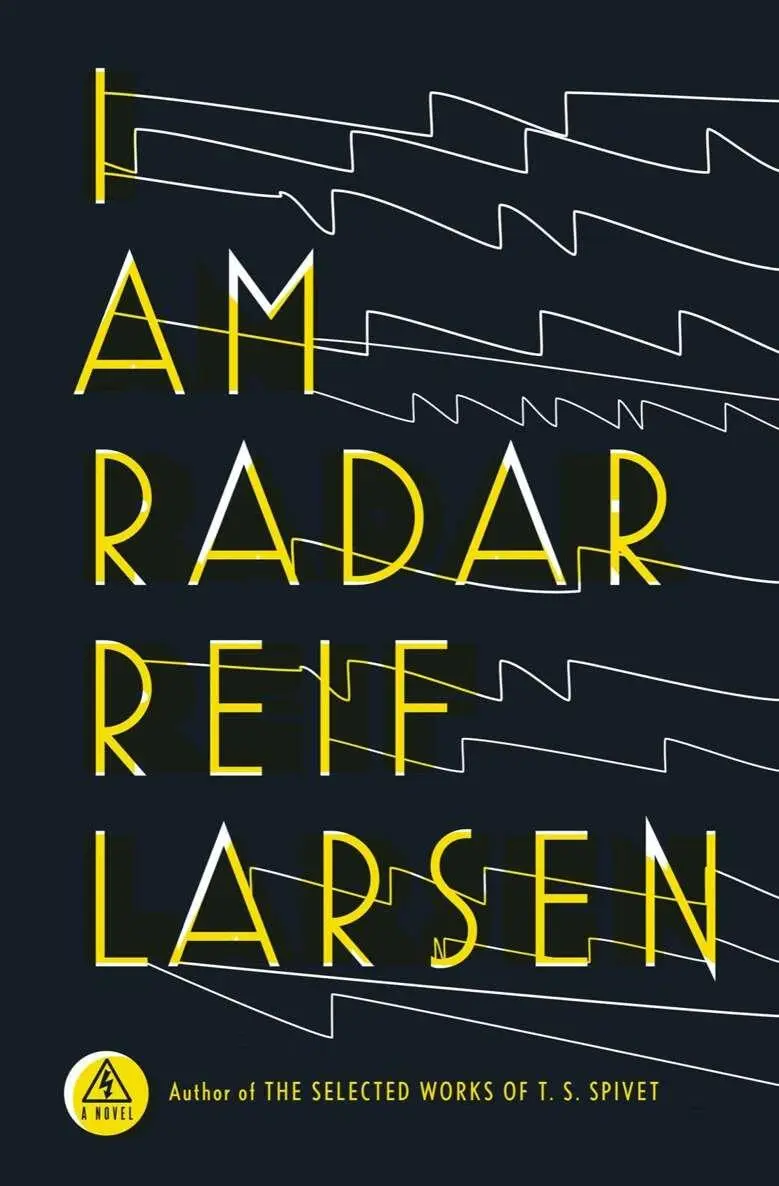
- Название:I Am Radar
- Автор:
- Издательство:Penguin Press
- Жанр:
- Год:2015
- ISBN:нет данных
- Рейтинг книги:3 / 5. Голосов: 1
-
Избранное:Добавить в избранное
- Отзывы:
-
Ваша оценка:
I Am Radar: краткое содержание, описание и аннотация
Предлагаем к чтению аннотацию, описание, краткое содержание или предисловие (зависит от того, что написал сам автор книги «I Am Radar»). Если вы не нашли необходимую информацию о книге — напишите в комментариях, мы постараемся отыскать её.
I Am Radar Deep in arctic Norway, a cadre of Norwegian schoolteachers is imprisoned during the Second World War. Founding a radical secret society that will hover on the margins of recorded history for decades to come, these schoolteachers steal radioactive material from a hidden Nazi nuclear reactor and use it to stage a surreal art performance on a frozen coastline. This strange society appears again in the aftermath of Cambodia’s murderous Khmer Rouge regime, when another secret performance takes place but goes horrifically wrong. Echoes of this disaster can be heard during the Yugoslavian wars, when an avant-garde puppeteer finds himself trapped inside Belgrade while his brother serves in the genocidal militia that attacks Srebrenica. Decades later, in the war-torn Congo, a disfigured literature professor assembles the largest library in the world even as the country around him collapses. All of these stories are linked by Radar — now a gifted radio operator living in the New Jersey Meadowlands — who struggles with love, a set of hapless parents,and a terrible medical affliction that he has only just begun to comprehend.
I Am Radar — читать онлайн бесплатно полную книгу (весь текст) целиком
Ниже представлен текст книги, разбитый по страницам. Система сохранения места последней прочитанной страницы, позволяет с удобством читать онлайн бесплатно книгу «I Am Radar», без необходимости каждый раз заново искать на чём Вы остановились. Поставьте закладку, и сможете в любой момент перейти на страницу, на которой закончили чтение.
Интервал:
Закладка:
Raksmey met Kirkenesferda at the Bangkok airport the day after Christmas. The team consisted of Dr. Christian-Holtsmark, the de facto leader of the troupe and director of the show; Tor Bjerknes, the primary puppet-maker; Ragnvald Brynildsen, Tor’s mentor and aging Kirk patriarch; Professor Jens Røed-Larsen, who was responsible for the theoretical physics in the show; Siri Hansteen, his wife, who had designed much of the mise-en-scène; and their child, young Lars Røed-Larsen, puppet savant and torchbearer for the next generation.
In Bangkok, they hired two canopy trucks and drove to Sangkha, just north of the Choam border crossing into Cambodia. At the time, the Thai military were collaborating closely with the exiled Khmer Rouge army, providing cross-border supplies and support in exchange for a political allegiance that would act as a buffer to the perceived threat of a growing Vietnamese empire. It was critical for Thailand that Cambodia function as a self-governed country with an actual populace and not just as a cavernous Vietnamese puppet state. Such a calculated realpolitik approach had already led to horrific humanitarian failures, as many Cambodians who had fled the Khmer Rouge to the relative safety of Thailand were now forced at gunpoint to return to their homeland. Military trucks dropped them at the border, often in the middle of the minefields, leaving the refugees paralyzed in a state of territorial limbo: they could go neither forward nor backward, and so they remained exactly where they were until starvation eventually gave them the courage to test their fate in the sea of mines.
Raksmey turned out to be a wise choice as both guide and counselor: somehow he managed to coerce and/or bribe the Thai border guards into letting him and the other performers through the blockade and into Cambodian territory. The rough track into the mountains wound through several live minefields, and it was not unusual for them to pass half-exploded cows or carts blown to bits, their onetime owners nowhere to be seen. After crossing into Cambodia, Raksmey again managed to convince the Khmer Rouge soldiers guarding Camp 808 to let them through. Røed-Larsen explains:
[Kirkenesferda’s entrance] seems entirely improbable until you consider that at the time the Khmer Rouge were attempting to boost their image as one of the legitimate government factions that would take part in the anti-Vietnamese Coalition Government of Democratic Kampuchea (CGDK). . Realizing any hope in future political viability lay with disassociating themselves from their failed occupation, [Pol Pot and his loyalists] rebranded the Khmer Rouge as the Party of Democratic Kampuchea (PDK) and embarked on a (short-lived) PR blitz to counter the reports only just now beginning to emerge of genocidal horrors during their three and a half years in power (681).
One must thus assume that Kirkenesferda caught a murderous regime in a unique window of existential recalibration. Khieu Samphan, the prime minister of Democratic Kampuchea — once upon a time one of the most secretive governments in modern history — was now the charming public relations figurehead attempting to resurrect the PDK’s image. Barely a month after Kirkenesferda’s unprecedented visit in December, he would invite a group of prominent Western journalists to dine at 808.
“Reality was suspended,” recalls Henry Kamm of that trip, in his book Cambodia: Report from a Stricken Land . The New York Times journalist describes his strange January 1980 sojourn to 808’s oasis of indulgence in a region of squalor:
The Khmer Rouge guest camp was the very latest in jungle luxury. That evening the soldier-waiters filled the table with platters of Cambodian, Chinese, and Western dishes of infinite variety and saw to it, following the prime minister’s discreet, silent commands, that the visitors’ plates stayed filled. The best Thai beer, Johnnie Walker Black Label scotch, American soft drinks, and Thai bottled water were served; the ice to cool them, which also must have been brought in from Bangkok hundreds of miles away, never ran out. The contrast between the real Cambodia and the holiday resort atmosphere was shocking (178).
Kamm makes no mention of Kirkenesferda’s visit only a few weeks prior, which is no wonder, for Samphan and the rest of the Khmer Rouge leadership would have done their best to eradicate all evidence of the disastrous events that transpired on December 30, 1979.
Like Kamm, the theater troupe encountered moments of surreality during their visit. Each member of the troupe, upon entering the compound, was issued a “Democratic Kampuchea” visa, written in flowery Khmer longhand by an old Khmer Rouge officer with beautiful penmanship. The man lingered over this job of drawing up visas, as if this were the last good deed he might do in the world. No matter that Democratic Kampuchea existed only in the minds of these men.
At some point, an offer was made by the troupe, translated by Raksmey, to provide some evening entertainment in the form of a puppet show. Questions were passed up the chain of command, and some superior, probably Khieu Samphan himself, granted permission. Never mind that such artistic practice had been banned in Democratic Kampuchea while the Khmer Rouge was in power, or that most puppeteers and actors in the country had been murdered. In this time, at this mountain base, such a show apparently was a welcome treat for the weary Khmer Rouge contingent.
Kirkenesferda’s entrance into the jungle compound must have been an odd spectacle. Who knows what these battle-hardened cadres thought as the theater wagon rumbled into camp. The wagon and generator were set up in a little clearing next to the rusty radio tower that the Khmer Rouge was using to communicate with its Chinese allies as well as the remaining far-flung Khmer Rouge factions along the Thai border. Chairs were assembled for the audience, and several rudimentary floodlights were installed as house lighting.
The view from 808 was spectacular. Perched on the edge of a steep precipice, one could see for miles and miles into the heart of Cambodia, a land now enduring mass displacement, famine, and widespread disease due to its hosts’ astonishing negligence of the citizens’ most basic needs. Presumably, such a spot was chosen for security reasons, but the stunning vistas on that evening, particularly as the sun set against a jungled horizon, brought both visitor and host to congregate at the overlook point, lending an air of contemplation to the proceedings as they silently admired nature’s vast depth of field.
At first, the guests were treated well, if not quite up to par with Kamm’s profuse testimony. They were fed a robust meal and given plenty to drink, mingling with Khieu Samphan, Ieng Sary, and several paunchy Khmer Rouge higher-ups. The mood was described as “festive and expectant” (694) about the upcoming show. Raksmey was very much in the middle of it all, dressed now in the simple black outfit of the Kirkenesferda puppeteer, which was reminiscent of the black uniforms formerly worn by their Khmer Rouge hosts, who now sported the dull hunter green of the jungle rebel. Perhaps the Khmer Rouge wardrobe shift was another effort by the rulers to distance themselves from their disastrous years in power, though many still wore the familiar red-checkered krama of the revolution. The puppeteers wore simple black masks around their necks. When the time came, they would disappear behind their puppets.
Raksmey mingled, joking in three languages, steering the conversations, complimenting the officers, saying little about himself or his acquaintances. He negotiated a starting time for the performance, the practicalities of electricity, housing, protocol. As darkness descended and the floodlights went up, Raksmey directed people to their seats. He was the perfect mediator. It was as if he had been training for this evening his entire life. Writes Røed-Larsen, “though [Raksmey] was the group’s newest addition, on that night he was also their most essential member. . (For the moment at least), he was Kirkenesferda’s lifeline” (703). It must be noted that the ease with which he took up this ambassadorial role was in marked contrast to the shy reclusion in which he had lived while at CERN, listening to Britten’s Les Illuminations on repeat until the vinyl had begun to erode.
Читать дальшеИнтервал:
Закладка:
Похожие книги на «I Am Radar»
Представляем Вашему вниманию похожие книги на «I Am Radar» списком для выбора. Мы отобрали схожую по названию и смыслу литературу в надежде предоставить читателям больше вариантов отыскать новые, интересные, ещё непрочитанные произведения.









Обсуждение, отзывы о книге «I Am Radar» и просто собственные мнения читателей. Оставьте ваши комментарии, напишите, что Вы думаете о произведении, его смысле или главных героях. Укажите что конкретно понравилось, а что нет, и почему Вы так считаете.