Reif Larsen - I Am Radar
Здесь есть возможность читать онлайн «Reif Larsen - I Am Radar» весь текст электронной книги совершенно бесплатно (целиком полную версию без сокращений). В некоторых случаях можно слушать аудио, скачать через торрент в формате fb2 и присутствует краткое содержание. Год выпуска: 2015, Издательство: Penguin Press, Жанр: Современная проза, на английском языке. Описание произведения, (предисловие) а так же отзывы посетителей доступны на портале библиотеки ЛибКат.
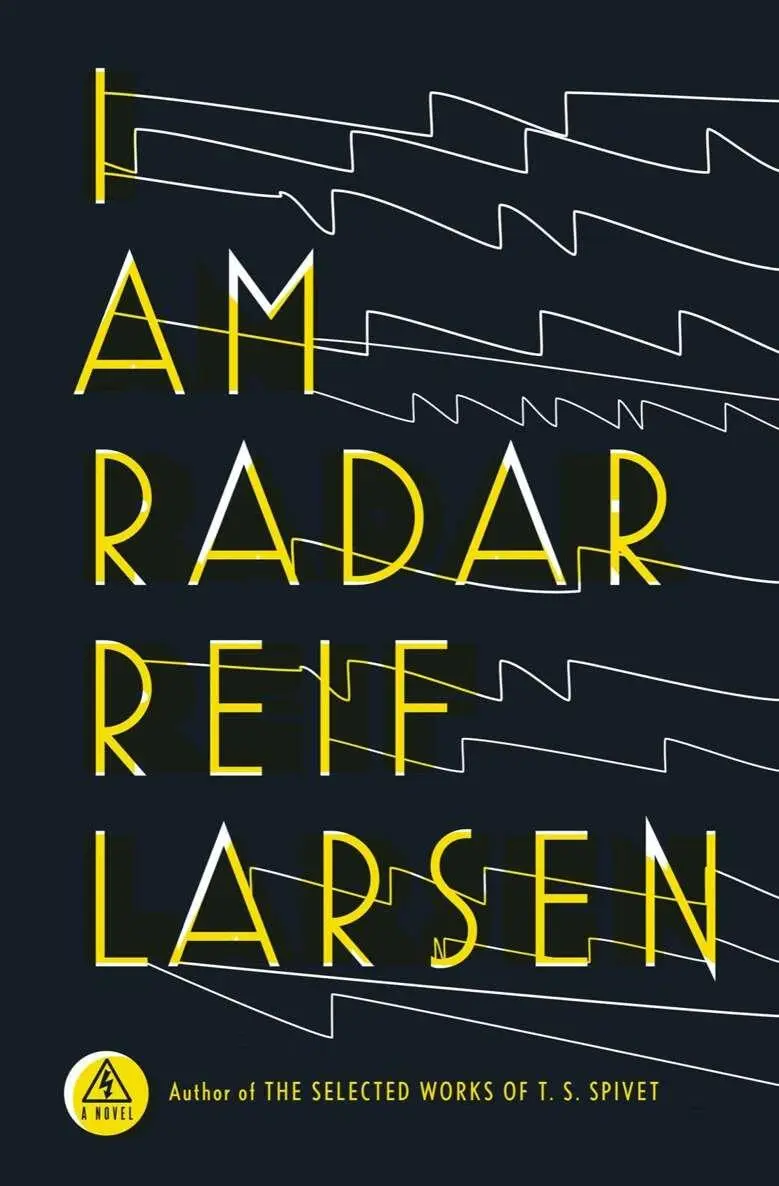
- Название:I Am Radar
- Автор:
- Издательство:Penguin Press
- Жанр:
- Год:2015
- ISBN:нет данных
- Рейтинг книги:3 / 5. Голосов: 1
-
Избранное:Добавить в избранное
- Отзывы:
-
Ваша оценка:
I Am Radar: краткое содержание, описание и аннотация
Предлагаем к чтению аннотацию, описание, краткое содержание или предисловие (зависит от того, что написал сам автор книги «I Am Radar»). Если вы не нашли необходимую информацию о книге — напишите в комментариях, мы постараемся отыскать её.
I Am Radar Deep in arctic Norway, a cadre of Norwegian schoolteachers is imprisoned during the Second World War. Founding a radical secret society that will hover on the margins of recorded history for decades to come, these schoolteachers steal radioactive material from a hidden Nazi nuclear reactor and use it to stage a surreal art performance on a frozen coastline. This strange society appears again in the aftermath of Cambodia’s murderous Khmer Rouge regime, when another secret performance takes place but goes horrifically wrong. Echoes of this disaster can be heard during the Yugoslavian wars, when an avant-garde puppeteer finds himself trapped inside Belgrade while his brother serves in the genocidal militia that attacks Srebrenica. Decades later, in the war-torn Congo, a disfigured literature professor assembles the largest library in the world even as the country around him collapses. All of these stories are linked by Radar — now a gifted radio operator living in the New Jersey Meadowlands — who struggles with love, a set of hapless parents,and a terrible medical affliction that he has only just begun to comprehend.
I Am Radar — читать онлайн бесплатно полную книгу (весь текст) целиком
Ниже представлен текст книги, разбитый по страницам. Система сохранения места последней прочитанной страницы, позволяет с удобством читать онлайн бесплатно книгу «I Am Radar», без необходимости каждый раз заново искать на чём Вы остановились. Поставьте закладку, и сможете в любой момент перейти на страницу, на которой закончили чтение.
Интервал:
Закладка:
The container actually represented an increase in space from the tiny cottage in Xanadu’s parking garage, but it offered precious little maneuvering room when all three men were present. This was not helped by Otik’s ongoing seasickness, exacerbated by the minute nature of his work on the bird heads. His pallor, which prior to their departure had resembled the color of unripe melon, had now taken on the hue of the repurposed ham-and-pea puree they used to serve at the Rutgers dining hall. Otik sat there, sweating and breathing heavily, a little moan escaping his lips every so often to signal his body’s revolt. He would then rip off his magnifying headpiece, raise his great body out of his chair, and proceed to vomit into a five-gallon bucket set up just outside the container’s entrance. The sound of his retching became a kind of metronome for the puppet work in the hull.
Ever since his outburst in port, both Lars and Otik had maintained their distance from Radar, each in his own way. Otik, mired in his nausea, simply chose not to acknowledge his existence. Lars’s evasions were more subtle: when addressing Radar, he would often let the ends of his sentences drift off, as if the most important bits could not be said. Radar watched them from his cot, fiddling absentmindedly with one of his father’s transceivers. It was evident that they were used to working in tandem. Even Kermin must have existed as a distant moon to their mutual dependence. It would have been more amusing to watch them in action if it were not also a reminder of his alienation.
“I hate you,” Otik hissed at Lars, completely unprompted. Yet the line was clearly delivered with such loving familiarity that Radar found himself longing for someone, anyone, to hate him with similar affection.
“Is it possible to have them return and perch ten seconds in?” Lars replied.
“Why to perch?”
“A moment of doubt.”
“Doubt?”
“Of contemplation, reflection. A prelude before the journey.”
“Let me see.”
“Ten seconds in.”
“This is soon.”
“If it’s not possible—”
“‘Nothing is not possible,’ says Kermin Radmanovic, alleged father of him .” Otik thrust his head in Radar’s direction.
“Can I do something?” said Radar.
The two went silent.
“We’re okay for now,” said Lars. “Thank you.”
“We are okay forever, ” said Otik. He grunted, removed his magnifier, and then trundled from the room. They soon heard the familiar sound of gagging.
“He takes a while,” said Lars. “But once he accepts you as one of his own, he’ll die for you.”
“Oh, am I one of his own?” said Radar. “I hadn’t realized.”
“It’s a complicated question for a Serb,” said Lars. “But I do know he’s been through a lot in life. You must meet him halfway. He has seen enough not to trust another human being on this planet, and yet. . he does. And he will. Just give him time; he’ll come around. He’s like an elephant. He never forgets.”
• • •
201-998-2666:Hello Mom. It’s Radar. I miss you. I tried to get off the ship when we started sailing but they wouldn’t let me. I realized this was a mistake. I shouldn’t have left you. Are you okay? Did you find tata? I feel terrible. I will never forgive myself for leaving you like this. Please call me. [Message not sent.]
201-998-2666:Hi Ana Cristina. I’m on the boat. We left yesterday morning. We’re somewhere in the Atlantic. My God I miss you. I feel like I’m the only person on this earth right now. — Radar (lost at sea) [Message not sent.]
Soon after their departure, the text messages would no longer go out. They sat in his phone, unsent, left in a state of perpetual limbo. He cursed himself for not giving his mother a transceiver. How had he gotten stuck with cellular communication as his only avenue? Helpless, voiceless, he would stand up on the forecastle deck, feeling the salty bow spray against his skin, and twiddle the dials, catching signal from Montauk, then from Europe, then from a ham in the Azores, in Dakar, in Guadeloupe, in Cartagena. The ionic skip was strange and beautiful out here. He could reach crazy new locations as if they were barely twenty yards away, and yet there were also whole blank spots on the Eastern Seaboard, including his home, that persisted in silence. He wondered about the blackout. How much had come back. That whole world — the swamps, the radio station, Forest Street — it all felt so far away now, separated by a wide and widening sea.
What was this sea? He spent most of his time staring out at its vast expanse. He felt unsettled on the boat, and not because of the vessel’s constant roll and pitch. His was not a seasickness like Otik’s. This feeling had more to do with absence. An absence of land, an absence of material, an absence of current. The salt water had an electromagnetic frequency all its own, but it was a frequency with which he was not familiar. Its note was singular, ancient, without end. He had come from a symphony, and now he was listening to an old man singing in the dark.
201-998-2666:Ana Cristina, I think about you all the time. Scary how much I think about you and home and everything I had. I wonder if I’ll ever see you again. [Message not sent.]
201-998-2666:Please ignore my last message. [Message not sent.]
201-998-2666:Sorry. It’s just lonely out here. I hope the power has come back there. I feel so far away right now. A blackout would be beautiful right now. Out here there is nothing to black out. [Message not sent.]
When the weather was calm, Radar — who had taken to wearing a knitted sailor’s cap he had found in one of the cargo holds — would curl up on the quarterdeck next to a cargo winch and read. He first looked at the many newspaper clippings in the folder his mother had given him. One would think such a trove of material would be a revelation, particularly coming on the heels of his mother’s announcement. Yet soon one article began to bleed into the next. He could feel the writers grasping for something just out of their reach. All they had were a few facts, some names, dates, and places, but nothing more. It was as if they were giving the particulars of an invented character that was him and yet not him. Even the highly technical “On an Isolated Incidence of Non-Addison’s Hypoadrenal Uniform Hyperpigmentation in a Caucasian Male,” by Dr. Thomas K. Fitzgerald, read as a kind of fiction that had very little to do with who he was. Cloaked within the fancy, medical-sounding language was a blatant absence of truth. He soon lost interest. These documents contained no answers.
He next turned his attention to Spesielle Partikler . This book, like the articles, had been fished from that hole in the floor of his parents’ bedroom, and just holding it in his hands made him feel close to her. If he closed his eyes, he could almost conjure the feeling of that night, of listening to Caruso in the dark.
The book was a monstrosity. It felt like a brick in his lap. The binding was the color of sand and had clearly been handled many, many times, for the spine was split in two places and a large chunk of pages had come loose from the headband. Radar had to clutch it, lest the wayward leaves decide to up and blow away in the wind. Many of its passages were marked in a soft purple pencil. He found himself wondering about these markings. Who could have taken the care to mark so much of the text? Surely it wasn’t his mother, who, like him, couldn’t read Norwegian. It must have been the reader before her, or the one before that.
The more he looked at the book, the more intrigued he became, though he could not quite say what drew him to it. Occasionally a familiar name or place would jump out of that incomprehensible sea and there would be a momentary flash of recognition, a pinprick of electricity. He found Lars Røed-Larsen and Miroslav Danilovic (who became Otik Mirosavic on page 1184). He found Leif Christian-Holtsmark, the leader of Kirkenesferda, whom Lars had talked about. On page 490 he even found himself, Radar Radmanovic, along with his mother and father. From what he could make out, their visit to Norway was described in some detail.
Читать дальшеИнтервал:
Закладка:
Похожие книги на «I Am Radar»
Представляем Вашему вниманию похожие книги на «I Am Radar» списком для выбора. Мы отобрали схожую по названию и смыслу литературу в надежде предоставить читателям больше вариантов отыскать новые, интересные, ещё непрочитанные произведения.












Обсуждение, отзывы о книге «I Am Radar» и просто собственные мнения читателей. Оставьте ваши комментарии, напишите, что Вы думаете о произведении, его смысле или главных героях. Укажите что конкретно понравилось, а что нет, и почему Вы так считаете.