Reif Larsen - I Am Radar
Здесь есть возможность читать онлайн «Reif Larsen - I Am Radar» весь текст электронной книги совершенно бесплатно (целиком полную версию без сокращений). В некоторых случаях можно слушать аудио, скачать через торрент в формате fb2 и присутствует краткое содержание. Год выпуска: 2015, Издательство: Penguin Press, Жанр: Современная проза, на английском языке. Описание произведения, (предисловие) а так же отзывы посетителей доступны на портале библиотеки ЛибКат.
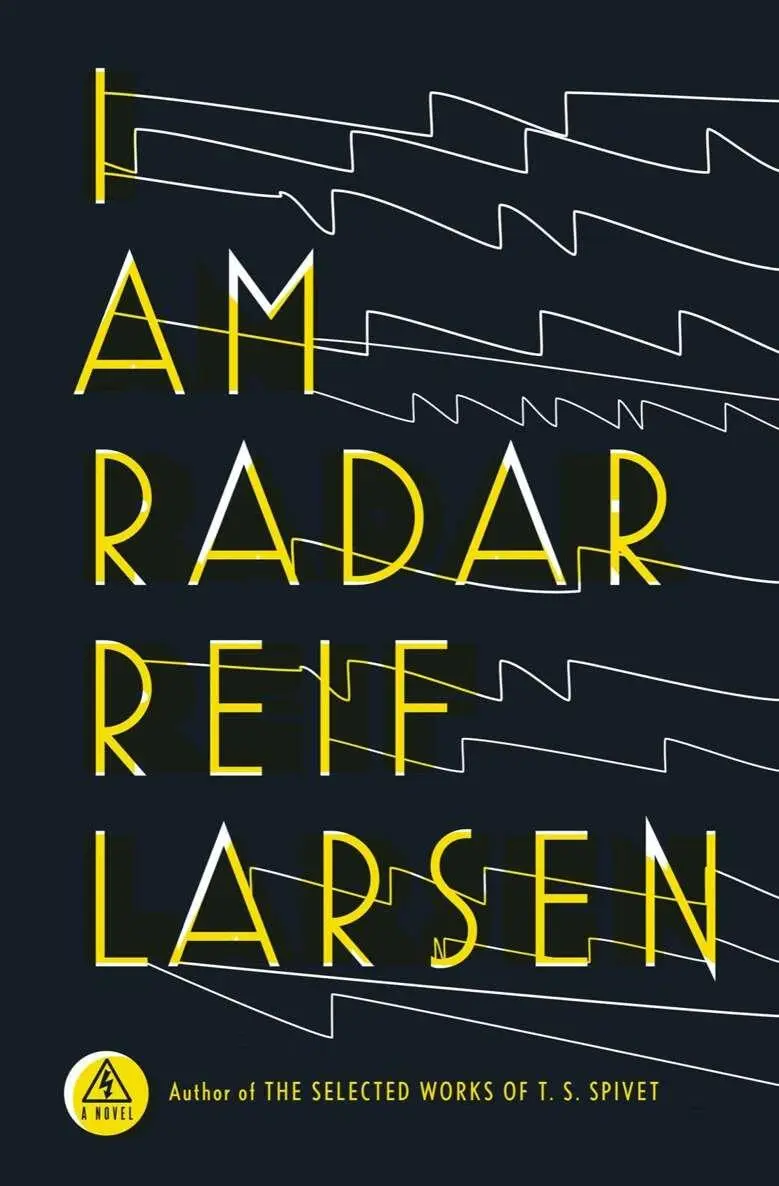
- Название:I Am Radar
- Автор:
- Издательство:Penguin Press
- Жанр:
- Год:2015
- ISBN:нет данных
- Рейтинг книги:3 / 5. Голосов: 1
-
Избранное:Добавить в избранное
- Отзывы:
-
Ваша оценка:
I Am Radar: краткое содержание, описание и аннотация
Предлагаем к чтению аннотацию, описание, краткое содержание или предисловие (зависит от того, что написал сам автор книги «I Am Radar»). Если вы не нашли необходимую информацию о книге — напишите в комментариях, мы постараемся отыскать её.
I Am Radar Deep in arctic Norway, a cadre of Norwegian schoolteachers is imprisoned during the Second World War. Founding a radical secret society that will hover on the margins of recorded history for decades to come, these schoolteachers steal radioactive material from a hidden Nazi nuclear reactor and use it to stage a surreal art performance on a frozen coastline. This strange society appears again in the aftermath of Cambodia’s murderous Khmer Rouge regime, when another secret performance takes place but goes horrifically wrong. Echoes of this disaster can be heard during the Yugoslavian wars, when an avant-garde puppeteer finds himself trapped inside Belgrade while his brother serves in the genocidal militia that attacks Srebrenica. Decades later, in the war-torn Congo, a disfigured literature professor assembles the largest library in the world even as the country around him collapses. All of these stories are linked by Radar — now a gifted radio operator living in the New Jersey Meadowlands — who struggles with love, a set of hapless parents,and a terrible medical affliction that he has only just begun to comprehend.
I Am Radar — читать онлайн бесплатно полную книгу (весь текст) целиком
Ниже представлен текст книги, разбитый по страницам. Система сохранения места последней прочитанной страницы, позволяет с удобством читать онлайн бесплатно книгу «I Am Radar», без необходимости каждый раз заново искать на чём Вы остановились. Поставьте закладку, и сможете в любой момент перейти на страницу, на которой закончили чтение.
Интервал:
Закладка:
When he got to page 493, he stopped. There, in the bottom right corner, was a diagram of a man. Except for a strange, slender headband and a boxy arm-strap contraption, the man was incredibly generic, an everyman. He wondered if this could be the diagram of his treatment. The electro-enveloping, as Lars had called it. Radar leaned in closer. Four or five strokes of the pen conveyed a subtle look of amusement across the man’s lips. Amusement at what? The transient nature of atomic reality? The knowledge that all things must change. Fall apart? Die?
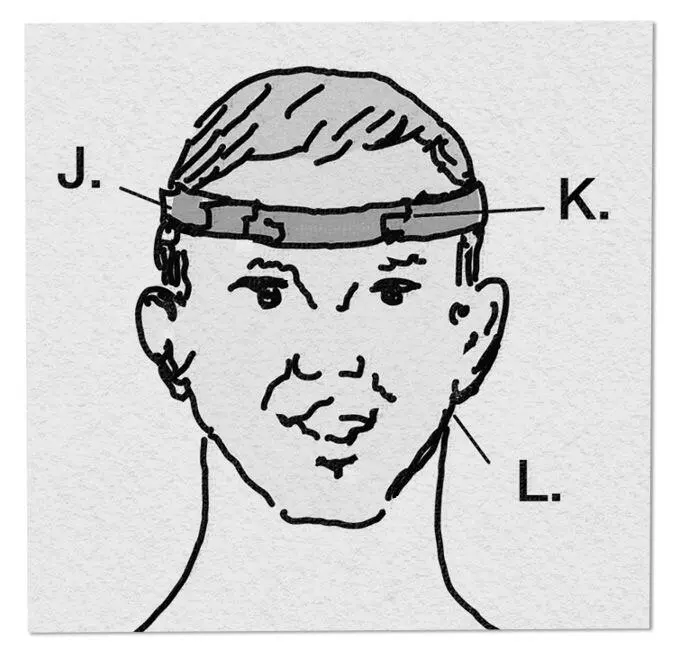
Fig. 5.2. Detail from Den Menneskelig Marionett Prosjektet
From Røed-Larsen, P., Spesielle Partikler, p. 493
Was this everyman supposed to be him?
It was preposterous, of course. He had been only four years old at the time, and even now, as a (somewhat) grown man, he in no way resembled this diagrammatic stand-in. And yet he could not look away. He leaned in closer, staring at the simple outline of the man’s frame, the hint of tendons in the neck, the twin dips of his pectorals. As he brought his eyes closer and closer to the page, the lines of the man blurred, along with the arrows and their unexplained letters. As their edges softened, he imagined the electricity spilling through this man’s skin, unraveling the cells, reversing proteins, morphing colors, peeling back time. The white of the page became him, became Radar the little boy, receiving that pulse, that quiet disaster of a pulse that would forever alter the shape of his story.
“I’m sorry,” he said to the man in the diagram. “You’re stuck like that.”
There were many such diagrams littered across the book’s pages. Floating within a sea of Norwegian, these diagrams came to represent little islands of potential meaning. He began to anticipate each image as a shipwrecked man anticipates an approaching shoal. Each one a world. Each one a promise of truth.
Gradually, as he sat with the book, a history of Kirkenesferda began to take shape in his mind, although he could not be sure if this history resembled the real history that had actually happened, or whether he was sculpting a new history, whole in and of itself. He was not even sure such a distinction mattered. He could now picture the four Kirk shows: Kirk En was the installation on the island in 1944, with the jars of little people floating in heavy water. One night, Radar had a terrible dream about these jars. He had been having more dreams since he started taking the malarial medication, and he was even remembering some of them the next morning. In the dream, the little people had come alive and were drowning, but he couldn’t figure out how to unscrew the tops of the jars, and so he was forced to watch as they slowly died, one by one, their tiny throats filled with the heavy water, stained a terrible translucent shade of yellow.
Kirk To was the Tsar Bomba show on Gåselandet Island in 1961, where the wagon housing the puppet show apparently exploded in the blast wave of the largest atomic bomb ever detonated. The book featured a series of stills from an eight-millimeter film that allegedly depicted the moment of destruction, but Radar had his doubts. How could the camera have survived? And the stills didn’t really show anything at all, at least as far as he could tell. Why show something if you couldn’t even tell what you were looking at? Maybe he just didn’t know how to look.
Then: Kirk Tre . The horror in Cambodia. He lingered here, knowing what an effect it had had on Lars. Young Lars. Through the palimpsest of diagrams and images he learned about Raksmey Raksmey, who had maybe been found in a hat (?), who had become a scientist (??) in Europe, who returned to Cambodia and somehow survived the Khmer Rouge, and who had then been invited to join Kirkenesferda via telegram. At least this is what he believed had happened. He couldn’t ever be sure. Radar studied the diagrams of the complex show, wondered how his father could have helped to create such intricate creatures. What a production it all was! To put on something that elaborate in the middle of the jungle for Pol Pot and his men. So much effort. And for what?
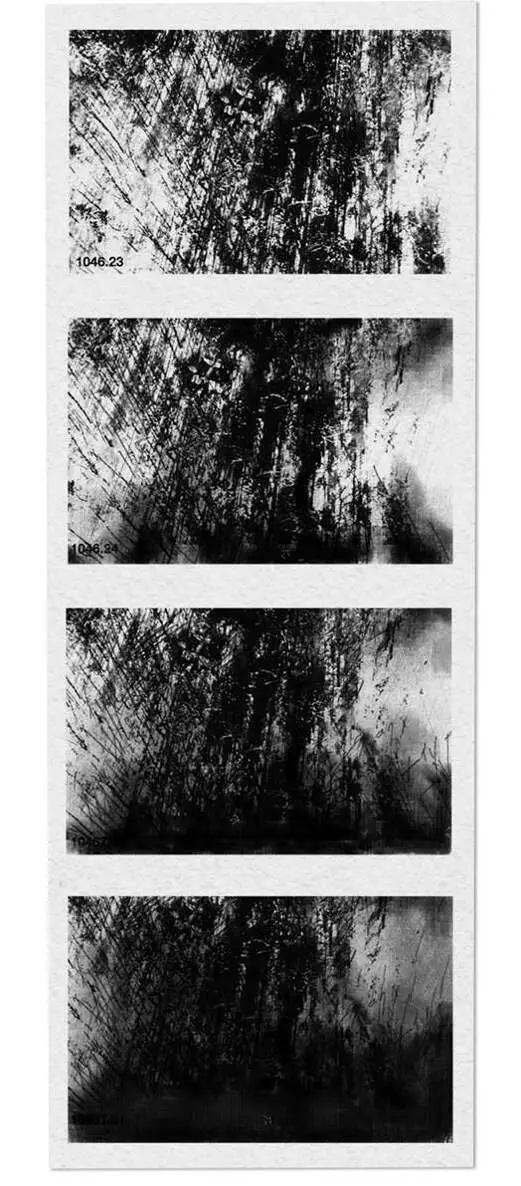
Fig. 5.3. “Gåselandet Still Sequence”
From Røed-Larsen, P., Spesielle Partikler, p. 231
With a shiver, Radar found the map on page 856: “Massakren og Escape på Camp 808.” The map depicted the aftermath of the night’s bloody ending, in which everyone was shot except little Lars, who escaped with Raksmey, only to see Raksmey die by stepping on a land mine at the Thai border. The maps of course told so little, captured none of the true terror of that night — the smell of death and cordite lingering in the air, the screams, the blood, then the silence, before the buzz of insects slowly returned. The map did not include the sound of Leif Christian-Holtsmark’s wet, ragged breath as the last of his life left him or Siri’s final glance across the hut to see the blood spilling from her husband’s neck. There was only this collection of dotted lines, a cluster of x’s, as if this were from some errant scrimmage in a coach’s playbook. And yet, seeing the unspeakable reduced to a simple black-and-white map, Radar felt himself overtaken by a new kind of horror, a horror of viewing but not knowing, of sensing what must lurk in the white spaces between the lines, beyond the boundaries of the map, beyond the confines of the book, beyond even the vast and unnameable sea. Otik wasn’t the only one who had been through hell and survived. After experiencing that simple map, in all its silence, Radar made a mental note to forgive Lars for everything he had done or would do.
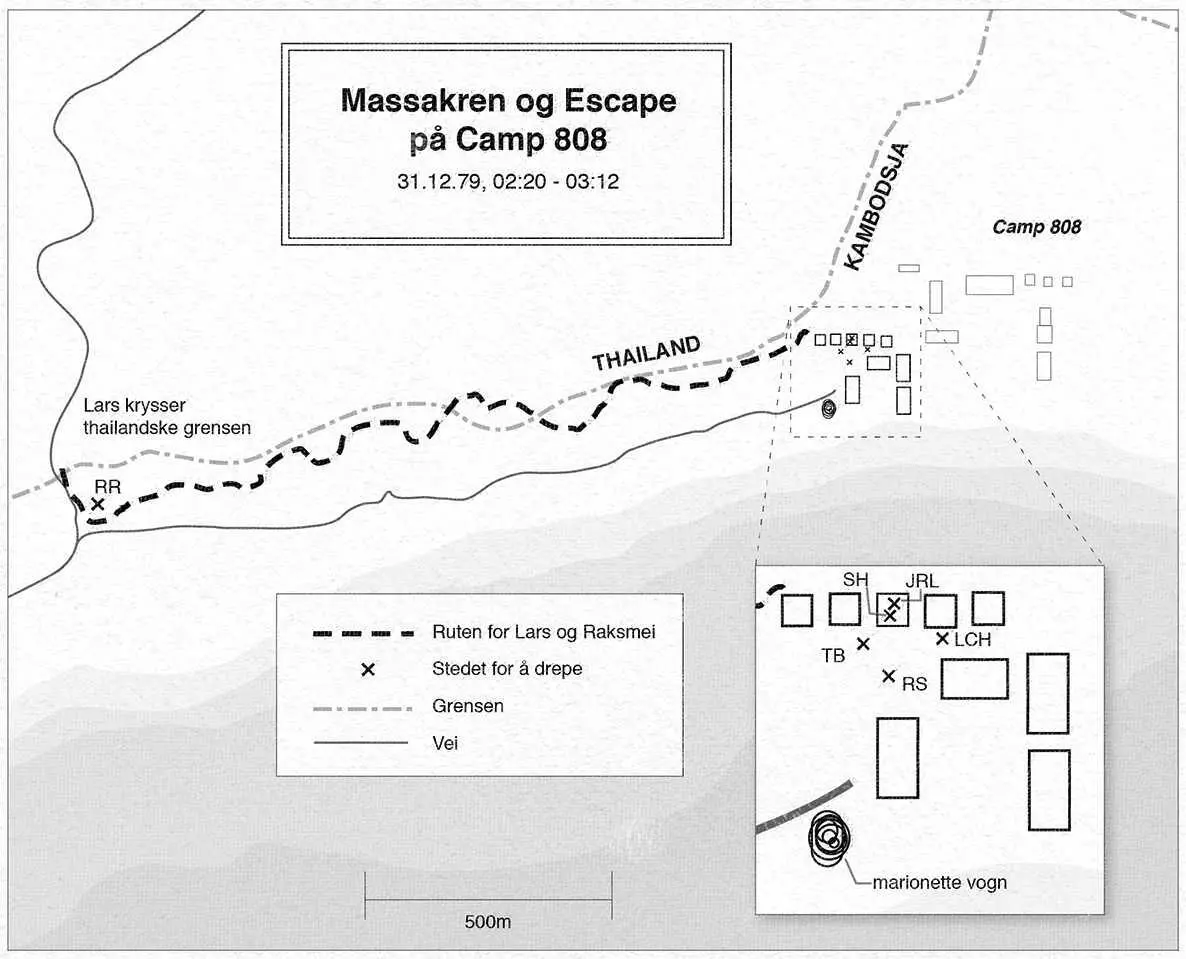
Fig. 5.4. “Massakren og Escape på Camp 808”
From Røed-Larsen, P., Spesielle Partikler, p. 856
By contrast, Kirkenesferda Fire, the Sarajevo performance, seemed almost tame, though Radar spent perhaps the longest time studying these diagrams, as his father felt most present here. He became frustrated with his total ignorance of Norwegian, with not being able to unravel and savor every detail of the performance. The language barrier felt almost personal; he became convinced that if he could just understand this show, then he would understand everything about his father. He would have to ask Lars to tell him about what had happened, what went wrong, why the show ended early.
Radar did fall in love with a series of images from the performance, although he could not quite explain their origins. The images appeared to have been taken through a strong microscope. In the sequence, a tiny (microscopic?) old man reads a book as he sits amid a lunar landscape. Several frames show him turning pages, until, in the final two frames, he disappears inside a fiery flash of light. Radar could not help feeling kinship with this minute reader. They were not so different. In many ways, he was simply another reader waiting for a spark of light to burn him up.
Radar did not sleep well, perhaps because of the close quarters, perhaps because of the malaria medication’s nocturnal effects. He still did not remember most of his dreams, but he often awoke in the middle of the night still caught in the lingering lacunae of their wake, immersed in the feeling of experiencing a horror that could not be known, and such a feeling of unknowing bled into his days. He missed the comforts of his Little Rule Book for Life and briefly regretted giving it to his mother. Where would he put all of his stupid little thoughts?
Читать дальшеИнтервал:
Закладка:
Похожие книги на «I Am Radar»
Представляем Вашему вниманию похожие книги на «I Am Radar» списком для выбора. Мы отобрали схожую по названию и смыслу литературу в надежде предоставить читателям больше вариантов отыскать новые, интересные, ещё непрочитанные произведения.










Обсуждение, отзывы о книге «I Am Radar» и просто собственные мнения читателей. Оставьте ваши комментарии, напишите, что Вы думаете о произведении, его смысле или главных героях. Укажите что конкретно понравилось, а что нет, и почему Вы так считаете.