Reif Larsen - I Am Radar
Здесь есть возможность читать онлайн «Reif Larsen - I Am Radar» весь текст электронной книги совершенно бесплатно (целиком полную версию без сокращений). В некоторых случаях можно слушать аудио, скачать через торрент в формате fb2 и присутствует краткое содержание. Год выпуска: 2015, Издательство: Penguin Press, Жанр: Современная проза, на английском языке. Описание произведения, (предисловие) а так же отзывы посетителей доступны на портале библиотеки ЛибКат.
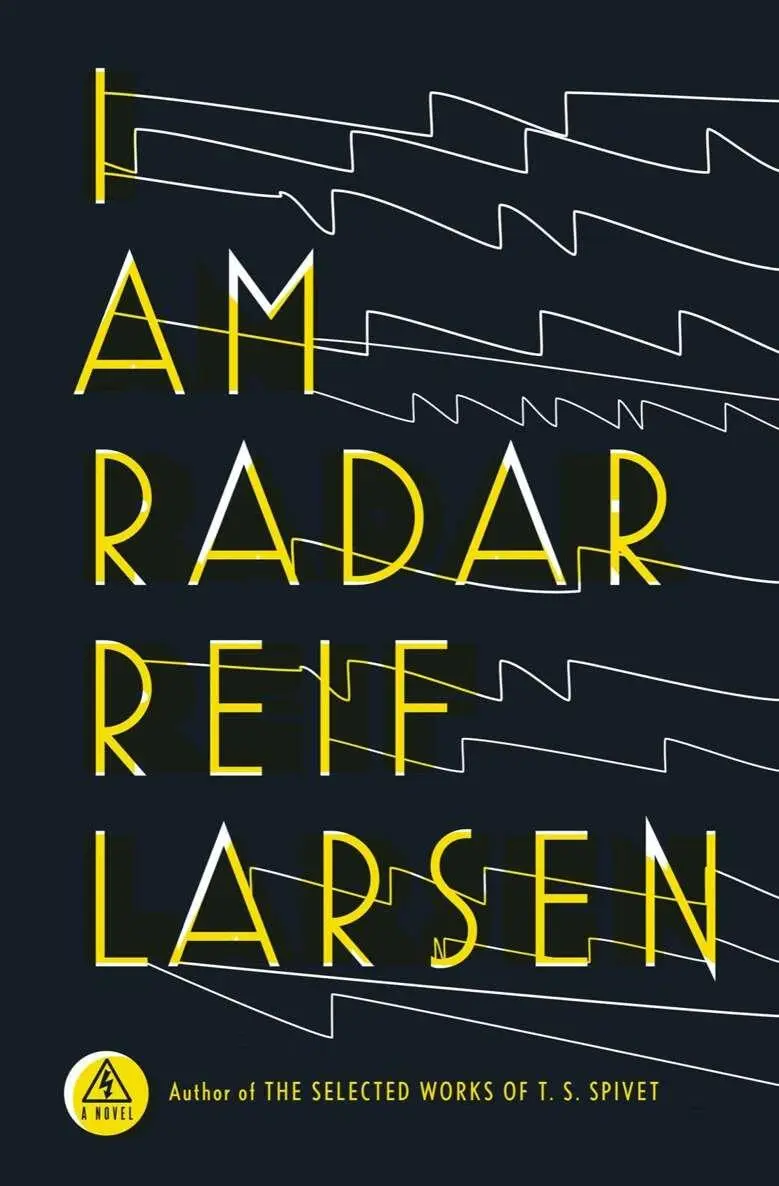
- Название:I Am Radar
- Автор:
- Издательство:Penguin Press
- Жанр:
- Год:2015
- ISBN:нет данных
- Рейтинг книги:3 / 5. Голосов: 1
-
Избранное:Добавить в избранное
- Отзывы:
-
Ваша оценка:
I Am Radar: краткое содержание, описание и аннотация
Предлагаем к чтению аннотацию, описание, краткое содержание или предисловие (зависит от того, что написал сам автор книги «I Am Radar»). Если вы не нашли необходимую информацию о книге — напишите в комментариях, мы постараемся отыскать её.
I Am Radar Deep in arctic Norway, a cadre of Norwegian schoolteachers is imprisoned during the Second World War. Founding a radical secret society that will hover on the margins of recorded history for decades to come, these schoolteachers steal radioactive material from a hidden Nazi nuclear reactor and use it to stage a surreal art performance on a frozen coastline. This strange society appears again in the aftermath of Cambodia’s murderous Khmer Rouge regime, when another secret performance takes place but goes horrifically wrong. Echoes of this disaster can be heard during the Yugoslavian wars, when an avant-garde puppeteer finds himself trapped inside Belgrade while his brother serves in the genocidal militia that attacks Srebrenica. Decades later, in the war-torn Congo, a disfigured literature professor assembles the largest library in the world even as the country around him collapses. All of these stories are linked by Radar — now a gifted radio operator living in the New Jersey Meadowlands — who struggles with love, a set of hapless parents,and a terrible medical affliction that he has only just begun to comprehend.
I Am Radar — читать онлайн бесплатно полную книгу (весь текст) целиком
Ниже представлен текст книги, разбитый по страницам. Система сохранения места последней прочитанной страницы, позволяет с удобством читать онлайн бесплатно книгу «I Am Radar», без необходимости каждый раз заново искать на чём Вы остановились. Поставьте закладку, и сможете в любой момент перейти на страницу, на которой закончили чтение.
Интервал:
Закладка:
“I’m not sure the Americans faked the moon landing.”
“Of course they did. That is common fact,” said Ivan, chewing thoughtfully on a forkful of mashed potatoes. “But probably real reason I became interested in stars is because of the event .”
“The event?”
“I think this is what you call it in English.”
“What event?”
“Tunguska Event. In 1908, there was huge explosion in Siberia. It blew out two thousand square meters of forest, something like this. Eighty million trees destroyed. Center of explosion was seventy kilometers from Vanavara, but the people there, they still felt heat blast all across their skin. The shockwave broke windows, collapsed woodsheds. It blew the men right off their horse. It was powerful, so powerful. Stronger than an atom bomb.”
“This was 1908?”
“Yes, 1908. In June. There is a monument in Vanavara, because after this everyone wanted to come to see what happened. Scientists, tourists, acrobats.”
“Acrobats?”
“Okay, one acrobat. But he was very famous. He did his Tunguska show, where he launched himself from a wire and disappeared into a puff of smoke. It was very famous and very beautiful.”
“So what caused the explosion?”
“Well, that is a lot of debating. When I was little, government report said this was meteor, but many older people who are still religious could not believe this. They said it was God’s doing. They said the government had made God angry by mistreating its people and so God is punishing them. I can still remember this. . There was line of scientists giving their report. They were standing in these white coats. And I said to myself, Ivan, if you cannot be cosmonaut, maybe you can become scientist like these men. These men know about everything in sky. Look how clean their coats are! They are so powerful and so clean . This is what I thought. So I get books and I get chart and I get spotter and. . I spend time with sky. I spend lots of time with sky. Just watching. In Siberia, sky is amazing. Maybe best sky in world. Like fish eye spinning around and around. You can see stars shoot once every ten seconds, no problem. You look straight ahead and you see more stars in your — how do you call it, on these sides?”
“Your periphery.”
“Yes, your periphery . Your periphery is having serious party. And when you look there, you see more stars over there, and so on. But funny thing is that when I was looking at stars, it was like looking at myself. At my own hand, but this hand I forget I have. It was like. . I have to learn this part of me again.”
“So you learned all of the constellations?”
“Yes, but not exactly like that. It is like I am becoming familiar again, if you understand. But of course I can’t see every star. I feel like I know them, but I can’t see them. And then I realize: there is whole Southern Hemisphere that I have never seen. So this is when I leave Vanavara and my family. To see sky I cannot see. I am not cosmonaut, I am not scientist, but I am next best thing. I become sailor. The sea is my outer space now.”
“Rule number two-thirty-nine.”
“What?”
“Nothing.”
• • •
ONE AFTERNOON, Radar was sitting up on the bridge while Ivan was at the helm on the eight-to-four watch. A call came in on an ACR VHF transceiver, but it warbled and fizzled out in the middle of the transmission.
“What did they say?” asked Radar.
“I can’t hear. That radio is broken,” said Ivan with a shake of his head. “Everything on this ship is broken.”
“Not everything,” said Captain Daneri, coming into the wheelhouse. “ We are not broken, Mr. Kovalyov.”
“Pardon, Captain,” said Ivan.
Radar cleared his throat. “Maybe I could fix it.”
“I think it is impossible. Igor tried and he said it is hopeless,” said Ivan.
“Igor’s a fool,” said the captain. Igor was one of those unfortunate souls who had convinced himself that the world was bent on deceiving him. He was also supposedly the boat’s electrician. But as far as Radar could tell, he devoted nearly all of his time to hitting the cooling devices on the refrigerated containers with his wrench and cussing in his native tongue. The clang of his wrench had become a common refrain in the ship’s painful symphony.
“Well, I could just take a look,” said Radar.
“Mr. Kovalyov, would you believe it? Our guest wants to tame the dragon,” said the captain. “Our guest is calling Igor un idiota incompetente .”
“I didn’t say that,” said Radar.
“You are correct: Igor es un idiota incompetente .”
“If I could just take a peek,” said Radar. “I might be able to—”
“He just wants to take a peek,” repeated the captain.
“Let him take a peek,” said Ivan.
“Please,” the captain bowed, and gestured at the radio. “She awaits your intentions.”
After removing the front panel, it took Radar barely a minute to discover the corroded transistor switch running off the link board. Telling Ivan and an amused captain that he would be right back, he detached the transceiver from the stack and made his way down to Moby-Dikt. Otik offered no response when Radar asked him if he could borrow one of the soldering irons, so he went ahead. Utilizing a spare transistor he found in a drawer, he fashioned a new switch, and what he could not solder he secured with a small wad of well-chewed watermelon-flavored bubble gum.
• • •
BACK ON THE BRIDGE, he presented his handiwork.
“It’ll run for now, but you may want to get a more permanent solution when you get back to port,” he said.
Ivan marveled like a child. “That,” he said. “ That is something incredible. Chewing gum.”
“Well, don’t tell Igor,” said the captain. “Wait, on second thought, let’s tell Igor. Let’s tell him that un yanki bobalicón is doing the job he cannot do.”
“One day, I will write song about this,” said Ivan.
Later, Daneri would touch Radar’s shoulder and say, “You’re a part of her now. She doesn’t ever forget.”
Indeed, ever since offending him that first day in port, Radar had slowly finessed his way back into the captain’s good graces. Or maybe it was simply a case of Radar being the only available audience member. It had become clear that Captain Daneri was really just a showman in search of a show. Perhaps this was why he had agreed to shepherd them across the ocean in the first place. Yet in this regard, Otik and Lars were not holding up their end of the bargain. Despite repeated invitations by the captain to join him in his quarters for an after-dinner maté, Otik and Lars consistently excused themselves so as to return to their feverish preparations. Things were not going well with the vircator. A palpable air of panic could be felt inside Moby-Dikt, so Radar returned there as seldom as possible now, only to catch a few hours of nightmarish sleep, though even this was proving difficult, as his companions worked all hours of the night. When Radar tried to query them about their progress, both grew cagey, even hostile. Radar was thus left to be Daneri’s sole patron.
Entering into the captain’s cabin was a bit like entering into a time machine. The room was paneled in a lush African mahogany so dark it appeared almost purple by the light of a candle. At the center of the room was a giant desk of such immense proportions, it was unclear how the piece had ever entered the cabin or how it would ever be removed.
Captain Daneri presided over their evenings together from a body-worn burgundy armchair, sipping his maté out of a calabash gourd through a thick silver straw. Occasionally he would light up a Cuban cigar, although these he dutifully rationed, explaining that his father had lost his entire throat to cancer and did not speak a word for the last fifteen years of his life.
Читать дальшеИнтервал:
Закладка:
Похожие книги на «I Am Radar»
Представляем Вашему вниманию похожие книги на «I Am Radar» списком для выбора. Мы отобрали схожую по названию и смыслу литературу в надежде предоставить читателям больше вариантов отыскать новые, интересные, ещё непрочитанные произведения.









Обсуждение, отзывы о книге «I Am Radar» и просто собственные мнения читателей. Оставьте ваши комментарии, напишите, что Вы думаете о произведении, его смысле или главных героях. Укажите что конкретно понравилось, а что нет, и почему Вы так считаете.