Reif Larsen - I Am Radar
Здесь есть возможность читать онлайн «Reif Larsen - I Am Radar» весь текст электронной книги совершенно бесплатно (целиком полную версию без сокращений). В некоторых случаях можно слушать аудио, скачать через торрент в формате fb2 и присутствует краткое содержание. Год выпуска: 2015, Издательство: Penguin Press, Жанр: Современная проза, на английском языке. Описание произведения, (предисловие) а так же отзывы посетителей доступны на портале библиотеки ЛибКат.
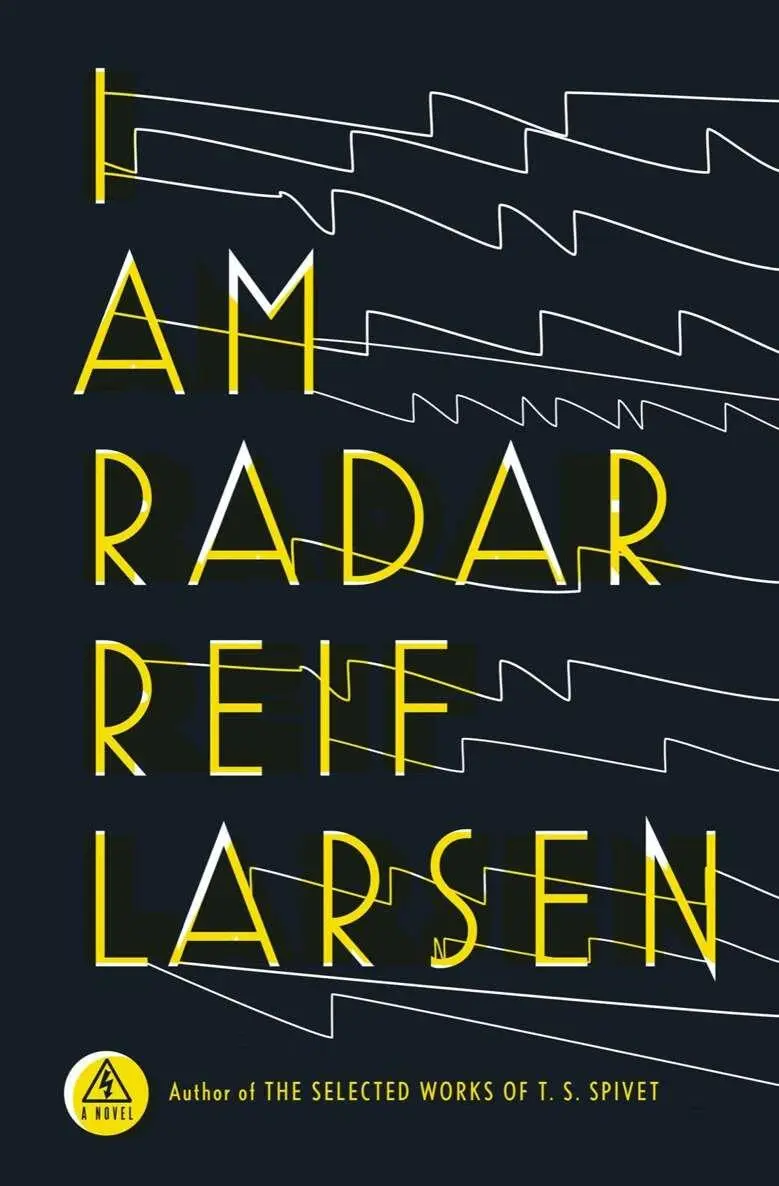
- Название:I Am Radar
- Автор:
- Издательство:Penguin Press
- Жанр:
- Год:2015
- ISBN:нет данных
- Рейтинг книги:3 / 5. Голосов: 1
-
Избранное:Добавить в избранное
- Отзывы:
-
Ваша оценка:
I Am Radar: краткое содержание, описание и аннотация
Предлагаем к чтению аннотацию, описание, краткое содержание или предисловие (зависит от того, что написал сам автор книги «I Am Radar»). Если вы не нашли необходимую информацию о книге — напишите в комментариях, мы постараемся отыскать её.
I Am Radar Deep in arctic Norway, a cadre of Norwegian schoolteachers is imprisoned during the Second World War. Founding a radical secret society that will hover on the margins of recorded history for decades to come, these schoolteachers steal radioactive material from a hidden Nazi nuclear reactor and use it to stage a surreal art performance on a frozen coastline. This strange society appears again in the aftermath of Cambodia’s murderous Khmer Rouge regime, when another secret performance takes place but goes horrifically wrong. Echoes of this disaster can be heard during the Yugoslavian wars, when an avant-garde puppeteer finds himself trapped inside Belgrade while his brother serves in the genocidal militia that attacks Srebrenica. Decades later, in the war-torn Congo, a disfigured literature professor assembles the largest library in the world even as the country around him collapses. All of these stories are linked by Radar — now a gifted radio operator living in the New Jersey Meadowlands — who struggles with love, a set of hapless parents,and a terrible medical affliction that he has only just begun to comprehend.
I Am Radar — читать онлайн бесплатно полную книгу (весь текст) целиком
Ниже представлен текст книги, разбитый по страницам. Система сохранения места последней прочитанной страницы, позволяет с удобством читать онлайн бесплатно книгу «I Am Radar», без необходимости каждый раз заново искать на чём Вы остановились. Поставьте закладку, и сможете в любой момент перейти на страницу, на которой закончили чтение.
Интервал:
Закладка:
For the first time, Radar saw what was going to happen: This ship is going to sink. I’m going to die on this ship. The idea of his own death did not elicit panic but rather resignation, as if he had known it would end like this the whole time.
“Get him upstairs!” shouted Lars. “There’s a lounge on the lower deck.”
Radar snapped out of his morose reverie and grabbed Otik’s shoulder. Urged on by adrenaline and the threat of a watery grave, they maneuvered themselves to the opening of the stairwell. Radar would have thought it impossible to go any farther, but somehow they pinballed up the four flights of stairs despite his own handicaps, the immensity of Otik’s mass, and the heave and throes of the boat. Radar’s shoulders were sore from crashing against one wall after another. Yet he had almost grown accustomed to the rhythms of the egregious rolling and pitching. Even if the rules of the world had gone haywire, he sensed a method to this madness. When the boat reached the top of its tilt axis, his body was already readying itself for the release and the counter-tilt.
They slammed against the door to the lounge and then collapsed onto the floor. The lounge was abandoned. The Little Mermaid was playing silently on the television. Radar lay there, panting, watching Sebastian merrily sing and leap about on the screen, when a single idea occurred to him: Ivan . He need to find Ivan. If he was with Ivan, all would be okay.
“I’m going upstairs,” he said.
“Better to stay here,” said Lars. “Who knows what’s out there?”
The boat reversed its roll. The ship groaned.
“I’m going!” said Radar. “I’ll be right back.”
Back in the stairwell, he staggered upward. His load was lightened, but it seemed as if the higher he went in the ship, the worse the pitching became. He finally made it to the top corridor, staggering, falling, grabbing hold of a stowed fire hose. He could see the hallway literally twisting and torquing like a Slinky.
Everyone up here must be dead! Thrown overboard or smashed to smithereens!
After some desperate balletics, he managed to make it to the doorway of the bridge and threw it open, expecting carnage.
But there was no carnage. The scene was one of remarkable serenity. And there was Ivan, standing at the helm, feet planted like a matador, nine fingers upon the wheel.
Oh, sweet, sweet Ivan!
Ivan’s face was completely calm, his eyes betraying no sense of unease as his gaze held fast into the very depths of the storm. It was a standoff — man versus nature — and seeing him like this, Radar could not bet against man.
Next to him, the chief mate, Akaki, was hunched over the radar, his face barely six inches from the screen. Several paces away stood Captain Daneri in his crisp white uniform. He looked as if he were attending a funeral. One hand firmly gripped the bridge console, but otherwise none of the three seemed particularly bothered by gravity’s complete disintegration.
Radar opened his mouth to convey his simultaneous terror and joy at seeing them. He wanted to tell them about Otik, about the water in the hold, about the twisting hallway, about seeing his own death.
“Blow me shivers!” he called out.
The needle in the room did not flicker. No one paid him any heed. Ivan, hands on the wheel. Akaki, studying his computers. Daneri, staring grimly ahead. It was as if he didn’t exist.
Radar took hold of a chair, then the bridge console, then made it to the helm.
“Ivan,” he said. “Ivan. What’s going on?”
“A squall,” said Ivan. “Big squall. Radar didn’t see it.”
“Radar never sees it,” said the captain.
“Radar did see it,” said Akaki.
“Only once we’re inside the goddamn headwall,” said the captain. “And then radar sees nothing.”
Radar was briefly confused, until he realized they were referring not to him but to the object of Akaki’s attention. The technology, not the person.
“How does she feel, Mr. Kovalyov?” the captain said. “Tell me something good.”
“She’s pushing three, four to starboard. I can hold,” said Ivan, gripping the wheel. “But if wind changes we are buried.”
The captain nodded. “What’s your height, Mr. Akakievich?”
“Twelve meters,” said the chief mate. “Fifty-three knots from the north-northeast. Holding. Gusting.”
“Hijo de puta,” hissed Daneri. He lifted the phone to the engine room and said, “Full ahead, Mr. Piskaryov. Give me more. I want more. We need to cut these down.”
“There’s a band ahead,” said the chief mate, staring at the radar.
The captain hung up his phone. “Keep her steady, Mr. Kovalyov. Pull port if you need, but don’t let her get turned. I don’t want to lose one goddamn box, you hear me? Not one goddamn box! ”
“There is a band ahead, captain!” the chief mate said again.
“I don’t care what you see on that cursed machine!” shouted the captain.
“I have never seen this,” the chief mate said, almost contemplatively.
Radar looked out through the windows, across the great deck of the Aleph . The windshield wipers squeaked away, back and forth across the glass — a pathetic show of resistance, given the immensity of the storm that surrounded them. At first he could not see much. The deck lights were all ablaze, but his visibility was still limited by the thrashing rain to a series of glimpses of a huge and unrelenting sea. And then there was a clap of lightning and he saw it all. What before had simply been a series of fantastic rolls and pitches now revealed itself to be a maelstrom of wind and rain and great white-capped waves that rose out of the darkness before crashing wildly against the deck, the stacks of containers lurching and leaning beneath the savagery of the ocean. The ship — once so big in port — now seemed so utterly small and helpless against this raging sea — a slight little dagger of a thing. And then the rain came at them again, pounding against the windows like a volley of bullets, the windshield wipers persisting but doing nothing to dispel the chaos outside. Having glimpsed the magnitude of their foe, Radar saw the odds now swinging back firmly in favor of nature’s eventual triumph, even with a wizard like Ivan at the helm.
“Dios mío,” said the captain.
Radar looked up. At first he could make out nothing through the blur of wind and rain. The boat bent toward its bow, and it was as if the great sea had taken a moment to rest, a moment to contemplate the extent of its destruction. And then Radar saw it: a mighty, incomprehensible wall of water rising above them, higher even than the bridge upon which they stood, thirty meters above the Plimsoll. The Aleph, stupefied, helpless to the world, was headed directly for it.
“Mr. Kovalyov—” the captain hissed.
“I see it, I see it,” said Ivan. “What do you want? There’s nothing I can do. .”
The chief mate looked up from his radar.
“Mater bozhya,” he whispered.
The boat churned up the flank of the giant wave, doing its best to climb into the sky, but eventually she lost her momentum, for there was only so much her propeller could manage against the laws of physics. The wave, previously content with existing as a mountain of potentiality, finally lost its patience with the ship. The tremendous cornice of white water at its zenith exploded like a volcano and let loose a thundering avalanche of sea down onto the Aleph’ s deck.
There are few sights as impressive as a wave breaking across a ship. It is the truest of force equations, an honest meeting of liquid and solid, where solid is forced to wonder what liquid might do, where solid resists, re-tabulates, converses, barters, prays, and then reemerges triumphant. Or not. Radar sensed such a negotiation only for a split second before the shockwave from the impact shook the bridge and he was tossed like a doll to the floor.
Читать дальшеИнтервал:
Закладка:
Похожие книги на «I Am Radar»
Представляем Вашему вниманию похожие книги на «I Am Radar» списком для выбора. Мы отобрали схожую по названию и смыслу литературу в надежде предоставить читателям больше вариантов отыскать новые, интересные, ещё непрочитанные произведения.












Обсуждение, отзывы о книге «I Am Radar» и просто собственные мнения читателей. Оставьте ваши комментарии, напишите, что Вы думаете о произведении, его смысле или главных героях. Укажите что конкретно понравилось, а что нет, и почему Вы так считаете.