Reif Larsen - I Am Radar
Здесь есть возможность читать онлайн «Reif Larsen - I Am Radar» весь текст электронной книги совершенно бесплатно (целиком полную версию без сокращений). В некоторых случаях можно слушать аудио, скачать через торрент в формате fb2 и присутствует краткое содержание. Год выпуска: 2015, Издательство: Penguin Press, Жанр: Современная проза, на английском языке. Описание произведения, (предисловие) а так же отзывы посетителей доступны на портале библиотеки ЛибКат.
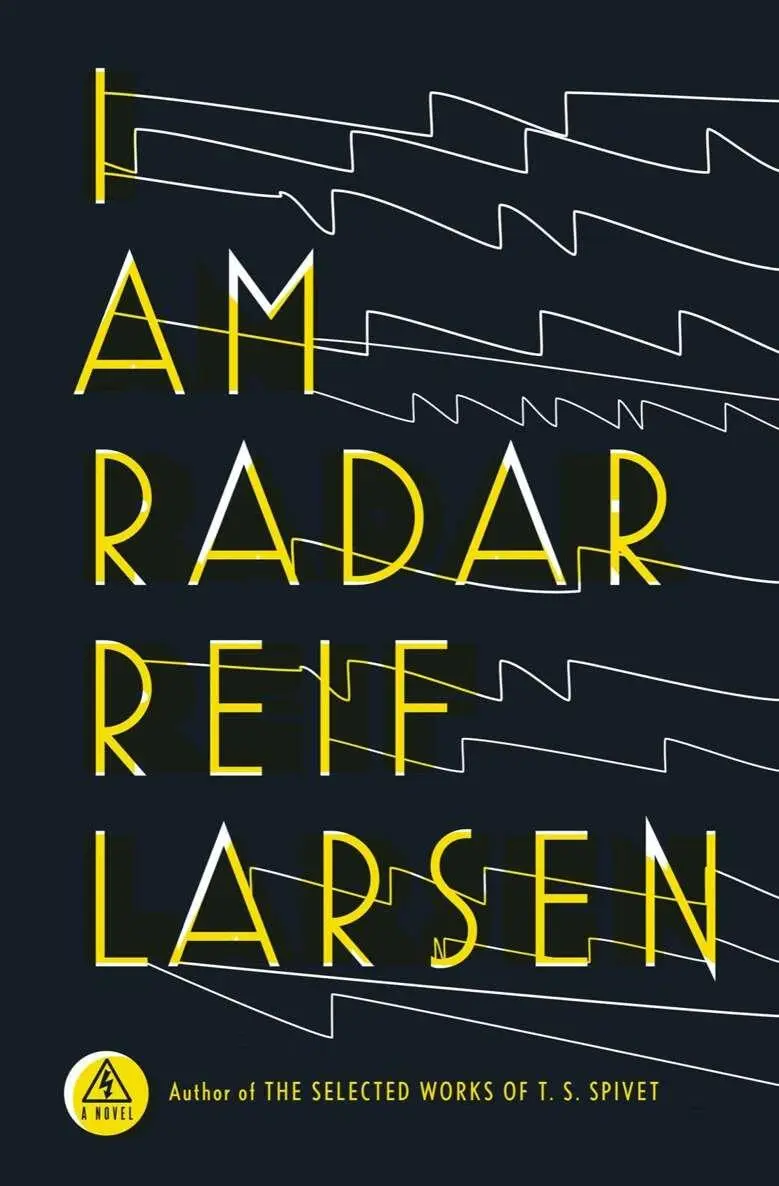
- Название:I Am Radar
- Автор:
- Издательство:Penguin Press
- Жанр:
- Год:2015
- ISBN:нет данных
- Рейтинг книги:3 / 5. Голосов: 1
-
Избранное:Добавить в избранное
- Отзывы:
-
Ваша оценка:
I Am Radar: краткое содержание, описание и аннотация
Предлагаем к чтению аннотацию, описание, краткое содержание или предисловие (зависит от того, что написал сам автор книги «I Am Radar»). Если вы не нашли необходимую информацию о книге — напишите в комментариях, мы постараемся отыскать её.
I Am Radar Deep in arctic Norway, a cadre of Norwegian schoolteachers is imprisoned during the Second World War. Founding a radical secret society that will hover on the margins of recorded history for decades to come, these schoolteachers steal radioactive material from a hidden Nazi nuclear reactor and use it to stage a surreal art performance on a frozen coastline. This strange society appears again in the aftermath of Cambodia’s murderous Khmer Rouge regime, when another secret performance takes place but goes horrifically wrong. Echoes of this disaster can be heard during the Yugoslavian wars, when an avant-garde puppeteer finds himself trapped inside Belgrade while his brother serves in the genocidal militia that attacks Srebrenica. Decades later, in the war-torn Congo, a disfigured literature professor assembles the largest library in the world even as the country around him collapses. All of these stories are linked by Radar — now a gifted radio operator living in the New Jersey Meadowlands — who struggles with love, a set of hapless parents,and a terrible medical affliction that he has only just begun to comprehend.
I Am Radar — читать онлайн бесплатно полную книгу (весь текст) целиком
Ниже представлен текст книги, разбитый по страницам. Система сохранения места последней прочитанной страницы, позволяет с удобством читать онлайн бесплатно книгу «I Am Radar», без необходимости каждый раз заново искать на чём Вы остановились. Поставьте закладку, и сможете в любой момент перейти на страницу, на которой закончили чтение.
Интервал:
Закладка:
“I don’t understand—”
But at that moment, they heard a giant explosion outside the boat. Radar ducked.
“What was that?” said Radar.
“We are under attack,” said Otik. “They have come for us.”
“Pirates?” said Radar.
More thundering booms echoed from outside.
“What should we do?” Radar whispered.
With a groan, Otik extricated his body from the bed and hobbled out into the hold. Radar cautiously followed.
“Where are you going?” asked Radar. “Don’t you think we should stay here?”
“Let’s go meet these men who will kill us. Let’s shake hands and congratulate,” said Otik, and he started up the stairs.
Radar stared after him, shocked. It seemed less an act of courage than a hopeful attempt at suicide.
“Wait!” said Radar, following him up the steps. “Wait for me, burazeru !”
They emerged onto the deck to find that it was already dark. They must have lost track of time. Night came quickly in the tropics, always at the same hour. The Aleph, contrary to what they expected, was not being overrun by a band of marauders. All was calm on her main deck. They heard the sound of guns again, but some distance away. They hurried to the balustrade and peered out across the water. In the moonlight, they could just make out what looked to be an old man-of-war, nestled in a cove, intermittently blasting its guns into the dark, jungled coastline. Each time its cannons fired, the bush would light up, and they watched as shadows of trees trembled and collapsed beneath the onslaught. Yet beyond this little war, the forest was endless, unaffected.
“What are they doing?” asked Radar.
“It’s Cabinda,” said Ivan, who appeared next to them at the balustrade with his guitar. “It belongs to Angola, but it is not attached to rest of country. Same old story. The Cabindans want to be their own people, but they cannot escape their motherland.”
“But why are they shooting?”
Ivan started to strum his guitar. “Ooo-ooo-ooo, Ju - lia, she split me in two, Ju - lia,” he sang.
“Would you cut that racket!” The captain’s voice came from above. His head appeared in silhouette over the bridgewing. “Quit that singing! Respect this night. Du calme, du calme .”
Ivan abruptly fell silent. They were left with only the sound of the man-of-war’s cannons caressing the darkness and the great silence that echoed from the country beyond.
• • •
AFTER WAITING THREE DAYS in the open ocean, they were finally given the crackly go-ahead to enter the mouth of the Congo. The Aleph turned, her engines fired, steam was applied to valve, and into the continent she went. At Banana Station, they picked up a pilot to help them run the river, but they were barely three miles upstream when a second transmission came over the wireless, this time from a different man: their permission had been rescinded and they were to turn back at once. It was an inauspicious beginning. Captain Daneri raised an eyebrow, looked at the pilot, and then flipped off the radio.
“We never heard it,” he said. “If we did not hear it, it does not exist.”
They chugged on. Ivan guided the big ship through a snarl of lush islands that looked untouched by man or beast and around an arcing bend carved from a rise of palisade cliffs. A map of the river lay on the table before him, but he did not consult it, nor did he seek advice from the pilot, who now dozed in a corner. They glided by the old river port of Boma, where they saw a handful of children wave at them from the docks, and then they were passing beneath a large suspension bridge. A truck rumbled across. Such a feat of engineering looked out of place amid all this greenery.
“The next bridge is two thousand kilometers up the Congo,” Captain Daneri said as they passed underneath its span. “Two thousand kilometers! No bridges for two thousand kilometers! Write a song about that, Mr. Kovalyov. Write a song about Congo, a country of no bridges.”
On the right, the sad squalor of Matadi slid into view: a town built on the promises of the sea and the betrayal of a nation. Corroded petrochemical tanks, the burned-out chassis of an abandoned truck cab, clusters of dusty red-roofed shacks rising up into the hills. A dog scratched itself on the riverbank, taking no notice of their arrival.
But arrived they had. Radar stood on the bridgewing, agape at their proximity to what before had only been an idea. This idea had now become a place, though the place felt like a pale imitation of the idea.
“Welcome to Africa,” said Lars. “It is the beginning of the end.”
• • •
“NOW THAT WE ARE HERE,” announced Otik, “I can inform you this was also the worst two weeks of my life.”
The three of them had been standing on the crumbling docks of Matadi for almost an hour. Before disembarking, they had all donned the bright yellow polyester tracksuit of Kirkenesferda. With one leg in the bottoms, Radar had realized his tracksuit had in fact been meant for his father. He had wanted to disappear then and weep for everything that was and wasn’t anymore. But the other two were already waiting for him, so he zipped up the jacket, put on his graffitied trucker’s hat — which, as fate would have it, was also yellow — and followed them off the ship and down the gangplank.
“There were some low points,” admitted Radar. “But we made it.”
“I have lived through war, bombing, everything,” said Otik. “And I will never get on another boat again.”
“We’re getting on another boat, Otik,” said Lars.
“Nope. I will walk. I don’t care how far it is. I will walk until my legs break off, and then I will crawl.”
They stood in a cluster, like a group of cheerleaders with no team to cheer. Radar was still buzzing with the notion that he was actually in a place that could not be called New Jersey. Occasionally, embarrassed that someone might hear him, he would sing under his breath, “Af-frik-a,” in what was no doubt a highly dubious accent.
Shortly after their arrival, Captain Daneri had disappeared into the town, along with most of his Russian crew, save for two young sour-faced seamen left on watch. The captain had given no word of explanation or instruction. After such an ungracious exit, Radar wondered if they would ever see him again.
The day wheezed away like a deflated balloon. The sun slinked quickly behind the hills, leaving the river valley in uncertain shadow. The Aleph, a modest vessel in Newark Bay, here dominated the quay, leaving room for only one small feeder boat from South Africa, the Colonel Joll, which looked as if it had been here for some time. Unlike in the frenetic ports they had visited before now, there was no movement to get the dozen or so rusting gantry cranes to begin unloading the Aleph’ s cargo. Radar was not sure what, if anything, was to be unloaded besides themselves.
“So what happens now?” he asked finally.
“We wait,” said Lars.
The great river flowed by them, carrying all and carrying nothing. A slight breeze brought the scent of burning down from the hills and into the river valley. Radar, despite having stable land beneath his feet for the first time in days, felt as if he were sinking.
Finally, a sweaty man in a beige uniform approached. He looked very, very tired.
“Vos papiers?” he said, although he did not look at them as he said this, but rather at a stain on the dock next to their feet.
Lars handed the man a bulging manila folder with all of their paperwork. He had spent months obtaining the requisite visas, permits, and transport permissions from various consulates, embassies, and government officials. What he could not obtain he had forged. He had even invented several Congolese intelligence officials who had given “Le théâtre de Kirkenesferda carte blanche absolue” to pass anywhere within the Democratic Republic of Congo unmolested. These papers contained many official seals. Radar thought it was impressive work.
Читать дальшеИнтервал:
Закладка:
Похожие книги на «I Am Radar»
Представляем Вашему вниманию похожие книги на «I Am Radar» списком для выбора. Мы отобрали схожую по названию и смыслу литературу в надежде предоставить читателям больше вариантов отыскать новые, интересные, ещё непрочитанные произведения.











Обсуждение, отзывы о книге «I Am Radar» и просто собственные мнения читателей. Оставьте ваши комментарии, напишите, что Вы думаете о произведении, его смысле или главных героях. Укажите что конкретно понравилось, а что нет, и почему Вы так считаете.