Reif Larsen - I Am Radar
Здесь есть возможность читать онлайн «Reif Larsen - I Am Radar» весь текст электронной книги совершенно бесплатно (целиком полную версию без сокращений). В некоторых случаях можно слушать аудио, скачать через торрент в формате fb2 и присутствует краткое содержание. Год выпуска: 2015, Издательство: Penguin Press, Жанр: Современная проза, на английском языке. Описание произведения, (предисловие) а так же отзывы посетителей доступны на портале библиотеки ЛибКат.
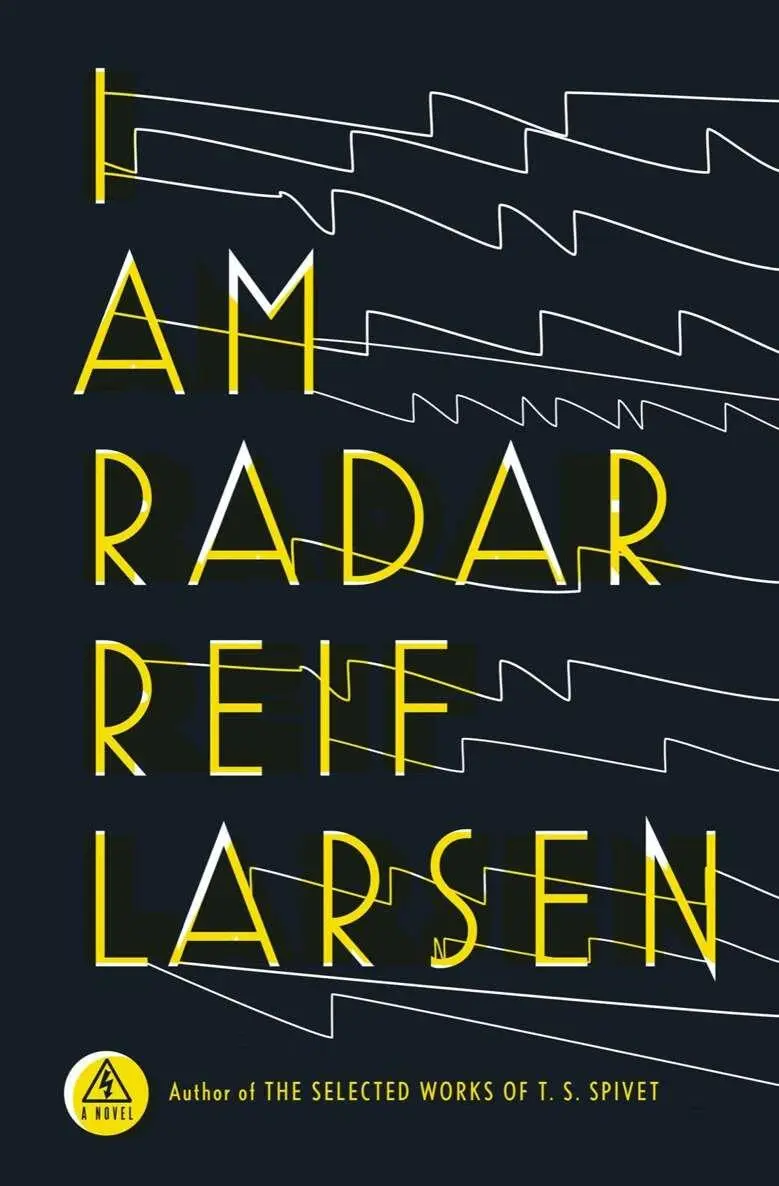
- Название:I Am Radar
- Автор:
- Издательство:Penguin Press
- Жанр:
- Год:2015
- ISBN:нет данных
- Рейтинг книги:3 / 5. Голосов: 1
-
Избранное:Добавить в избранное
- Отзывы:
-
Ваша оценка:
I Am Radar: краткое содержание, описание и аннотация
Предлагаем к чтению аннотацию, описание, краткое содержание или предисловие (зависит от того, что написал сам автор книги «I Am Radar»). Если вы не нашли необходимую информацию о книге — напишите в комментариях, мы постараемся отыскать её.
I Am Radar Deep in arctic Norway, a cadre of Norwegian schoolteachers is imprisoned during the Second World War. Founding a radical secret society that will hover on the margins of recorded history for decades to come, these schoolteachers steal radioactive material from a hidden Nazi nuclear reactor and use it to stage a surreal art performance on a frozen coastline. This strange society appears again in the aftermath of Cambodia’s murderous Khmer Rouge regime, when another secret performance takes place but goes horrifically wrong. Echoes of this disaster can be heard during the Yugoslavian wars, when an avant-garde puppeteer finds himself trapped inside Belgrade while his brother serves in the genocidal militia that attacks Srebrenica. Decades later, in the war-torn Congo, a disfigured literature professor assembles the largest library in the world even as the country around him collapses. All of these stories are linked by Radar — now a gifted radio operator living in the New Jersey Meadowlands — who struggles with love, a set of hapless parents,and a terrible medical affliction that he has only just begun to comprehend.
I Am Radar — читать онлайн бесплатно полную книгу (весь текст) целиком
Ниже представлен текст книги, разбитый по страницам. Система сохранения места последней прочитанной страницы, позволяет с удобством читать онлайн бесплатно книгу «I Am Radar», без необходимости каждый раз заново искать на чём Вы остановились. Поставьте закладку, и сможете в любой момент перейти на страницу, на которой закончили чтение.
Интервал:
Закладка:
When he stood up again, he could see nothing through the windows. For an instant, he thought that the boat had simply vanished, that the wave had acted like a giant eraser and banished them from existence, but then he realized that they were still on the ship, and they still existed, so the ship must exist, too. Maybe she had split off and sunk, taking all of her cargo with her? Maybe they were sinking already and they had precious few moments together before the ocean burst through the windows. But no, there she was: with great effort, the outline of the Aleph surfaced from the grim sea like an ancient sea creature heaving itself from the depths. She was still intact. She had made it through.
“How many boxes?” the captain was yelling.
The chief mate was at the window, counting, fingers touching fingers.
“How many boxes are gone, Mr. Akakievich?!”
“At least fifteen, sir,” he yelled. “Maybe more.”
Radar peered out into the storm, the green and red bow lights still glimmering through the rain. He could see the patchwork quilt of boxes, so small and vulnerable against the sea. Most were still in place, but he could also see what the first mate was looking at: two stacks in the bow were shorter than the rest and now were tilting dangerously with each swell.
“Tell me what is gone!” said the captain.
“I have to check the computers, sir!”
“Hijo de puta.”
Ivan was still manning the wheel, his face crooked into the faintest of smiles.
Radar came up to him. “How did you know how to do it?”
“I didn’t,” said Ivan. “I never know.”
Radar looked out across the deck, wet with the sea still churning out thirty-foot waves, though after the monstrosity they had just survived, the rest was child’s play.
Through the slashing rain, something caught his eye. He blinked. Just past the gunwales, somewhere over the second cargo hold, he could’ve sworn he had seen a horse galloping across the decks, weaving around the stacks of containers. He stared out into the storm but did not see the creature again.
“Captain,” said Radar, “are any of these containers said to contain horses?”
• • •
THE STORM SUBSIDED, though the seas retained their swell for many hours afterwards. Down in Moby-Dikt, the cleanup had begun.
Otik lay on his cot, dead to the world, while Lars worked furiously to restore order from the chaos. Radar picked up the bow saw and began to help him. The precious bird heads, so carefully looked after, were strewn all over the floor. Many had rolled into dark corners, and it took time to find them. And still some had been lost. They had boarded the boat with 1,387; after the storm, they could find only 1,381. Otik, normally so protective of his heads, only groaned.
“I want off,” he said. “I want land. I want real land.”
After three hours, Radar collapsed into his own cot, exhausted. They had done the best they could. Time would tell whether the storm had doomed the show.
Lars stood by the workbench, swaying, his eyes empty.
“You should get some sleep,” said Radar.
“I won’t sleep again,” said Lars.
“Ever?”
“In the north, you learn to sleep half the year and then stay awake for six months, like a bear.”
“Yeah, I’m not quite there yet,” said Radar.
“You did wonders today,” Lars said suddenly. “We couldn’t do this without you.”
“Oh? I feel like I’m always in the way.”
“You’ll see,” said Lars. “Otik doesn’t forget. Things will be different now.”
6
They crossed the Atlantic without further incident. On the tenth day, they stopped in Lisbon, where they unloaded — or supposedly unloaded—50,000 pounds of “lubricated materials,” 75,000 pounds of “tractors or tractor equipment,” 20,000 pounds of “explosive and/or non-explosive chemicals,” 33,000 pounds of semiconductors, 25,500 pounds of “potato product,” and 70 tons of flat carbon steel. They took on containers said to contain 1,000 cases of port wine, 10,000 pounds of green olives, 20,000 pounds of leather hide, 2,000 bottles of milk, 15,000 pounds of young wool, 9,000 pounds of “footwear and/or foot apparel,” and a 1976 Mercedes-Benz fire engine.
In the Canary Islands, more containers were exchanged and shifted. Among other things, they dropped off the containers said to contain the milk, the wool, the footwear, and 950 jackhammers. They also dropped off the fire engine, which drove off the docks after sounding its siren, as if in thanks for the safe passage. They picked up 5,000 pounds of live lobster, 22,000 pounds of frozen fish, 30,000 pounds of “cola and diet cola product,” 65,000 pounds of “precious gemstones,” and 14,000 traffic cones. At no point in the loading and unloading did Radar see any evidence of the horse he had glimpsed in the middle of the typhoon.
They rode the Canary Current down the west coast of Africa, past Senegal, through the turbulent waters of Cape Palmas, and into the Gulf of Guinea, where they stopped briefly in Lagos to pick up five hundred tons of crude oil. Captain Daneri, nervous about pirates, stationed his crew on the gunwales with high-pressure hoses pointed at the sea while he stalked the bridgewings with a rifle in the crook of each arm. As if knowing who they were up against, no pirates elected to appear. The captain looked almost disappointed at the ease with which they slid out of Nigerian waters.
From Lagos, they crossed the equator, hugging the coast near Gabon so as to mitigate the Angola Gyre working against them. Nearly two weeks after leaving New Jersey, they were forced to anchor just south of Point Noire, next to several Taiwanese oil tankers, while they waited to gain admission into the Congo River.
Captain Daneri fumed at the delay.
“The system crumbles,” he muttered into his maté.
While they waited, the tropical sun sent temperatures in the hold soaring. Otik, who had not fully recovered his strength since the storm, tried halfheartedly to work on the damaged bird heads, but the sweat poured off him in sheets and he soon fell back into bed. Radar noticed that he had lost a considerable amount of weight during their ten days at sea, and his eyes now appeared sunken and dull. Despite his pallor, Otik’s demeanor toward Radar had softened dramatically. Just as Lars had predicted, Otik now approached him with an almost off-putting tenderness, given his previous vitriol.
“You always remind me of Kermin,” said Otik from his bed. “I miss this man every day.”
“I shouldn’t have left.”
“You had to leave, burazeru . You had to come with us.”
Burazeru . Brother. A word he had heard passed like a secret handshake between two boys while they played soccer on a street in Belgrade. A word he never thought he would hear directed at him. An elusive connection that would always, by definition, exclude him. He was brotherless. Until now.
Burazeru. His skin prickled.
“You mean it?” he said.
“Without you, there can be no show. Ti si dobar covek, Charlie Brown. ”
Even if it was not true, it meant the world to him. For the first time in his life, Radar felt as though he might be on the right path.
“Otik, when we were back in New Jersey, you said my father wasn’t coming back,” said Radar. “How can you be so sure?”
“I didn’t know what I was saying, burazeru . It was long night. I was tired.”
“But what do you think happened to him, really?”
Otik rubbed his face. “I don’t know.”
“What is it?” asked Radar.
Otik sighed. “There is type of puppet tradition in Java called wayang golek, ” he said. “They are using wooden rod puppets. Very beautiful. When puppet dies in play, the puppeteer hangs puppet next to stage, on special hook, so audience can see puppet. Puppet is not gone. Puppet is still there.”
Читать дальшеИнтервал:
Закладка:
Похожие книги на «I Am Radar»
Представляем Вашему вниманию похожие книги на «I Am Radar» списком для выбора. Мы отобрали схожую по названию и смыслу литературу в надежде предоставить читателям больше вариантов отыскать новые, интересные, ещё непрочитанные произведения.










Обсуждение, отзывы о книге «I Am Radar» и просто собственные мнения читателей. Оставьте ваши комментарии, напишите, что Вы думаете о произведении, его смысле или главных героях. Укажите что конкретно понравилось, а что нет, и почему Вы так считаете.