Reif Larsen - I Am Radar
Здесь есть возможность читать онлайн «Reif Larsen - I Am Radar» весь текст электронной книги совершенно бесплатно (целиком полную версию без сокращений). В некоторых случаях можно слушать аудио, скачать через торрент в формате fb2 и присутствует краткое содержание. Год выпуска: 2015, Издательство: Penguin Press, Жанр: Современная проза, на английском языке. Описание произведения, (предисловие) а так же отзывы посетителей доступны на портале библиотеки ЛибКат.
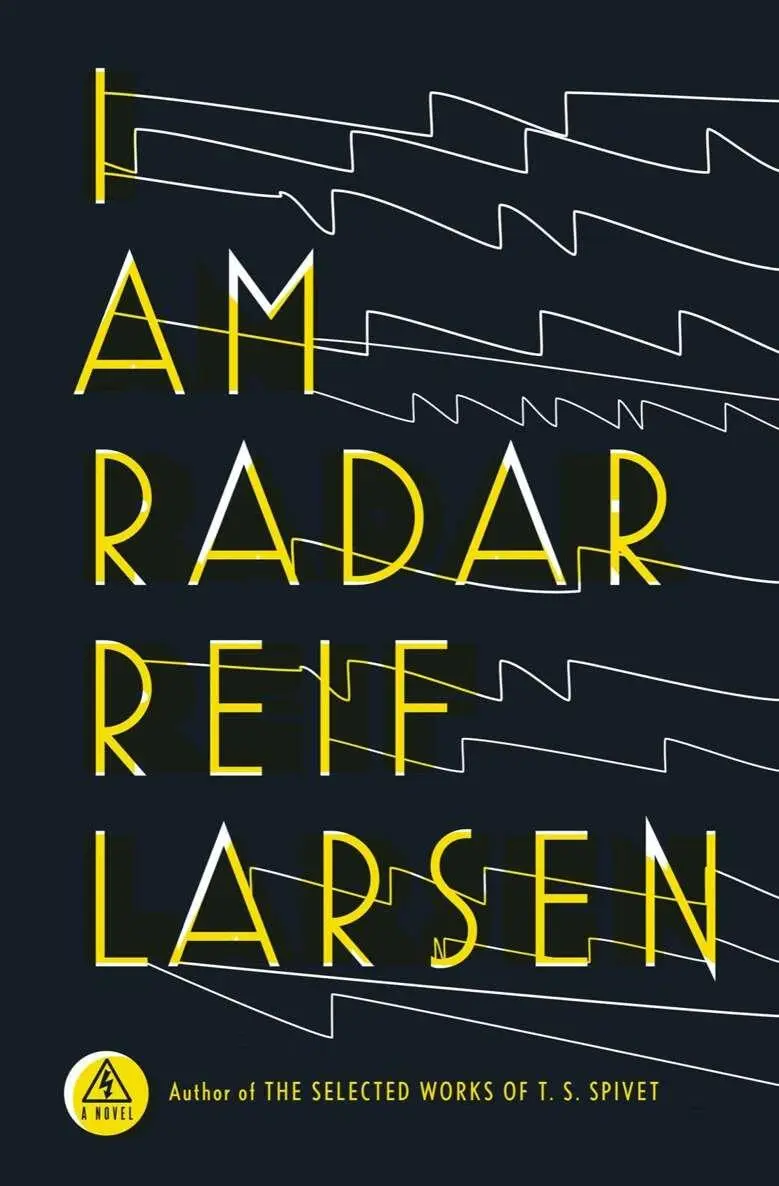
- Название:I Am Radar
- Автор:
- Издательство:Penguin Press
- Жанр:
- Год:2015
- ISBN:нет данных
- Рейтинг книги:3 / 5. Голосов: 1
-
Избранное:Добавить в избранное
- Отзывы:
-
Ваша оценка:
I Am Radar: краткое содержание, описание и аннотация
Предлагаем к чтению аннотацию, описание, краткое содержание или предисловие (зависит от того, что написал сам автор книги «I Am Radar»). Если вы не нашли необходимую информацию о книге — напишите в комментариях, мы постараемся отыскать её.
I Am Radar Deep in arctic Norway, a cadre of Norwegian schoolteachers is imprisoned during the Second World War. Founding a radical secret society that will hover on the margins of recorded history for decades to come, these schoolteachers steal radioactive material from a hidden Nazi nuclear reactor and use it to stage a surreal art performance on a frozen coastline. This strange society appears again in the aftermath of Cambodia’s murderous Khmer Rouge regime, when another secret performance takes place but goes horrifically wrong. Echoes of this disaster can be heard during the Yugoslavian wars, when an avant-garde puppeteer finds himself trapped inside Belgrade while his brother serves in the genocidal militia that attacks Srebrenica. Decades later, in the war-torn Congo, a disfigured literature professor assembles the largest library in the world even as the country around him collapses. All of these stories are linked by Radar — now a gifted radio operator living in the New Jersey Meadowlands — who struggles with love, a set of hapless parents,and a terrible medical affliction that he has only just begun to comprehend.
I Am Radar — читать онлайн бесплатно полную книгу (весь текст) целиком
Ниже представлен текст книги, разбитый по страницам. Система сохранения места последней прочитанной страницы, позволяет с удобством читать онлайн бесплатно книгу «I Am Radar», без необходимости каждый раз заново искать на чём Вы остановились. Поставьте закладку, и сможете в любой момент перейти на страницу, на которой закончили чтение.
Интервал:
Закладка:
The whistle blew. Raksmey had fallen. He looked over to where Jean-Baptiste and the rector were standing and then pulled himself up. Another boy slapped him on the back of the head. Jean-Baptiste instinctively cringed.
“I realized I could not be everything for him,” Jean-Baptiste said, staring at the boys milling about. “He needs socialization with other children.”
“Among other things,” said Monsieur Than. “He also — and please do not take this the wrong way — he also needs to be away from his father for some time.”
Jean-Baptiste took a step back. “What do you mean? I made him into who he is!”
“No, Monsieur de Broglie, you did not make him—”
“Where would he be without me?”
“Nor did his mother make him. Nor did God, nor Buddha, nor whomever you ascribe your ascendant powers to. Raksmey can only make himself, and in order for him to do this, your project — as honorable as it is — must end here. I won’t force you. You’re free to withdraw Raksmey from the collège at this very moment. But if you choose to keep him here, if you truly wish for us to be partners, then you must agree to entrust him to us and to let him go. I would ask that you leave and visit us again in four months. I know this may seem harsh, but it’s absolutely necessary. For you as much as for him.”
• • •
JEAN-BAPTISTE STAYED in Saigon for two more weeks. At night, in search again of that beautiful, horrific sensation du familier, he began to frequent an opium parlor in District 5. The door was tended by a madam named Phuong. She never smiled as she took his money. The dimly lit parlor, which consisted of a damp cement room adorned with a meager collection of pillows and dull green army mattresses, was populated by potbellied French colonials who had lost their way; sleepy-eyed American servicemen on R&R, happy enough to wax melancholic about the impending war; the occasional Chinese diplomat who took his drug and said nothing at all.
Jean-Baptiste lay there in the gloom and thought of his wife, of his mother, of his father, of Raksmey, of Tien, of the river and the jungle, the jungle that had become his jungle. He thought of everything that had come to pass, all the words spoken and not spoken, everything said and done and never done, and the promise of a forgiveness that would never come. The depth of his loneliness surprised and soothed him. Stumbling home from the parlor late one night, his left hand bleeding from an incident he could not recall, he realized he would always be alone — that he had always been alone.
There was nothing left but to leave.
“Please,” he told the hotel’s concierge. “If my mother shows up, tell her to wire this number in Phnom Penh. They’ll get word to me. Give her this letter. Tell her I’m not angry. Tell her I love her.”
“Monsieur,” the concierge said, bowing.
“You’ll tell her?”
“Monsieur?”
“You’ll tell her everything?”
The concierge bowed again. “I will try,” he said.
Jean-Baptiste packed his bags and hers, including the little wooden doll, and started back to the place from which he had come.
7. MARCH 1975
There were only five other people on his flight to Phnom Penh, and none appeared to be Cambodian. Raksmey squinted out the airplane window at the rolling green expanse of his country. He had not been home in eleven years. The plane lurched, then steadied itself. In the distance, something burned, the smoke pooling pleasantly in the air. From this height the world was in miniature, like a museum exhibit, content with its own beauty, wanting of nothing.
After his passport was stamped by a plump, bored army officer, Raksmey wandered through what looked to be an abandoned airport. Inside the main terminal, a series of plastic buckets filled with greasy mechanic’s tools were lined up next to a deserted security checkpoint. Nearby, a lone worker mopped at the floor, though the floor appeared to be clean.
As he was walking past the shuttered airport café, Raksmey heard someone call his name — once, twice. He turned, and there was Tien, standing in a white short-sleeved shirt and slim blue slacks. The two men embraced, laughed, nearly falling into a dusty ficus tree.
“You survived?” Tien asked in Khmer, holding on to Raksmey’s shoulder as if he might fly away.
“Survived what?” Raksmey answered in French.
“Sometimes the Khmer Rouge shoot at planes coming to land.” Tien switched to French.
“No one told me this!” said Raksmey.
“Better not to know,” Tien smiled. “How is life in Europe? You are a big man now?”
Raksmey held up his arms. “Not so big.”
“Where do you live?”
“Geneva,” said Raksmey. “Switzerland.”
“Your father. .” His voice caught. “He said you are working inside a tunnel. Like a rabbit.”
“It’s a collider. A big tunnel, like a circle,” said Raksmey, tracing a loop with his finger. There were new lines beneath Tien’s eyes and across his forehead. “Things here are not good?”
Tien shook his head. “Not so good. Maybe you should not come.”
“I had to come.”
Tien smiled, nodded. “Yes,” he said.
“Rak,” said Raksmey.
“Rak,” said Tien.
• • •
THEY WALKED OUT into the heat. Raksmey almost gasped as the heavy air strangled him. His pores flexed open, his breath shortened, his pupils dilated and then contracted with this sudden transfer of energy. The molecules in his skin began to sputter and churn, tuning themselves to the temperature of the world, and yet his body settled into an enduring weariness, his walk morphing into an improvised lean. It was out of this paradox — of quick molecules and slow bodies — that the great, beautiful sadness of the tropics arose, causing men and country alike to fall and rise and fall again. When Raksmey felt this familiar malaise, felt his skin both alive and dead, he knew he was finally home.
Tien hailed a tuk-tuk. They wove through a quiet, sullen Phnom Penh. Women hanging up laundry eyed them warily as they passed.
“You live here now?” asked Raksmey.
“I’m having trouble,” said Tien. His voiced quavered.
“I brought you something,” said Raksmey. From his pocket he produced a coin. He placed it in his friend’s palm. “Rak.”
Tien stared at the little silver circle. His eyes grew moist.
“The world is not so big,” he said.
“Very small, in fact,” said Raksmey.
They rode through the city, past a marketplace that had been bombed. Streaks of soot rising from broken windows.
“Tell me, Tien, did he suffer?”
Tien shook his head. “No. He did not.”
“You saw?”
“When he went, he went like this.” He clapped his hands around the coin.
“Tell me, Tien. Tell me everything. I want to know.”
• • •
AND SO ENDS that slim little wonder that is Jeg er Raksmey . In a review of the novella in Vinduet, Røed-Larsen declares this ending “a curious failure of invention for a man whose only gift was an overactive imagination” (125). Other reviews complained about how such an ending left too much unexplained. Dagfinn Møller writes, in the final issue of Profil, that “this last line. . a plea for information, for anything concrete. . becomes the voice of a reader left in the lurch” (102).
Tofte-Jebsen never responded publicly to these criticisms, but in a lecture at the Bergen Offentlige Bibliotek in 1983, he advanced this theory of fiction making:
If you grow too comfortable with your book, I say dismantle it (“demontere det”). Put it into a paper bag and heave it out the window. . no matter if it hits someone in the street. You have to clear the decks before you grow complacent. If you’ve lived with even one eye open you’ll know what I’m talking about — change is the only force that keeps us alive.
Читать дальшеИнтервал:
Закладка:
Похожие книги на «I Am Radar»
Представляем Вашему вниманию похожие книги на «I Am Radar» списком для выбора. Мы отобрали схожую по названию и смыслу литературу в надежде предоставить читателям больше вариантов отыскать новые, интересные, ещё непрочитанные произведения.









Обсуждение, отзывы о книге «I Am Radar» и просто собственные мнения читателей. Оставьте ваши комментарии, напишите, что Вы думаете о произведении, его смысле или главных героях. Укажите что конкретно понравилось, а что нет, и почему Вы так считаете.