Reif Larsen - I Am Radar
Здесь есть возможность читать онлайн «Reif Larsen - I Am Radar» весь текст электронной книги совершенно бесплатно (целиком полную версию без сокращений). В некоторых случаях можно слушать аудио, скачать через торрент в формате fb2 и присутствует краткое содержание. Год выпуска: 2015, Издательство: Penguin Press, Жанр: Современная проза, на английском языке. Описание произведения, (предисловие) а так же отзывы посетителей доступны на портале библиотеки ЛибКат.
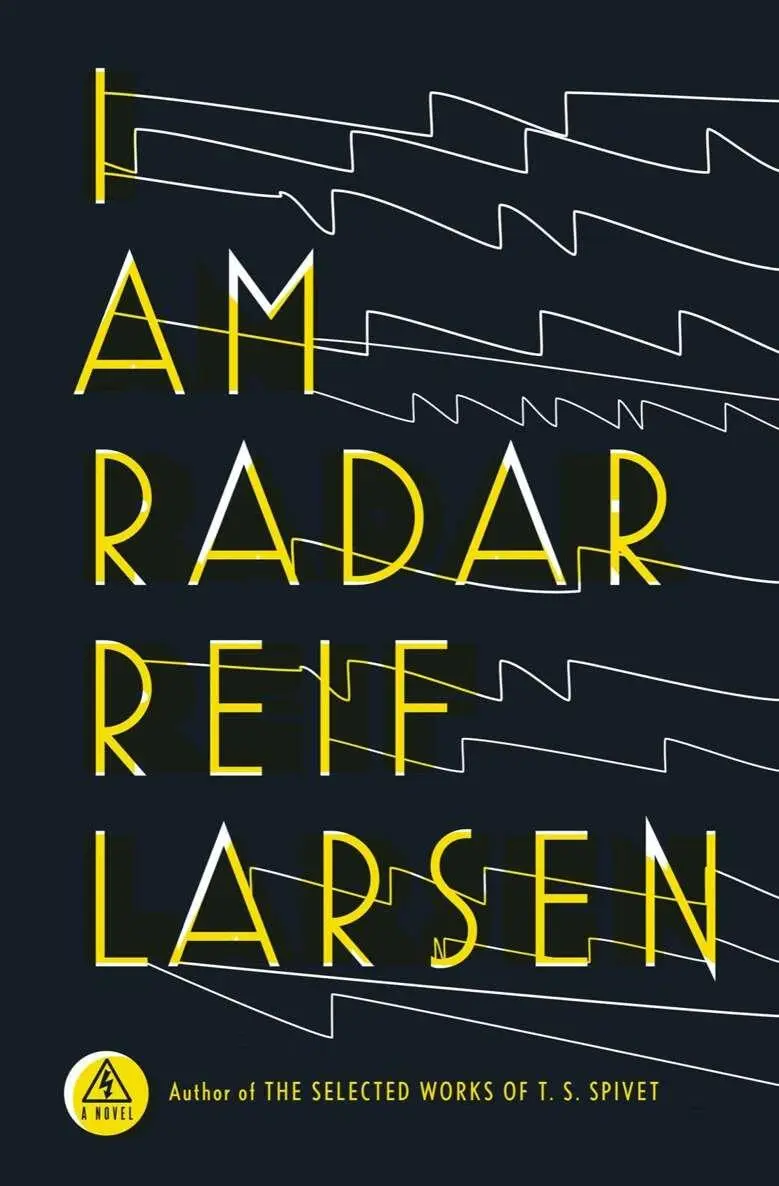
- Название:I Am Radar
- Автор:
- Издательство:Penguin Press
- Жанр:
- Год:2015
- ISBN:нет данных
- Рейтинг книги:3 / 5. Голосов: 1
-
Избранное:Добавить в избранное
- Отзывы:
-
Ваша оценка:
I Am Radar: краткое содержание, описание и аннотация
Предлагаем к чтению аннотацию, описание, краткое содержание или предисловие (зависит от того, что написал сам автор книги «I Am Radar»). Если вы не нашли необходимую информацию о книге — напишите в комментариях, мы постараемся отыскать её.
I Am Radar Deep in arctic Norway, a cadre of Norwegian schoolteachers is imprisoned during the Second World War. Founding a radical secret society that will hover on the margins of recorded history for decades to come, these schoolteachers steal radioactive material from a hidden Nazi nuclear reactor and use it to stage a surreal art performance on a frozen coastline. This strange society appears again in the aftermath of Cambodia’s murderous Khmer Rouge regime, when another secret performance takes place but goes horrifically wrong. Echoes of this disaster can be heard during the Yugoslavian wars, when an avant-garde puppeteer finds himself trapped inside Belgrade while his brother serves in the genocidal militia that attacks Srebrenica. Decades later, in the war-torn Congo, a disfigured literature professor assembles the largest library in the world even as the country around him collapses. All of these stories are linked by Radar — now a gifted radio operator living in the New Jersey Meadowlands — who struggles with love, a set of hapless parents,and a terrible medical affliction that he has only just begun to comprehend.
I Am Radar — читать онлайн бесплатно полную книгу (весь текст) целиком
Ниже представлен текст книги, разбитый по страницам. Система сохранения места последней прочитанной страницы, позволяет с удобством читать онлайн бесплатно книгу «I Am Radar», без необходимости каждый раз заново искать на чём Вы остановились. Поставьте закладку, и сможете в любой момент перейти на страницу, на которой закончили чтение.
Интервал:
Закладка:
“You can still blame us,” said Jean-Baptiste. “I give you my permission.”
The rector looked confused, then he laughed, quickly and uncomfortably.
“Of course,” he said. “I understand you’re joking now. We can all make many jokes now.”
“Just as soon as the Americans leave.”
“Ah,” the rector said, opening his hands. “What can I say? Saigon is a popular place. Many ideas, many forces at work, not all of them. .” He turned to Raksmey, who had remained silent throughout their conversation. “It’s a good place to come and study. Do you like to study?”
“Yes, Monsieur,” Raksmey said quietly.
“And tell me, what is your favorite subject?”
Raksmey looked at his father. Jean-Baptiste motioned for him to speak.
“Molecular physics,” Raksmey whispered, shrinking down into his seat.
Monsieur Than raised his eyebrows. “Well, welcome to René Descartes, Raksmey.”
“I’ve left my instructions in here,” said Jean-Baptiste, sliding a thick envelope across the table.
“Instructions?”
“Raksmey is used to a rigorous education program. Obviously this school will represent some kind of break from that, but I’d like to ensure as much continuity as possible. There are certain. . aspects of his development that I’d like you to keep track of.”
Monsieur Than leaned back in his chair. “Many parents are nervous when they first drop off their children here. They wonder, what will we do to them? Well, I can assure you he will be in good hands.”
“Read the materials. This is a little different. I’ve been involved in a. . project.”
“We aren’t going to turn your son into a Communist, if that’s what you’re worried about, Monsieur. We believe in a basic set of ideals, but we also teach open-mindedness. Tolerance. It’s the only way this region will survive.”
Monsieur Than offered to give them a tour of the grounds, but Jean-Baptiste explained that his mother had gone missing and that he must get back to the hotel.
“I’m sorry to hear this,” said Monsieur Than. “But Saigon is not such a big town. I’m sure you’ll find her.”
“I’m sure,” said Jean-Baptiste.
Outside, he paused at the gates of the collège .
“Please, take care of him,” he said to the rector. “He means a great deal to me. You’ll quickly see the caliber of child you have on your hands.”
“It’s what we do here,” said Monsieur Than. “The future of this country depends on them.”
“He’s Cambodian.”
Monsieur Than smiled. “I don’t discriminate. Cambodia’s problems are our problems. And our problems are Cambodia’s. We’re all in this fight together.”
Jean-Baptiste bent down to Raksmey. “And you take care of them. Be nice. Chew with your mouth closed. Don’t show off.”
Raksmey looked at his father, his eyes wide with terror.
“Don’t worry,” said Jean-Baptiste. “We’ll find her.” And he hugged his son for the second time in his life.
• • •
THEY DID NOT FIND HER. Two weeks went by. Despite a citywide search, despite inquiries into various underground factions that might have had grounds to kidnap her or worse, Eugenia remained missing. All avenues of inquiry turned up nothing. Even the American army had been sent notice of her disappearance and were on the lookout at their checkpoints around the city and as far north as Bien Hoa.
That first morning after Eugenia disappeared, the maid had discovered something unusual inside the bed: a smooth, polished stick figure, wrapped in a roll of twine that had been threaded through pieces of bone-white seashell. When shaken, the figurine made a thin rattling noise. Jean-Baptiste had never seen this wooden effigy before and was convinced it could not have been in his mother’s possession. He propped it up by the window, and though he was not a religious man, he took to kneeling in front of the stick creature each evening and praying for her safe return.
He spent several days searching the city from the back of a tuk-tuk, scanning the sea of faces. Every old white woman he spotted from a distance caused his pulse to quicken, even if he also knew, in his heart of hearts, that it was not her, that it would never be her. This simultaneous expectation and resignation wore him to the bone. Eventually he stopped looking.
Jean-Baptiste also began to worry about his son. He did not want Eugenia’s disappearance to have a negative effect on Raksmey’s first days at the collège . In fact, the more he was away from Raksmey, the more nervous he became that Monsieur Than had not properly studied his instructions. Vital aspects of his development might even now be going unnoticed and unrecorded. The possibility drove him mad. This initial break-in period was crucial for developing Raksmey’s positive attitude toward an institutional education. How could he have left such important data collection in the hands of others? His notebooks would suffer, were already suffering.
In the middle of his third week in the city, he returned to the school. He found Raksmey on the sporting grounds, playing football, a game he had never taught the boy. He realized there was so much he had not done, a million opportunities not taken, a million chances for growth lost and gone forever. What a ruse! What a sham — to raise a child when failure is almost certainly guaranteed! He very nearly turned around then and there, to leave and never to return, but Raksmey spotted him on the sidelines and came running over.
“There you are,” said Jean-Baptiste. “How’re you getting on? Do you like football?”
“Yes,” said Raksmey, flushed from his exertions. “Did you find Grandma?”
Jean-Baptiste got down on one knee. “Yes, of course,” he said. “She had just gone out to find her old house, and she had gotten lost. How silly of her. Apparently she had left a note for us but it had slipped underneath the bed.”
Raksmey studied him. “But she was sick.”
“You know your grandmother. She’s never one to let anything keep her down,” he said. “Have you made any friends here?”
Raksmey shrugged. “Some of the boys are mean.”
“Yes, well, this happens, unfortunately. And I’m afraid it won’t change, wherever you go. These boys are scared of their own deficiencies.”
“Yes, Papa.”
“How are the studies? Are they difficult?”
“They put me with the oldest class in science. It’s a bit easy. But the boys laughed at me. They said I was un phénomène de la nature .”
“Well, that doesn’t sound so bad,” said Jean-Baptiste.
Raksmey blinked at him.
“Okay, go out and play. Score some goals!”
“They won’t let me score,” Raksmey said and ran off.
Monsieur Than joined him on the sidelines. He was carrying a rolled-up umbrella, even though the sky was clear.
“You were right,” said the rector. “Raksmey is most unusual. I don’t think I’ve ever encountered a student quite like him.”
“You need to protect him. The other children don’t understand.”
“Boys can be like that. We’ll make sure he gets the attention he deserves.”
“Did you get my instructions?” Jean-Baptiste asked.
“Yes, I wanted to talk with you about this—”
“I’ve been thinking,” said Jean-Baptiste. “I believe this break has caused too much discontinuity in the experiment. I’d like to do the observations myself, at least for the first month or so. Then I can train one of your own teachers to pick up after me. But it’s critical right now—”
Monsieur Than cleared his throat.
“Monsieur de Broglie, I admire what you’ve done with Raksmey. You’ve clearly taught him a great deal. But you’ve sensed there are things that. . that you cannot teach him. This, I assume, is why you’ve brought him to us.”
Читать дальшеИнтервал:
Закладка:
Похожие книги на «I Am Radar»
Представляем Вашему вниманию похожие книги на «I Am Radar» списком для выбора. Мы отобрали схожую по названию и смыслу литературу в надежде предоставить читателям больше вариантов отыскать новые, интересные, ещё непрочитанные произведения.









Обсуждение, отзывы о книге «I Am Radar» и просто собственные мнения читателей. Оставьте ваши комментарии, напишите, что Вы думаете о произведении, его смысле или главных героях. Укажите что конкретно понравилось, а что нет, и почему Вы так считаете.