Reif Larsen - I Am Radar
Здесь есть возможность читать онлайн «Reif Larsen - I Am Radar» весь текст электронной книги совершенно бесплатно (целиком полную версию без сокращений). В некоторых случаях можно слушать аудио, скачать через торрент в формате fb2 и присутствует краткое содержание. Год выпуска: 2015, Издательство: Penguin Press, Жанр: Современная проза, на английском языке. Описание произведения, (предисловие) а так же отзывы посетителей доступны на портале библиотеки ЛибКат.
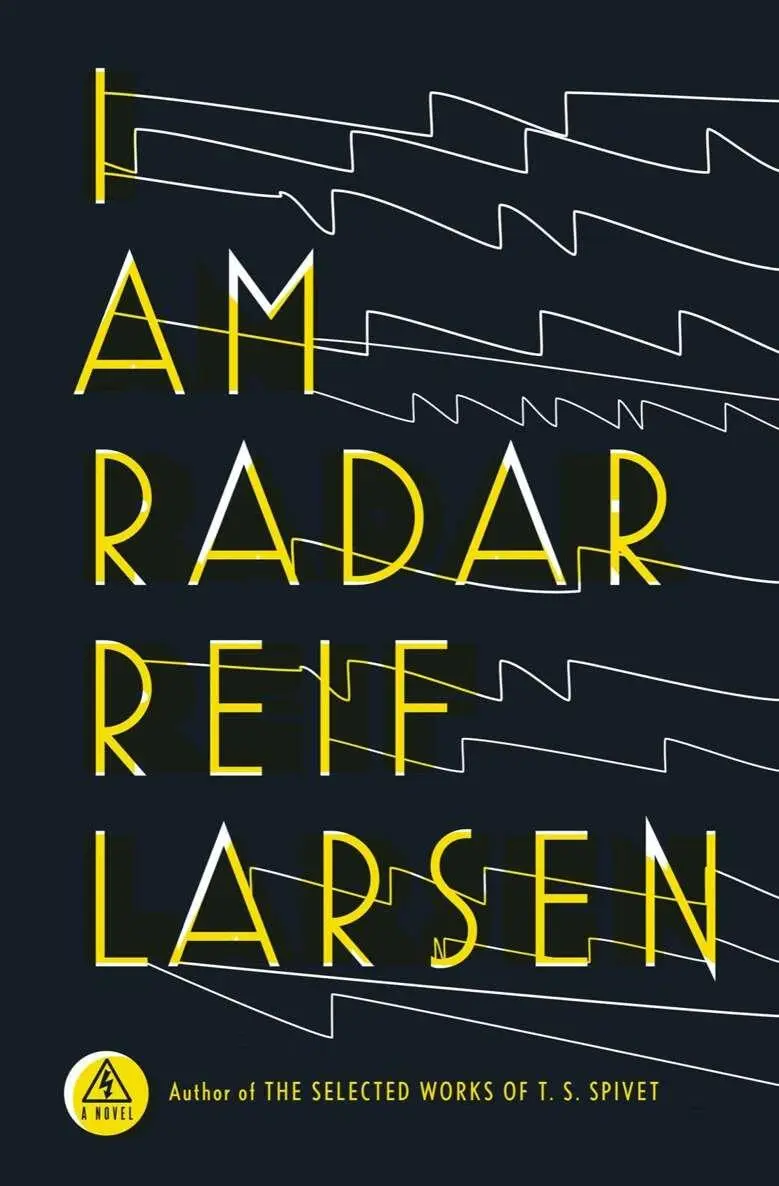
- Название:I Am Radar
- Автор:
- Издательство:Penguin Press
- Жанр:
- Год:2015
- ISBN:нет данных
- Рейтинг книги:3 / 5. Голосов: 1
-
Избранное:Добавить в избранное
- Отзывы:
-
Ваша оценка:
I Am Radar: краткое содержание, описание и аннотация
Предлагаем к чтению аннотацию, описание, краткое содержание или предисловие (зависит от того, что написал сам автор книги «I Am Radar»). Если вы не нашли необходимую информацию о книге — напишите в комментариях, мы постараемся отыскать её.
I Am Radar Deep in arctic Norway, a cadre of Norwegian schoolteachers is imprisoned during the Second World War. Founding a radical secret society that will hover on the margins of recorded history for decades to come, these schoolteachers steal radioactive material from a hidden Nazi nuclear reactor and use it to stage a surreal art performance on a frozen coastline. This strange society appears again in the aftermath of Cambodia’s murderous Khmer Rouge regime, when another secret performance takes place but goes horrifically wrong. Echoes of this disaster can be heard during the Yugoslavian wars, when an avant-garde puppeteer finds himself trapped inside Belgrade while his brother serves in the genocidal militia that attacks Srebrenica. Decades later, in the war-torn Congo, a disfigured literature professor assembles the largest library in the world even as the country around him collapses. All of these stories are linked by Radar — now a gifted radio operator living in the New Jersey Meadowlands — who struggles with love, a set of hapless parents,and a terrible medical affliction that he has only just begun to comprehend.
I Am Radar — читать онлайн бесплатно полную книгу (весь текст) целиком
Ниже представлен текст книги, разбитый по страницам. Система сохранения места последней прочитанной страницы, позволяет с удобством читать онлайн бесплатно книгу «I Am Radar», без необходимости каждый раз заново искать на чём Вы остановились. Поставьте закладку, и сможете в любой момент перейти на страницу, на которой закончили чтение.
Интервал:
Закладка:
Inquiries were also made about the safety of the journey down the Mekong. News of the security situation, received from boatmen and garbled reports over the wireless, was unreliable and dependent on whoever was doing the reporting. There had been rumors of government instability since President Ngo Dinh Diem’s assassination the previous year, of American planes dropping bombs in the north, of Chinese troops amassing at the Laotian border, of Vietnamese Communists attacking monks, of Khmer insurgents attacking supply routes — but then, there had always been rumors. If repeated often enough, a rumor could become truth; if repeated still more, the news would drift back into the uncertain realm of rumor. “Reality,” Tofte-Jebsen wrote in a 1976 letter to Orientering, “has little bearing on truth; truth is instead a confluence of time and story.”14
It was decided that they would all make the trip together, as both Eugenia and Jean-Baptiste realized they had not left La Seule Vérité in the decade since Raksmey’s arrival. Eugenia, who had just turned seventy-nine, was not in particularly good health, and Jean-Baptiste thought she should stay behind, but she would not hear of it. She insisted on seeing Raksmey delivered safely from the jungles with her own eyes. Secretly, she also wanted to revisit the city of her childhood one last time so that she could make a kind of peace with it. Her parents were long dead; her sisters, having left for Paris decades before, were also dead. The city was not the same city that had tortured her so, but she still wanted it to see her, to see how she had survived and outlived them all. She thus requested that they stay at the Hôtel Continental, her family’s old establishment, now under the ownership of a shady Corsican mafioso and renamed the Continental Palace.
At the docks on the morning of their departure, Tien held Raksmey close. He pressed something into his hand and bowed to the little boy, who solemnly returned the gesture.
“Rak,” he said.
“Rak,” Raksmey agreed.
When they were on the boat, Raksmey signed to Eugenia, “Rasey is staying here with Tien so he won’t get lonely.”
As they made their way down the huge, muddy river, weaving past nameless islands, the channels splitting and splitting and coming together again, Raksmey spent the entire trip perched on the bow, watching the landscape slip past. He saw workers hunched thigh deep in rice fields, herds of weary, low-backed buffalo, men tossing nets into the shallows, packs of children waving frantically as they passed. It was his country, yet he had never seen it. He knew the half-life of radium 225, but he did not know the curves of the Mekong, the scent of rotting cassava, the sweeping glint of sunlight across the floodplains of Kampong Cham. Hundreds of villages dotting the vast basin. Specks of people fanning out across the paddies, swaying against the heat of a flickering horizon. A long, spindly bamboo bridge filled with bicyclists and women with fruit on their heads. Raksmey asked no questions, merely watched, the faintest of smiles hanging on his lips, the spray from the river occasionally leaping over the bow and wetting his brow.
They reached the wonder of Phnom Penh in the late afternoon. The ringed spires of the wats and the Royal Palace rose through the thin layer of smoky sweat that hung across the city. The smell of something metallic and unburnable, burning nonetheless. After docking their boat, they shuffled through the throngs amassed along the riverfront to a four-story guesthouse on the boulevard near the place where the Tonle Sap spilled out into the Mekong.
That evening, Raksmey held fast to Eugenia’s hand on the way to the restaurant as bicycles and motos sped past, clipping at their heels. Having known only the rhythm of the rubber trees, he was paralyzed into a kind of awed silence by this swarm of fluctuating humanity. There were more people here on a single street than he had seen in his entire life. Hawkers wielding dripping pig heads yelled out prices to an indifferent crowd. A boy, not much younger than Raksmey, tore by them after a loose chicken, diving beneath a car to snatch at the terrified bird. Loud pop music played from an open window. A crowd of young monks in orange robes enveloped them and then moved silently on: an oasis of calm amid the urban hustle.
“What do you hear?” Eugenia signed to him as they wound through the city.
Raksmey closed his eyes to listen, and promptly tripped over a curb.
“Careful,” Jean-Baptiste said. “In a place like this, you must keep your eyes open. Always open.”
Raksmey stopped, listening. He tried to pick out one sound, but there was simply too much.
“I hear everything,” he signed to Eugenia. Then: “I don’t hear anything.”
“Yes,” she signed. “I know what you mean.”
Later he sat at the window of their guesthouse, staring at the twinkle of streetlamps. A lone firework exploded above the river. Someone moaned from another room. Cars honked and zipped by along the boulevard. The scent of spilled gasoline wafted up from below. Next to the window, a strip of sticky flypaper whispered in the breeze. A fly had recently gotten stuck and was buzzing loudly in short, frequent intervals.
“There’s so much,” said Raksmey.
“Try to get some sleep,” said Jean-Baptiste. “Tomorrow will be even longer.”
“It’s funny to think this place was here this whole time,” said Raksmey, touching the trapped fly.
• • •
THE NEXT DAY, they departed before dawn, pushing out into a misty river that prevented them from seeing more than half a kilometer ahead. Soon the fog burned off, but the current — unsettled by some unseen force — became choppier. The river appeared to be flowing both ways, so their progress was slow and laborious. At one point they rounded a bend and came across a Buddhist wat in flames, the temple rippling against the jungle heat, the monks running to the river for water.
“What happened?” Raksmey asked.
“I don’t know,” said Jean-Baptiste.
When the monks saw their boat, they began to jump up and down, calling out for help.
“We should help them,” said Raksmey. He looked down and saw ash floating on the surface of the river. A half-burnt page.
Jean-Baptiste shook his head. “We can do nothing.”
“Why?”
But his father gave no answer.
After an eternity, the river opened and parted into the salamander islands of the delta. They passed clusters of floating markets teeming with long-tail boats, bunches of fish hanging from their sterns. They passed a large container ship that had become beached on a sandbar, its crew lazily playing cards on the deck. One of the men formed an imaginary gun with his hand, aimed, and shot at Raksmey as they went by.
Finally, as the sun began to sink behind them, they could see it: the place where all things went, the great expanse of the South China Sea.
Raksmey turned to his grandmother. “You cannot see the end,” he signed.
“We must have faith,” she signed. “If there was no end, then all of the water would flow out and the ocean would be empty.”
The wind picked up. It began to rain. They sought shelter in the boat’s little cabin, listening to the raindrops hammer at the thin metal roof. Raksmey curled up in Eugenia’s lap and quickly fell asleep to the lull of the motor and the roll of the waves against the hull. A leak from the roof began dripping onto Eugenia’s head, but she did not move, fearing she would disturb the child. The water collected and ran down her neck. She put her hand on the bulb of his cheek and smoothed his hair.
“Little one,” she signed against his skin. “How do you say goodbye?”
Hampered by a steady headwind and a whipping rain that increased in intensity as they worked their way up the coast, they arrived in Saigon late that night, cold and hungry, caught in the middle of a tropical downpour. It was too late to head to the collège as planned, so they hurriedly loaded their luggage into the back of a tuk-tuk, clambered into another, and directed this little caravan directly to the hotel.
Читать дальшеИнтервал:
Закладка:
Похожие книги на «I Am Radar»
Представляем Вашему вниманию похожие книги на «I Am Radar» списком для выбора. Мы отобрали схожую по названию и смыслу литературу в надежде предоставить читателям больше вариантов отыскать новые, интересные, ещё непрочитанные произведения.










Обсуждение, отзывы о книге «I Am Radar» и просто собственные мнения читателей. Оставьте ваши комментарии, напишите, что Вы думаете о произведении, его смысле или главных героях. Укажите что конкретно понравилось, а что нет, и почему Вы так считаете.