Reif Larsen - I Am Radar
Здесь есть возможность читать онлайн «Reif Larsen - I Am Radar» весь текст электронной книги совершенно бесплатно (целиком полную версию без сокращений). В некоторых случаях можно слушать аудио, скачать через торрент в формате fb2 и присутствует краткое содержание. Год выпуска: 2015, Издательство: Penguin Press, Жанр: Современная проза, на английском языке. Описание произведения, (предисловие) а так же отзывы посетителей доступны на портале библиотеки ЛибКат.
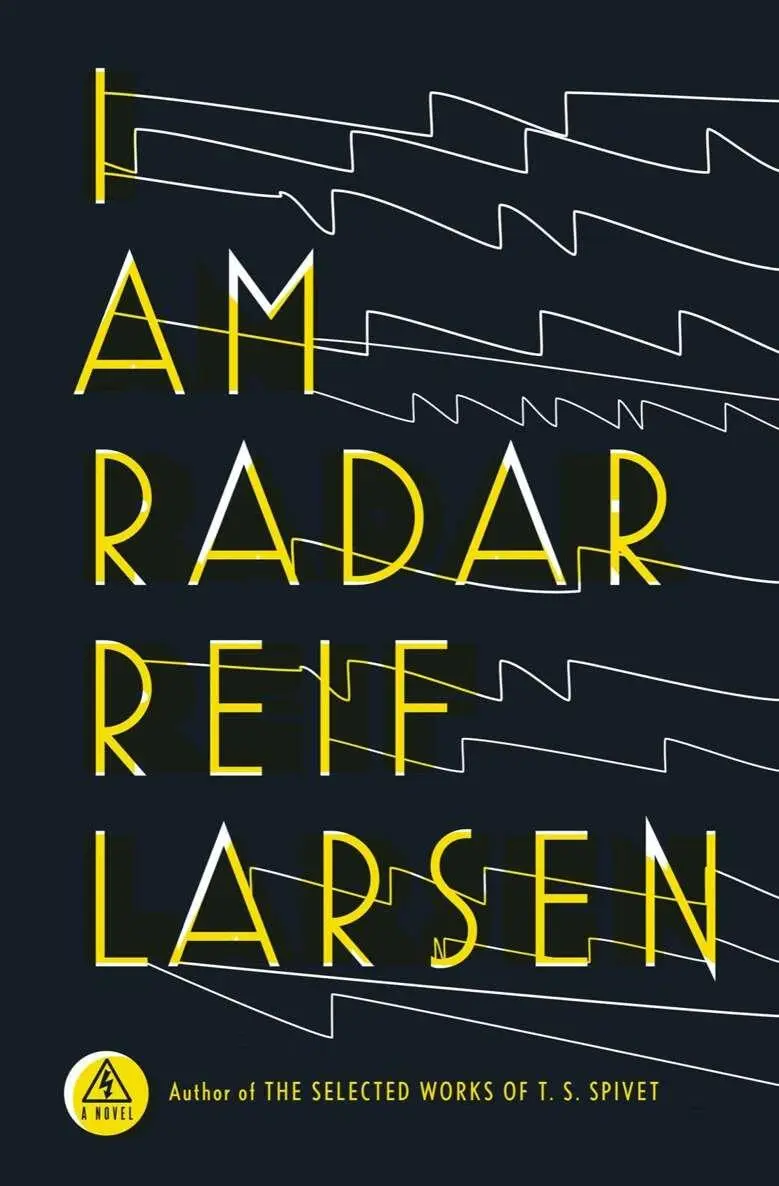
- Название:I Am Radar
- Автор:
- Издательство:Penguin Press
- Жанр:
- Год:2015
- ISBN:нет данных
- Рейтинг книги:3 / 5. Голосов: 1
-
Избранное:Добавить в избранное
- Отзывы:
-
Ваша оценка:
I Am Radar: краткое содержание, описание и аннотация
Предлагаем к чтению аннотацию, описание, краткое содержание или предисловие (зависит от того, что написал сам автор книги «I Am Radar»). Если вы не нашли необходимую информацию о книге — напишите в комментариях, мы постараемся отыскать её.
I Am Radar Deep in arctic Norway, a cadre of Norwegian schoolteachers is imprisoned during the Second World War. Founding a radical secret society that will hover on the margins of recorded history for decades to come, these schoolteachers steal radioactive material from a hidden Nazi nuclear reactor and use it to stage a surreal art performance on a frozen coastline. This strange society appears again in the aftermath of Cambodia’s murderous Khmer Rouge regime, when another secret performance takes place but goes horrifically wrong. Echoes of this disaster can be heard during the Yugoslavian wars, when an avant-garde puppeteer finds himself trapped inside Belgrade while his brother serves in the genocidal militia that attacks Srebrenica. Decades later, in the war-torn Congo, a disfigured literature professor assembles the largest library in the world even as the country around him collapses. All of these stories are linked by Radar — now a gifted radio operator living in the New Jersey Meadowlands — who struggles with love, a set of hapless parents,and a terrible medical affliction that he has only just begun to comprehend.
I Am Radar — читать онлайн бесплатно полную книгу (весь текст) целиком
Ниже представлен текст книги, разбитый по страницам. Система сохранения места последней прочитанной страницы, позволяет с удобством читать онлайн бесплатно книгу «I Am Radar», без необходимости каждый раз заново искать на чём Вы остановились. Поставьте закладку, и сможете в любой момент перейти на страницу, на которой закончили чтение.
Интервал:
Закладка:
Much was as Eugenia remembered it from her youth, though the facade now read CONTINENTAL PALACE in an art deco sans serif and the street signs were all in Vietnamese, an attempt by the state to shed the language of its colonizers. They stood, waterlogged, in the bright white-marble lobby, blinking at the legacy of Pierre Cazeau’s audacity. A group of American officers emerged from the elevator, holding their hats in their hands. One of them delivered a punch line and the rest burst into laughter.
“This is where your grandmother grew up,” said Jean-Baptiste. “She was high society.”
“High society?” Raksmey repeated. “What’s this?”
Eugenia wobbled, steadied herself, and then tumbled over their luggage and onto the floor.
“Grandma!” Raksmey yelled.
The American officers came rushing over to help.
“I’m fine,” she signed, shooing them away. “It’s been a long trip.”
They did not understand her signs, so they lifted her up and placed her in a plush chair next to a palm plant. She was annoyed at all the attention, but her face had drained of its color and she’d begun to shiver uncontrollably.
“Someone should call a doctor,” one of the officers said loudly.
“I’ll do it!” yelled another.
“Does she speak English?” asked another.
“She does not speak. She’s deaf,” Jean-Baptiste said in English.
“Deaf, eh? My old lady’s deaf,” said the officer. “ Selectively deaf.”
“Let’s get you upstairs, Mother,” Jean-Baptiste signed. “You shouldn’t have come to Saigon.”
“I’m fine, ” she said aloud, but her voice quavered, and she did not protest when a bellhop brought over a wheelchair.
When they got her into the room, it was discovered that she was already running a high fever. The doctor arrived, bearing pills and a hot water bottle. Swaddled inside the blankets, a shell of herself, Eugenia was too weak to complain.
Raksmey sat by her bed, staring at his grandmother, lying prone beneath a headboard of two ornamental dragons locked in combat.
Eugenia moved her hands from beneath the covers. “Don’t look so worried,” she signed. “It doesn’t suit you.”
“Your father owned this hotel?” he signed.
“Yes,” she signed. “This was back when the French were in charge. My father was a. .” She paused, her hands searching for the word. She waved her fingers and floated her hands upward. “He was a proud man. He was used to getting his way.”
“He died?”
“In 1911. Four years after your father was born. He never met Jean-Baptiste. I don’t think he wanted to meet Jean-Baptiste.”
“Why not?”
“Sometimes we’re related to people purely out of chance. We don’t love them; they’re simply there, like the forest.”
“He was mean to you?”
“Not so mean. He didn’t understand who I was, that’s all. We can’t expect people to understand all the time, can we?” She closed her eyes. “Tell me, Raksmey, what do you hear now?”
The answer to their game felt vitally important. As if he could make everything better simply by giving the correct response. He closed his eyes and imagined a world where there was nothing but sound. Nothing but the compression of air molecules, bouncing this way and that. No light, no objects, no jungle, no animals, no love, no fire, no death. Only sound.
He listened and heard piano music drifting down the corridor. A woman’s laughter, rising, joined by a man’s, before both fell silent again. The faint ting of the elevators opening and closing next to their room. The rattle of silverware on a cart in the hallway. Rain tiptoeing against a windowpane.
How to say this to her? He scratched his nose and took a breath, then he put his mouth up to her ear and hummed. He hummed, and from his lips he gave her everything he heard. She smiled, her eyes closed, taking in the little boy’s vibrations.
• • •
THE NEXT MORNING, she was gone. The bed was neatly made, and there was no sign of her anywhere in the room or the hotel. The staff in the lobby had not seen her come or go.
Jean-Baptiste was furious.
“What was she thinking? Wandering off like that in the middle of the night? Unwell? Deaf and blind? Doesn’t she have any sense at all?”
After giving a description to the hotel manager and a representative from the police, he told Raksmey to gather his things.
“We will not let the lunacy of an old woman derail the whole purpose of coming here.”
“But what if she’s in trouble?”
“Don’t worry about her. You’ve got enough to worry about. We came here to get you to school, and that’s exactly what we’ll do.”
“But—”
“Raksmey, she’ll be fine. Has she ever not been fine? She’s going to outlive us all. We’re going. No arguments.”
Saigon was in a state of low-grade unease. The president’s assassination in a U.S.-backed coup had created a vacuum in the country’s leadership. On nearly every corner, young policemen in oversize helmets stood at attention, thumbing at their surplus Kalashnikovs. On the way to the collège, they passed three jeeps carrying American troops, their faces set in hard expressions, their skin pasty in the gleam of the morning sun.
Raksmey watched from the back of the tuk-tuk as they crisscrossed the broad, palm-lined boulevards, weaving through waves of traffic, gliding through the roundabouts like electrons circling a nucleus. He tried to chart their route, but he could not read the street signs. It was the first time he had encountered a language he did not understand.
“What does that say?” he asked Jean-Baptiste, pointing to a bright yellow banner above a shop.
“I don’t know.”
“Why do they write like this?”
“Because they’re Vietnamese. Because they’re trying to be their own country now.”
“Why don’t they speak Khmer?”
“Vietnam’s a different country than Cambodia. Everyone has their own language.”
Raksmey thought about this. “If I’m Cambodian, why don’t I go to school in Cambodia?”
“A fair question,” said Jean-Baptiste. “I suppose it’s because I went here once upon a time, before it was Vietnam. And because you are my son. And sons do what their fathers did.”
Looking above them, Raksmey noticed a complex system of wires connecting all of the buildings. The wires came together in tangled bunches, following the roads, exploding apart, rejoining again.
“What are those?” he asked.
“Electricity,” Jean-Baptiste said. “Telephone. Telegraph. This is what makes a city possible.”
“Don’t people make a city possible?”
“Yes. You’re right. People plus electricity make a city possible.”
“And food.”
“And food.”
“And language.”
“Yes, Raksmey, we could extend this list indefinitely. To include everything in the city. The list would fill the city itself.”
Raksmey was quiet as they moved through the streets. He could drive like this all day. One among many.
“I like you, Papa,” he said after a while.
• • •
THE RECTOR OF COLLÈGE René Descartes was a young, exuberant Vietnamese man named Han Mac Than, who had taken control of the collège the year before, just after President Diem’s assassination. Monsieur Than wore circular glasses that were too small for his face and a white three-piece suit that was too large for his slender frame. He combed his hair long and to the side like the young people did, but he had a purposeful, self-assured air that put both Raksmey and Jean-Baptiste at ease, though for different reasons.
“We are on the verge of a new era,” he said to them in his office. “Independence has given many Vietnamese a fresh perspective on life. This is a very important time. We must make our own way. There can be no more excuses for failure. You cannot blame the Frenchman. Blaming the Frenchman is like blaming a ghost. There’s nothing there. The only one you can blame is yourself.”
Читать дальшеИнтервал:
Закладка:
Похожие книги на «I Am Radar»
Представляем Вашему вниманию похожие книги на «I Am Radar» списком для выбора. Мы отобрали схожую по названию и смыслу литературу в надежде предоставить читателям больше вариантов отыскать новые, интересные, ещё непрочитанные произведения.










Обсуждение, отзывы о книге «I Am Radar» и просто собственные мнения читателей. Оставьте ваши комментарии, напишите, что Вы думаете о произведении, его смысле или главных героях. Укажите что конкретно понравилось, а что нет, и почему Вы так считаете.