Gabriel Chevallier - Fear
Здесь есть возможность читать онлайн «Gabriel Chevallier - Fear» весь текст электронной книги совершенно бесплатно (целиком полную версию без сокращений). В некоторых случаях можно слушать аудио, скачать через торрент в формате fb2 и присутствует краткое содержание. Город: New York, Год выпуска: 2014, Издательство: New York Review Books, Жанр: Классическая проза, на английском языке. Описание произведения, (предисловие) а так же отзывы посетителей доступны на портале библиотеки ЛибКат.
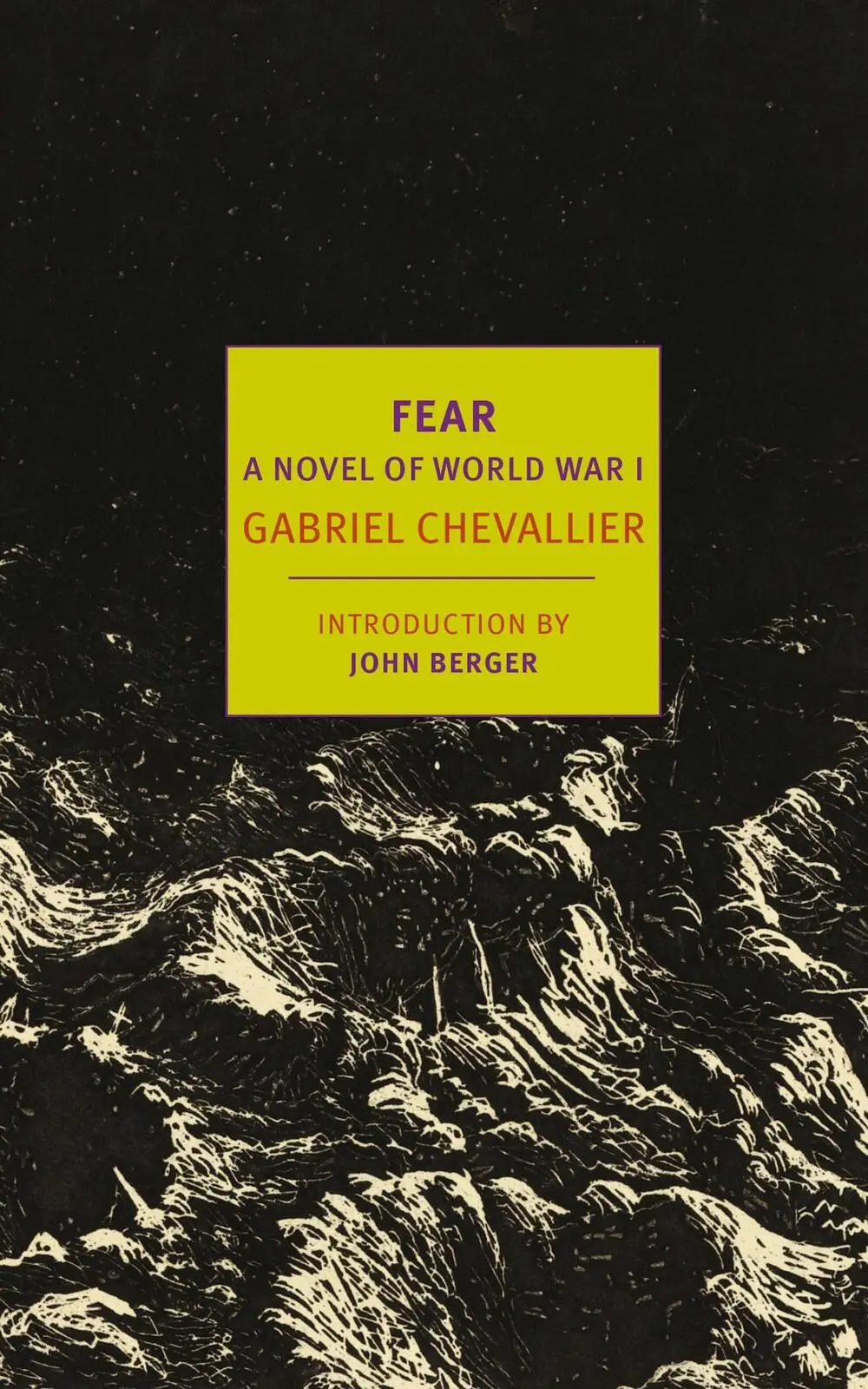
- Название:Fear
- Автор:
- Издательство:New York Review Books
- Жанр:
- Год:2014
- Город:New York
- ISBN:нет данных
- Рейтинг книги:3 / 5. Голосов: 1
-
Избранное:Добавить в избранное
- Отзывы:
-
Ваша оценка:
Fear: краткое содержание, описание и аннотация
Предлагаем к чтению аннотацию, описание, краткое содержание или предисловие (зависит от того, что написал сам автор книги «Fear»). Если вы не нашли необходимую информацию о книге — напишите в комментариях, мы постараемся отыскать её.
1915: Jean Dartemont heads off to the Great War, an eager conscript. The only thing he fears is missing the action. Soon, however, the vaunted “war to end all wars” seems like a war that will never end: whether mired in the trenches or going over the top, Jean finds himself caught in the midst of an unimaginable, unceasing slaughter. After he is wounded, he returns from the front to discover a world where no one knows or wants to know any of this. Both the public and the authorities go on talking about heroes — and sending more men to their graves. But Jean refuses to keep silent. He will speak the forbidden word. He will tell them about fear.
John Berger has called
“a book of the utmost urgency and relevance.” A literary masterpiece, it is also an essential and unforgettable reckoning with the terrible war that gave birth to a century of war.
Fear — читать онлайн бесплатно полную книгу (весь текст) целиком
Ниже представлен текст книги, разбитый по страницам. Система сохранения места последней прочитанной страницы, позволяет с удобством читать онлайн бесплатно книгу «Fear», без необходимости каждый раз заново искать на чём Вы остановились. Поставьте закладку, и сможете в любой момент перейти на страницу, на которой закончили чтение.
Интервал:
Закладка:
‘Forward!’
‘Forward! Forward!’ repeated the sergeants. ‘Clear the entrance.’
The candle went out. Men moved up the steps — and then rapidly moved back.
‘Watch out!’ shouted the soldier standing on the top steps.
A burst of gunfire very close. The entrance was a red square, blinding us. The cellar shook. Our breath came in gasps.
‘Forward! On the double! Hurry!’
We threw ourselves out, tumbling over, clutching each other, shouting. We threw ourselves into the cold night, the whistling, burning night, the night full of obstacles and snares and shards of metal and clamour, the night which hid the unknown and death, that silent prowler with explosions for eyes, seeking its terrified prey. Abandoned creatures, wounded, lying out there somewhere, perhaps from our regiment, howled like injured dogs. Ammunition wagons, the thunder’s supply-train, passed by at full speed, wobbling and rattling, crushing everything in their mad rush to escape. We ran with all our might, on inadequate legs, overburdened, too small, too weak to get out of the way of the sudden trajectories. Our packs and bags squeezed our lungs, pulled us back, cast us out into the zone of sparks, and roaring and crashing, where it was suddenly too hot. And we always had our rifles which kept slipping off our shoulders, such useless, ridiculous weapons, never staying put, always a hindrance. And the bayonets that get in our way! We ran, following the back of the person in front, eyes wide but ready to shut so as not to see the fire, to shut on our shrivelled brains, which refused to work, which didn’t want to know, didn’t want to understand, which were dead weights on our racing bodies, driven on by the sharp lash of steel, fleeing the leaded knout howling at our ears. We ran, leaning forwards, ready to fall to the ground, faster than the shell. We ran, like beasts, no longer soldiers but deserters, yet towards the enemy, with this one word resounding in us: enough! through the shaking houses, lifted up and falling back in clouds of dust on to their foundations.
A salvo, so direct that it caught us still standing, roared up out of the earth like a volcano, roasted our faces, burned our eyes, cut into our column as if cutting into the flesh of each one of us.
Panic booted us in the arse. Like tigers we leaped over the shells’ smoking craters, rimmed with the wounded, and we leaped over the cries of our brothers, cries that come from the guts and strike at the guts, we leaped over pity, honour, shame, we eliminated all feeling, all that makes us human, according to moralists — imposters who are not enduring an artillery bombardment and yet exalt courage! We were cowards and we knew it and we could be nothing else. The body was in charge and fear gave the orders.
We ran faster than ever, hearts pummelled by the panic of our bodies, with such a rush of blood that it made purple sparks dance in front of our eyes, that it gave us hallucinations of yet more explosions. ‘Trenches?’ we asked. ‘Where are the trenches?’
We were still bracketed by the artillery fire, suffocating with anxiety. Then we moved away from it, away from the village.
We managed to reach a wide trench, half-collapsed, a calm spot in the night, which hid us from the enemy’s deadly vigilance. We slid down to the ground, utterly exhausted, trying to deepen the darkness above us, like children hiding. We heard houses blowing up five hundred metres away, not understanding how we had been able to save ourselves, overwhelmed with horror at such bombardments against which there is no defence. We hesitated between futile revolt and the resignation of beasts in a slaughterhouse. We clung on to this calm for dear life, refusing to imagine the next stage of this adventure, which was only beginning. Other men in their turn ran up. We could hear their gasping breath. We waited for our hearts and lungs to return to their normal rhythms before asking questions, finding out who was missing. We put off the moment when we would know. We let the darkness fill the gaps in our ranks. Every fallen comrade increased the chances of our own deaths. But the cold, which penetrated our soaking garments, gradually calmed us down. This new discomfort brought us back to life. Men once more, we sadly considered our destiny.
Questions went round:
‘Tell the captain: ten wounded in the 3rd section, six in the 2nd, and a machine gun out of action.’
Then came the orders, the same as ever:
‘Forward!’
We slung on our packs and set off, hunched over, wearier than ever and less confident. Shells were hunting their targets in the darkness and we were heading in their direction. We came into the range of this new bombardment. Heavy-calibre time-shells, methodical and precise, were bursting twenty metres above the trench every minute and showering us with their raging shrapnel. With every one, we dived down into the mud and waited, frozen with terror, for the explosion to seal our fate. And then we’d get up and push ourselves forward. Once again, some men were hit. The battalion advanced past them and witnessed their suffering. But the episode came to an end. Further on, the night was calm and endless, concealing from us unknown, deadly objectives. Fatigue, the struggle that every infantryman has to endure with the load he is carrying, which constricts and exhausts him, prevented us from thinking.
Our last reserves of strength were concentrated in the muscles of our necks and shoulders. Would these trenches never end? Yet we feared that they would indeed end. We were approaching a goal that we were in no hurry to reach. Every metre we covered, every effort that we could claw out of our exhaustion, took us ever deeper into danger, brought a great many lives closer to their end. Who would be struck down?
I had a trivial accident during this march to which the circumstances lent great importance and which caused me considerable suffering. As we were leaping through the harassing fire, gasping for breath, the puttee on my right leg came undone, unravelled, dragged in the mud, was stepped on by the person behind me, tripping me up. There was no question of stopping, resisting the pressure of hundreds of men blindly fleeing the shells. I had to keep going forward, holding my puttee, shackled like a beast. Whenever I heard the whistle of a shell I dropped down on one knee and profited from the explosion to wind round the strip of cloth as fast as I could. But the pause was too short, and I learned the hard way that a man who cannot move freely feels more vulnerable. This uncomfortable situation lasted for some time, until we made a proper halt.
We had lost all notion of the time, of duration, of distance. We kept on marching along identical trenches, in the endless night, numbed by the growing cold. We could no longer feel our flayed shoulders. We did not even have enough lucidity left to imagine, or fear, anything…
At last dawn broke through the grey rainclouds. A pale, silent dawn, revealing a foggy, lifeless desert. A strange scent hung in the air, at first rather sweet and sickly but then giving off the richer notes of a still-contained putrefaction — in the way that a thick sauce slowly reveals the strength of its seasoning.
I kept going, bent down, blank, all my faculties absorbed by my pack, my rifle and my cartridge pouches. I stepped over pools of water and shaky duckboards which added to the difficulty of our progress. We skirted round the blast-proof traverses, changed direction without trying to keep our bearings, all in silence, a metre apart, and banged into each other whenever the pace slackened. The trenches widened out, and there were more and more signs of damage and destruction.
All of a sudden the soldier in front of me crouched down on his knees in order to get under an overhanging pile of material. I crouched down behind him. When he got back on his feet, he revealed a man of wax, stretched out on his back, his unbreathing mouth wide open, his eyes expressionless, a cold, stiff man who must have slipped beneath this illusory shelter of old planks to die. I suddenly found myself face to face with the first fresh corpse that I had seen in my life. My face passed within a few centimetres of his, my gaze met his terrifying glassy stare, my hand touched his frozen one, darkened by the blood that had frozen in his veins. It felt as if this dead man, in the brief tête-à-tête he had forced on me, was blaming me for his death and threatening me with revenge. It was one of the most horrible impressions that I took away from the front.
Читать дальшеИнтервал:
Закладка:
Похожие книги на «Fear»
Представляем Вашему вниманию похожие книги на «Fear» списком для выбора. Мы отобрали схожую по названию и смыслу литературу в надежде предоставить читателям больше вариантов отыскать новые, интересные, ещё непрочитанные произведения.





Обсуждение, отзывы о книге «Fear» и просто собственные мнения читателей. Оставьте ваши комментарии, напишите, что Вы думаете о произведении, его смысле или главных героях. Укажите что конкретно понравилось, а что нет, и почему Вы так считаете.