Gabriel Chevallier - Fear
Здесь есть возможность читать онлайн «Gabriel Chevallier - Fear» весь текст электронной книги совершенно бесплатно (целиком полную версию без сокращений). В некоторых случаях можно слушать аудио, скачать через торрент в формате fb2 и присутствует краткое содержание. Город: New York, Год выпуска: 2014, Издательство: New York Review Books, Жанр: Классическая проза, на английском языке. Описание произведения, (предисловие) а так же отзывы посетителей доступны на портале библиотеки ЛибКат.
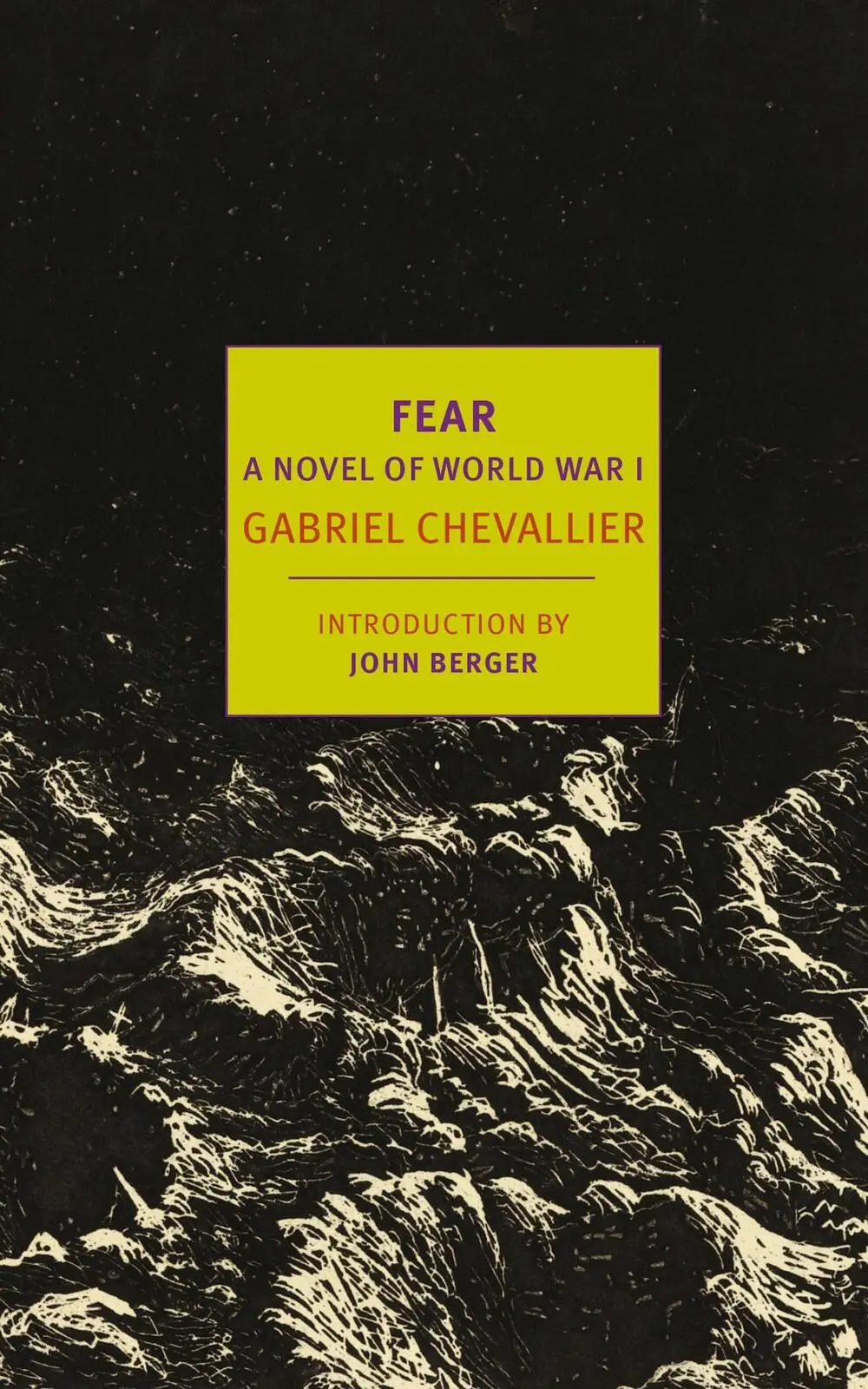
- Название:Fear
- Автор:
- Издательство:New York Review Books
- Жанр:
- Год:2014
- Город:New York
- ISBN:нет данных
- Рейтинг книги:3 / 5. Голосов: 1
-
Избранное:Добавить в избранное
- Отзывы:
-
Ваша оценка:
Fear: краткое содержание, описание и аннотация
Предлагаем к чтению аннотацию, описание, краткое содержание или предисловие (зависит от того, что написал сам автор книги «Fear»). Если вы не нашли необходимую информацию о книге — напишите в комментариях, мы постараемся отыскать её.
1915: Jean Dartemont heads off to the Great War, an eager conscript. The only thing he fears is missing the action. Soon, however, the vaunted “war to end all wars” seems like a war that will never end: whether mired in the trenches or going over the top, Jean finds himself caught in the midst of an unimaginable, unceasing slaughter. After he is wounded, he returns from the front to discover a world where no one knows or wants to know any of this. Both the public and the authorities go on talking about heroes — and sending more men to their graves. But Jean refuses to keep silent. He will speak the forbidden word. He will tell them about fear.
John Berger has called
“a book of the utmost urgency and relevance.” A literary masterpiece, it is also an essential and unforgettable reckoning with the terrible war that gave birth to a century of war.
Fear — читать онлайн бесплатно полную книгу (весь текст) целиком
Ниже представлен текст книги, разбитый по страницам. Система сохранения места последней прочитанной страницы, позволяет с удобством читать онлайн бесплатно книгу «Fear», без необходимости каждый раз заново искать на чём Вы остановились. Поставьте закладку, и сможете в любой момент перейти на страницу, на которой закончили чтение.
Интервал:
Закладка:
But this dead man was like the watchman for a whole kingdom of the dead. This first French corpse preceded hundreds of other French corpses. The trench was full of them. (We had come out into our former front line, from where our attack had been launched the day before.) Corpses contorted into every possible position, corpses which had suffered every possible mutilation, every gaping wound, every agony. There were complete corpses, serene and perfectly composed like stone saints in a chapel; undamaged corpses without any evident injuries; foul, blood-soaked corpses like the prey of unclean beasts; calm, resigned, insignificant corpses; the terrifying corpses of men who had refused to die, raging, upright, bulging, haggard, cursing and crying out for justice. All with their twisted mouths, their glassy eyes, and their skin like that of drowned men. And then there were the pieces of corpses, the shreds of bodies and clothes, organs, severed members, red and purple human flesh, like rotten meat in a butcher’s, limp, flabby, yellow fat, bones extruding marrow, unravelled entrails, like vile worms that we crushed with a shudder. The body of a dead man is an object of utter disgust for those who are alive, and this disgust is itself the mark of utter prostration.
To escape such horror, I looked out at the plain. A new and greater horror: the plain was blue.[15]
The plain was covered with our comrades, cut down by machine guns, their faces in the mud, arses in the air, indecent, grotesque like puppets, but pitiable like men, alas! Fields of heroes, cargo for the nocturnal carts…
A voice, from somewhere in our ranks, found words for the thought we suppressed: ‘Jesus, they copped it!’ which immediately echoed in all our minds as: Jesus, we’re going to cop it!
No life, no light, no colour caught the eye or distracted the mind. We had to follow the trench, look out for corpses, if only to avoid them. I had noticed that we no longer distinguished the living from the dead. We had encountered a few soldiers leaning on the parapet, not moving, and I had assumed they had fallen asleep. I saw that they were also dead and the slight slope had kept them upright against the side of the trench.
From a distance I saw the profile of a little bald man with a beard, sitting on the fire-step, who seemed to be laughing. It was the first relaxed, cheerful face we had seen, and I approached him thankfully, asking myself what he had to laugh about. He was laughing at being dead! His head was cleanly sliced down the middle. As I passed, I saw with a start that he had lost half this jovial head, the other profile.[16] The head was completely empty. His brains, which had dropped out in one piece, were placed neatly beside him — like an item in a tripe butcher’s — next to his hand which pointed to them. This corpse was playing a macabre joke on us. Hence, perhaps, his posthumous laughter. The joke reached the nadir of horror when someone uttered a strangled cry and shoved us aside to run.
‘What’s got into you?’
‘I think that it’s… my brother!’
‘Good God, look more closely!’
‘I don’t dare…’ he said, as he fled the scene.
Before us in every direction spread a flat, dreary, silent expanse, as far as the rainy horizon, sunk beneath low clouds. The landscape was nothing but a pulverised mire, uniformly grey, overwhelmingly desolate. Though we knew that the bleeding armies paralysed with fear were somewhere down in that valley of devastation, there was no sign of their presence or their respective positions. It looked like a barren land, recently stripped bare by some terrible flood, which had retreated leaving in its wake shipwrecks and bodies buried under a coat of dark slime. The heavy sky weighed down on us like a tombstone. It all served to remind us of the inexorable fate for which we were destined.
We finally emerged into a kind of rallying point, with wide tracks running through it. The place must have been blown apart and then re-established using a vast number of sandbags. Marching in single file, we hadn’t seen each other since the previous day, and were surprised to recognise ourselves, so much had we changed. We were as pallid as the corpses that surrounded us, filthy and tired. Hunger gnawed at our bellies and the chill of morning made us shudder. I met Bertrand, who was with another unit. On his face that was worn and aged by the night’s anxieties, I recognised the signs of my own anguish. Seeing him made me aware of how I looked myself. He found a few words to express the fear and the astonishment of all the new recruits:
‘Is this what war is?’
‘What are we doing here?’ asked the men.
No one knew. We had no orders. We had been abandoned in this wasteland full of corpses, some of them sneering, holding us in the menacing gaze of their glaucous eyes, others turned away, indifferent, as if they were saying: ‘We’ve finished with all this. Get yourself ready to die. It’s your turn next.’
The yellow light of a day that seemed to falter as if it too was struck by horror, illuminated a lifeless, soundless battlefield. It felt as if everything around us and off into infinity was dead, and we did not dare raise our voices. It felt as if we had come to some place in the world which was part of a dream, that had gone beyond all the limits of reality and hope. Ahead and behind merged into limitless desolation, all covered with the same churned up grey mud. We were stranded on some ice-floe out in space, surrounded by clouds of sulphur, ravaged by sudden bursts of thunder. We prowled in these accursed limbos which at any moment now would turn into hell.
Our bugles sounded the charge and unleashed all the instruments of war.
Rifles and grenades, guardians of space, threw up their deadly barriers, at the level of French soldiers’ stomachs.
Shells of every calibre were crashing down on us, barrage after barrage, a mixture of shrapnel and high explosive. The burning sky fell on our backs, squeezing our necks, buffeting us from side to side, twisting our guts with waves of dry, painful colic. Our pounding hearts tore at our bodies, tried to burst out of our chests. Terror suffocated us, like an attack of angina. And our souls were on our tongues, like bitter communion wafers, and we kept gulping them down, kept swallowing, because we did not want to spit out our souls.
The bugles sounded again, a death knell. We knew that just a few hundred metres ahead our ashen-faced brothers were about to offer themselves up to the eager machine guns. We knew that once they had fallen, and then others had fallen too, men just like us, just as obsessed with staying alive, with running away, with putting an end to their torment, it would be our turn, that we were worth no more than them in the mass of sacrificed manpower. We knew that the massacre was well underway, that new corpses were piling up on the earth, their arms frozen in the last, despairing gestures of drowning men.
The shellfire had caught us at a crossroads pinpointed by the German artillery. We ducked down into a Russian sap to shelter from the explosions.
The attack quickly subsided. The roar of the guns died away. Now we could hear the screams, those terrible screams that we had heard before…
We stayed in that sap for three days and two nights.
Once we realised that we were being left there, we organised ourselves. There were twenty of us in a tunnel some twenty metres long; we had to crouch down, chins on knees, only going out to answer calls of nature.
Several times a day we heard the ominous bugle calls and the artillery barrage began again. The smallest shell would have shattered the thin layer of soil that protected us but we had piled up our packs by the entrance to cover ourselves on that side. The entrance was guarded by a dead body, buried right there. As if he had been buried standing up, his head still stuck out of the ground, along with one hand, a finger pointing in our direction, seeming to indicate: there they are! Whenever we crawled out we nearly bumped into the cold head. It reminded us what awaited us in this chaos.
Читать дальшеИнтервал:
Закладка:
Похожие книги на «Fear»
Представляем Вашему вниманию похожие книги на «Fear» списком для выбора. Мы отобрали схожую по названию и смыслу литературу в надежде предоставить читателям больше вариантов отыскать новые, интересные, ещё непрочитанные произведения.



Обсуждение, отзывы о книге «Fear» и просто собственные мнения читателей. Оставьте ваши комментарии, напишите, что Вы думаете о произведении, его смысле или главных героях. Укажите что конкретно понравилось, а что нет, и почему Вы так считаете.