Gabriel Chevallier - Fear
Здесь есть возможность читать онлайн «Gabriel Chevallier - Fear» весь текст электронной книги совершенно бесплатно (целиком полную версию без сокращений). В некоторых случаях можно слушать аудио, скачать через торрент в формате fb2 и присутствует краткое содержание. Город: New York, Год выпуска: 2014, Издательство: New York Review Books, Жанр: Классическая проза, на английском языке. Описание произведения, (предисловие) а так же отзывы посетителей доступны на портале библиотеки ЛибКат.
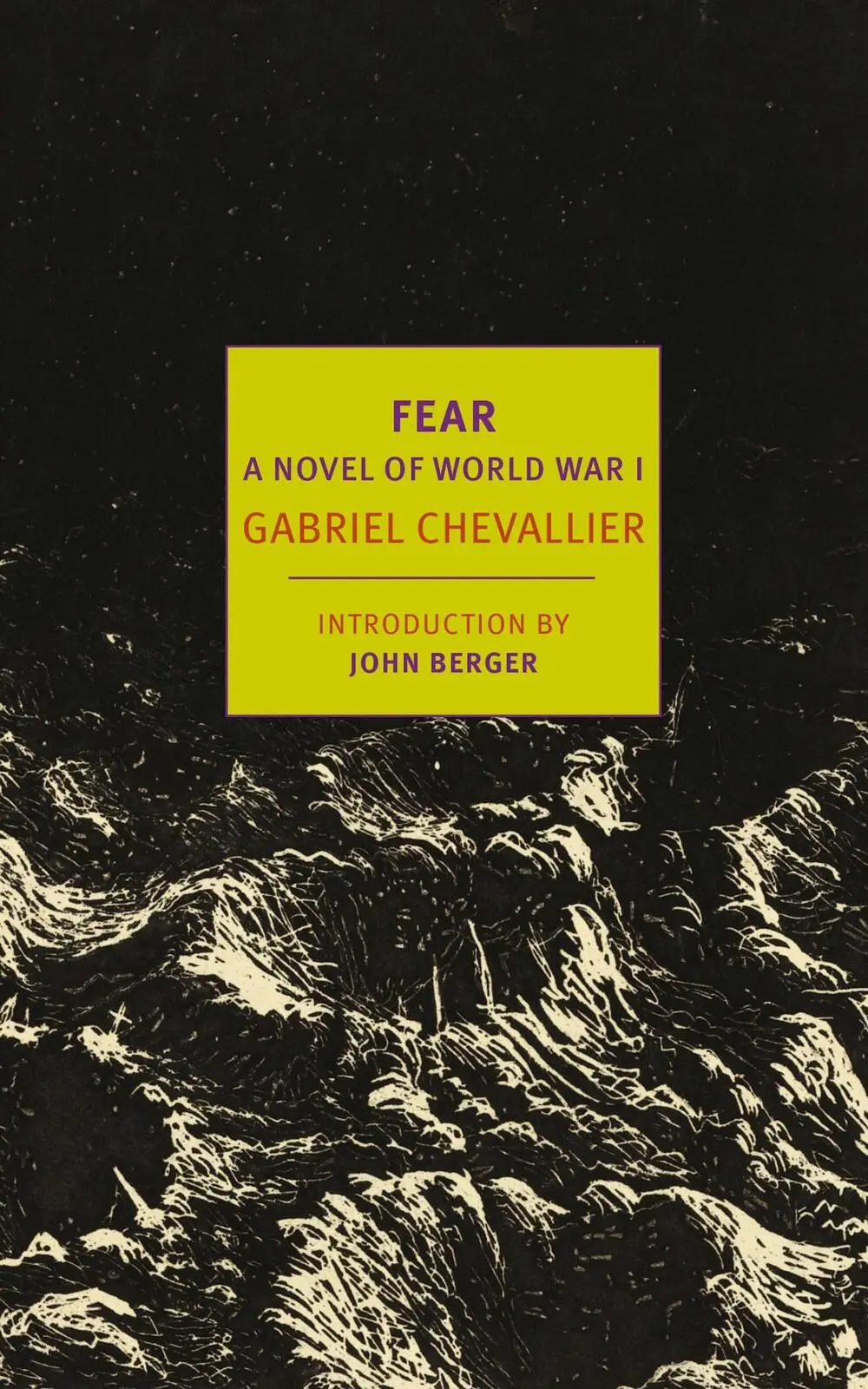
- Название:Fear
- Автор:
- Издательство:New York Review Books
- Жанр:
- Год:2014
- Город:New York
- ISBN:нет данных
- Рейтинг книги:3 / 5. Голосов: 1
-
Избранное:Добавить в избранное
- Отзывы:
-
Ваша оценка:
Fear: краткое содержание, описание и аннотация
Предлагаем к чтению аннотацию, описание, краткое содержание или предисловие (зависит от того, что написал сам автор книги «Fear»). Если вы не нашли необходимую информацию о книге — напишите в комментариях, мы постараемся отыскать её.
1915: Jean Dartemont heads off to the Great War, an eager conscript. The only thing he fears is missing the action. Soon, however, the vaunted “war to end all wars” seems like a war that will never end: whether mired in the trenches or going over the top, Jean finds himself caught in the midst of an unimaginable, unceasing slaughter. After he is wounded, he returns from the front to discover a world where no one knows or wants to know any of this. Both the public and the authorities go on talking about heroes — and sending more men to their graves. But Jean refuses to keep silent. He will speak the forbidden word. He will tell them about fear.
John Berger has called
“a book of the utmost urgency and relevance.” A literary masterpiece, it is also an essential and unforgettable reckoning with the terrible war that gave birth to a century of war.
Fear — читать онлайн бесплатно полную книгу (весь текст) целиком
Ниже представлен текст книги, разбитый по страницам. Система сохранения места последней прочитанной страницы, позволяет с удобством читать онлайн бесплатно книгу «Fear», без необходимости каждый раз заново искать на чём Вы остановились. Поставьте закладку, и сможете в любой момент перейти на страницу, на которой закончили чтение.
Интервал:
Закладка:
The morning after the night when we were relieved, lorries took us to an unknown village where we were put in barns to get some sleep. We believed we were going to have a rest. In fact we were being taken to the rear to regroup and take our place in the formations of assault troops.
After two days, we marched to a point near the front, which thundered without pause. In another village, the captain read us a proclamation from High Command, the gist of which was that the French army was attacking the Germans at two points, in Artois and Champagne, with every available division, every piece of artillery and ordnance, and with the certainty of carrying all before it. The commander didn’t hesitate to give us the numbers, whether true or false, of the troops engaged, so sure was he that the Germans would be incapable of stopping them.
While old hands were muttering, the captain concluded by stating that the first day’s objective was Douai, twenty-five kilometres behind the German lines, and our division would be there to support the artillery and occupy captured ground.
The perspective of getting out of the trenches and advancing in open country and through towns, returning at last to traditional, imperial war, the kind we had been taught, with its surprise attacks, plunder, unforeseen events, happy encounters with beautiful women, all this enchanted class 15. But the stony-faced, sarcastic veterans dampened our enthusiasm.
‘We all know about their stupid offensives and the objectives they’ve dreamt up in the officer’s mess at HQ!’
‘You’ll see what a nice little job it is, an attack!’
‘It all comes down to the fact that we’re going to get smashed up one more time!’
Back in our billet, an old hand was carefully testing the strength of his belts and braces. Seeing I was watching him, he explained:
‘Surprised are you, young conscript, to see me taking a good dekko at my straps? But remember this: your future old age depends on whatever helps you run. Agility is the best weapon of any clear-thinking, well-organised infantryman, when things don’t quite turn out the way the general imagined — which isn’t unusual, with all due respect to the general who does what he can, which isn’t very much. You think the Boche are more stupid than we are? Well, there’s a bit of truth in that. But we are no more stupid than them. One day you fool them, the next day you’re one who’s fooled! War is all a matter of chance, a complete shambles, which no one’s ever understood. There are times you’d do better to whistle a tune than waste your spit on patriotic speeches. Just imagine you happen to run slap into three or four Fritz of a soldierly type… (just because you look like a decent young chap it doesn’t mean it won’t happen to you!) While you are affecting your strategic withdrawal, at the double, if your flies let you down and your trousers drop round your ankles, then you’re well and truly collared by the comrades from Berlin. I’m not saying that some of them aren’t good sorts in their way but it still ain’t healthy to hang around with them. Since you don’t speak the same lingo you might not be understood if you’re in a rush… Like I was saying: shoelaces, braces, flies, belts, everything that holds your clobber together, they are tools of the trade and you’d better look after them!’
We were all issued helmets. We didn’t like this rigid headgear, because, unlike the képi, you could not break off the visor, and adapt it to your own taste, Bat d’Af [14] style, with a braided chinstrap, which was the height of rakish elegance in the army. Under a helmet, you could not tell at first glance if someone was one of the lads. But orders were strict, and our képis were withdrawn. Many people kept theirs in a haversack, in the hope of better days back at the rear, when you could put it on and charm the women, skivvies in local bars — a mere glimpse of one could arouse a whole battalion.
Then the corporal chose the bombers or trench-clearers. I was one of them. He gave each of us a large kitchen knife with a white wood handle, apparently intended for slicing German guts. I took mine with revulsion. I found the bombs, the grenades, equally revolting. Considering these objects with my customary, gloomy reasoning, I told myself that a worker assembling the things was sooner or later bound to misjudge the length of the fuse to the detonator and that I was equally bound to pay the price of his distraction. And I was a bad thrower. The only proper weapon in my opinion was the revolver, with which a skilled shooter had a chance, and which avoided the need for repugnant hand-to-hand combat with an enemy whose smell could be disagreeable and who usually had the advantage of weight (those Germans are fatter than us), and of their supposed barbarity. I knew that the French were supposed to be wiry and fierce. But that is just hearsay and I did not want to test out its accuracy by grappling with the first enemy I encountered. Such, more or less, were my ideas on close combat. They did not square at all with the methods used. One more reason I had to blame this war.
While I was considering my knife, Poirier tugged at my sleeve.
‘Will you give me your place as a trench-clearer?’
This Poirier was short, red-faced, stocky and boastful, and I had held him in low esteem ever since I had surprised him with his hand in my food pack, which had become a great deal lighter. ‘There are a lot of rats in this sector,’ he had said, nonchalantly. What is more he had for some days been wearing a fine pair of new canvas and leather ‘rest’ shoes, bearing an uncanny resemblance to mine, which had vanished. But his proposition suited me. I was just handing over my knife when the corporal turned up. I explained to him what we were doing.
‘Poirier would like to take my place as a bomber, and it must be said that I don’t know how to use grenades.’
‘No!’
‘But Poirier wants to do it, and it disgusts me!’
‘Listen, Poirier won’t do it and you will! I have my orders.’
‘That’s all right then,’ I said with a smile, ‘that’s military reasoning.’
In fact our corporal, a very young, blond, cheerful Parisian, was a charming lad. But he had a lot of trouble leading our squad of twelve men, undisciplined, excitable newcomers or quarrelsome Norman malcontents. To get us to march he always put himself at the front, but en route he would sometimes lose part of his team. Their alacrity in escaping danger was a characteristic of the old hands, a result of their experience of the realities of war. I think that NCOs had been advised to pick men who had been tried and tested as bombers. Our young leader confused the curiosity I had displayed on our first time in the trenches with military merit, and he judged that I was more reliable than Poirier whom he knew well. It is true that the latter was to leave us, three days into the attack, on the pretext of getting some supplies, and never reappeared. It was later rumoured that he had been shot.
That same evening, 24 September, we moved off again for the front. It was raining.
5. THE PARAPET
‘Savary is an excellent man for secondary operations, but lacks the experience and calculation to be at the head of such a great machine. He understands nothing of this war.
You were ten leagues from your advance guard; General Lasalle, who commanded it, was five leagues from Burgos, as a result of which it was all ended by a colonel who did not know what was wanted of him. Is that, Marshal, how you have seen me make war?’
NapoléonTHE NEXT MORNING I had a strange awakening. A metal monster was brushing up against me, threatening to crush me: I saw huge pistons and got a blast of steam. I was lying on the edge of a railway track, and an armoured train was passing right next to my head.
Читать дальшеИнтервал:
Закладка:
Похожие книги на «Fear»
Представляем Вашему вниманию похожие книги на «Fear» списком для выбора. Мы отобрали схожую по названию и смыслу литературу в надежде предоставить читателям больше вариантов отыскать новые, интересные, ещё непрочитанные произведения.







Обсуждение, отзывы о книге «Fear» и просто собственные мнения читателей. Оставьте ваши комментарии, напишите, что Вы думаете о произведении, его смысле или главных героях. Укажите что конкретно понравилось, а что нет, и почему Вы так считаете.