Gabriel Chevallier - Fear
Здесь есть возможность читать онлайн «Gabriel Chevallier - Fear» весь текст электронной книги совершенно бесплатно (целиком полную версию без сокращений). В некоторых случаях можно слушать аудио, скачать через торрент в формате fb2 и присутствует краткое содержание. Город: New York, Год выпуска: 2014, Издательство: New York Review Books, Жанр: Классическая проза, на английском языке. Описание произведения, (предисловие) а так же отзывы посетителей доступны на портале библиотеки ЛибКат.
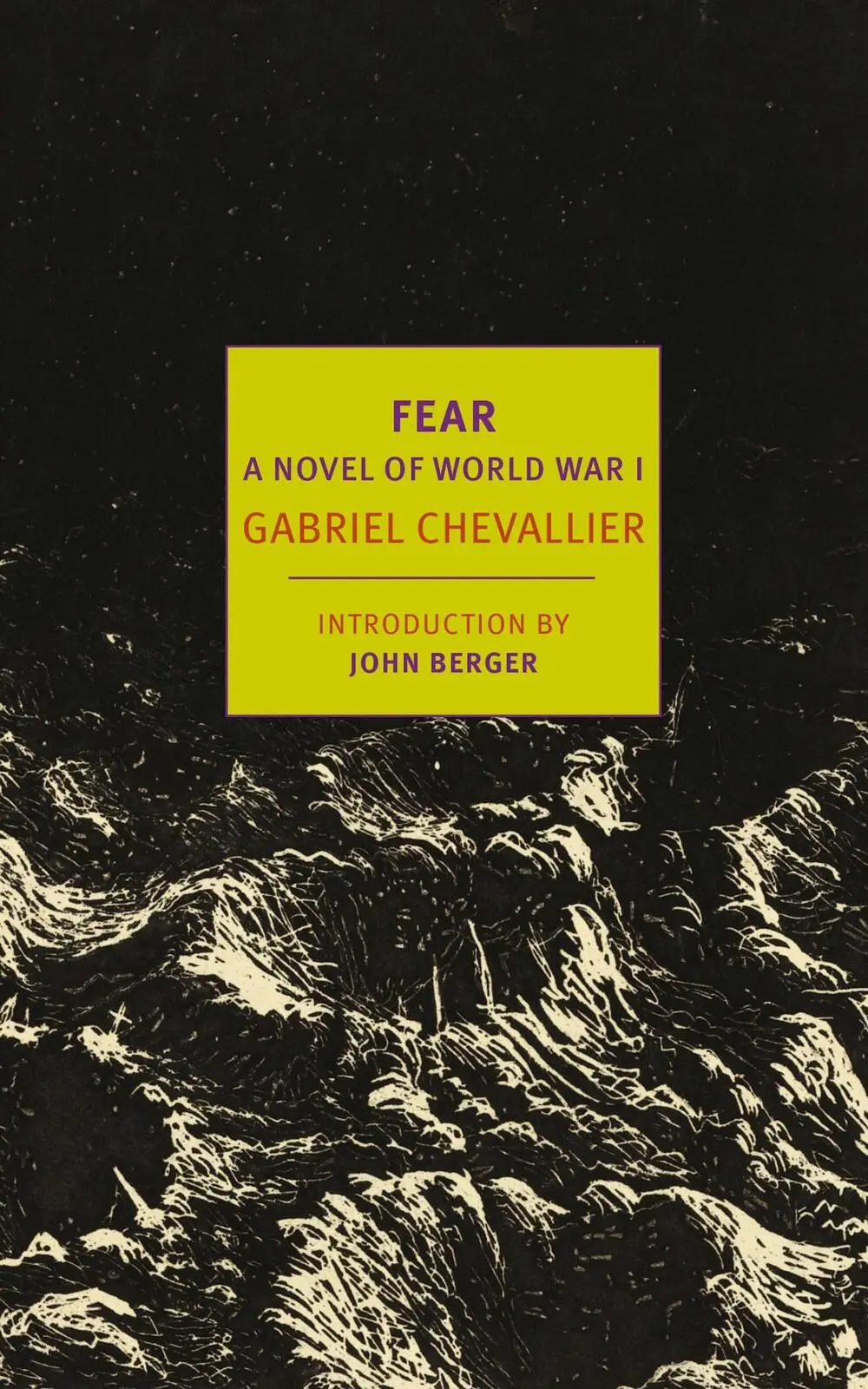
- Название:Fear
- Автор:
- Издательство:New York Review Books
- Жанр:
- Год:2014
- Город:New York
- ISBN:нет данных
- Рейтинг книги:3 / 5. Голосов: 1
-
Избранное:Добавить в избранное
- Отзывы:
-
Ваша оценка:
Fear: краткое содержание, описание и аннотация
Предлагаем к чтению аннотацию, описание, краткое содержание или предисловие (зависит от того, что написал сам автор книги «Fear»). Если вы не нашли необходимую информацию о книге — напишите в комментариях, мы постараемся отыскать её.
1915: Jean Dartemont heads off to the Great War, an eager conscript. The only thing he fears is missing the action. Soon, however, the vaunted “war to end all wars” seems like a war that will never end: whether mired in the trenches or going over the top, Jean finds himself caught in the midst of an unimaginable, unceasing slaughter. After he is wounded, he returns from the front to discover a world where no one knows or wants to know any of this. Both the public and the authorities go on talking about heroes — and sending more men to their graves. But Jean refuses to keep silent. He will speak the forbidden word. He will tell them about fear.
John Berger has called
“a book of the utmost urgency and relevance.” A literary masterpiece, it is also an essential and unforgettable reckoning with the terrible war that gave birth to a century of war.
Fear — читать онлайн бесплатно полную книгу (весь текст) целиком
Ниже представлен текст книги, разбитый по страницам. Система сохранения места последней прочитанной страницы, позволяет с удобством читать онлайн бесплатно книгу «Fear», без необходимости каждый раз заново искать на чём Вы остановились. Поставьте закладку, и сможете в любой момент перейти на страницу, на которой закончили чтение.
Интервал:
Закладка:
‘So what do you think it takes to make a great military leader?’
‘Maybe the first requirement would be that they came from outside the army, so they could bring a fresh approach to understanding war. It isn’t so much a military leader we need as a real leader, which would be something much greater.’
‘Perhaps they’ll still find one…’
‘Perhaps…’
The heat, the dirt, and the boredom had worn us out.
My most vivid memory from this time was of a dead body, not one I saw but one I smelt. It was a night when we were trying to deepen a communication trench, hardly able to see where we were digging. As one of us struck his pick into the earth there was a squelch, the sound of something bursting. The pick had hit a damp, rotten stomach, which released its miasma right into our faces, in a sudden blast of foul vapour. The stench filled the air, covered our mouths like a foetid flannel so we could not breathe, pricked our eyelids with poisonous needles which brought tears to our eyes. This pestilential geyser caused a panic and the diggers fled the accursed spot. The decomposing body’s disgusting gasses spread out, filled the darkness and our lungs, reigned over the silence. The NCOs had to force us back to this angry corpse, and then we shovelled furiously, desperate to cover it up and calm it down. But our bodies had caught the awful, fecund smell of putrefaction, which is life and death, and for a long time that smell irritated our mucous membranes, stimulated the secretions of our glands, aroused in us some secret organic attraction of matter for matter, even when it is corrupt and almost extinguished. Our own promised, perhaps imminent, putrefaction found communion with this other, powerful extreme of putrefaction, which holds dominion over our pale souls and hunts them down remorselessly.
That night I reflected on the destiny of the unknown soldier whose grave we had disturbed, and upon which many others would trample. I imagined a man like me, someone young, full of plans and ambitions, of loves still uncertain, scarcely out of childhood and about to launch himself into life. To me life is like a game you begin at twenty where victory is called success: money for most people, reputation for some, esteem for a very few. To live, to endure, that is nothing; to achieve is everything. I compare someone who dies young to a player who has just been dealt his cards and then forbidden to play. Maybe this particular player was taking his revenge… Twenty years of learning, of subordination, of hopes and desires, the sum of feelings that a human being carries within himself and which gives him his value, had all found their conclusion in a corner of a communication trench. If I must die now, I will not say it is awful or terrible, but it is unjust and absurd, because I have not yet attempted anything, I have done nothing but wait for my chance and my moment, built up my resources and waited. The life of my will and my tastes is only just starting — or will start, because the war has deferred it. If I disappear now, I will have been nothing but subordinate and anonymous. I will have been defeated.
I got my first proper view of a wide section of the front on 15 August 1915. A few kilometres outside our village was a hill called Mont-Saint-Éloi, somewhere near the famous Berthonval farm, I think, from where our spring offensive was launched and which must now therefore be nothing but a pile of rubble. There was a monument on this hill, a church, damaged by shellfire and out of bounds because it was dangerous. But, being curious to see, I managed to slip away with Bertrand and we climbed one of the towers, up a stone stairway that was shaky in places, and partially blocked by debris from the walls, cracked by the bombardment.
From up there you could see right across the plains of Artois, but it was impossible to make out any real signs of a battle. A few white puffs of smoke, followed by explosions, told us that this was indeed where the war was, but we could not see any trace of the armies on the ground observing and destroying each other slowly in this arid, silent landscape. Such a calm expanse, baking in the sunshine, confounded our expectations. We could see the trenches quite clearly but they looked like tiny embankments, or narrow, winding streams, and it seemed incredible that this fragile network could offer serious resistance to attacks, that people did not simply step across it to move forward. I later thought that some generals, who had never done sentry duty at a lookout post nor charged at barbed wire under machine-gun fire, must have seen the trenches as we saw them then, with our novice eyes, and had the same illusions. Such illusions seem to have determined the murderous and pointless offensive in which I took part.
Soon after, we joined a fighting unit.
4. BAPTISM OF FIRE
WE MOVED UP TO THE LINE at the beginning of September, on a quiet, cool evening. The trench system spread out over eight to ten kilometres, but we wandered around all night, packs on our backs, as the guides who led our column kept getting lost at the various junctions. We often had to retrace our steps and wait while scouts explored the desolate, silent labyrinth in which they, in their turn, got lost. Behind us, some small groups had vanished altogether, through the fault of men who had dropped back a few metres, lost sight of those in front of them, and then set off in the wrong direction. So we all had to take responsibility for those behind us. The march was forever being stopped by shouts of ‘Halt!’ and ‘Turn here!’ which made it very tiring.
I was sustained by the notion that this night was my baptism of fire, and my equipment seemed less of a burden than usual. Little by little we advanced into the active zone, the danger zone. It felt warmer and stuffier, like a place that was lived in; there was a powerful smell of human bodies, a mixture of fermentation and excrement, and food that had gone bad. Men were snoring behind the embankments we brushed past, and glimmers of light marked the openings of the dugouts where they lay. We had to keep ducking to avoid the tangle of wires, traverses, and plank bridges. The first stray bullets began to plough through the air, but the rifle shots themselves were scarcely audible. Shells passed over us like great birds of passage, way up high, then came to earth somewhere off in the depths of the battlefield where they burst with dull thuds. Now rockets were illuminating a flickering landscape, briefly bathing the tattered natural world in baleful moonlight. After these bursts of false day, the night was even blacker and we groped our way forward like blind men. The more we advanced, the more tortuous the passageways became, and the more densely populated too, so it seemed. We finally emerged into ruins and I had the impression that I was entering some town that had been exhumed from the dead. But now the night was nearly over. We saw our pale faces, tinged with green by the dawn and exhaustion. Our squad slipped down into the nearest cellar, settled in by the light of a candle, and slept.
When I woke a few hours later I remembered that I was in Neuville-Saint-Vaast, just a few hundred metres from the front lines. At last, I told myself, I was at the heart of the adventure, with my luck, my strength, and my curiosity intact. I hurried out like an eager tourist, leaving my weapons behind. I was greeted by a beautiful, clear sky, which seemed to me to bode well, and I set off to see the sights, drifting aimlessly along the main street, a real boulevard of war. It was crowded with soldiers bustling about who took no notice of me. The confusion was a delight. I had been transported to an unknown country, like none I had ever seen, and this chaos, which I intended to explore, enchanted me, for I saw it as the symbol of the freedom that surely awaited me here. Nothing remained of the houses except some walls and piles of rubble above the cellars where soldiers sheltered; a few kept parts of their broken timber frames, which stretched out their burned beams in anguish. Mutilated trees were frozen in the postures of supplicants. One, which still had leaves, made me think of the poignant good humour of an invalid. It was pleasant to lose myself in the infinite maze of streets, to feel alone and adrift, and then to find my path again, with the special sense of a true warrior.
Читать дальшеИнтервал:
Закладка:
Похожие книги на «Fear»
Представляем Вашему вниманию похожие книги на «Fear» списком для выбора. Мы отобрали схожую по названию и смыслу литературу в надежде предоставить читателям больше вариантов отыскать новые, интересные, ещё непрочитанные произведения.








Обсуждение, отзывы о книге «Fear» и просто собственные мнения читателей. Оставьте ваши комментарии, напишите, что Вы думаете о произведении, его смысле или главных героях. Укажите что конкретно понравилось, а что нет, и почему Вы так считаете.