Gabriel Chevallier - Fear
Здесь есть возможность читать онлайн «Gabriel Chevallier - Fear» весь текст электронной книги совершенно бесплатно (целиком полную версию без сокращений). В некоторых случаях можно слушать аудио, скачать через торрент в формате fb2 и присутствует краткое содержание. Город: New York, Год выпуска: 2014, Издательство: New York Review Books, Жанр: Классическая проза, на английском языке. Описание произведения, (предисловие) а так же отзывы посетителей доступны на портале библиотеки ЛибКат.
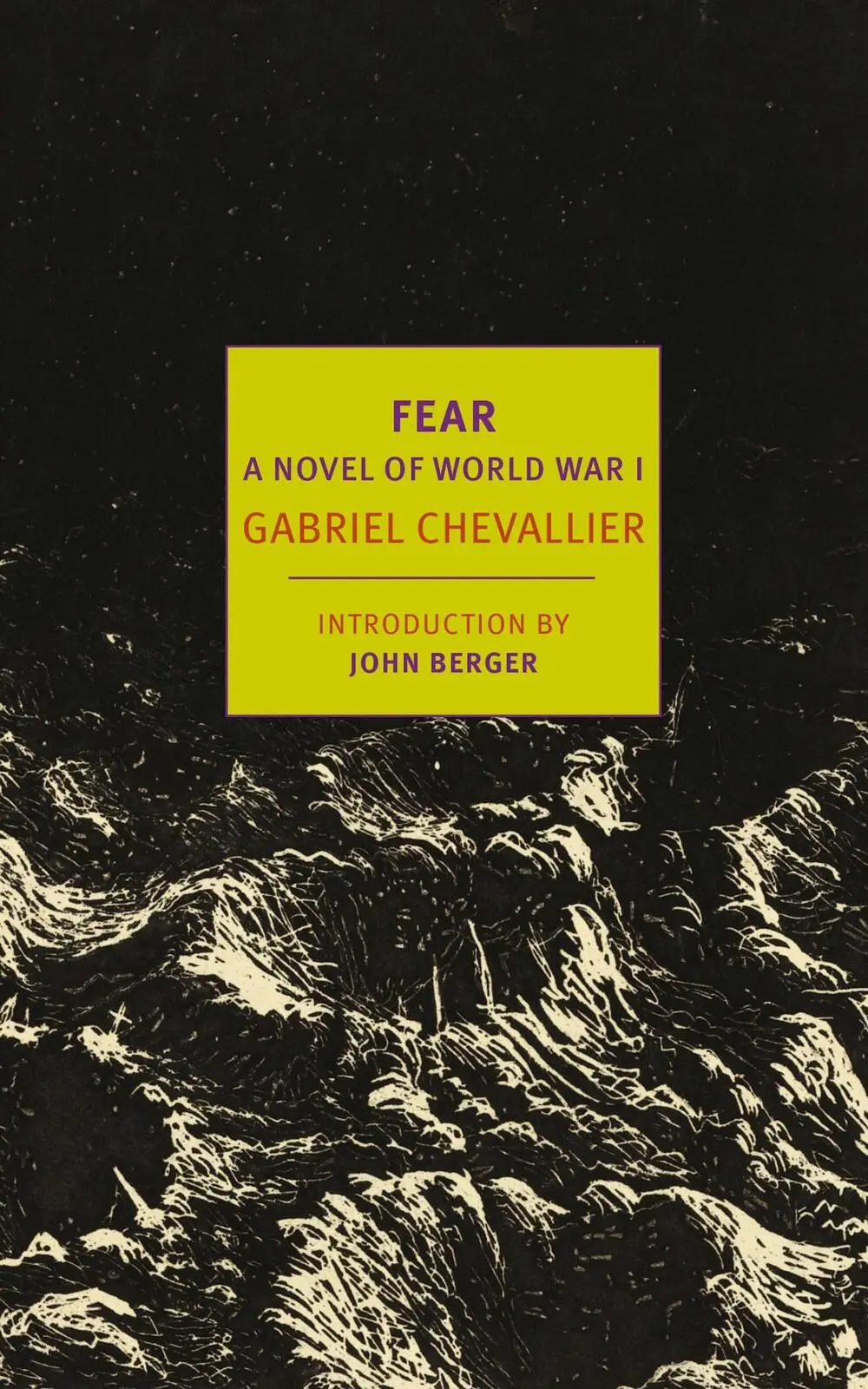
- Название:Fear
- Автор:
- Издательство:New York Review Books
- Жанр:
- Год:2014
- Город:New York
- ISBN:нет данных
- Рейтинг книги:3 / 5. Голосов: 1
-
Избранное:Добавить в избранное
- Отзывы:
-
Ваша оценка:
Fear: краткое содержание, описание и аннотация
Предлагаем к чтению аннотацию, описание, краткое содержание или предисловие (зависит от того, что написал сам автор книги «Fear»). Если вы не нашли необходимую информацию о книге — напишите в комментариях, мы постараемся отыскать её.
1915: Jean Dartemont heads off to the Great War, an eager conscript. The only thing he fears is missing the action. Soon, however, the vaunted “war to end all wars” seems like a war that will never end: whether mired in the trenches or going over the top, Jean finds himself caught in the midst of an unimaginable, unceasing slaughter. After he is wounded, he returns from the front to discover a world where no one knows or wants to know any of this. Both the public and the authorities go on talking about heroes — and sending more men to their graves. But Jean refuses to keep silent. He will speak the forbidden word. He will tell them about fear.
John Berger has called
“a book of the utmost urgency and relevance.” A literary masterpiece, it is also an essential and unforgettable reckoning with the terrible war that gave birth to a century of war.
Fear — читать онлайн бесплатно полную книгу (весь текст) целиком
Ниже представлен текст книги, разбитый по страницам. Система сохранения места последней прочитанной страницы, позволяет с удобством читать онлайн бесплатно книгу «Fear», без необходимости каждый раз заново искать на чём Вы остановились. Поставьте закладку, и сможете в любой момент перейти на страницу, на которой закончили чтение.
Интервал:
Закладка:
The shelters, of all shapes and sizes, dug out of mounds of earth, offered a curious sight. What was particularly striking about these makeshift constructions was that the materials used were themselves just bits of scrap and rubbish: old pieces of wood, old weapons, old pots and pans. With no resources except their wits, the combatants had come up with this primitive solution. A few metal implements sufficed for all their needs and life thus returned to the most basic conditions, as if to the dawn of time.
I went back to our cellar, then set off once more. Continuing my explorations away from the main thoroughfares, I came upon the bodies of two long-dead Germans in the basement of a house. These men must have been hit by grenades and then walled up, in the haste of battle. In this airless space they had not decomposed but shrivelled and then a more recent shell had blown apart their tomb and scattered their remains. I spent some time in their company, turning them over with a stick, not out of hatred or disrespect but motivated rather by a kind of fraternal pity, as if asking them to deliver up the secret of their death. The flattened uniforms seemed empty. Of the scattered remains nothing really survived except for half a head, a mask, but a mask of magnificent horror. The skin on it had dried and turned green, taking on the dark tones of an antique bronze with its patina of age. A pitted eye socket was empty and around it had streamed like tears a paste, now hardened, which must have been brains. It was the only blemish that spoilt the whole thing, but perhaps it really added to it, like the marks of wear add something to the worn stone of ancient statues. It was as if a pious hand had closed the eye, and, beneath the eyelid you could imagine the smooth contour and the shape of the eyeball. The mouth was fixed in the last screams of a terrible death agony, with a rictus of the lips baring the teeth, a mouth wide open, spitting out the soul like a clot of blood. I wished I could have kept this mask that death had fashioned, on which its fatal genius had achieved a synthesis of war, so that a cast could be made and given to women and zealots. I did at least make a sketch which I’ve kept in my notebook, but it does not express the holy horror with which I was filled by its model. The skull lent the chiaroscuro of the ruins a grandeur that I found hard to leave behind, and I only went outside again when the fading daylight cast formless shadows over the forehead, cheek bones and teeth, turning it into a grinning Asian.
I went back slowly through a dusk pierced by the noise of gunfire and exploding shells, which heralded the night’s uneasy quarrel, when men shoot more to comfort themselves than to destroy.
Inside our shelter an old hand said to me:
‘You shouldn’t stay outside, young lad. You’ll come to harm!’
But I was proud of my afternoon discovery and at the thought that in one day at the front I had already found something that people at the rear could not imagine: this pathetic mask, this death mask of some Beethoven who had been savagely executed.
The next morning we were taken to the front lines and put to work.
Our job was to dig out ‘Russian saps’, in preparation for the next offensive, now imminent. These were low, narrow underground trenches, dug straight out from the front line for some twenty metres towards the enemy lines, so that our troops could advance and only appear at the last moment. Some unknown engineer had come up with this idea which was supposed to allow our assault units to move forward stealthily under cover, and to charge out close to the German positions, and at the same time to eliminate the need for taking down our own barbed wire so as not to warn the enemy of an impending attack. But the Germans had other sure ways of knowing, and the eventual surprise was not the one hoped for.
It was long and tiring job. One man, bent double, moved forward with his pick, and those behind passed back sacks full of earth, which those at the rear would empty in the second, reserve lines so that the digging wasn’t visible. One sap was allotted to each squad, with gaps between them, all the way along the front of the offensive as far as I knew. Completing the task took us a fortnight, interrupted by other bits of repair work, day and night, all over our sector. Our military function was limited to the role of navvies working under fire, exposed and passive, terms which in fact defined the general situation of soldiers in this war. But I did not know that yet and was disappointed that our initiation began with fatigues.
The sector was fairly quiet, as often happens in the periods before a big battle, and only disturbed by the bombardments of our own artillery, either for range-finding or to cause general damage. The German batteries, no doubt trying to save ammunition, only answered with short, concentrated fire on targeted objectives.
The only people we encountered at the front line were mud-encrusted men, who trudged about like peasants, wary and arrogant. When they ate they did it with intense concentration, as if it were the most important task in the world and their greasy mess-tins and battered dixies contained very possible pleasure. They would spend long hours just standing behind an observation slit, not talking, smoking their pipes, and cursing loudly whenever there was an explosion in the vicinity.
I had been astonished to find myself in the middle of the war yet not be able to find it, unable to accept that in fact the war consisted precisely of this stasis. But I had to see it, and so I clambered up on a fire-step and stuck my head above the parapet. Through the tangle of barbed wire an embankment very like ours could be seen less than a hundred metres away, silent as if abandoned, yet full of eyes and gunsights focused on us. The other army was there, under cover, holding its breath to surprise us, and menacing us with its own guns and gadgets and the conviction of its strength. Between the two embankments, ours and theirs, lay this strip of shattered land, no man’s land, where anyone who stands up is a target immediately struck down, where rotting corpses serve as bait, where patrols venture only at night, suffocated by their pounding hearts and dizzied by the blood roaring in their temples, so loud it seems to hide all other sounds, when they creep out into this macabre land defended by dread and death.
But I didn’t have time for a good look. Someone had grabbed my feet and was pulling me down. I heard a low, angry voice:
‘If you really want to be a corpse there’s no rush, you’ll have plenty of chances. But don’t show the Boche where your pals are!’
I wanted to reply. But the shrugs and sneers of the other soldiers made me think better of it:
‘Berlin’s straight ahead, lad, you can’t miss it!’
‘Looks like the new boys are dead keen to win the war for us!’
‘Yeah, just look at this one! But they won’t be cocky for long, these bloody conscripts!’
I realised that they had taken my curiosity for some pointless display of bravado and that I should watch what I said to men who were old hands at this game. I must not allow myself to look ridiculous by appearing reckless, and the wisest counsel was to imitate their prudence and passivity. From then on I only looked out through the narrow slit of a loophole, hidden by sparse clumps of grey grass which also cut off the view at a few metres. Instead of the enemy army all I glimpsed were ants and the occasional grasshopper, the only visitors to a landscape forbidden to men.
In any case, bullets kept smashing into the parapet.
And our sergeant gave us wise advice:
‘Fritz will make sure he puts some lead in your brain. Leave it to him!’
We came under shellfire for the first time.
Since the days were still warm, we made ourselves comfortable in the afternoon among the ruins outside our cellar. Stripped to the waist, we inspected our underwear so we could kill the lice that were devouring us and which thrived in the rotten straw mixed with rubbish that we slept on. Lice-hunting was one of our most pressing tasks. We devoted an hour of our rest period to it, as well as a great deal of care. Our sleep depended on it.
Читать дальшеИнтервал:
Закладка:
Похожие книги на «Fear»
Представляем Вашему вниманию похожие книги на «Fear» списком для выбора. Мы отобрали схожую по названию и смыслу литературу в надежде предоставить читателям больше вариантов отыскать новые, интересные, ещё непрочитанные произведения.





Обсуждение, отзывы о книге «Fear» и просто собственные мнения читателей. Оставьте ваши комментарии, напишите, что Вы думаете о произведении, его смысле или главных героях. Укажите что конкретно понравилось, а что нет, и почему Вы так считаете.