Gabriel Chevallier - Fear
Здесь есть возможность читать онлайн «Gabriel Chevallier - Fear» весь текст электронной книги совершенно бесплатно (целиком полную версию без сокращений). В некоторых случаях можно слушать аудио, скачать через торрент в формате fb2 и присутствует краткое содержание. Город: New York, Год выпуска: 2014, Издательство: New York Review Books, Жанр: Классическая проза, на английском языке. Описание произведения, (предисловие) а так же отзывы посетителей доступны на портале библиотеки ЛибКат.
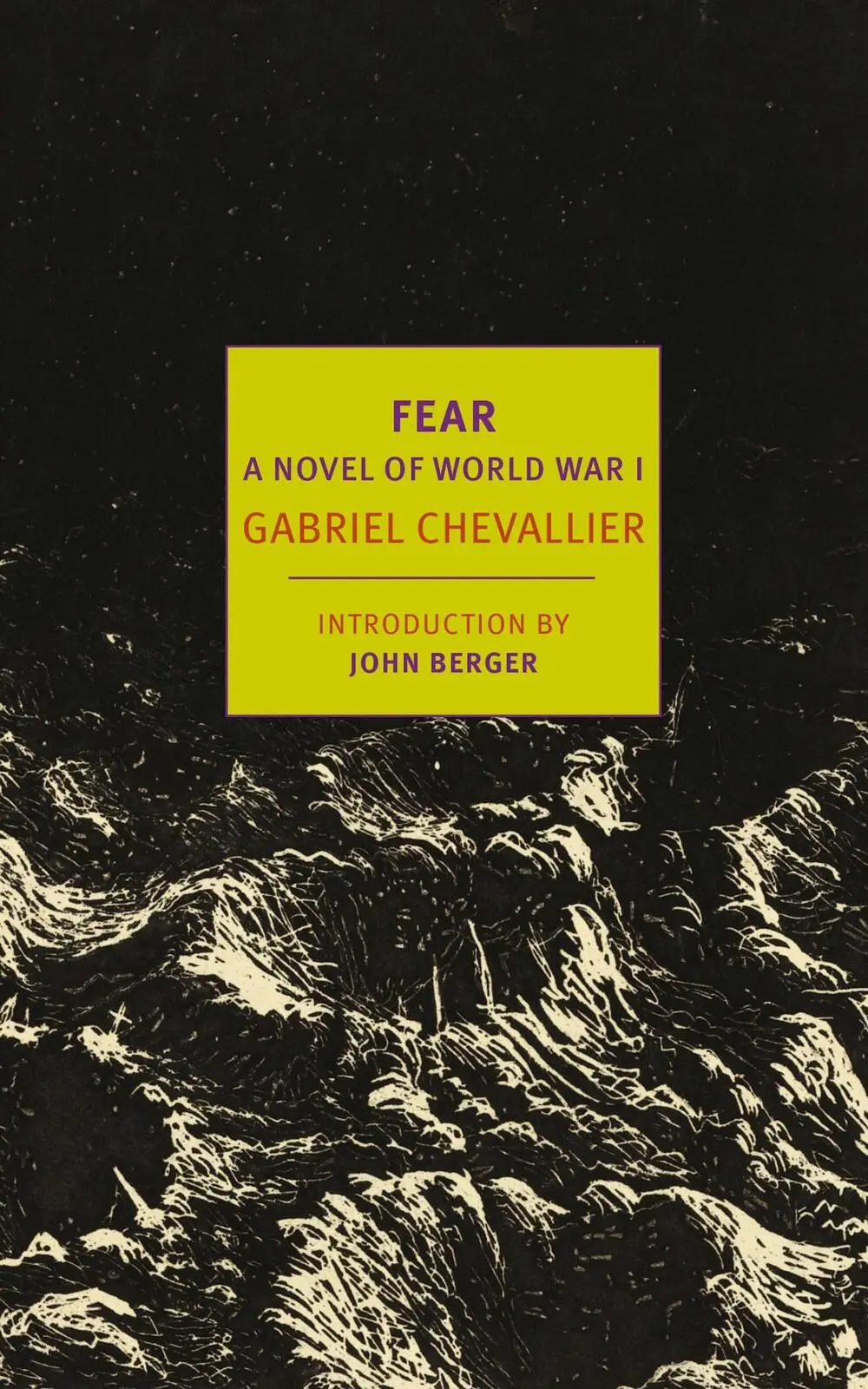
- Название:Fear
- Автор:
- Издательство:New York Review Books
- Жанр:
- Год:2014
- Город:New York
- ISBN:нет данных
- Рейтинг книги:3 / 5. Голосов: 1
-
Избранное:Добавить в избранное
- Отзывы:
-
Ваша оценка:
Fear: краткое содержание, описание и аннотация
Предлагаем к чтению аннотацию, описание, краткое содержание или предисловие (зависит от того, что написал сам автор книги «Fear»). Если вы не нашли необходимую информацию о книге — напишите в комментариях, мы постараемся отыскать её.
1915: Jean Dartemont heads off to the Great War, an eager conscript. The only thing he fears is missing the action. Soon, however, the vaunted “war to end all wars” seems like a war that will never end: whether mired in the trenches or going over the top, Jean finds himself caught in the midst of an unimaginable, unceasing slaughter. After he is wounded, he returns from the front to discover a world where no one knows or wants to know any of this. Both the public and the authorities go on talking about heroes — and sending more men to their graves. But Jean refuses to keep silent. He will speak the forbidden word. He will tell them about fear.
John Berger has called
“a book of the utmost urgency and relevance.” A literary masterpiece, it is also an essential and unforgettable reckoning with the terrible war that gave birth to a century of war.
Fear — читать онлайн бесплатно полную книгу (весь текст) целиком
Ниже представлен текст книги, разбитый по страницам. Система сохранения места последней прочитанной страницы, позволяет с удобством читать онлайн бесплатно книгу «Fear», без необходимости каждый раз заново искать на чём Вы остановились. Поставьте закладку, и сможете в любой момент перейти на страницу, на которой закончили чтение.
Интервал:
Закладка:
We did not receive any new provisions. We ate our emergency rations, and some men who had gone out in the dark to rummage in the packs of the dead brought back biscuits and chocolate. But we were desperately thirsty. I had a little flask of peppermint liqueur in my haversack. We passed it round but no one was allowed to drink. Twenty mouths sucked at the rim to moisten their lips. That was our only drink throughout those three days. But a few men took water from the puddles where corpses bathed.
We also sorted ourselves out so that we could sleep and avoid cramp. We arranged ourselves like oarsmen, each making space between his legs for his neighbour. At night the whole row of us leaned back so that stomachs served as pillows.
The sap became a rather cosy little place that we did not dare leave. We cherished the illusion that we had been forgotten and no order would ever find us there. But the orders came on the third day. We set off at night.
In the morning, after various halts and hesitations, we found ourselves in recently taken German positions. We walked past big dugouts that echoed with the cries of the wounded who had been brought there to wait until they could be transported to the rear. There were so many of them that it held up their evacuation; there were not enough stretcher-bearers.
Finally we were left in a trench where we could just about stand upright. It began to drizzle and we were soon wet. Our feet sank into the mud, which held them so firmly that in order to extricate them we had to pull at our knees with both hands. We warmed up each leg in turn. Still no new provisions. Fortunately shells rarely fell in this spot.
In the evening we had the idea to dig out small niches in the trench wall, just deep enough to hold our backs and stop us from slipping. Over the front of these little niches we spread out our tent canvases, held in place by cartridges stuck in the ground. Sitting behind the dripping canvas, squeezed together in pairs, with our feet in the water and shivering with cold, we managed to get a few hours’ sleep.
In the middle of the night we were woken. The call came that I had dreaded: ‘Bombers to the front!’ The Germans must have launched a counter-attack. But the firing died down before we reached the front line.
The next day we were moved forward again.
We took up positions in a trench perpendicular to the enemy lines, closed off by a barricade of sandbags, at the furthest point of our advance.
We were dirtier, more exhausted, paler and more silent than ever. We knew that our hour was approaching.
After all that we had seen, we could have no more illusions. As soon as one battalion was out of action, the next battalion was pushed forward to attack, over the same ground covered in our dead and wounded, after an inadequate artillery barrage, which did more to alert the enemy than to harm them. The useless victory which consisted of capturing a bit of the enemy trenches was paid for by the massacre of our soldiers. We could see the dead men in blue spread out between the lines. We knew that their sacrifice had been in vain and ours, which was about to follow, would be too. We knew that it was absurd and criminal to throw men against unbroken barbed wire protecting weapons that spat out hundreds of bullets per minute. We knew that invisible machine-gunners were waiting for the targets that we would be as soon as we went over the top, and would pick us off like game birds. Only the assailants were exposed to view, while the men we were attacking, dug in behind their earthen ramparts, would stop us getting to them as long as they kept a cool head for a couple of minutes.
As for a deep advance, all hope was lost. This offensive, which was supposed to take us twenty-five kilometres forward in one go, destroying every obstacle in its path, had just about managed to gain a few hundred metres in a week. A handful of senior officers had to justify their role to the nation by a few lines of communiqué that bore the scent of victory. We were there for no other reason than to purchase those few lines with our blood. It was now a matter of politics, not strategy.
One thing still gave us pause for thought. Among all the dead that surrounded us, we saw very few Germans. There was no equivalence of losses; our feeble territorial gains were lies, because we were the only ones to die. Victorious troops are those who kill more, and here we were the victims. This put the finishing touch to our demoralisation. The soldiers had lost conviction long ago. Now they lost confidence. Our attacking troops, supposed conquerors, muttered to themselves: ‘These fools are just killing us all.’
As a witness to this chaos and carnage, it seemed to me that ‘fools’ was an inadequate word. In the Revolution they sent incompetent generals to the guillotine. An excellent measure. Why should men who had set up courts martial, advocated summary justice, escape the sanctions they imposed on others? Such a threat would cure these wielders of thunderbolts of their Olympian arrogance, force them to reflect on what they were doing. No dictatorship could compare with theirs. They prohibit any scrutiny of what they are doing by the nations, the families, who have blindly put their trust in them. And if those of us who can see that their glory is an imposture, their power a menace, if we tell the truth, they will have us shot.
These were the thoughts that haunted us on the eve of the attack. Bowed down beneath the rain and the shells, the pale soldiers sneered:
‘Morale is high! The troops are raring to go!’
Now begins our final agony.
The attack is certain. But, since frontal assaults that get nowhere must be abandoned, we are to move forward through the trenches. My battalion will attack the German defences with grenades. As a bomber, I will march in the front ranks.
We still don’t know the hour of the attack. Around midday they tell us: ‘It will be this evening or tonight.’
From the latrines which were above the trenches we can see the enemy line. The gently rising plain is crowned in the distance by a wood that has been blasted to pieces, ‘Folly Wood’, and our command apparently proposes to occupy it. A rumour goes round that we are facing the German Imperial Guard and they will greet us with exploding bullets.
What can we do until evening? I have little faith in my grenades, which I do not know how to use. I strip down my rifle, clean it carefully, oil it and wrap it in a cloth. I also check my bayonet. I have no idea how one fights in a trench, in Indian file. But a rifle is a weapon after all, the only one I understand, and I have to get ready to protect my life. I have no faith in my knife either.
Above all, I must not think… What could I expect? To die? I must not expect that. To kill? That is the unknown and I have no wish to kill. Glory? This isn’t the place where you get glory; that happens much further back. To advance one, two, three hundred metres into the German positions? I have seen only too well that this will make no difference to events. I have no hatred, no ambition, and no motivation. Yet I must attack…
I have a single idea: get through the bullets, the grenades, the shells, get through them all, whether victorious or defeated. And moreover, to be alive is to be victorious . This was also the sole idea of everyone around me.
The old hands are anxious and grumble to calm themselves down. They refuse to do guard duty, but all eagerly volunteer to go to the rear in search of provisions.
Bursts of artillery and machine-gun fire sweep the plain. There’s a bit of sunshine. Far off we can still hear bugles, gunfire, bombardments.
We would like to halt the march of time. Yet dusk descends on the battlefield, separates us from each other, makes us shiver with cold… the cold of death…
Читать дальшеИнтервал:
Закладка:
Похожие книги на «Fear»
Представляем Вашему вниманию похожие книги на «Fear» списком для выбора. Мы отобрали схожую по названию и смыслу литературу в надежде предоставить читателям больше вариантов отыскать новые, интересные, ещё непрочитанные произведения.







Обсуждение, отзывы о книге «Fear» и просто собственные мнения читателей. Оставьте ваши комментарии, напишите, что Вы думаете о произведении, его смысле или главных героях. Укажите что конкретно понравилось, а что нет, и почему Вы так считаете.