Gabriel Chevallier - Fear
Здесь есть возможность читать онлайн «Gabriel Chevallier - Fear» весь текст электронной книги совершенно бесплатно (целиком полную версию без сокращений). В некоторых случаях можно слушать аудио, скачать через торрент в формате fb2 и присутствует краткое содержание. Город: New York, Год выпуска: 2014, Издательство: New York Review Books, Жанр: Классическая проза, на английском языке. Описание произведения, (предисловие) а так же отзывы посетителей доступны на портале библиотеки ЛибКат.
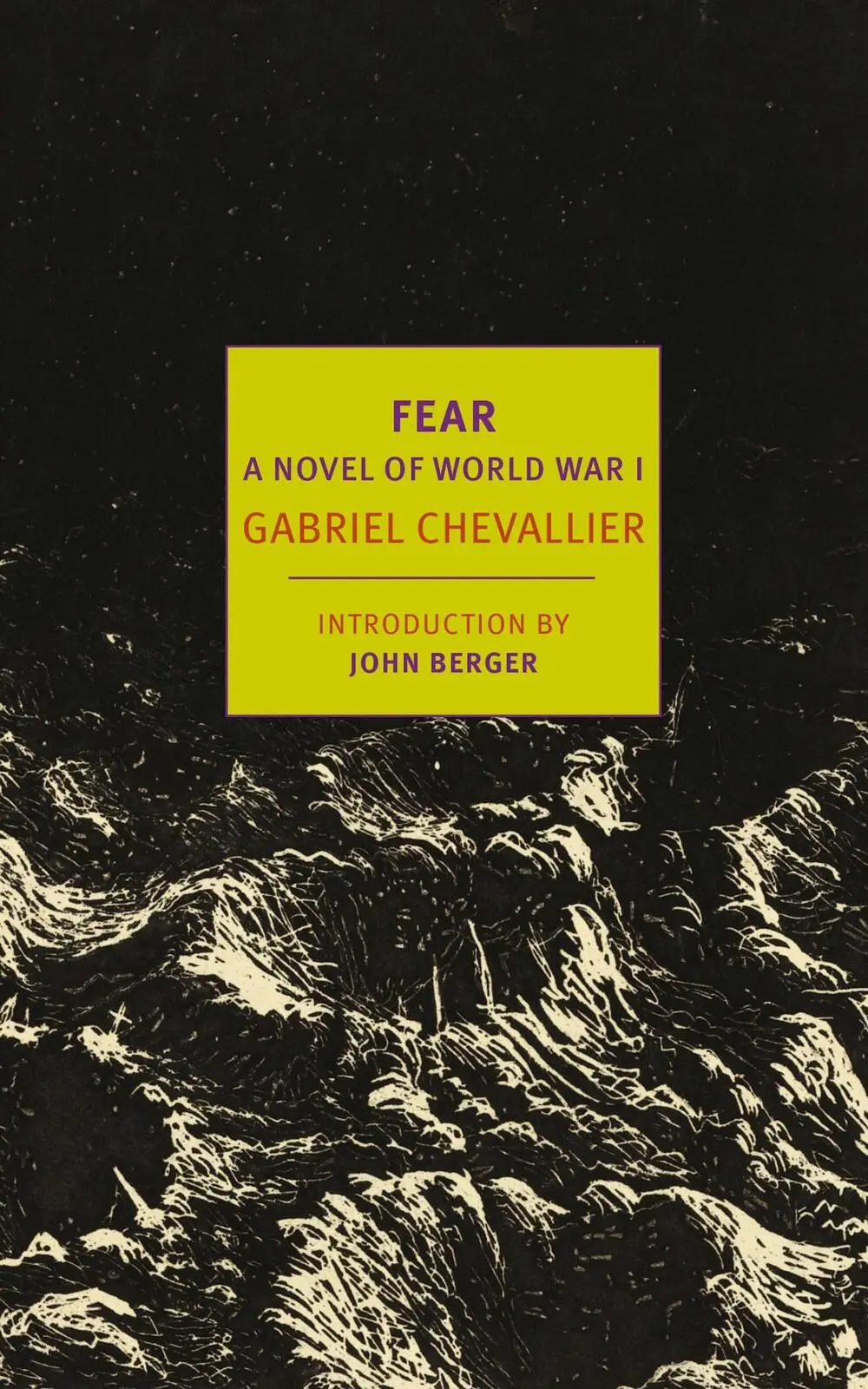
- Название:Fear
- Автор:
- Издательство:New York Review Books
- Жанр:
- Год:2014
- Город:New York
- ISBN:нет данных
- Рейтинг книги:3 / 5. Голосов: 1
-
Избранное:Добавить в избранное
- Отзывы:
-
Ваша оценка:
Fear: краткое содержание, описание и аннотация
Предлагаем к чтению аннотацию, описание, краткое содержание или предисловие (зависит от того, что написал сам автор книги «Fear»). Если вы не нашли необходимую информацию о книге — напишите в комментариях, мы постараемся отыскать её.
1915: Jean Dartemont heads off to the Great War, an eager conscript. The only thing he fears is missing the action. Soon, however, the vaunted “war to end all wars” seems like a war that will never end: whether mired in the trenches or going over the top, Jean finds himself caught in the midst of an unimaginable, unceasing slaughter. After he is wounded, he returns from the front to discover a world where no one knows or wants to know any of this. Both the public and the authorities go on talking about heroes — and sending more men to their graves. But Jean refuses to keep silent. He will speak the forbidden word. He will tell them about fear.
John Berger has called
“a book of the utmost urgency and relevance.” A literary masterpiece, it is also an essential and unforgettable reckoning with the terrible war that gave birth to a century of war.
Fear — читать онлайн бесплатно полную книгу (весь текст) целиком
Ниже представлен текст книги, разбитый по страницам. Система сохранения места последней прочитанной страницы, позволяет с удобством читать онлайн бесплатно книгу «Fear», без необходимости каждый раз заново искать на чём Вы остановились. Поставьте закладку, и сможете в любой момент перейти на страницу, на которой закончили чтение.
Интервал:
Закладка:
We wait.
Nothing gets any clearer.
I crouch down in a hole to get some sleep. Better not to know in advance!
I remember that I am twenty years old. The age of which the poets sing.
Daylight again. I stretch my stiff legs in the deserted trench and then go to our corporal’s dugout.
‘We’re not attacking?’
‘It’s postponed to this evening.’
Here we go again! One more grim day!
It’s early, and all is quiet on the front. Mist covers the plain and through it come long, heart-rending groans, punctuated by hoarse death-rattles. Our wounded lie between the lines, crying for help. ‘Comrades, brothers, friends, come and get me… don’t leave me, I can still live…’ You can make out women’s names, and the screams of those who are in unbearable pain: ‘Finish me off!’ And those who curse us: ‘Cowards, cowards!’ There is nothing we can do but pity them, and shudder. In their cries we can hear the cries that are inside us, and which will come out, perhaps this evening… It is as if the two armies have kept quiet to hear them and must be red with shame in their trenches.
I withdraw to my hole, cover my head so as not to hear, and try to sleep.
I am awoken a few hours later. Food has finally come: a stew congealed in the dixies, wine, cold coffee, brandy. Our squad gathers round the corporal and he distributes it. I have no appetite, force it down, and finish first. The corporal gives me an armful of newspapers:
‘Read us the news.’
‘Yeah, let’s hear the latest claptrap!’ agree the men, clustering round so as not to miss anything.
First there was the rather confused official statement on the progress of the war. They shake their heads.
‘Meaning, we’re stuck in this shit for the winter!’
Then I scan the columns signed by great names: academicians, retired generals, even men of the Church, and pluck out these rare and precious flowers of prose:
‘That war has an educational value can never be doubted by anyone with the slightest powers of observation…’
‘It was time war came to France to revive the true meaning of the Ideal and the Divine.’
‘One of the surprises of this war, and one of the wonders, is the brilliant role played by poetry.’
Someone interrupted:
‘How much do these blokes get paid to write this fucking rubbish?’
Continuing, I indulged my audience:
‘O dead, would that you were alive!’
‘Merriment reigns in the trenches!’
‘Now I can follow you into the attack; I can feel the joy that overwhelms you at the moment of supreme effort, the ecstasy, the transmigration of the soul, the unfettered flight of the spirit.’
They reflect for a moment. And then Bougnou, self-effacing, obedient little Bougnou, who never says a word, passes judgement on these famous writers in his little-girl voice:
‘Oh, what scum!’
In the afternoon the corporal takes me aside: ‘I want you to join a fatigue party this evening. We’re going to go and collect some wicker hurdles.’[17]
‘Oh no, not that. I am already a bomber. I don’t want to go on fatigues as well.’
‘Shut up. This way we’ll miss the attack…’
His assurance calms me down. I pass quite a pleasant evening.
It has already been dark for some time when we set off. There are five of us. I’ve left my rifle and my pack in a little corner of the trench where I can get them later and just kept a haversack and the rest of my kit. We walk fast along the dark trenches that have been battered by shells, in a hurry to get to the rear where we can shelter.
Unfortunately the wet weather in the last few days and the damp biscuits I’ve eaten have brought back my upset stomach. I have to make frequent stops and force the others to wait, complaining, afraid that a shot will catch us at any moment. It isn’t easy for me to find a suitable spot in the dark. At one point a man suddenly jumps up and tries to chase me off.
‘Get out of here! These are the commandant’s latrines.’
I tell this dutiful servant in no uncertain terms that no commandant in the world could make my guts stand to attention. His nose and the noises from my bowels convince him that I am telling the truth. He makes himself scarce.
We find the hurdles in a depot and assemble our load. Then we sit in a covered shelter, huddled close together to keep warm, and light up our cigarettes.
Heavy shells start landing not far off and make a terrible racket in this deserted spot. We squeeze down into the depth of the shadows, telling ourselves that our shelter is solid. Above all, we are thinking of what’s about to happen to the battalion up ahead. Better to be where we are.
And then the shelling stops and silence returns. We stop talking. We listen to the confused sounds from the front, off in the distance. We doze, we let the time pass. We feel like deserters.
‘I suppose we’d better go back,’ says the corporal.
Off we go again. It is quite a struggle moving forward with the wicker hurdles that are wider than the trenches so that we have to carry them at an angle. In normal times we would never have wanted such a task. But now we feel privileged.
We reach our positions.
The whole battalion is in the trench, bayonets fixed, in total silence.
‘What are you doing?’
‘We’re about to attack.’
So the attack hasn’t happened!
‘Tell the captain that the hurdles have arrived,’ says the corporal.
The message passes from man to man. I think of my rifle, and of going to get it… then an order comes:
‘The men from the fatigue party to the front. Leave the hurdles.’
This is the limit! What is that supposed to mean? But there’s no room for argument. We make our way through the battalion. Men move aside to let us pass, with unusual courtesy.
Beneath the parapet stands our captain, chinstrap in place, revolver in hand. He points to some boxes:
‘Take your grenades.’
‘I don’t know how they work, sir.’
This is the truth. These are cylindrical tin grenades of a type I’ve never seen before. ‘Just do it!’ he snaps.
Yes sir! I dutifully take five or six grenades and slip them into my haversack. He points to the parapet.
‘Over you go!’
I see a short ladder. I climb up. I straddle the sandbags and find myself on a level with the plain, above the trenches. I am blinded by flashes. Rockets, shells. Bullets whistling, whipping past me. I let myself drop down.
On the other side of the parapet…
A man is running in front of me. I am running behind him.
Thoughts flash through my mind: ‘OK, here I am, I’m going into the attack at the front of a battalion. My only weapons are five grenades of an unknown type and I am running towards the German Imperial Guard…’ That’s as far as I can think. I wish I had not left my well-oiled rifle behind.
Other men are running behind me. I mustn’t think of stopping, I don’t think of stopping. One flare after another bathes us in light. I spot a rifle on the edge of a trench and grab it. An old French rifle: bolt jammed, bayonet bent and rusty. Better than nothing.
I cannot imagine combat at all, I just can’t think like a soldier. I tell myself:
‘This is all stupid, utterly stupid!’ And I run, run like I’m in a hurry.
Am I afraid? My mind is afraid. But I’m not asking its advice.
Stupid, stupid!
Behind the second parapet, four maniacs are lobbing grenades, bellowing to work themselves up into a frenzy.
So here we are, five chaps attacking the German army with tin cans. Unbelievable!
‘Give me some grenades!’ one of these lunatics shouts at me.
‘With pleasure!’ I think. I hand him the contents of my bag.
‘More!’
Читать дальшеИнтервал:
Закладка:
Похожие книги на «Fear»
Представляем Вашему вниманию похожие книги на «Fear» списком для выбора. Мы отобрали схожую по названию и смыслу литературу в надежде предоставить читателям больше вариантов отыскать новые, интересные, ещё непрочитанные произведения.







Обсуждение, отзывы о книге «Fear» и просто собственные мнения читателей. Оставьте ваши комментарии, напишите, что Вы думаете о произведении, его смысле или главных героях. Укажите что конкретно понравилось, а что нет, и почему Вы так считаете.