Sait Abasiyanik - A Useless Man
Здесь есть возможность читать онлайн «Sait Abasiyanik - A Useless Man» весь текст электронной книги совершенно бесплатно (целиком полную версию без сокращений). В некоторых случаях можно слушать аудио, скачать через торрент в формате fb2 и присутствует краткое содержание. Год выпуска: 2015, Издательство: Archipelago, Жанр: Классическая проза, на английском языке. Описание произведения, (предисловие) а так же отзывы посетителей доступны на портале библиотеки ЛибКат.
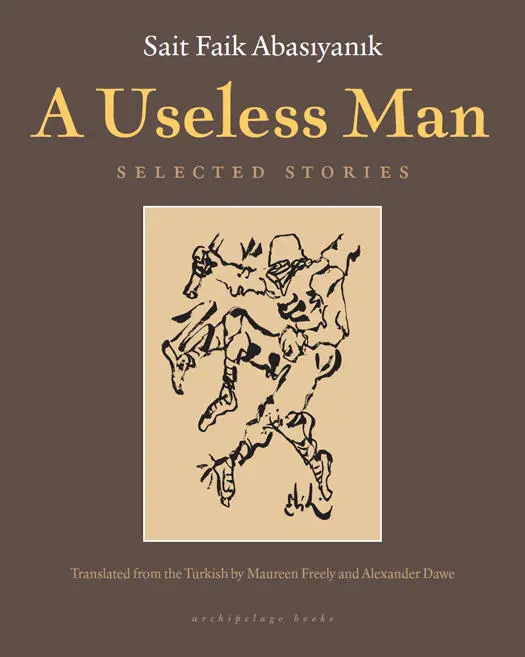
- Название:A Useless Man
- Автор:
- Издательство:Archipelago
- Жанр:
- Год:2015
- ISBN:нет данных
- Рейтинг книги:3 / 5. Голосов: 1
-
Избранное:Добавить в избранное
- Отзывы:
-
Ваша оценка:
A Useless Man: краткое содержание, описание и аннотация
Предлагаем к чтению аннотацию, описание, краткое содержание или предисловие (зависит от того, что написал сам автор книги «A Useless Man»). Если вы не нашли необходимую информацию о книге — напишите в комментариях, мы постараемся отыскать её.
Sait Faik donated his estate to the Daruşafaka foundation for orphans, and this foundation has since been committed to promoting his work. His former family home on Burgazada was recently restored, and now functions as a museum honoring his life and work. He is still greatly revered: Turkey's most prestigious short story award carries his name and nearly every Turk knows by heart a line or a story by Sait Faik.
A Useless Man — читать онлайн бесплатно полную книгу (весь текст) целиком
Ниже представлен текст книги, разбитый по страницам. Система сохранения места последней прочитанной страницы, позволяет с удобством читать онлайн бесплатно книгу «A Useless Man», без необходимости каждый раз заново искать на чём Вы остановились. Поставьте закладку, и сможете в любой момент перейти на страницу, на которой закончили чтение.
Интервал:
Закладка:
“Mother! Someone’s at the door.”
“Well go and open it. Grandpa must be back from the coffeehouse.”
“I’m scared.”
“What’s there to be scared of?”
“There are two men out there.”
“Don’t be silly. Well then it must be Grandpa and Uncle Hasan.”
The door opened, and a girl with blond hair and speckled blue eyes stared vacantly at Bayram’s face. Then her luminous blue eyes were on me, looking me over. And she slammed the door shut.
“There are thieves at the door, Mom! Thieves, I swear to God, thieves!”
Then a woman was standing before us; her brow was pure white, her eyes were jet black and wide open in surprise, and she held her headscarf over her mouth. First she simply stood there, staring, then she pulled the headscarf away from her mouth, stepped back and said:
“Come in, gentlemen.”
We went in. There was a stairwell just beyond the door. We hadn’t gone up ten steps before we were at another door. We opened it. We were in a room with an iron stove, and a strong scent of children and linden flowers. We sat down on the divan as a low, round wooden table was set in the middle of the room and a round copper tray, sparkling with red streaks of light, was placed on top; pickles, cheese, jam and six hardboiled eggs sat on the tray. We sat around the table, and without saying a word we ate. While we ate a little boy opened the door, peered in, and then disappeared. The little girl attended to us while we ate and when we finished, the older girl returned, with her hair pulled back and her headscarf tied tightly around her forehead. She moved in and out of the room in silence, collecting the empty dishes from the tray. Then she opened the lid of a large chest, laid out blankets for two beds and left the room. Later she came with coffee. We went to bed without exchanging words. It was like we were angry with each other: frowning, we avoided each other’s eyes.
When I awoke in the morning, Bayram was by the window smoking a cigarette. I sat down on the divan beside him and looked at the garden below, stretching out before us in the mist. On one side there was something like a greenhouse, covered in glass and wicker. I opened the window and breathed in the sweet scent of violets. The weather was warm, almost balmy. Soon the mist slowly rose and I could see the entire orchard: cabbages, flowers, parsley and lettuce all rearing up like horses. In the distance among the flowers there were other gardens, other warped, crooked buildings. The same vegetables, the same animals, the same bent and solitary structures filled the surrounding landscape, and everywhere the scent of violets. A swirling stream ran across the road. Did we cross it when we came to the house the night before? I couldn’t remember getting my feet wet.
An old man came up behind us.
“Dad!” Bayram cried.
It was the first word uttered since the night before.
The old man turned to me and said, “Welcome home, my son.”
Then an old woman brought us milk and said to the old man:
“Are you going to the market? Should I get the cart ready?”
The man looked at Bayram.
“Yes, I’m going, Mother!” Bayram said.
The old woman wiped away a tear waiting to run down her wrinkled cheek. It seemed that no one else was touched by Bayram’s return.
Cabbages, leeks, red radishes, and spinach were loaded onto the carriage, and we piled in. Bayram’s little girl turned up with a bursting bouquet of violets and gave them to me, and a woman with a face as yellow as a quince came running to the carriage with an armful of celery root. She threw them all into the carriage, lifting only her eyes to glance at Bayram. I looked at Bayram, but he didn’t seem to notice. She watched the carriage until it disappeared from view. Bayram didn’t stand until we had turned the corner. Then he cracked his whip over the white workhorse, turned, and snapped it back toward the woman who had been watching him disappear. We had turned the corner so we couldn’t see the woman racing back home.
I could smell the violets, oh, and that wonderfully pungent scent of the celery root! I wasn’t sure where we were going and didn’t ask.
When we got to the market we jumped out of the carriage and the middlemen swarmed around Bayram.
“Back from military service? We thought you’d died, my man Bayram!” they cried.
“I’ll be off then, Bayram,” I said.
“Stop by some time.”
I wandered along so many streets, down and up and then back down again until I ended up in Ortaköy.
I haven’t been back to the valley of violets in nearly a year. I always said I was going but then I could never find it. But last year, one cold day in February, I found myself with a few friends in that same cabbage patch near Mecidiyeköy. The landscape before us opened onto a valley whose depth and mystery drew us toward it. I knew just where I was when I felt the soft earth under my feet, and over the soft earth we ran down into the valley. And the valley was so warm, so warm, and steeped in the scent of violet. We walked along the bank of the stream and saw Bayram hoeing a lettuce patch with a pick, his wife bent over the earth, collecting what I think was mallow. She turned to look at us. Bayram didn’t remember me at first so I had to introduce myself to him.
As we traveled back up into the hills of Arnavutköy, passing along the edge of the garden, we could still smell the violets. We left a warm day in May to find February waiting for us like a whip.
The Story of a Külhanbeyi

The street was deserted. Where else would a raw cucumber like him get it on with his girl? The bar’s a little further on. You can see the agency light reflected in its iron grill.
In the old days this was an Ottoman han , but now they rent by the room. It’s more a prison than a han . There’s this office next door. But no, that’s the agency. You can buy a ticket to America there. But the main attraction is just opposite: the state factory. They make booze there. Man! Do they ever! Sometimes you just want to bang on that metal grate and scream, “Damn it, man! Can’t you give me just one little taste?”
Ömer keeps an eye on people who go into the han and don’t come out. Every day he listens to that horrible mash of languages pouring out through the agency’s back window. It’s bracing stuff. Even the curly blonde gets a little scared, though she should be used to it by now.
But now she is soothed by the harmonies of the suma factory: the beds, the slippers, and the strops; she can even hear the trembling whispers of desire — she likes them.
Ömer is sitting on a truck, inside a wreath of cigarette smoke. He is waiting for someone to leave but his slow and heavy gestures betray no anxiety. Though his shoulders are hunched, he keeps one a little higher, just in case. The shabby ends of his long pants dangle over the edge of the truck — it looks like he has no legs. A few people go into the han . A few go out. He listens to their footsteps crossing the long courtyard. He thinks of taking off, but then he stretches. Stretches and stretches until he feels as long as that dark and dusty courtyard. He can almost feel the footsteps in his chest. Now comes the worst of it: the ruthless, godless desires that come on with the drink. Hours go by and no one comes out.
The han has five floors, with a great courtyard in the middle. There are sunflower seeds and cucumber skins and paper wrappers scattered over the stone steps. But no matter how drunk a man gets, he always knows when it’s a cherry pit jammed in the sole of his tattered shoe. That’s just how it is. It’s the season, my friend. The cherry season. Surely the han boys wouldn’t be eating strawberries at this time of year! And what the hell’s a strawberry seed, anyway?
Читать дальшеИнтервал:
Закладка:
Похожие книги на «A Useless Man»
Представляем Вашему вниманию похожие книги на «A Useless Man» списком для выбора. Мы отобрали схожую по названию и смыслу литературу в надежде предоставить читателям больше вариантов отыскать новые, интересные, ещё непрочитанные произведения.










Обсуждение, отзывы о книге «A Useless Man» и просто собственные мнения читателей. Оставьте ваши комментарии, напишите, что Вы думаете о произведении, его смысле или главных героях. Укажите что конкретно понравилось, а что нет, и почему Вы так считаете.